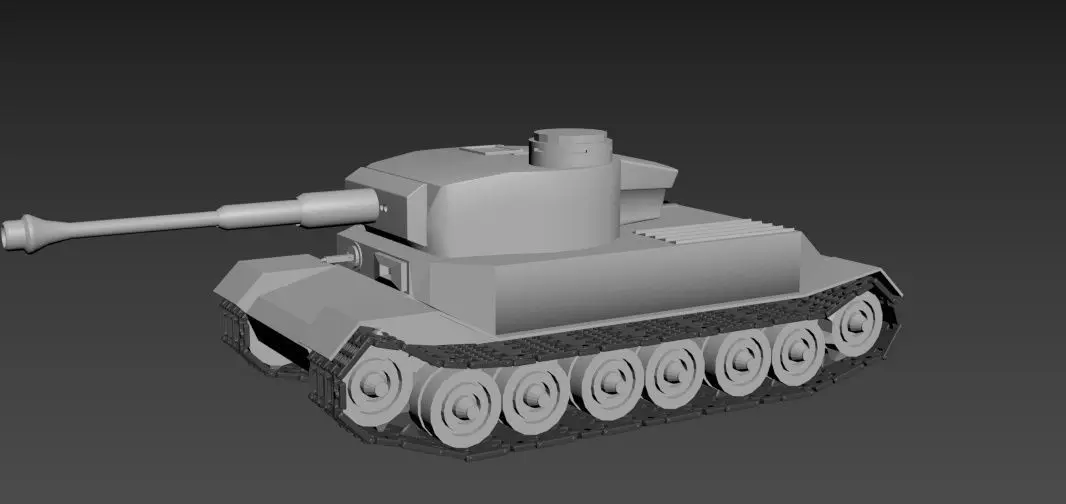
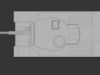
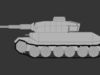
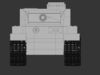
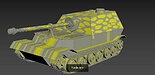
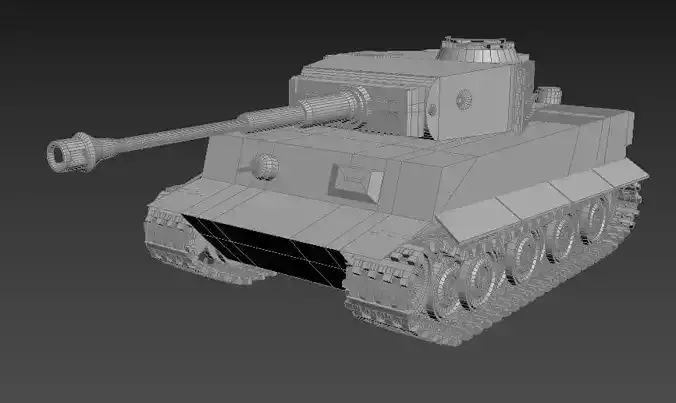
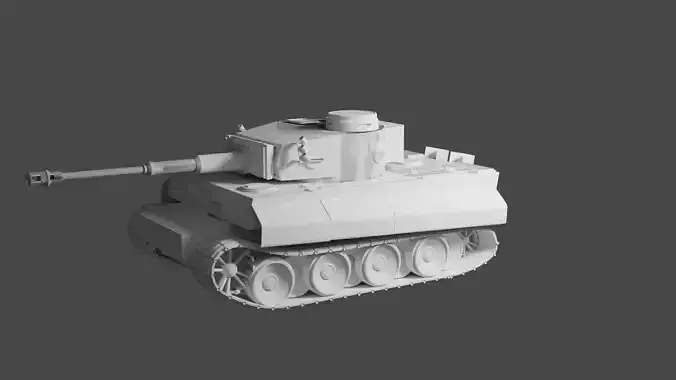
Until now, no one can say for sure when work began on the creation of Tiger. Many researchers call the date May 26, 1941, when the terms of reference were issued. On that day, a meeting was held at the Berghof, at which the state of the German armored forces, which followed from an analysis of their combat use in France, was discussed. It was attended by: A. Hitler, Reichsminister of armaments and ammunition F. Todt, chairman of the tank commission of the Reichsministry, honorary doctor of technical sciences F. Porsche, head of the armaments department of the ground forces Saur, his deputies: Colonel Philps, Lieutenant Colonel von Wilke, senior adviser design services E. Kniepkampf and company director Steyr Hacker. Hitler paid special attention to the development of means of dealing with the British infantry tank Matilda.
One of the agenda items was the report of the head of the weapons department on the progress of design work on the VK4501 (P) and VK3601 (H) tanks, the models of which were presented here for display. It follows from this that the tanks were already at the development stage at the time of the meeting.
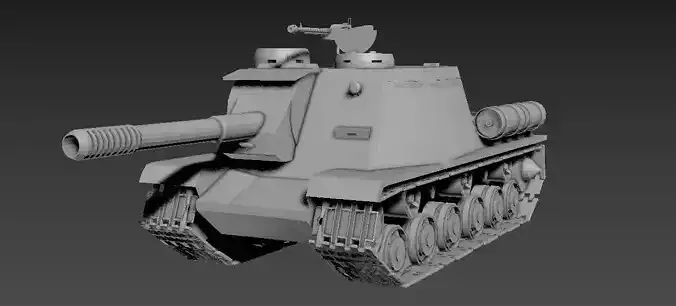
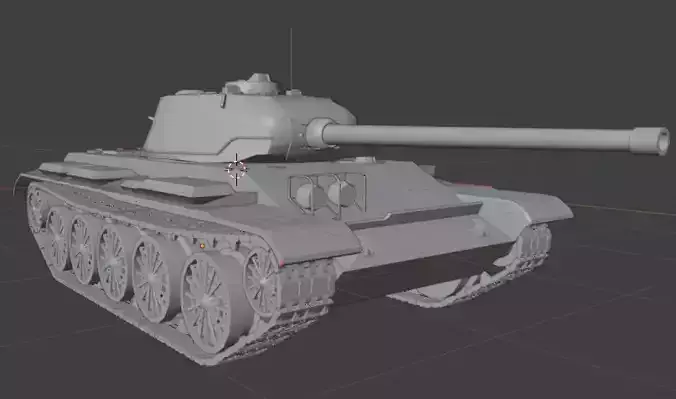
The attack on the USSR initially did not affect the creation of a German heavy tank in any way, since all the efforts of German designers were thrown into improving the already existing production vehicles, in connection with which work on the design and creation of heavy tanks was temporarily stopped. However, in the fall, in connection with the constant complaints of Panzerwaffe tankers about the unsatisfactory armor resistance of the vehicles and weak weapons, work on the creation of a new tank was resumed. As a result of modifications to the Henschel tank (changing the turret platform, increasing the thickness of the armor, modifications in the undercarriage), the prototype's weight reached 48 tons instead of the originally announced 36. After that, the project was renamed from VK3601 (H) to VK4501 (H). As a result of the increased weight of the machine, the pressure of the tracks on the ground also increased, in connection with which extremely wide tracks were used. On them, the tank did not fit on the railway platforms, so it had to be changed every time.
Around the same time, the first scandal related to the creation of the Porsche tank took place. The Armaments Directorate ordered the Krupp company a different turret that was developed by the Porsche Design Bureau. Instead of a turret with a shoulder strap of 2000 mm and armed with an 88-mm cannon, a turret with a shoulder strap of 1820 mm was made, which made it difficult to install the gun, which had also not been manufactured by that time due to the decision of the Armaments Department to postpone work on its launch into production for year. Reich Minister Todt, who personally oversaw the project, filed a complaint with Hitler. Since then, there have been constant conflicts between the Armaments Directorate and F. Porsche.
F. Porsche enjoyed the personal patronage of F. Todt. And when Todt crashed in a plane crash on February 3, 1942, and Albert Speer took his place, Dr. Porsche's car in an instant from a priority breakthrough tank turned into excessively costly and unreliable. The Armaments Directorate, with the help of Speer, constantly proved to Hitler that it was inexpedient to create a Porsche tank, since the revolutionary decision for that time to use electric generators as a transmission required a lot of copper, and was also unreliable when operating the tank.
It was originally planned to produce 135 vehicles of this class by March 1943, of which 85 were Porsche tanks and 50 were from Henschel. But, according to Speer, the manufacture of two machines of the same type at the same time was irrational, which he also repeatedly reported to Hitler.
The prototype was built in April, the first serial production in June. 4 tanks were assembled in August, 3 in September, and the only Pz Bef Wg VI (P) was manufactured in October.