High-quality 3D assets at affordable prices — trusted by designers, engineers, and creators worldwide. Made with care to be versatile, accessible, and ready for your pipeline.
Included File Formats
This model is provided in 14 widely supported formats, ensuring maximum compatibility:
• - FBX (.fbx) – Standard format for most 3D software and pipelines
• - OBJ + MTL (.obj, .mtl) – Wavefront format, widely used and compatible
• - STL (.stl) – Exported mesh geometry; may be suitable for 3D printing with adjustments
• - STEP (.step, .stp) – CAD format using NURBS surfaces
• - IGES (.iges, .igs) – Common format for CAD/CAM and engineering workflows (NURBS)
• - SAT (.sat) – ACIS solid model format (NURBS)
• - DAE (.dae) – Collada format for 3D applications and animations
• - glTF (.glb) – Modern, lightweight format for web, AR, and real-time engines
• - 3DS (.3ds) – Legacy format with broad software support
• - 3ds Max (.max) – Provided for 3ds Max users
• - Blender (.blend) – Provided for Blender users
• - SketchUp (.skp) – Compatible with all SketchUp versions
• - AutoCAD (.dwg) – Suitable for technical and architectural workflows
• - Rhino (.3dm) – Provided for Rhino users
Model Info
• - All files are checked and tested for integrity and correct content
• - Geometry uses real-world scale; model resolution varies depending on the product (high or low poly)
• • - Scene setup and mesh structure may vary depending on model complexity
• - Rendered using Luxion KeyShot
• - Affordable price with professional detailing
Buy with confidence. Quality and compatibility guaranteed.
If you have any questions about the file formats, feel free to send us a message — we're happy to assist you!
Sincerely,
SURF3D
Trusted source for professional and affordable 3D models.
More Information About 3D Model :
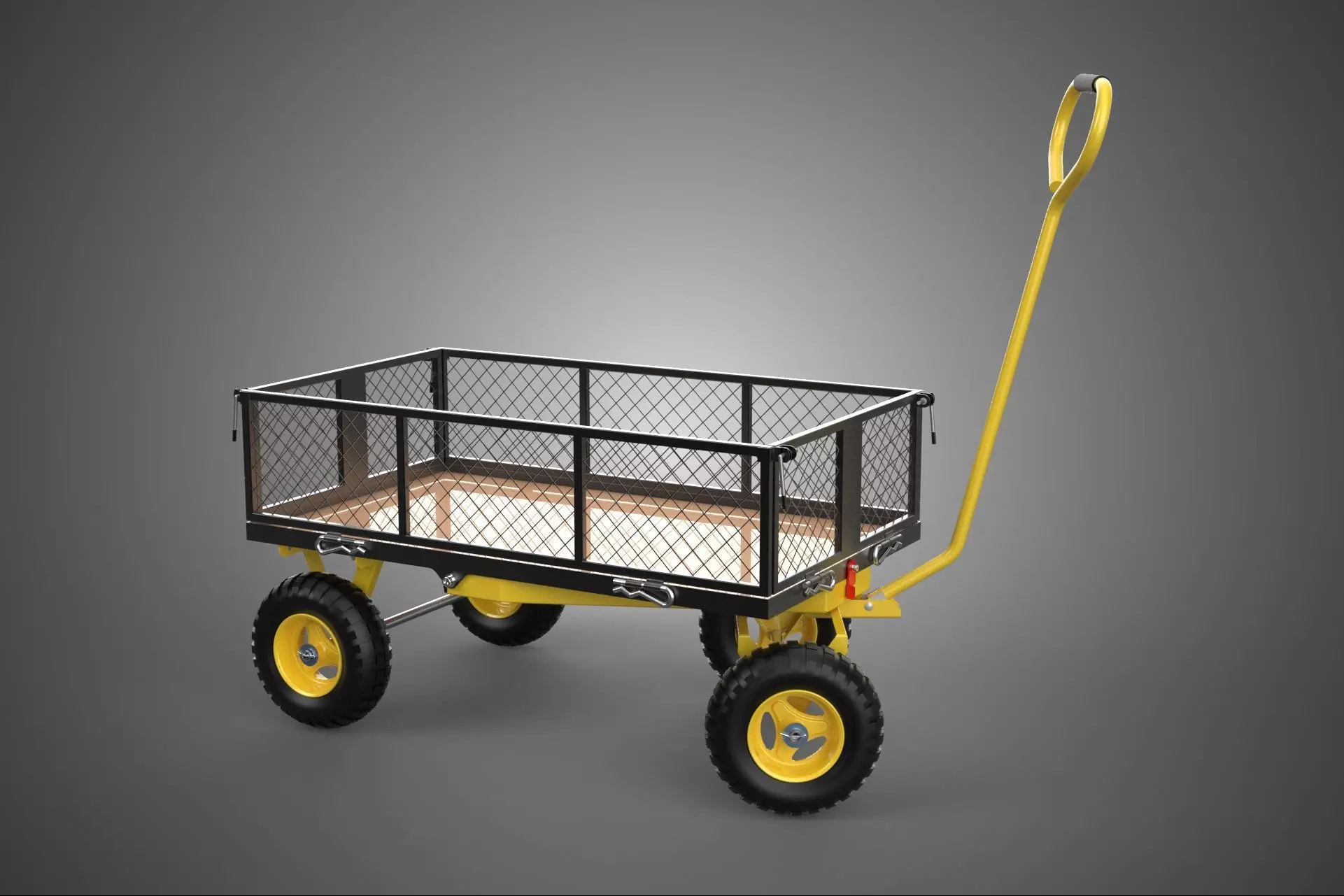
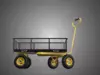
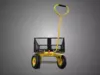
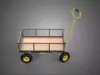
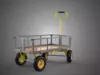
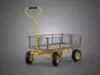
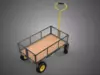
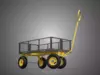
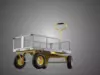
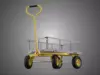
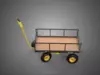
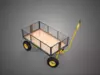
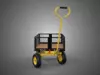
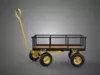
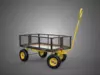
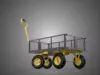
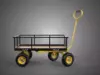
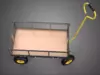
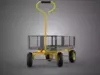
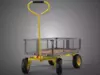
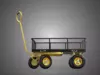
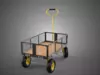
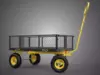
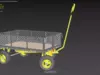
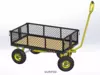
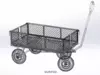
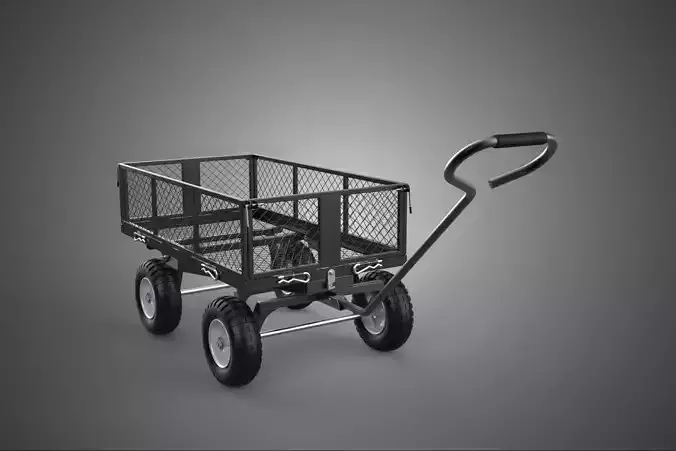
A Heavy Duty Utility Manual Hand Pull Wagon, often interchangeably referred to as a Garden Cart or Trolley, is a specialized, non-motorized material handling device designed for the transportation of substantial loads over variable or uneven terrain. It is distinguished from traditional wheelbarrows by its four-wheel architecture, which enhances stability and distributes weight across multiple contact points, making it suitable for significantly higher load capacities.
Nomenclature and Classification
The apparatus falls under the classification of utility trailers or manual transport equipment. The terms wagon, cart, and trolley are used synonymously, generally referring to the flatbed or deep-sided chassis configuration. The critical prefix Heavy Duty indicates construction materials and design optimized for high-stress applications, typically supporting load-bearing capacities ranging from 500 pounds (227 kg) to 1,500 pounds (680 kg), dependent on the specific model and reinforcement strategy.
Design and Construction
The structural integrity of these units relies primarily on a robust frame and bed assembly.
Frame and Chassis
The chassis is typically constructed from heavy-gauge, tubular or box-section steel, often finished with a powder-coating process to mitigate corrosion resulting from exposure to weather, soil, and moisture. This configuration ensures torsional stiffness under extreme loading conditions. The four-wheel configuration mandates the use of either fixed axles or an articulating front axle system.
Bed and Deck
The bed, or deck, material is selected based on durability and specific utility requirements. Common materials include reinforced high-density polyethylene (HDPE), structural foam, or heavy-gauge steel mesh. Models designed for granular materials or liquids often incorporate reinforced polymer beds that allow for efficient cleaning and possess resistance to chemical corrosion. Certain utility models feature removable or collapsible side panels, allowing the cart to be converted into a flatbed platform for oversized items like lumber or large equipment.
Mobility System
The 4 Wheel system is foundational to the heavy-duty designation, providing superior equilibrium compared to two-wheeled devices.
Wheels and Tires
Wheels often utilize pneumatic (air-filled) tires, mandatory for superior shock absorption and traction on soft soil, gravel, or rough outdoor surfaces. Tire diameters are typically oversized to minimize ground pressure and facilitate easier navigation over obstacles. Alternatively, some models employ solid, puncture-proof rubber tires for maintenance-free operation in environments where puncture risks (e.g., construction sites) are high. Axles are invariably equipped with sealed ball bearings to ensure smooth rolling and resistance to abrasive debris and moisture ingress.
Steering Mechanism
Steering is commonly facilitated by a fifth wheel or articulation mechanism located at the front axle. This allows the front wheels to pivot sharply in response to the handle input, providing tight turning radii crucial for maneuvering within confined garden paths or workshops.
Operation and Ergonomics
Operation is entirely Manual Hand Pull, requiring the user to supply the motive force via a drawbar or handle. The handle is designed to be lengthy, offering optimal leverage to initiate movement of a heavily loaded cart. Ergonomic considerations include a large D-grip or loop handle configuration, which often features a spring-loaded locking mechanism to keep the handle upright when not in use, preventing accidental tripping hazards.
Principal Applications
Heavy Duty Utility Wagons are essential tools across various demanding sectors, including:
- Horticulture and Landscaping: Transporting topsoil, mulch, stones, large planters, and gardening tools.
- Agriculture: Moving feed bags, harvested crops, and small farm implements.
- Industrial Maintenance: Hauling equipment, parts, or waste materials in non-paved industrial yards.
- Recreational/Residential Use: Moving large items such as firewood, camping gear, or building materials during home renovation projects.
KEYWORDS: Utility Wagon, Garden Cart, Heavy Duty, Manual Pull, Four Wheel, Landscaping Equipment, Material Handling, Trolley, Hauling Device, Transport Cart, Non-Motorized, Articulating Axle, Pneumatic Tires, Steel Chassis, Load Capacity, Gardening Tools, Industrial Cart, Flatbed Wagon, Dump Cart, Polymer Bed, Collapsible Sides, High Density Polyethylene, Horticultural Use, Yard Cart, Manual Operation, Drawbar, Equipment Mover, Terrain Mobility, Construction Utility, Robust Design.