High-quality 3D assets at affordable prices — trusted by designers, engineers, and creators worldwide. Made with care to be versatile, accessible, and ready for your pipeline.
Included File Formats
This model is provided in 14 widely supported formats, ensuring maximum compatibility:
• - FBX (.fbx) – Standard format for most 3D software and pipelines
• - OBJ + MTL (.obj, .mtl) – Wavefront format, widely used and compatible
• - STL (.stl) – Exported mesh geometry; may be suitable for 3D printing with adjustments
• - STEP (.step, .stp) – CAD format using NURBS surfaces
• - IGES (.iges, .igs) – Common format for CAD/CAM and engineering workflows (NURBS)
• - SAT (.sat) – ACIS solid model format (NURBS)
• - DAE (.dae) – Collada format for 3D applications and animations
• - glTF (.glb) – Modern, lightweight format for web, AR, and real-time engines
• - 3DS (.3ds) – Legacy format with broad software support
• - 3ds Max (.max) – Provided for 3ds Max users
• - Blender (.blend) – Provided for Blender users
• - SketchUp (.skp) – Compatible with all SketchUp versions
• - AutoCAD (.dwg) – Suitable for technical and architectural workflows
• - Rhino (.3dm) – Provided for Rhino users
Model Info
• - All files are checked and tested for integrity and correct content
• - Geometry uses real-world scale; model resolution varies depending on the product (high or low poly)
• • - Scene setup and mesh structure may vary depending on model complexity
• - Rendered using Luxion KeyShot
• - Affordable price with professional detailing
Buy with confidence. Quality and compatibility guaranteed.
If you have any questions about the file formats, feel free to send us a message — we're happy to assist you!
Sincerely,
SURF3D
Trusted source for professional and affordable 3D models.
More Information About 3D Model :
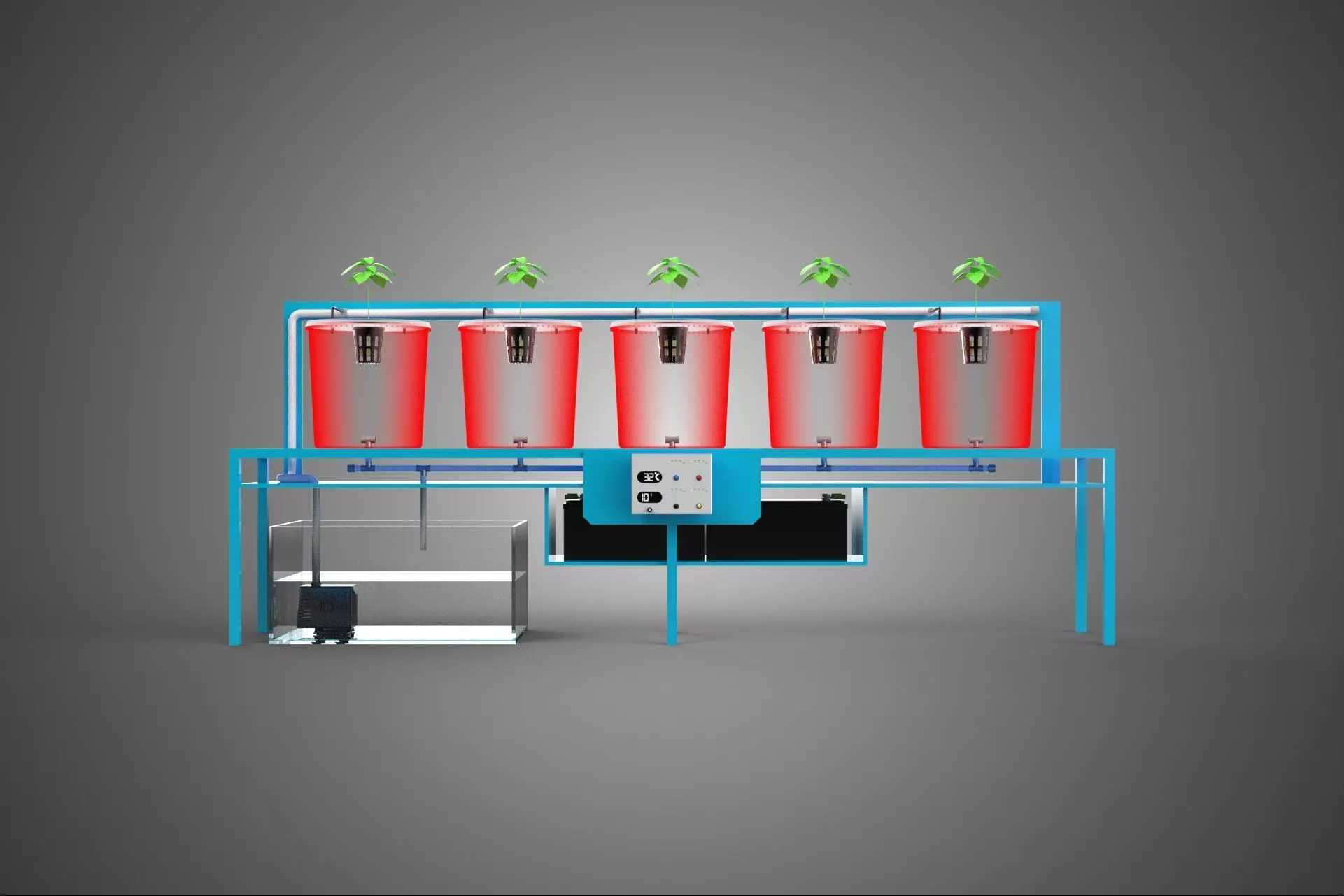
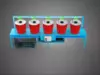
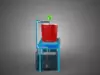
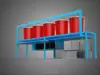
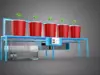
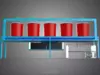
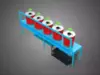
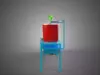
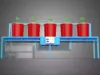
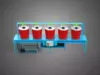
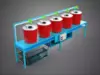
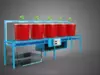
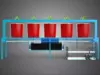
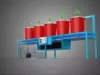
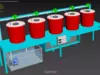
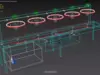
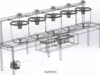
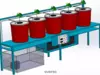
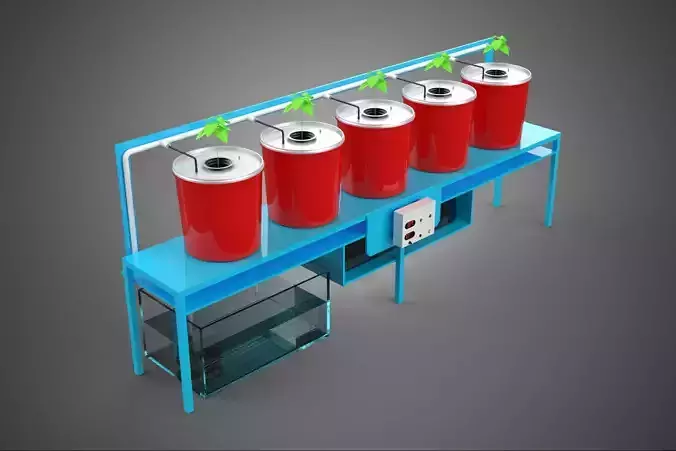
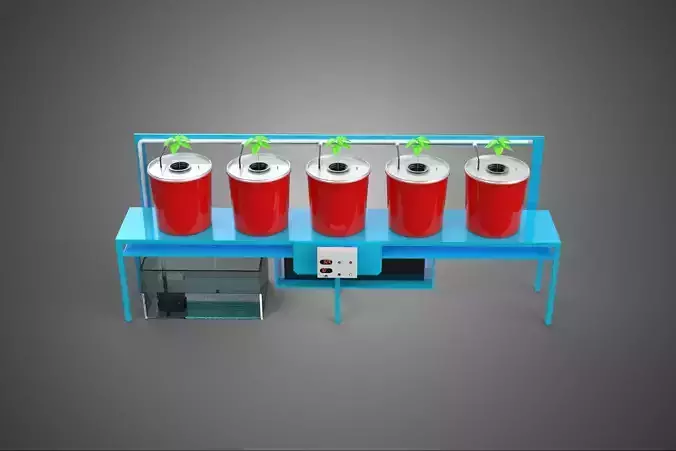
The IOT Controlled Hydroponic Water Nutrient Delivery Dutch Bucket system is a highly automated and optimized method of soilless culture that integrates the principles of recirculating hydroponics with advanced sensor-driven Internet of Things (IoT) technology. This system utilizes the Dutch Bucket (also known as the Bato Bucket) technique, a specialized form of drip irrigation, while employing computational oversight to maintain precise environmental parameters critical for plant growth and yield maximization.
System Definition and Architecture
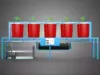
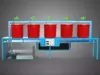
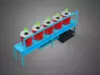
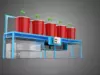
The core physical structure is the Dutch Bucket system, typically consisting of individual polypropylene containers arranged linearly and connected to a centralized reservoir. These buckets are filled with an inert growth medium (e.g., perlite, coco coir, rockwool) and are suitable for large, long-term fruiting or vining crops, such as tomatoes, peppers, cucumbers, and larger flowers.
Nutrient delivery occurs via a main water line that feeds individual drip emitters situated above each bucket. The system is designed for recirculation: excess nutrient solution, after passing through the substrate, drains from the bottom of the bucket via a common return line back to the main reservoir. This closed-loop design conserves water and nutrients, enhancing Water Use Efficiency (WUE).
Integration of IoT Control
The transition from a standard Dutch Bucket setup to an IoT-controlled system involves the incorporation of networked sensors, microcontrollers, and electromechanical actuators. The objective of this control layer is to establish a continuous feedback loop, ensuring that the nutrient solution remains within predefined optimal ranges.
1. Sensor Array and Data Acquisition:
The system relies on real-time measurement of key solution parameters, usually located within the primary reservoir or the feed line:
- Electrical Conductivity (EC) or Total Dissolved Solids (TDS): Measures the concentration of dissolved mineral salts (nutrients).
- pH: Measures the acidity or alkalinity of the solution, which directly affects nutrient availability and uptake kinetics.
- Temperature: Measures the water temperature, influencing dissolved oxygen levels and root health.
Data from these sensors are continuously sampled by a central processing unit (CPU), typically a dedicated microcontroller (e.g., Arduino, ESP32, Raspberry Pi) that digitizes the analog inputs.
2. Network Connectivity and Processing:
The microcontroller processes the raw sensor data and uses embedded logic to determine the necessity for intervention. Via integrated communication modules (Wi-Fi, Ethernet, or cellular), this data is transmitted using standard IoT protocols (such as MQTT or HTTP) to a local server or a cloud-based data platform. This connectivity allows for:
- Remote Monitoring: Operators can view real-time status, historical data logs, and system alerts from any location.
- Algorithm Adjustments: Set points (target EC, pH, duration of irrigation cycles) can be adjusted remotely.
- Predictive Analytics: Collected data can be used for modeling plant growth trajectories and optimizing future nutrient profiles.
3. Actuation and Nutrient Dosing:
When the processed sensor data indicates a deviation from the established set points, the system executes automated corrective actions utilizing electromechanical actuators:
- Nutrient Dosing: Peristaltic or diaphragm pumps inject highly concentrated stock solutions (typically A and B macro/micro-nutrient formulations) into the reservoir to increase the EC.
- pH Correction: Dedicated pumps inject precise volumes of pH Up (base) or pH Down (acid) solutions to stabilize the hydrogen ion concentration.
- Irrigation Control: Solenoid valves manage the duration and frequency of nutrient delivery cycles based on time, light intensity (DLI), or substrate moisture levels.
### Operational Advantages
The automation provided by the IoT control system elevates the Dutch Bucket method from a manual or semi-automated process to a high-precision cultivation platform. Key advantages include minimizing human error, facilitating dynamic environmental response, maximizing yield consistency, and significantly optimizing resource utilization, particularly reducing water wastage through high-resolution data logging and precise dosing mechanisms.
KEYWORDS: Hydroponics, IoT, Dutch Bucket, Bato Bucket, Recirculating System, Nutrient Delivery, Precision Agriculture, Automation, Sensor Technology, Electrical Conductivity, pH Monitoring, Water Management, Fertigation, Peristaltic Pump, Microcontroller, Remote Monitoring, Soilless Culture, Crop Optimization, Closed-Loop System, Actuator, Dosing System, Smart Farming, Data Logging, Agriculture Technology, Water Use Efficiency, Crop Yield, Digital Farming, Substrate Culture, Solenoid Valve, Plant Physiology.