High-quality 3D assets at affordable prices — trusted by designers, engineers, and creators worldwide. Made with care to be versatile, accessible, and ready for your pipeline.
Included File Formats
This model is provided in 14 widely supported formats, ensuring maximum compatibility:
• - FBX (.fbx) – Standard format for most 3D software and pipelines
• - OBJ + MTL (.obj, .mtl) – Wavefront format, widely used and compatible
• - STL (.stl) – Exported mesh geometry; may be suitable for 3D printing with adjustments
• - STEP (.step, .stp) – CAD format using NURBS surfaces
• - IGES (.iges, .igs) – Common format for CAD/CAM and engineering workflows (NURBS)
• - SAT (.sat) – ACIS solid model format (NURBS)
• - DAE (.dae) – Collada format for 3D applications and animations
• - glTF (.glb) – Modern, lightweight format for web, AR, and real-time engines
• - 3DS (.3ds) – Legacy format with broad software support
• - 3ds Max (.max) – Provided for 3ds Max users
• - Blender (.blend) – Provided for Blender users
• - SketchUp (.skp) – Compatible with all SketchUp versions
• - AutoCAD (.dwg) – Suitable for technical and architectural workflows
• - Rhino (.3dm) – Provided for Rhino users
Model Info
• - All files are checked and tested for integrity and correct content
• - Geometry uses real-world scale; model resolution varies depending on the product (high or low poly)
• • - Scene setup and mesh structure may vary depending on model complexity
• - Rendered using Luxion KeyShot
• - Affordable price with professional detailing
Buy with confidence. Quality and compatibility guaranteed.
If you have any questions about the file formats, feel free to send us a message — we're happy to assist you!
Sincerely,
SURF3D
Trusted source for professional and affordable 3D models.
More Information About 3D Model :
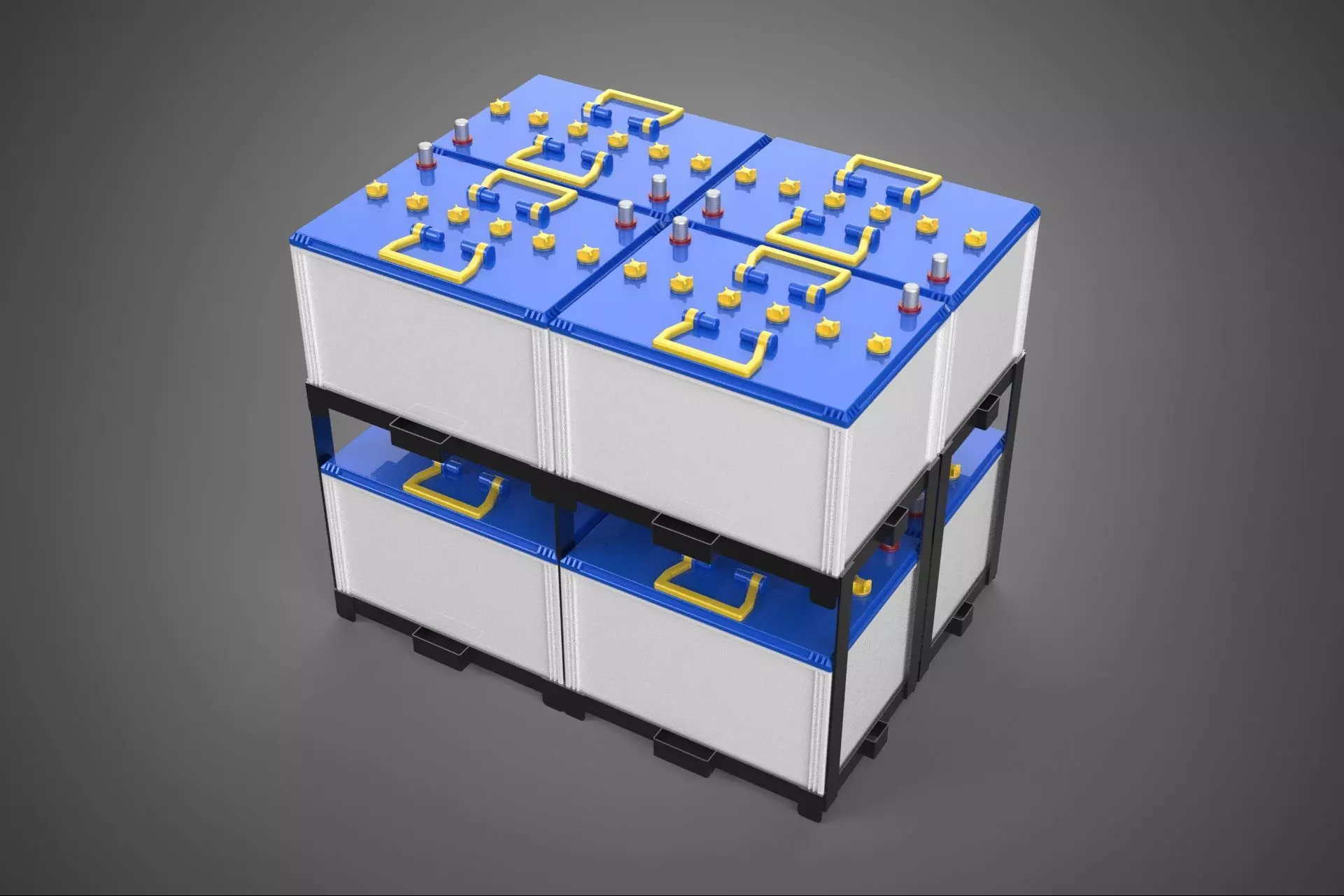
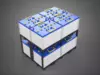
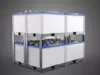
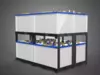
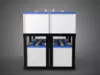
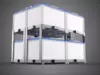
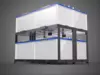
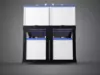
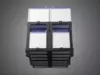
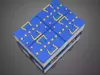
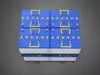
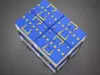
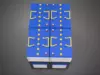
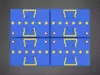
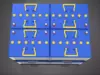
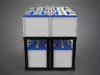
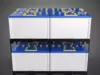
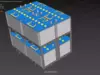
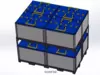
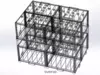
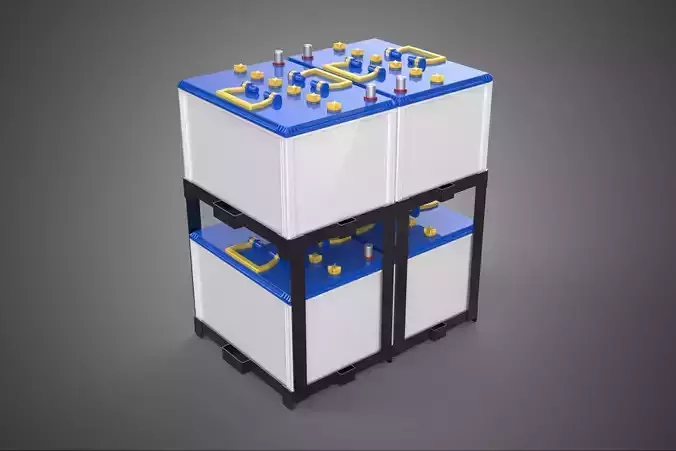
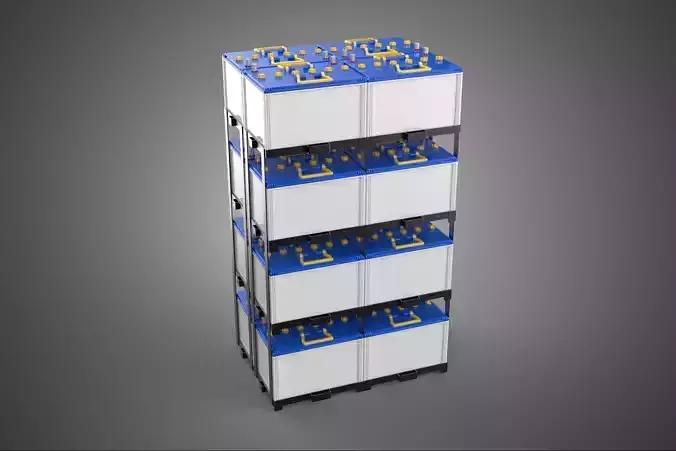
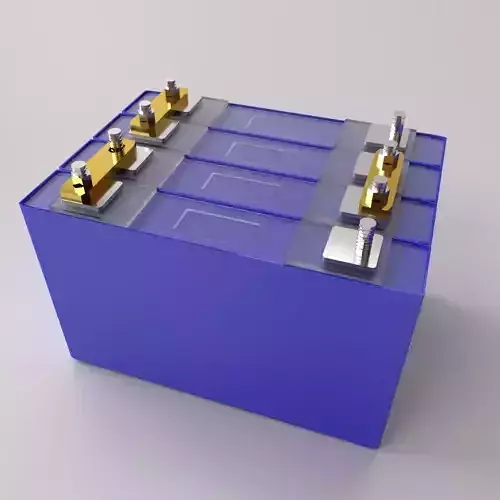
The term ARRAY SERIES PARALLEL ACCU BATTERY STACK TRAY RACK BRACKET MOUNT describes a comprehensive, integrated structural and electrical system utilized for the construction and deployment of large-scale, high-density energy storage solutions (ESS). This system encompasses the methodology of interconnecting individual accumulator (Accu) battery cells or modules (electrical configuration) and the mechanical infrastructure necessary to support, organize, manage, and protect these units (physical configuration).
Electrical Configuration: Array, Series, and Parallel Interconnection
The electrical performance of the system is determined by how the individual battery units—typically based on lead-acid, Nickel-Cadmium, or modern lithium-ion chemistries—are interconnected to form a unified array.
- Series Connection: Units are linked positive-to-negative, resulting in a summation of individual unit voltages ($V_{total} = \sum V_{unit}$) while maintaining the lowest current capacity (Ah) of the units in the chain. This configuration is employed to achieve the high operating voltages required for applications such as grid-scale storage or high-power industrial drives.
- Parallel Connection: Units are linked positive-to-positive and negative-to-negative, resulting in a summation of individual current capacities ($Ah_{total} = \sum Ah_{unit}$) while maintaining the voltage of a single unit. This configuration is employed to increase the total energy storage capacity and current delivery capability of the system.
- Array: The system utilizes a combined series-parallel arrangement (a matrix array) to simultaneously optimize both the terminal voltage and the total amp-hour capacity required to meet specific load profiles. Complex arrays necessitate sophisticated Battery Management Systems (BMS) to ensure charge equalization, monitor state-of-charge (SoC), and prevent imbalances between parallel strings.
### Mechanical Infrastructure: Mount, Bracket, Tray, Stack, and Rack
The physical infrastructure ensures the safety, thermal management, accessibility, and scalability required for handling dense, heavy, and potentially hazardous energy sources.
- Mounts and Brackets: These are the foundational fixtures responsible for securing individual cells or modules. Brackets ensure precise spacing, provide vibration damping, and anchor modules rigidly to the chassis, crucial for mitigating seismic or impact stress.
- Trays and Stacks: A tray serves as a modular containment unit, housing a sub-group of batteries (e.g., one parallel string or one series block). These trays facilitate ease of installation, replacement, and servicing. Trays are then organized into vertical stacks within the rack structure. The design of the tray often incorporates channels or gaps crucial for forced or passive airflow necessary for thermal dissipation.
- Racks: The rack is the primary load-bearing enclosure, often constructed of reinforced metal (steel or aluminum) to withstand the significant weight of the batteries. Racks are typically standardized (e.g., 19-inch rack format) to facilitate integration into telecommunication rooms, data centers, or utility substations. Racks provide physical security, define the overall volumetric energy density, and often integrate environmental controls, fire suppression systems, and main electrical bus bars.
### System Function and Significance
This highly structured system is mandatory for modern critical applications where system reliability and ease of maintenance are paramount, including uninterruptible power supplies (UPS), renewable energy integration (solar and wind farms), utility peak shaving, and electric vehicle charging infrastructure. The standardized, modular design enables rapid scalability and maximizes volumetric efficiency while strictly adhering to safety standards regarding thermal management, shock hazard protection, and structural integrity.
KEYWORDS: Energy Storage System, ESS, Battery Management System, BMS, Accumulator, Module, Series Connection, Parallel Array, Load Profile, Volumetric Density, Power Density, Rack Mount, Stack Structure, Battery Tray, Seismic Rating, Thermal Dissipation, Current Capacity, System Voltage, Charge Equalization, Lithium-ion, Grid Storage, UPS System, Standardization, Containment, Structural Integrity, Interconnection, Electrical Bus, Modular Design, High Current, Fire Suppression.