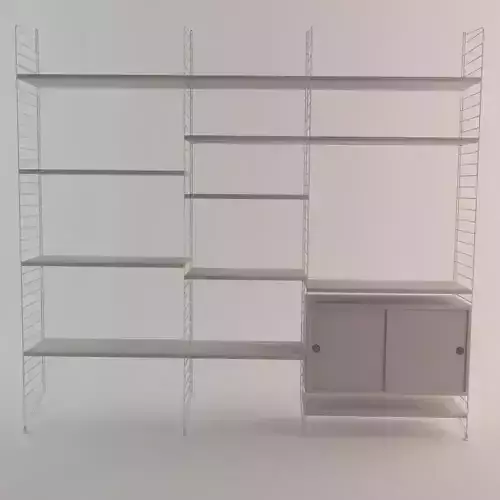
High-quality 3D assets at affordable prices — trusted by designers, engineers, and creators worldwide. Made with care to be versatile, accessible, and ready for your pipeline.
Included File Formats
This model is provided in 14 widely supported formats, ensuring maximum compatibility:
• - FBX (.fbx) – Standard format for most 3D software and pipelines
• - OBJ + MTL (.obj, .mtl) – Wavefront format, widely used and compatible
• - STL (.stl) – Exported mesh geometry; may be suitable for 3D printing with adjustments
• - STEP (.step, .stp) – CAD format using NURBS surfaces
• - IGES (.iges, .igs) – Common format for CAD/CAM and engineering workflows (NURBS)
• - SAT (.sat) – ACIS solid model format (NURBS)
• - DAE (.dae) – Collada format for 3D applications and animations
• - glTF (.glb) – Modern, lightweight format for web, AR, and real-time engines
• - 3DS (.3ds) – Legacy format with broad software support
• - 3ds Max (.max) – Provided for 3ds Max users
• - Blender (.blend) – Provided for Blender users
• - SketchUp (.skp) – Compatible with all SketchUp versions
• - AutoCAD (.dwg) – Suitable for technical and architectural workflows
• - Rhino (.3dm) – Provided for Rhino users
Model Info
• - All files are checked and tested for integrity and correct content
• - Geometry uses real-world scale; model resolution varies depending on the product (high or low poly)
• • - Scene setup and mesh structure may vary depending on model complexity
• - Rendered using Luxion KeyShot
• - Affordable price with professional detailing
Buy with confidence. Quality and compatibility guaranteed.
If you have any questions about the file formats, feel free to send us a message — we're happy to assist you!
Sincerely,
SURF3D
Trusted source for professional and affordable 3D models.
More Information About 3D Model :
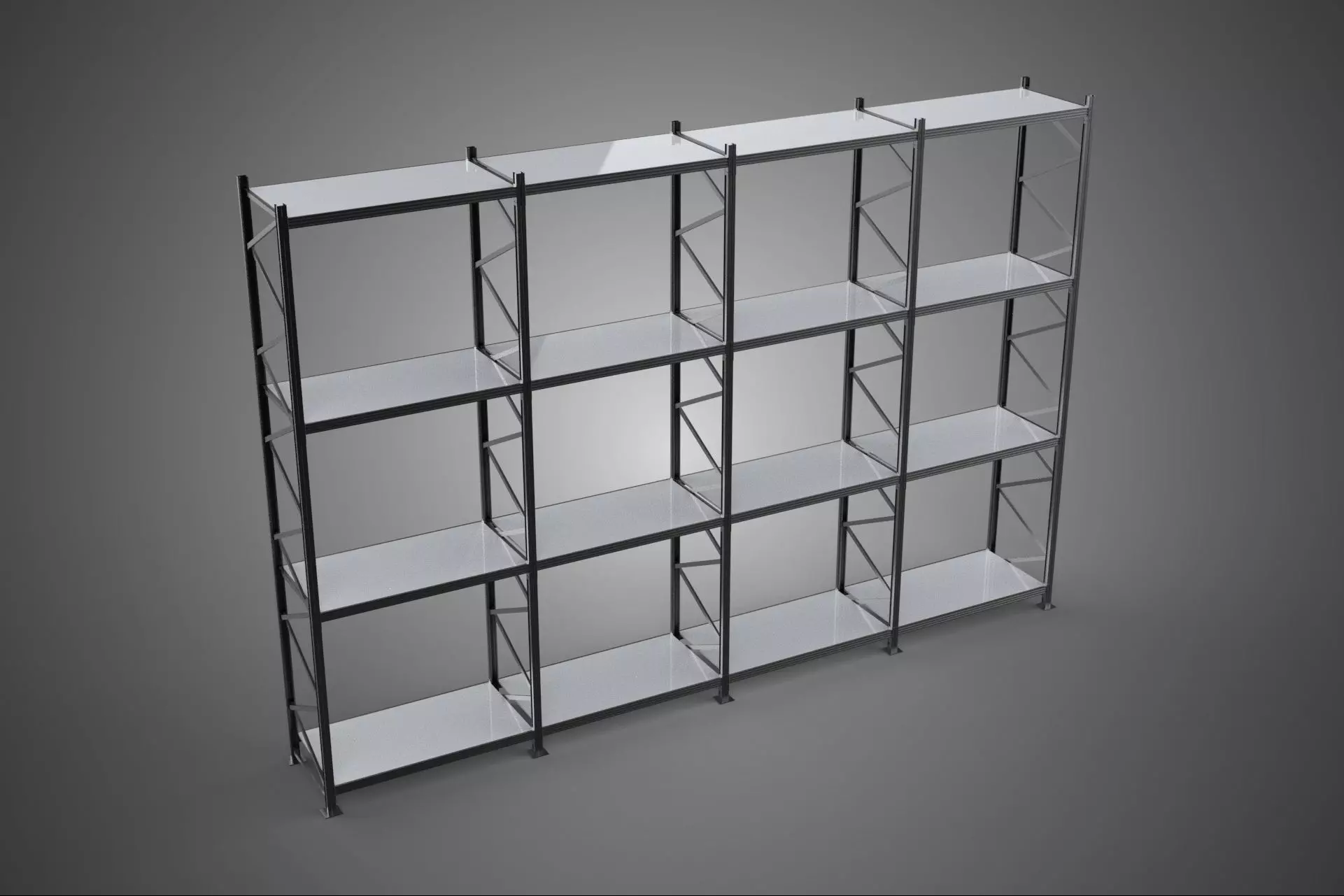
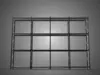
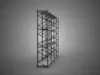
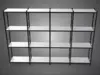
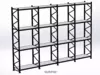
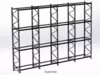
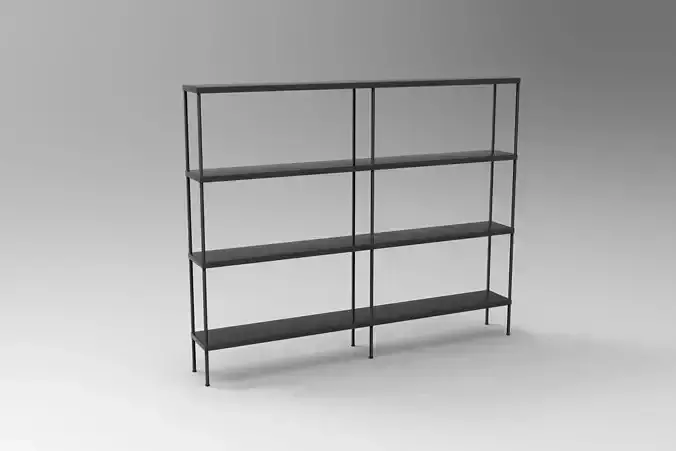
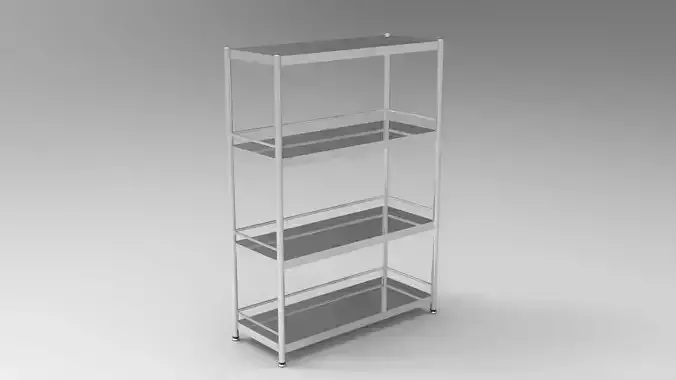
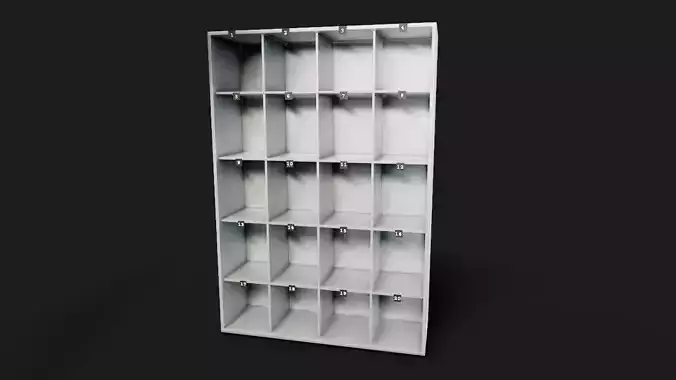
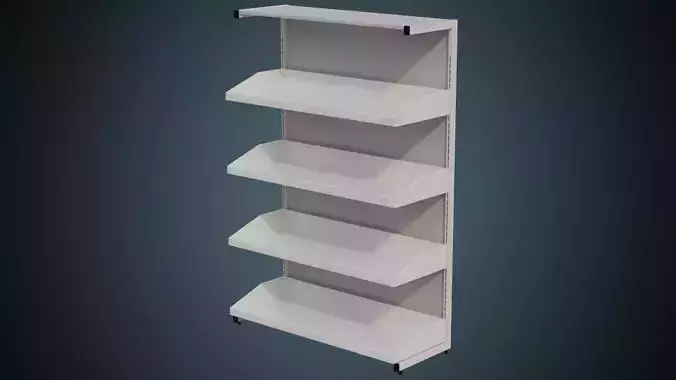
An Industrial Warehouse Metal Shelving Organized Storage Rack Shelf system represents a fundamental component of modern material handling and inventory management within industrial and commercial environments. These systems are specifically engineered to provide robust, efficient, and systematically organized storage solutions, primarily constructed from metal components, typically steel. Their design prioritizes maximizing vertical space utilization, enhancing operational efficiency, and ensuring the safety and accessibility of stored goods.
Purpose and Functionality:
The primary purpose of industrial metal shelving is to facilitate the systematic organization and retrieval of various items, ranging from individual components and tools to packaged goods and bulky materials, that are not typically stored on pallets. Unlike pallet racking, which is designed for palletized loads, industrial shelving is optimized for piece-picking or carton-picking operations. This organization directly contributes to improved inventory control, reduced search times, and streamlined workflow within warehouses, distribution centers, manufacturing facilities, and retail backrooms. By effectively utilizing the available vertical space, these systems significantly increase the storage density of a facility, deferring the need for facility expansion.
Core Components:
A typical industrial metal shelving system comprises several key structural elements:
- Upright Frames (Posts/Columns): These vertical supports form the backbone of the system. They are usually perforated along their length, allowing for the precise and flexible adjustment of shelf levels. Uprights are designed to bear the primary compressive loads.
- Horizontal Beams (Shelf Supports): These components connect the upright frames horizontally, forming the framework upon which the decking or shelves rest. Beams are crucial for defining shelf levels and distributing the load across the uprights. Their design varies to accommodate different load capacities and spans.
- Decking (Shelving Surfaces): This is the actual flat surface where items are placed. Common materials for decking include:
- Steel Panels: Solid or perforated, offering high strength and durability. Often used for heavy loads or when a solid surface is required to prevent items from falling through.
- Wire Mesh Decking: Provides good airflow, light penetration, and improved fire suppression system effectiveness. It also prevents small items from falling through while offering visibility.
- Engineered Wood Products: Such as particle board, MDF (medium-density fiberboard), or plywood, often used for lighter to medium loads, sometimes covered with steel for added durability.
- Bracing: Diagonal and/or horizontal braces are incorporated into the upright frames to provide lateral stability and rigidity, preventing sway and ensuring structural integrity, particularly under dynamic loading conditions.
- Base Plates: Attached to the bottom of the uprights, these plates distribute the load over a larger floor area and provide anchor points for securing the shelving system to the facility floor, enhancing stability and safety.
Materials and Construction:
The predominant material used in the construction of these shelving systems is high-grade steel. Steel is chosen for its superior tensile strength, rigidity, and durability, enabling it to withstand significant static and dynamic loads inherent in industrial environments. To prevent corrosion, extend service life, and improve aesthetics, steel components are commonly finished with powder coatings or galvanization. Powder coating offers a resilient finish available in various colors, while galvanization provides excellent corrosion resistance, especially in damp or humid conditions.
Key Features and Advantages:
- Modularity and Adjustability: Most systems feature boltless or clip-together designs, allowing for easy assembly, disassembly, and reconfiguration of shelf heights and bay widths to adapt to changing storage requirements.
- High Load Capacity: Engineered to support substantial weight per shelf level and per bay, making them suitable for heavy industrial applications.
- Space Optimization: Efficiently utilize vertical cubic space, reducing the footprint required for storage.
- Durability and Longevity: Robust construction ensures a long operational lifespan, even in demanding industrial settings.
- Improved Organization and Accessibility: Facilitate systematic storage, reducing clutter, improving inventory accuracy, and streamlining item retrieval processes.
- Enhanced Safety: Properly installed and maintained shelving systems contribute to a safer working environment by reducing trip hazards, preventing goods from falling, and ensuring structural stability.
Applications:
Industrial warehouse metal shelving finds ubiquitous application across various sectors, including:
- General warehousing and logistics centers.
- Manufacturing plants for storing raw materials, components, and finished goods.
- Automotive parts departments.
- Tool and die shops.
- Retail stockrooms and distribution hubs.
- Government and institutional archives.
Installation and Maintenance:
Proper installation, typically involving anchoring to the floor and adherence to manufacturer's specifications, is crucial for the stability and safety of the system. Regular inspections for signs of damage (e.g., bent beams, rust, loose connections), adherence to stated load capacities, and prompt repairs are essential for maintaining the integrity and safety of industrial shelving systems over their operational life.