High-quality 3D assets at affordable prices — trusted by designers, engineers, and creators worldwide. Made with care to be versatile, accessible, and ready for your pipeline.
Included File Formats
This model is provided in 14 widely supported formats, ensuring maximum compatibility:
• - FBX (.fbx) – Standard format for most 3D software and pipelines
• - OBJ + MTL (.obj, .mtl) – Wavefront format, widely used and compatible
• - STL (.stl) – Exported mesh geometry; may be suitable for 3D printing with adjustments
• - STEP (.step, .stp) – CAD format using NURBS surfaces
• - IGES (.iges, .igs) – Common format for CAD/CAM and engineering workflows (NURBS)
• - SAT (.sat) – ACIS solid model format (NURBS)
• - DAE (.dae) – Collada format for 3D applications and animations
• - glTF (.glb) – Modern, lightweight format for web, AR, and real-time engines
• - 3DS (.3ds) – Legacy format with broad software support
• - 3ds Max (.max) – Provided for 3ds Max users
• - Blender (.blend) – Provided for Blender users
• - SketchUp (.skp) – Compatible with all SketchUp versions
• - AutoCAD (.dwg) – Suitable for technical and architectural workflows
• - Rhino (.3dm) – Provided for Rhino users
Model Info
• - All files are checked and tested for integrity and correct content
• - Geometry uses real-world scale; model resolution varies depending on the product (high or low poly)
• • - Scene setup and mesh structure may vary depending on model complexity
• - Rendered using Luxion KeyShot
• - Affordable price with professional detailing
Buy with confidence. Quality and compatibility guaranteed.
If you have any questions about the file formats, feel free to send us a message — we're happy to assist you!
Sincerely,
SURF3D
Trusted source for professional and affordable 3D models.
More Information About 3D Model :
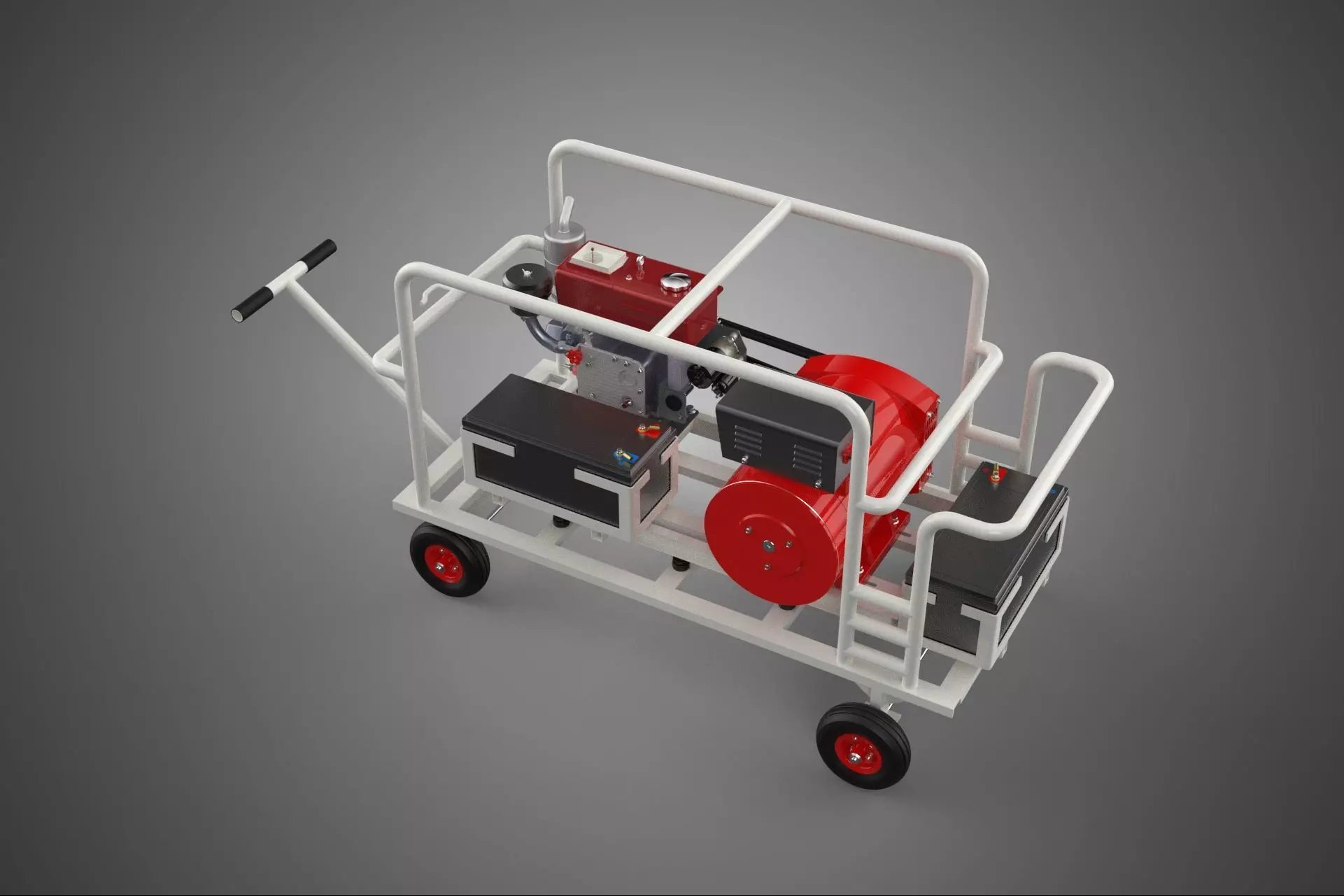
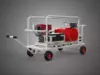
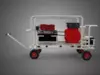
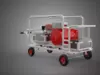
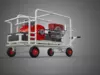
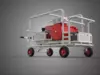
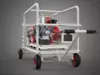
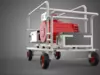
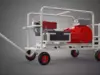
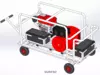
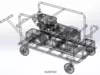
LARGE POWER BANK CHARGING STATION DIESEL GENERATOR SET GENSET KW
A Large Power Bank Charging Station powered by a Diesel Generator Set (Genset) is a specialized, autonomous system designed for the bulk replenishment of electrical energy into multiple high-capacity portable battery packs (power banks) in environments lacking reliable connection to an electrical grid. These apparatuses are characterized by their significant power output, rated typically in the tens or hundreds of Kilowatts (KW), classifying them as industrial or logistical assets rather than consumer equipment. The integration of a diesel genset ensures energy independence and sustained operational capacity in remote or emergency scenarios.
Architecture and Components
The system is fundamentally composed of three integrated subsystems:
- The Diesel Generator Set (Genset): This serves as the primary power source. It consists of a robust compression-ignition (diesel) engine coupled to an electrical alternator. The engine converts chemical energy from diesel fuel into mechanical rotational energy, which the alternator then converts into AC electrical power (typically high-voltage three-phase). Modern gensets incorporate electronic governing systems to maintain stable frequency and voltage output critical for subsequent power conditioning.
- The Power Conditioning and Distribution Unit (PCDU): This is the core charging infrastructure. The raw AC power from the genset is unsuitable for direct battery charging and must be conditioned. The PCDU utilizes advanced power electronics, including rectifiers and DC-DC converters, to transform the AC input into the precise DC voltages and currents required by the diverse lithium-ion or other battery chemistries in the power banks. This unit typically features numerous segregated charging bays or ports, each equipped with its own charging profile management system (e.g., Constant Current/Constant Voltage, or CC/CV).
- Control, Monitoring, and Safety Systems: These systems govern the entire operation. They monitor the Genset's status (fuel level, engine temperature, oil pressure), manage the State of Charge (SoC) and health of the connected power banks, optimize charging throughput based on available Genset load, and ensure critical safety parameters, including thermal management, short-circuit protection, and load shedding capabilities.
### Operational Methodology
The operational sequence begins with the activation of the diesel Genset, which provides the baseline electrical input. The PCDU then draws power, converting it into regulated DC outputs suitable for the connected power banks. Unlike conventional trickle chargers, these high-capacity stations employ intelligent charging algorithms to maximize efficiency and minimize the charge time for large fleets of batteries while safeguarding battery longevity.
Efficiency is a critical design consideration. The overall system efficiency ($\eta_{sys}$) is a product of the Genset efficiency (fuel-to-AC power) and the power electronics conversion efficiency (AC-to-DC charging output). Designers often prioritize optimizing the Genset's running load to match its peak efficiency point, thus minimizing fuel consumption per kilowatt-hour delivered.
### Applications and Deployment
Large power bank charging stations are crucial in applications demanding immediate, sustained access to portable power sources where conventional refueling logistics are complex:
- Disaster Relief and Humanitarian Aid: Providing energy for communications equipment, lighting, and medical devices in areas with collapsed infrastructure.
- Military and Defense Logistics: Ensuring battery readiness for field communications, surveillance drones, and electronic warfare systems.
- Remote Industrial Operations: Supporting high-power cordless tools, robotic systems, and temporary site lighting in mining, construction, or offshore exploration.
- Large-Scale Events: Powering communication hubs or vendor systems at temporary outdoor festivals or concerts.
To facilitate rapid deployment and protection from harsh environments, these systems are frequently integrated into rugged, weatherized enclosures, often utilizing standard ISO shipping container dimensions for ease of transport via road, rail, or sea.
KEYWORDS: Diesel generator, Genset, Power Bank, Charging Station, Off-grid, Mobile power, Energy storage, Battery fleet, Kilowatt, KW, PCDU, Power conditioning, Industrial charging, Remote logistics, Disaster relief, Field deployment, Containerized solution, Fuel efficiency, Rectification, DC-DC converter, Lithium-ion, CC/CV profile, Autonomous power, Microgrid, Temporary power, High-capacity, Engine governance, Grid independence, Load management, Telemetry.