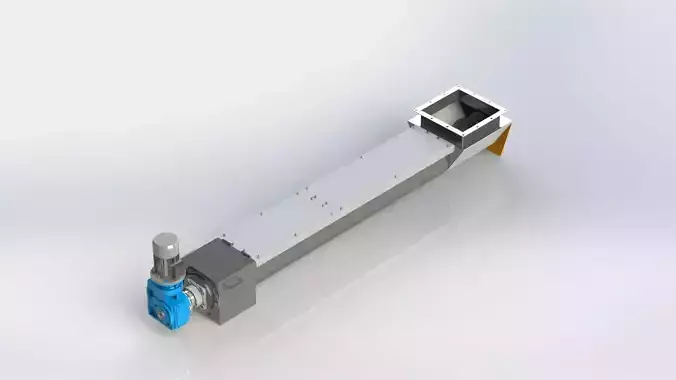
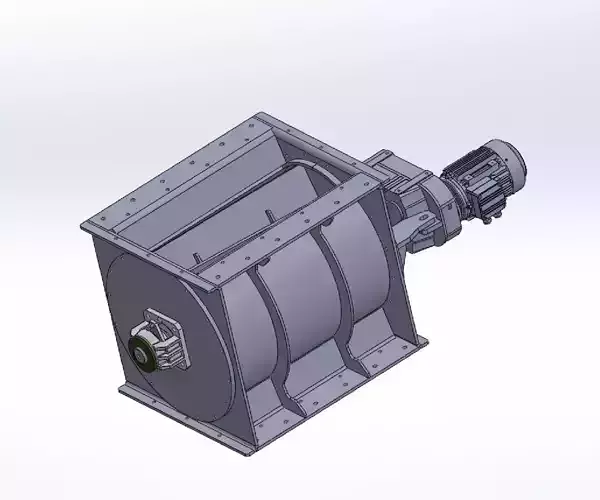
High-quality 3D assets at affordable prices — trusted by designers, engineers, and creators worldwide. Made with care to be versatile, accessible, and ready for your pipeline.
Included File Formats
This model is provided in 14 widely supported formats, ensuring maximum compatibility:
• - FBX (.fbx) – Standard format for most 3D software and pipelines
• - OBJ + MTL (.obj, .mtl) – Wavefront format, widely used and compatible
• - STL (.stl) – Exported mesh geometry; may be suitable for 3D printing with adjustments
• - STEP (.step, .stp) – CAD format using NURBS surfaces
• - IGES (.iges, .igs) – Common format for CAD/CAM and engineering workflows (NURBS)
• - SAT (.sat) – ACIS solid model format (NURBS)
• - DAE (.dae) – Collada format for 3D applications and animations
• - glTF (.glb) – Modern, lightweight format for web, AR, and real-time engines
• - 3DS (.3ds) – Legacy format with broad software support
• - 3ds Max (.max) – Provided for 3ds Max users
• - Blender (.blend) – Provided for Blender users
• - SketchUp (.skp) – Compatible with all SketchUp versions
• - AutoCAD (.dwg) – Suitable for technical and architectural workflows
• - Rhino (.3dm) – Provided for Rhino users
Model Info
• - All files are checked and tested for integrity and correct content
• - Geometry uses real-world scale; model resolution varies depending on the product (high or low poly)
• • - Scene setup and mesh structure may vary depending on model complexity
• - Rendered using Luxion KeyShot
• - Affordable price with professional detailing
Buy with confidence. Quality and compatibility guaranteed.
If you have any questions about the file formats, feel free to send us a message — we're happy to assist you!
Sincerely,
SURF3D
Trusted source for professional and affordable 3D models.
More Information About 3D Model :
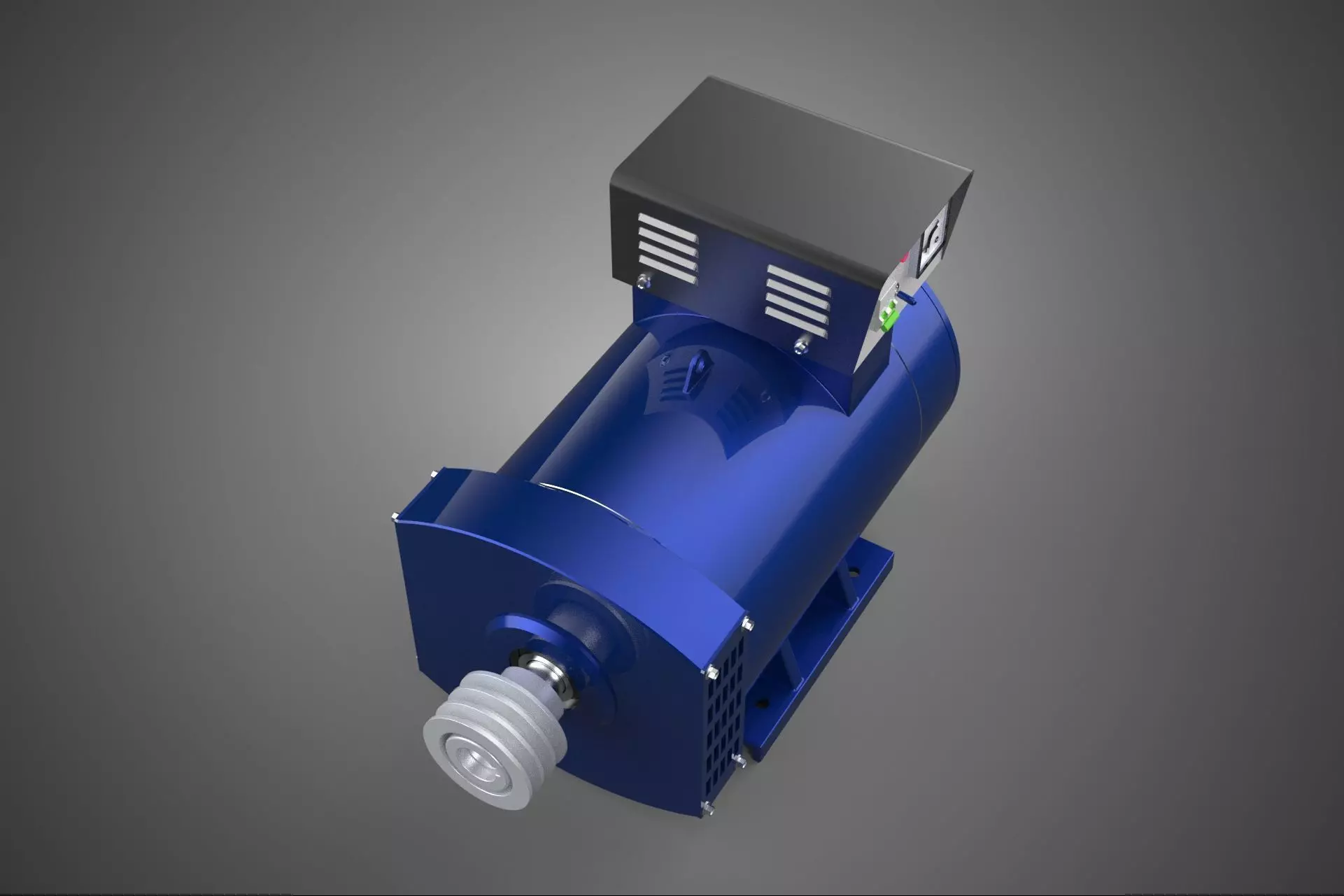
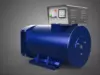
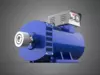
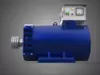
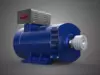
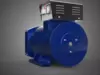
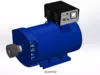
The device described is a heavy-duty electromechanical rotating machine designed for highly demanding power conversion applications. It functions interchangeably or selectively as an electrical generator, an alternator (producing alternating current), a dynamo (producing direct current, typically via commutation), or an electric motor (converting electrical energy into mechanical torque). The multi-functional nomenclature indicates a robust unit intended for environments requiring bidirectional energy conversion or specialized output characteristics.
Functional Specifications and Nomenclature
The machine operates based on the principle of electromagnetic induction, utilizing a precisely engineered Stator-Rotor assembly.
- Alternator/Generator: When driven mechanically, the machine induces voltage and current in its windings. The term Alternator specifically refers to AC power production, which is typical for modern systems and is often internally rectified to provide DC output for battery charging or vehicle systems. Generator is the broader term encompassing all such electricity-producing machines.
- Dynamo: Historically, this term is reserved for DC generators utilizing a commutator to continuously reverse the current flow in the rotor windings, thereby ensuring a unidirectional external current flow.
- Motor: When supplied with electrical current (AC or DC, depending on design), the device produces rotational kinetic energy, operating typically as a shunt-wound DC motor or an induction AC motor, depending on the operational context (e.g., starting aid or auxiliary drive).
### Physical and Electrical Characteristics
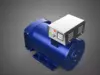
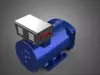
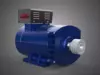
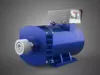
The designation BLUE refers to the durable external finish, typically a powder coating or enamel paint applied to the housing (casing). This protective layer serves multiple purposes: corrosion resistance, insulation against environmental contaminants (moisture, dust), and high-visibility identification.
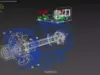
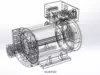
The internal structure involves heavy gauge copper wire windings, a laminated steel core to minimize eddy current losses, and high-quality, sealed ball bearings designed for high rotational speeds and extended duty cycles. Given the expected power handling, the machine likely utilizes an efficient forced-air or fan-assisted cooling system integrated into the enclosure.
Standard operational voltages vary, but such heavy-duty industrial units often operate at 12V/24V DC (for vehicular/marine systems) or industrial standard AC voltages (e.g., 208V, 480V) when integrated into stationary power plants.
### Mechanical Interface: The 3-Track Sheave
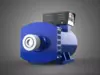
The machine’s mechanical coupling mechanism is defined by the SHEAVE 3 TRACK. A sheave, or pulley wheel, is affixed to the rotor shaft, designed explicitly to accept three parallel V-belts.
This 3-track configuration is a critical engineering feature indicating a requirement for substantial mechanical power transfer. Utilizing multiple belts distributes the load, significantly increasing the total torque transmission capacity compared to a single or dual-belt system. This configuration ensures:
- High Horsepower Transfer: Necessary for driving the machine efficiently when operating as a generator under full electrical load, or conversely, for applying maximal torque when operating as a motor.
- Load Distribution and Durability: Minimizes slippage, reduces stress on individual belts, and increases the overall reliability and lifespan of the drive system.
- Vibration Dampening: The V-belt system inherently provides a degree of shock absorption between the prime mover (e.g., engine) and the electrical machine.
Such robust mechanical coupling is requisite for continuous operation in high-demand fields like heavy construction equipment, industrial machinery, marine propulsion systems, and large stationary backup power units where consistent, high power output is mandatory.
KEYWORDS: Electromechanical, Transducer, Alternator, Dynamo, Generator, Motor, Sheave, Pulley, V-Belt, Triple-Track, High-Duty Cycle, Industrial, Vehicular, Power Conversion, Electrical Machine, Rotor, Stator, Commutator, Rectification, DC Power, AC Power, Torque, Horsepower, Electromagnetic Induction, Heavy-Duty, Enclosure, Blue Finish, Marine Application, Auxiliary Power, Laminated Core.