High-quality 3D assets at affordable prices — trusted by designers, engineers, and creators worldwide. Made with care to be versatile, accessible, and ready for your pipeline.
Included File Formats
This model is provided in 14 widely supported formats, ensuring maximum compatibility:
• - FBX (.fbx) – Standard format for most 3D software and pipelines
• - OBJ + MTL (.obj, .mtl) – Wavefront format, widely used and compatible
• - STL (.stl) – Exported mesh geometry; may be suitable for 3D printing with adjustments
• - STEP (.step, .stp) – CAD format using NURBS surfaces
• - IGES (.iges, .igs) – Common format for CAD/CAM and engineering workflows (NURBS)
• - SAT (.sat) – ACIS solid model format (NURBS)
• - DAE (.dae) – Collada format for 3D applications and animations
• - glTF (.glb) – Modern, lightweight format for web, AR, and real-time engines
• - 3DS (.3ds) – Legacy format with broad software support
• - 3ds Max (.max) – Provided for 3ds Max users
• - Blender (.blend) – Provided for Blender users
• - SketchUp (.skp) – Compatible with all SketchUp versions
• - AutoCAD (.dwg) – Suitable for technical and architectural workflows
• - Rhino (.3dm) – Provided for Rhino users
Model Info
• - All files are checked and tested for integrity and correct content
• - Geometry uses real-world scale; model resolution varies depending on the product (high or low poly)
• • - Scene setup and mesh structure may vary depending on model complexity
• - Rendered using Luxion KeyShot
• - Affordable price with professional detailing
Buy with confidence. Quality and compatibility guaranteed.
If you have any questions about the file formats, feel free to send us a message — we're happy to assist you!
Sincerely,
SURF3D
Trusted source for professional and affordable 3D models.
More Information About 3D Model :
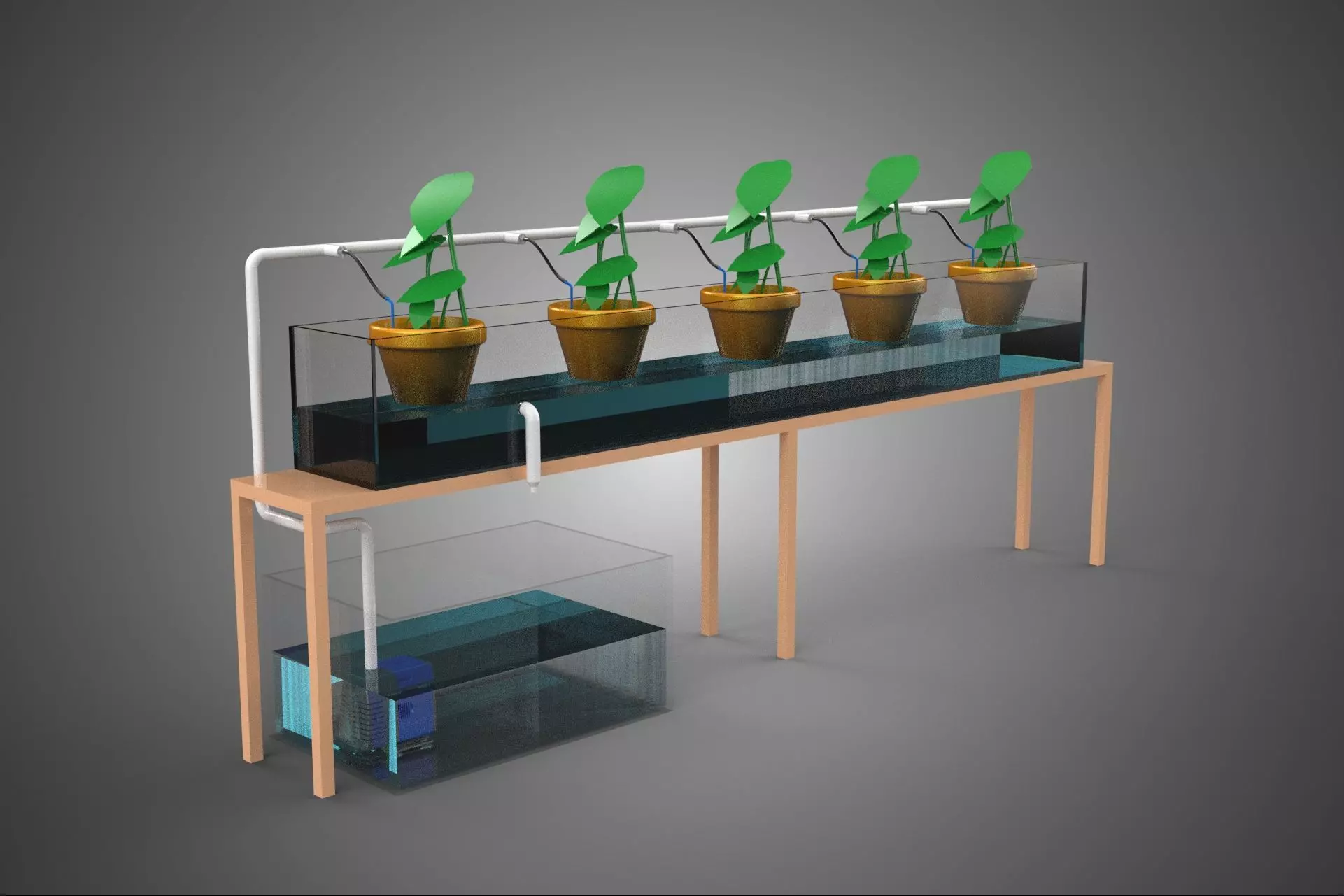
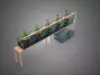
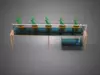
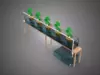
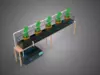
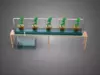
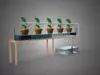
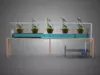
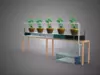
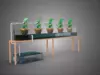
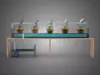
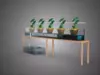
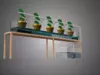
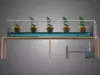
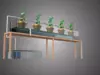
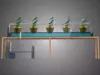
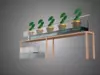
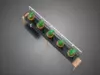
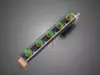
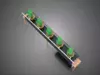
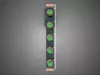
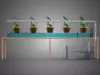
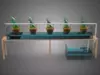
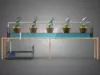
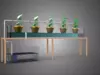
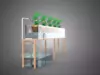
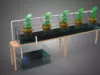
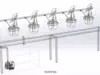
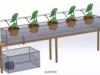
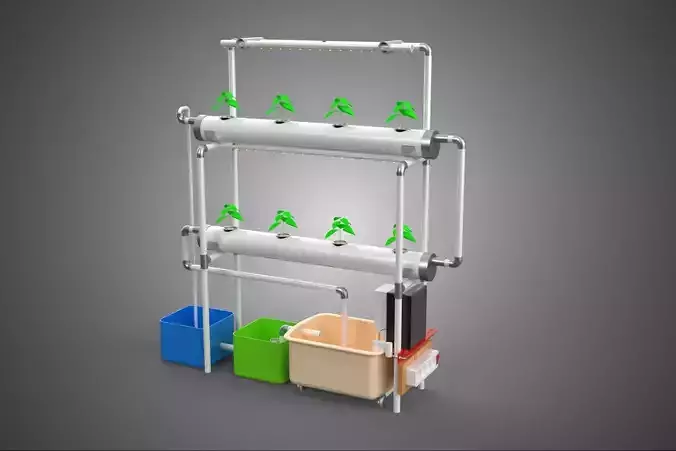
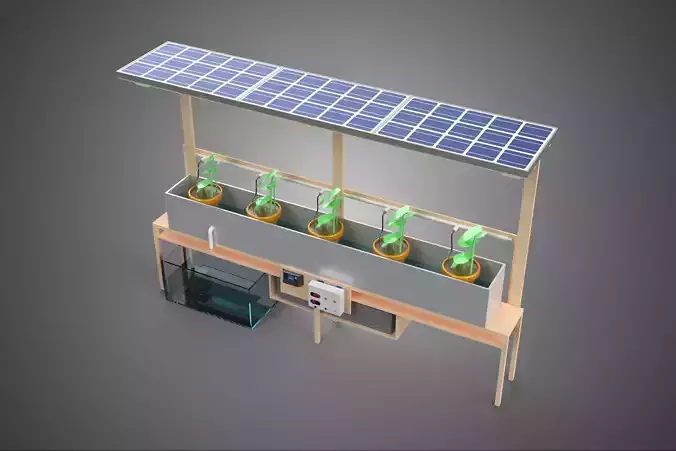
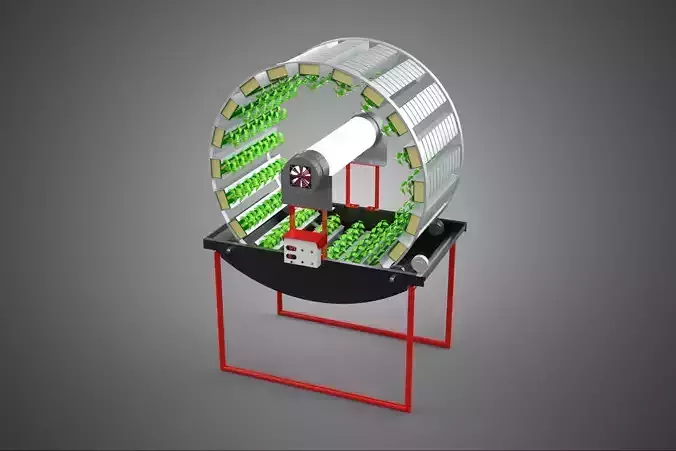
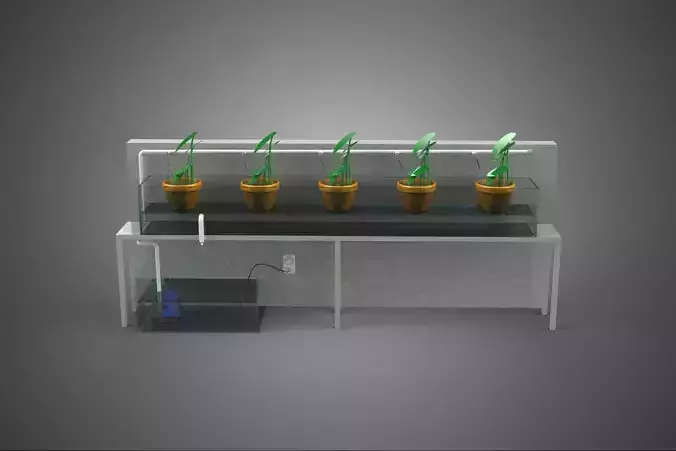
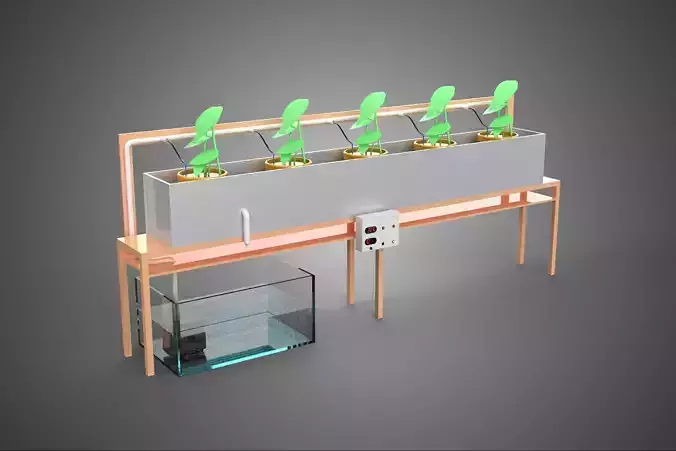
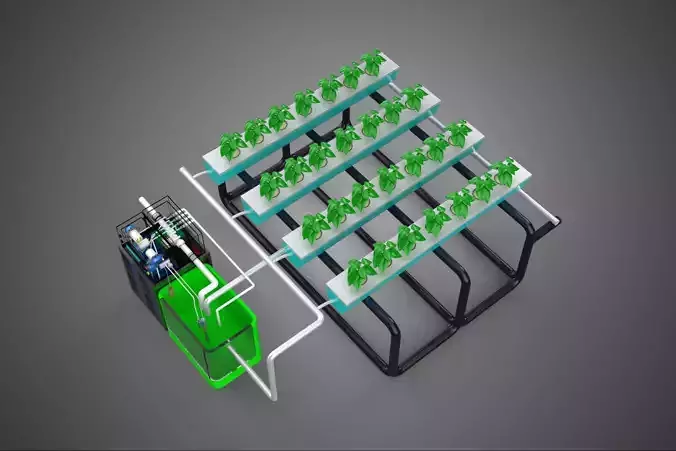
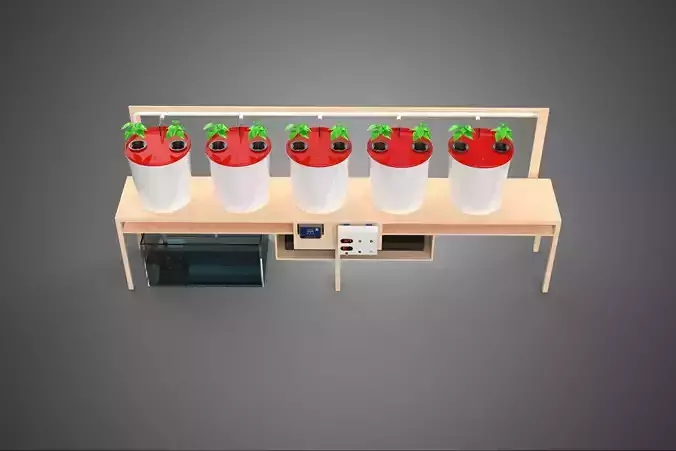
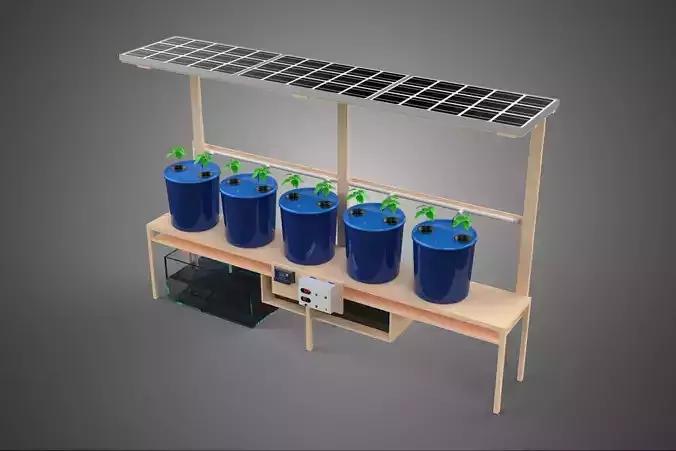
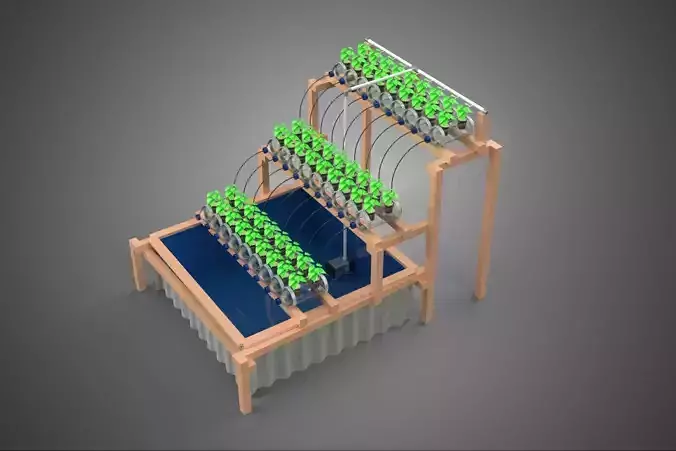
The integrated approach of Hydroponic Growth Plant Farming utilizing Drip Irrigation Systems for Gardening represents an advanced and highly efficient method of cultivating plants. This sophisticated horticultural practice combines the principles of soilless culture (hydroponics) with the precise water and nutrient delivery capabilities of drip irrigation, offering significant advantages in controlled environment agriculture, commercial farming, and modern gardening applications.
Hydroponics, derived from the Greek words 'hydro' (water) and 'ponos' (labor), is a method of growing plants in mineral nutrient solutions, in water, without soil. Instead of soil, inert growing media such as rockwool, coco coir, perlite, or clay pebbles may be used to provide structural support for the plant roots. The fundamental principle involves supplying all necessary macro- and micronutrients directly to the plant's root zone via a precisely formulated aqueous solution. This system allows for optimized nutrient uptake, significantly reduced water usage compared to traditional agriculture, and often results in accelerated growth rates and higher yields due to the direct availability of resources.
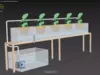
Drip irrigation, also known as trickle irrigation or micro-irrigation, is an agricultural method that delivers water and dissolved nutrients directly to the plant's root zone, one drop at a time. Within a hydroponic context, a typical drip irrigation system comprises several key components: a reservoir to hold the recirculating or single-pass nutrient solution, a pump to circulate the solution, a filtration unit to prevent clogging of emitters, main lines and sub-main lines to transport the solution, and a network of smaller lateral lines fitted with emitters (drippers or micro-sprayers) that release the solution precisely at the base of each plant. This localized and slow application minimizes evaporation, surface runoff, and deep percolation losses, ensuring that moisture and nutrients are absorbed efficiently by the plant roots while preventing oversaturation of the growing medium.
The synergy between hydroponics and drip irrigation is particularly effective. In a hydroponic drip system, the nutrient solution is periodically pumped from a reservoir, filtered, and then delivered directly to the base of each plant via emitters. Excess solution may be collected and recirculated (closed loop system) or allowed to drain (open or run-to-waste system). This integration facilitates:
- Optimized Nutrient Delivery: Nutrients are precisely measured and delivered, preventing waste and ensuring consistent availability to the plant roots, which is critical in soilless environments.
- Superior Water Conservation: By delivering water directly to the root zone with minimal loss, these systems can reduce water usage by up to 90% compared to conventional field farming methods.
- Reduced Disease and Pest Incidence: The absence of soil and the controlled environment inherently minimize the presence of soil-borne pathogens, weeds, and many common pests.
- Enhanced Root Zone Oxygenation: Precise irrigation cycles can be timed to allow for periods of drainage and air exchange around the roots, which is crucial for preventing anaerobic conditions and promoting healthy root development in inert media.
- High Automation Potential: These systems are highly amenable to automation through timers, sensors, and sophisticated environmental control units, enabling precise regulation of irrigation schedules, nutrient concentrations, pH levels, and environmental parameters such as temperature and humidity.
This combined methodology is widely applied across various scales:
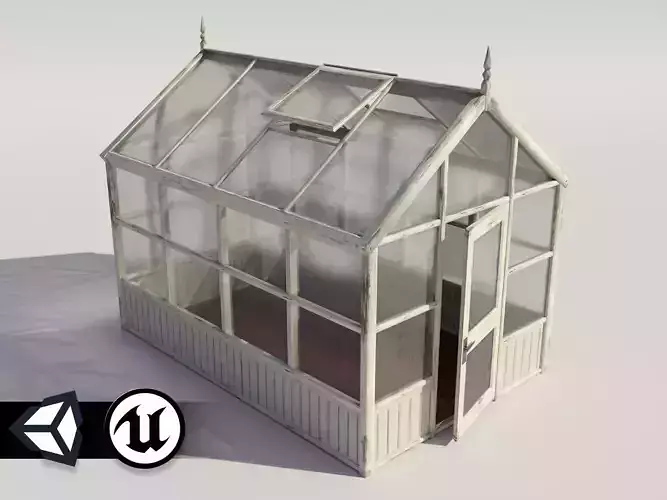
- Commercial Plant Farming: Large-scale operations, including vertical farms and advanced greenhouses, utilize these systems for high-density cultivation of high-value crops such as leafy greens (e.g., lettuce, spinach, kale), herbs (e.g., basil, mint, cilantro), soft fruits (e.g., strawberries, raspberries), and various vegetables (e.g., tomatoes, peppers, cucumbers). This enables year-round production irrespective of external climate conditions.
- Urban Agriculture: Its space-saving and resource-efficient nature makes it an ideal solution for urban farms, rooftop gardens, and community projects in densely populated areas where arable land is scarce.
- Home Gardening: Hobbyists and enthusiasts adopt smaller-scale hydroponic drip systems for personal cultivation, enjoying fresh produce with reduced manual effort and mess compared to traditional soil gardening.
The principal advantages of this integrated system include significantly higher yields per unit area, faster growth cycles, optimal resource utilization (water and nutrients), lower incidence of soil-borne diseases, and the ability to grow crops in non-arable land or challenging climates. Environmentally, it promotes sustainable agriculture by conserving precious water resources, minimizing fertilizer runoff into natural water bodies, and reducing the land footprint required for food production. Economically, it can lead to more predictable crop cycles, higher quality produce, and potentially lower transportation costs by enabling local food production.
The Hydroponic Growth Plant Farming Drip Irrigation System Gardening methodology represents a powerful convergence of agricultural technologies. It offers a sustainable, efficient, and productive framework for cultivating a diverse range of plants, addressing contemporary challenges related to food security, resource scarcity, and environmental stewardship in both commercial and domestic settings.
KEYWORDS: Hydroponics, Drip Irrigation, Soilless Culture, Nutrient Solution, Controlled Environment Agriculture, CEA, Plant Farming, Gardening, Water Conservation, Resource Efficiency, Vertical Farming, Greenhouse, Urban Agriculture, Crop Yields, Accelerated Growth, Root Zone, Emitters, Micro-irrigation, Sustainable Agriculture, Automation, Nutrient Management, Pest Control, Disease Prevention, Year-round Production, Leafy Greens, Herbs, Strawberries, Tomatoes, Precision Agriculture, Food Security