High-quality 3D assets at affordable prices — trusted by designers, engineers, and creators worldwide. Made with care to be versatile, accessible, and ready for your pipeline.
Included File Formats
This model is provided in 14 widely supported formats, ensuring maximum compatibility:
• - FBX (.fbx) – Standard format for most 3D software and pipelines
• - OBJ + MTL (.obj, .mtl) – Wavefront format, widely used and compatible
• - STL (.stl) – Exported mesh geometry; may be suitable for 3D printing with adjustments
• - STEP (.step, .stp) – CAD format using NURBS surfaces
• - IGES (.iges, .igs) – Common format for CAD/CAM and engineering workflows (NURBS)
• - SAT (.sat) – ACIS solid model format (NURBS)
• - DAE (.dae) – Collada format for 3D applications and animations
• - glTF (.glb) – Modern, lightweight format for web, AR, and real-time engines
• - 3DS (.3ds) – Legacy format with broad software support
• - 3ds Max (.max) – Provided for 3ds Max users
• - Blender (.blend) – Provided for Blender users
• - SketchUp (.skp) – Compatible with all SketchUp versions
• - AutoCAD (.dwg) – Suitable for technical and architectural workflows
• - Rhino (.3dm) – Provided for Rhino users
Model Info
• - All files are checked and tested for integrity and correct content
• - Geometry uses real-world scale; model resolution varies depending on the product (high or low poly)
• • - Scene setup and mesh structure may vary depending on model complexity
• - Rendered using Luxion KeyShot
• - Affordable price with professional detailing
Buy with confidence. Quality and compatibility guaranteed.
If you have any questions about the file formats, feel free to send us a message — we're happy to assist you!
Sincerely,
SURF3D
Trusted source for professional and affordable 3D models.
More Information About 3D Model :
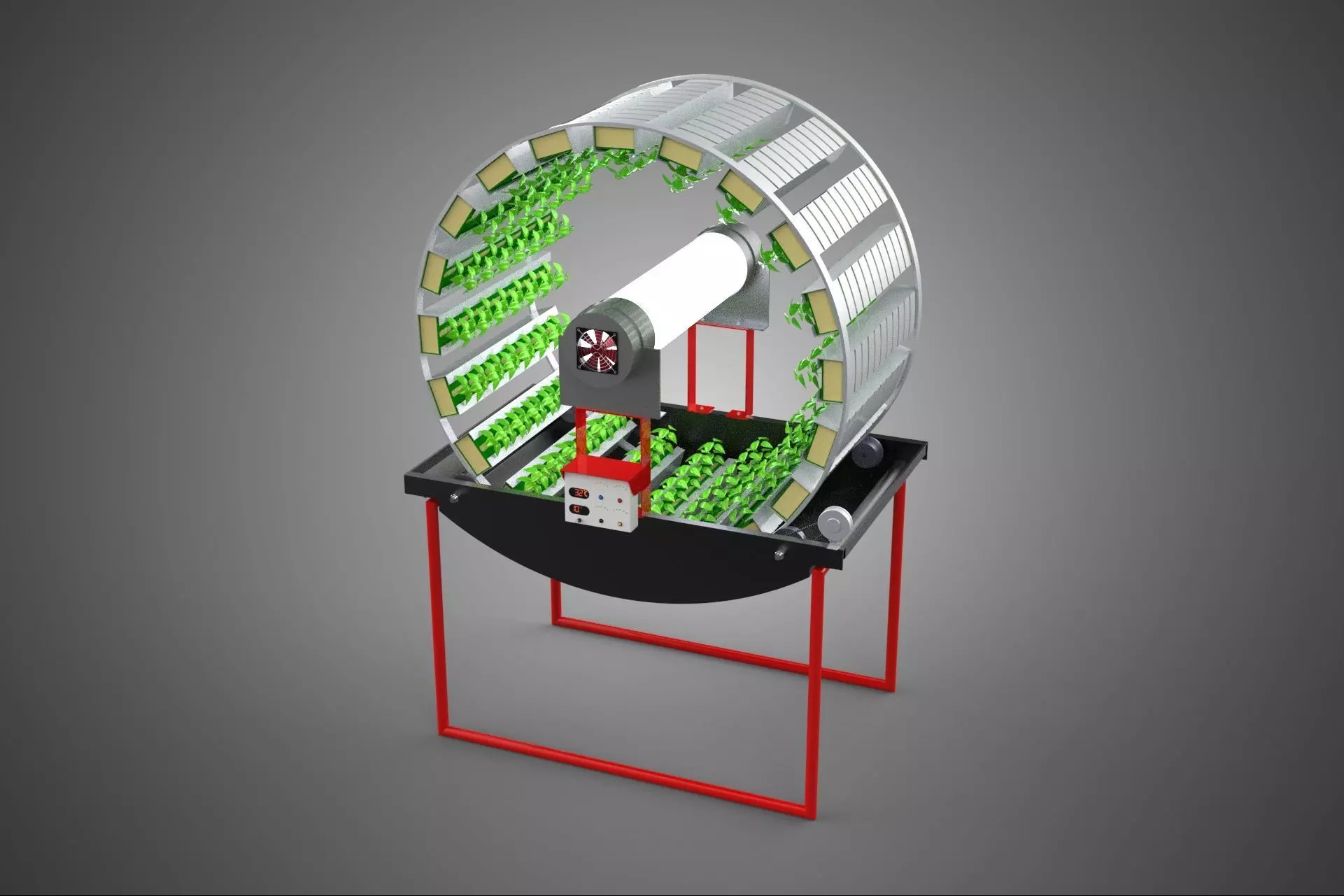
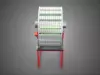
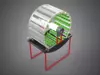
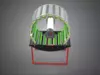
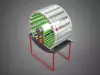
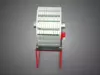
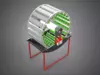
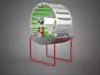
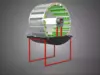
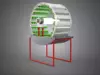
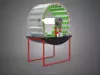
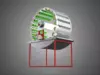
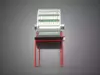
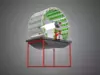
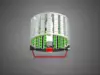
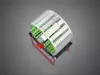
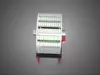
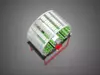
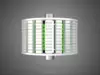
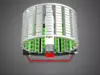
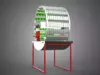
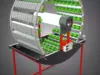
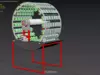
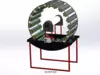
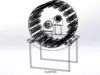
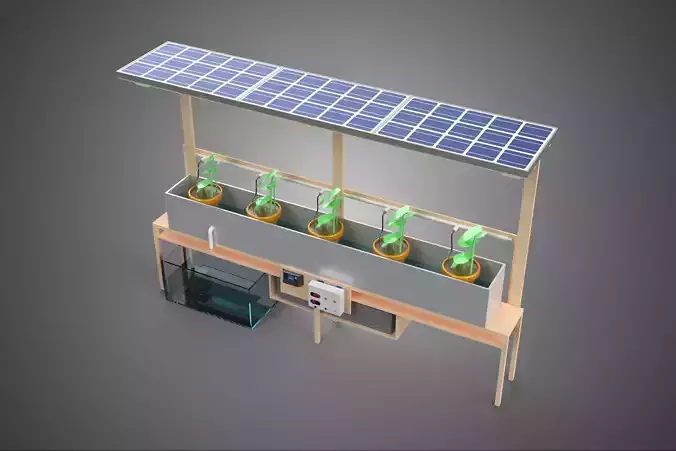
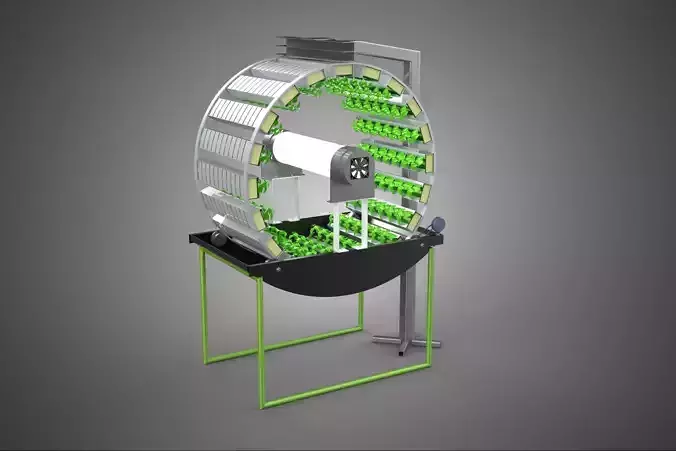
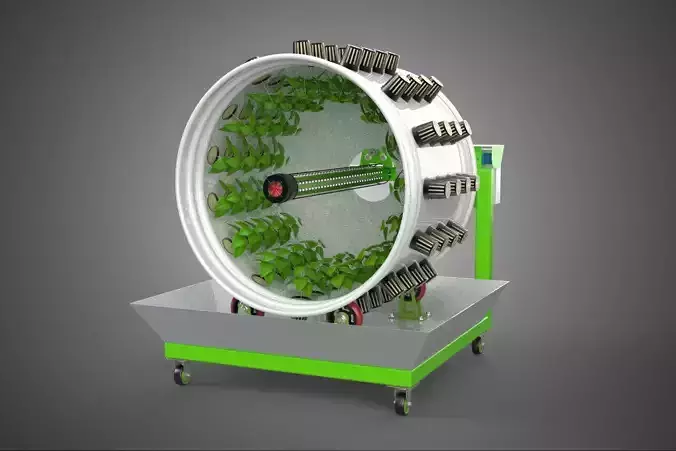
The IoT Control Rotary Hydroponic Garden Plant Farming System Wheel is an advanced agricultural technology that integrates soilless cultivation, kinetic rotation, and Internet of Things (IoT) capabilities for controlled environment agriculture. It represents a significant innovation in vertical farming, designed to optimize plant growth in confined spaces while minimizing resource consumption and maximizing yield through automated management and data-driven insights.
This system primarily operates on the principles of hydroponics, where plants are grown in nutrient-rich water solutions rather than soil, and rotational kinetics. The wheel component refers to a Ferris wheel-like or drum-shaped structure that rotates continuously or intermittently around a central axis. This rotation serves multiple critical functions:
- Gravity-fed Nutrient Distribution: As the plant-holding modules (often net pots containing an inert growing medium) rotate downwards, they are periodically submerged in or irrigated by a hydroponic nutrient solution reservoir. When rotating upwards, excess solution drains, providing essential aeration to the roots and preventing waterlogging.
- Optimized Light Exposure: The rotational movement ensures uniform exposure of all plants to a central or strategically placed artificial light source (typically high-efficiency LED grow lights), preventing shading, promoting consistent growth, and maximizing the photosynthetic efficiency across the entire system.
- Maximized Space Efficiency: The vertical and rotational design significantly increases planting density within a minimal horizontal footprint, making it an ideal solution for urban environments, indoor cultivation, or areas with limited arable land.
Key Components:
- Rotary Structure (The Wheel): A mechanical framework, typically constructed from durable, food-grade materials resistant to corrosion, designed to securely hold multiple plant-growing modules or chambers. It is driven by an electric motor, often with adjustable speed settings to control rotation cycles.
- Hydroponic System: This comprises a water reservoir for the nutrient solution, a pump to circulate the solution, delivery lines (e.g., drip emitters, channels, or a direct root submergence mechanism), and a drainage system to return excess solution to the reservoir, facilitating recirculation. The nutrient solutions are precisely formulated to provide all essential macro and micronutrients.
- Plant Growth Modules: Individual containers (e.g., net pots) where plants are housed, often utilizing inert growing media like rockwool, coco coir, or clay pebbles to provide support, while allowing direct access of the roots to the nutrient solution.
- Lighting System: High-efficiency LED grow lights, specifically designed for plant growth, are strategically positioned within or around the rotary structure. These lights provide the necessary spectrum and intensity of light required for photosynthesis throughout the plant's life cycle.
- IoT Control Unit: The central intelligence and automation hub of the system, comprising:
- Sensors: Continuously monitor critical environmental and physiological parameters such as water pH, electrical conductivity (EC) of the nutrient solution, water temperature, ambient air temperature, humidity, light intensity (PAR), CO2 levels, and potentially plant-specific biometric data.
- Actuators: Electromechanical devices that execute commands based on sensor data and programmed logic. Examples include pumps for nutrient delivery and circulation, pH adjustment dispensers, fans for air circulation, heaters/coolers for temperature regulation, and light dimmers/timers.
- Microcontroller/Microprocessor: Processes data from sensors, runs pre-programmed control algorithms, and sends precise commands to actuators to maintain optimal conditions.
- Network Connectivity: Integrated Wi-Fi, Ethernet, or cellular modules enable seamless remote monitoring and control via a cloud-based platform or dedicated mobile/web application.
- User Interface: A local display or a remote application providing real-time data visualization, system configuration options, alert notifications, and manual override capabilities.
IoT Control Aspects:
The integration of IoT capabilities significantly enhances the efficiency, precision, and scalability of this hydroponic system:
- Automated Environmental Control: Sensors feed continuous data to the IoT control unit, which then automatically adjusts parameters like nutrient concentration, pH levels, water and air temperatures, humidity, and lighting cycles. This maintains optimal growth conditions specifically tailored to the cultivated plant species without constant human intervention.
- Remote Monitoring and Management: Users can access real-time data, receive critical alerts, and control system functions from anywhere in the world via a connected device, enabling proactive intervention, troubleshooting, and reduced on-site labor.
- Data Analytics and Optimization: Continuous data logging allows for comprehensive trend analysis, predictive modeling, and the application of machine learning algorithms. This facilitates the refinement of growing protocols, identification of inefficiencies, and ongoing optimization of resource usage and crop yield over successive growth cycles.
- Resource Efficiency: Precise, automated control over water, nutrients, and energy (lighting and climate control) minimizes waste, leading to substantial reductions in operational costs, environmental footprint, and overall resource consumption compared to conventional agriculture.
Advantages and Applications:
The IoT Control Rotary Hydroponic Garden Plant Farming System Wheel offers numerous advantages:
- Maximized Space Utilization: Highly suitable for urban farming, indoor cultivation, and regions with limited agricultural land.