High-quality 3D assets at affordable prices — trusted by designers, engineers, and creators worldwide. Made with care to be versatile, accessible, and ready for your pipeline.
Included File Formats
This model is provided in 14 widely supported formats, ensuring maximum compatibility:
• - FBX (.fbx) – Standard format for most 3D software and pipelines
• - OBJ + MTL (.obj, .mtl) – Wavefront format, widely used and compatible
• - STL (.stl) – Exported mesh geometry; may be suitable for 3D printing with adjustments
• - STEP (.step, .stp) – CAD format using NURBS surfaces
• - IGES (.iges, .igs) – Common format for CAD/CAM and engineering workflows (NURBS)
• - SAT (.sat) – ACIS solid model format (NURBS)
• - DAE (.dae) – Collada format for 3D applications and animations
• - glTF (.glb) – Modern, lightweight format for web, AR, and real-time engines
• - 3DS (.3ds) – Legacy format with broad software support
• - 3ds Max (.max) – Provided for 3ds Max users
• - Blender (.blend) – Provided for Blender users
• - SketchUp (.skp) – Compatible with all SketchUp versions
• - AutoCAD (.dwg) – Suitable for technical and architectural workflows
• - Rhino (.3dm) – Provided for Rhino users
Model Info
• - All files are checked and tested for integrity and correct content
• - Geometry uses real-world scale; model resolution varies depending on the product (high or low poly)
• • - Scene setup and mesh structure may vary depending on model complexity
• - Rendered using Luxion KeyShot
• - Affordable price with professional detailing
Buy with confidence. Quality and compatibility guaranteed.
If you have any questions about the file formats, feel free to send us a message — we're happy to assist you!
Sincerely,
SURF3D
Trusted source for professional and affordable 3D models.
More Information About 3D Model :
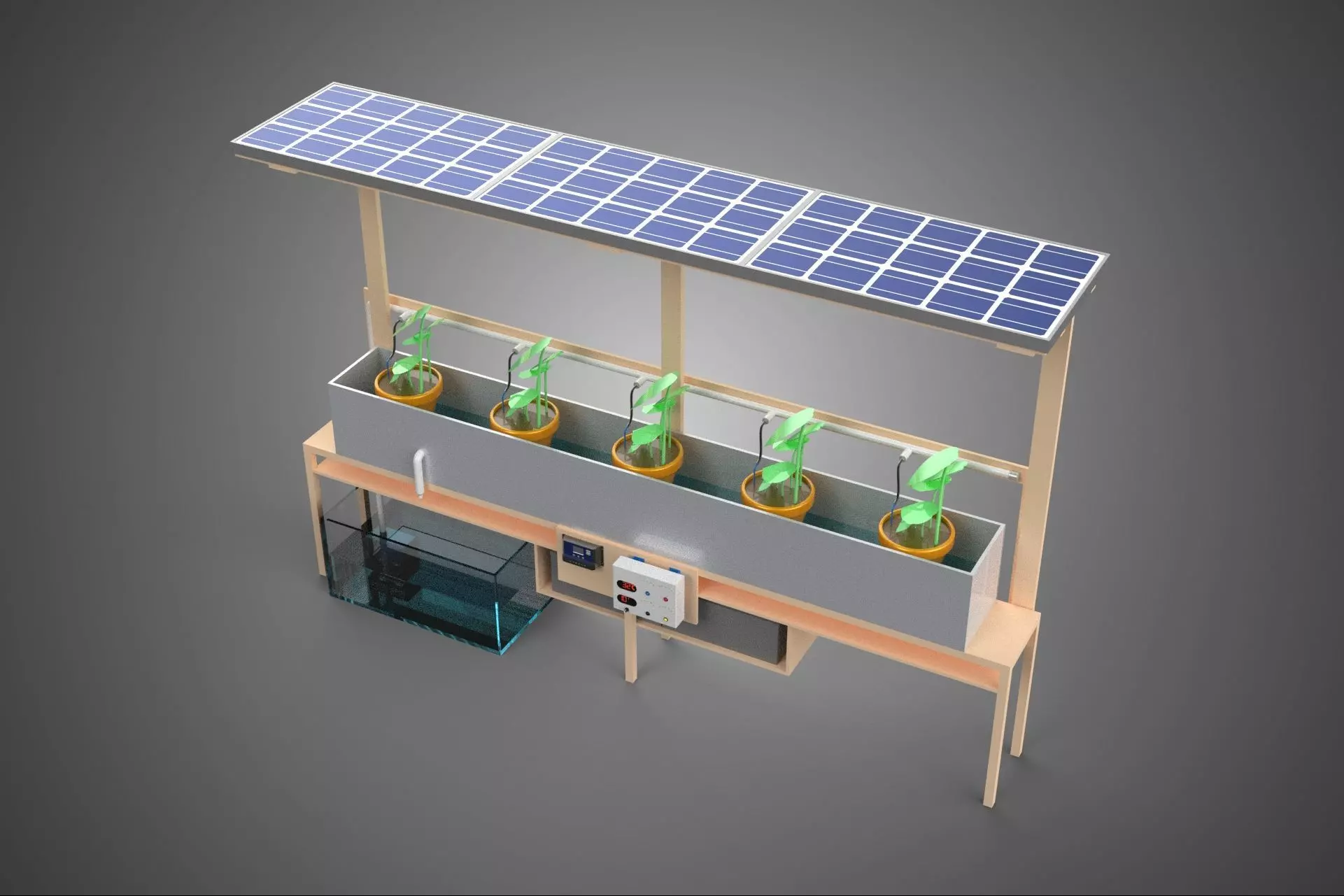
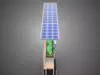
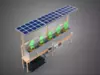
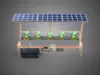
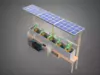
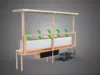
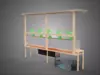
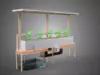
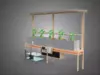
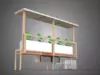
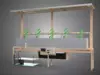
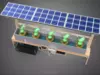
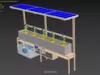
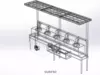
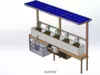
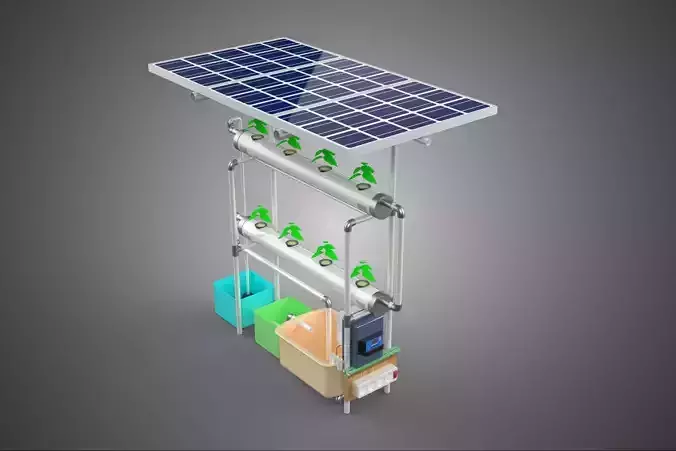
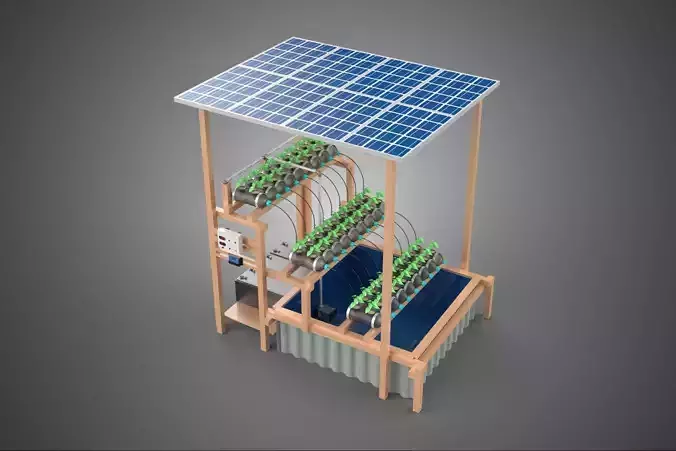
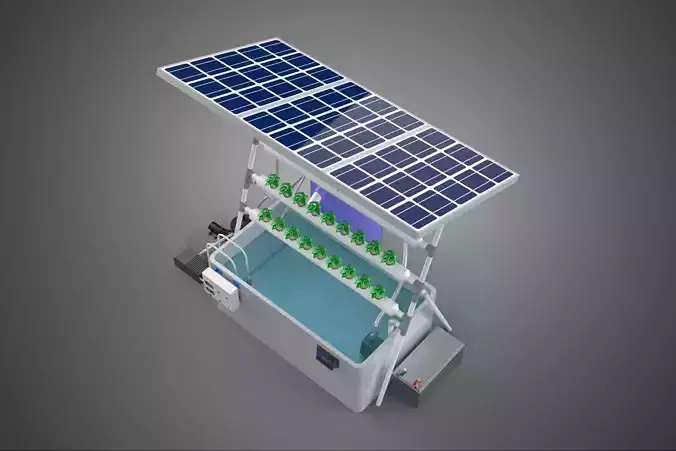
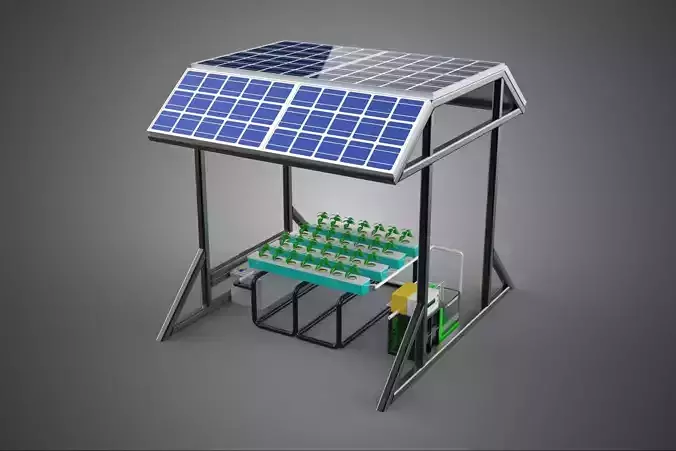
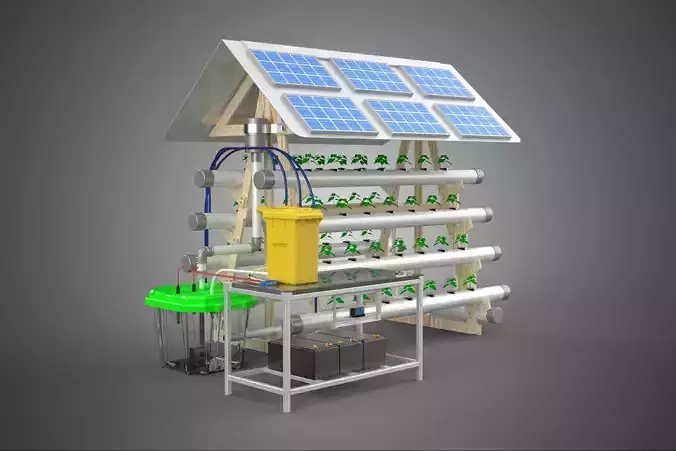
The integrated agricultural system described by the title Solar Panel PV IoT Water Drip Irrigation System Hydroponic Plant represents a sophisticated technological convergence aimed at sustainable, efficient, and data-driven cultivation of plants in soilless environments. This system synergistically combines renewable energy generation, smart monitoring and control via the Internet of Things (IoT), and precise nutrient delivery methods, specifically designed to optimize the growth and resource utilization of hydroponically grown crops.
Photovoltaic (PV) Power Generation:
At its foundation, the system relies on photovoltaic (PV) solar panels for electrical power generation. These panels convert solar radiation directly into direct current (DC) electricity, offering a clean, renewable, and autonomous energy source. A charge controller regulates the output from the solar panels, ensuring efficient charging of a battery bank, which stores energy for continuous system operation, particularly during periods of low sunlight or at night. An inverter may be included to convert DC power to alternating current (AC) if required by specific components like certain pumps or computing units, thereby reducing reliance on conventional grid electricity and making the system suitable for off-grid or remote agricultural applications.
Internet of Things (IoT) Integration:
The core intelligence of the system is derived from its Internet of Things (IoT) framework. This encompasses a network of interconnected sensors, microcontrollers, and communication modules. Critical environmental and plant health parameters are continuously monitored by various sensors, including but not limited to: pH levels and Electrical Conductivity (EC) of the nutrient solution (indicating nutrient concentration), water temperature, reservoir volume, ambient air temperature, relative humidity, and light intensity. These real-time data points are acquired and processed by embedded microcontrollers (e.g., based on platforms like Arduino or ESP32). Data is then transmitted wirelessly, often via Wi-Fi, LoRa, or cellular networks, to a cloud-based server or a local gateway. This infrastructure enables remote monitoring, data analytics, and the generation of actionable insights. Users can interact with the system and issue commands via dedicated web dashboards or mobile applications, allowing for automated decision-making and manual overrides from any internet-connected location.
Hydroponic Cultivation:
The system is explicitly designed to facilitate hydroponic cultivation, a method of growing plants without soil, where roots are immersed in or routinely supplied with a mineral nutrient solution. This soilless approach offers numerous advantages, including accelerated growth rates, higher yields per unit area, and significantly reduced water consumption compared to traditional soil-based farming. Common hydroponic techniques integrated into such systems include Nutrient Film Technique (NFT), Deep Water Culture (DWC), or substrate-based methods utilizing inert media like rockwool or coco coir. The controlled environment and precise nutrient delivery inherent in hydroponics are crucial for optimizing plant health and productivity.
Water Drip Irrigation System:
Within the hydroponic framework, a precise water drip irrigation system serves as the primary mechanism for delivering the carefully formulated nutrient solution directly to the plant roots or surrounding inert growing medium. Drip emitters ensure a slow, controlled, and uniform application of water and dissolved nutrients, minimizing evaporation, runoff, and waste. This targeted delivery method maximizes nutrient uptake efficiency and prevents localized deficiencies or toxicities. When interfaced with the IoT component, the drip irrigation system can be fully automated. Actuators, such as solenoid valves and pumps, are controlled by the microcontroller based on sensor data and programmed thresholds, adjusting irrigation schedules, nutrient solution composition, and flow rates to match the specific physiological needs of the plants at different growth stages.
Operational Principles and Advantages:
The synergistic integration of these components allows for highly optimized and sustainable agricultural practices. Solar power ensures energy independence and reduces the carbon footprint. IoT sensors provide the data necessary for intelligent algorithms to precisely manage the hydroponic environment, dynamically adjusting nutrient delivery (pH, EC), irrigation frequency, and duration via the drip system. This comprehensive automation minimizes manual labor, enhances resource efficiency (particularly water and nutrients), and creates an ideal, consistent growth environment, leading to increased crop yields and superior quality. The capacity for remote management and data-driven insights also provides scalability and flexibility, making these systems valuable for diverse applications ranging from small-scale urban agriculture and domestic use to larger commercial greenhouses and research facilities, ultimately contributing to food security and environmental conservation.
Challenges and Future Outlook:
While offering significant benefits, the implementation of such advanced systems can entail initial capital investment and a requirement for technical expertise in setup, operation, and maintenance. Reliance on internet connectivity for full IoT functionality can also pose challenges in remote areas with unstable infrastructure. However, continuous advancements in sensor miniaturization, artificial intelligence algorithms for predictive analytics, and reductions in component costs are steadily enhancing the accessibility, reliability, and efficiency of these integrated systems. The future outlook for PV-powered IoT hydroponic drip irrigation systems points towards even greater autonomy, predictive optimization, and broader adoption in precision agriculture, fostering more resilient and sustainable food production systems globally.