High-quality 3D assets at affordable prices — trusted by designers, engineers, and creators worldwide. Made with care to be versatile, accessible, and ready for your pipeline.
Included File Formats
This model is provided in 14 widely supported formats, ensuring maximum compatibility:
• - FBX (.fbx) – Standard format for most 3D software and pipelines
• - OBJ + MTL (.obj, .mtl) – Wavefront format, widely used and compatible
• - STL (.stl) – Exported mesh geometry; may be suitable for 3D printing with adjustments
• - STEP (.step, .stp) – CAD format using NURBS surfaces
• - IGES (.iges, .igs) – Common format for CAD/CAM and engineering workflows (NURBS)
• - SAT (.sat) – ACIS solid model format (NURBS)
• - DAE (.dae) – Collada format for 3D applications and animations
• - glTF (.glb) – Modern, lightweight format for web, AR, and real-time engines
• - 3DS (.3ds) – Legacy format with broad software support
• - 3ds Max (.max) – Provided for 3ds Max users
• - Blender (.blend) – Provided for Blender users
• - SketchUp (.skp) – Compatible with all SketchUp versions
• - AutoCAD (.dwg) – Suitable for technical and architectural workflows
• - Rhino (.3dm) – Provided for Rhino users
Model Info
• - All files are checked and tested for integrity and correct content
• - Geometry uses real-world scale; model resolution varies depending on the product (high or low poly)
• • - Scene setup and mesh structure may vary depending on model complexity
• - Rendered using Luxion KeyShot
• - Affordable price with professional detailing
Buy with confidence. Quality and compatibility guaranteed.
If you have any questions about the file formats, feel free to send us a message — we're happy to assist you!
Sincerely,
SURF3D
Trusted source for professional and affordable 3D models.
More Information About 3D Model :
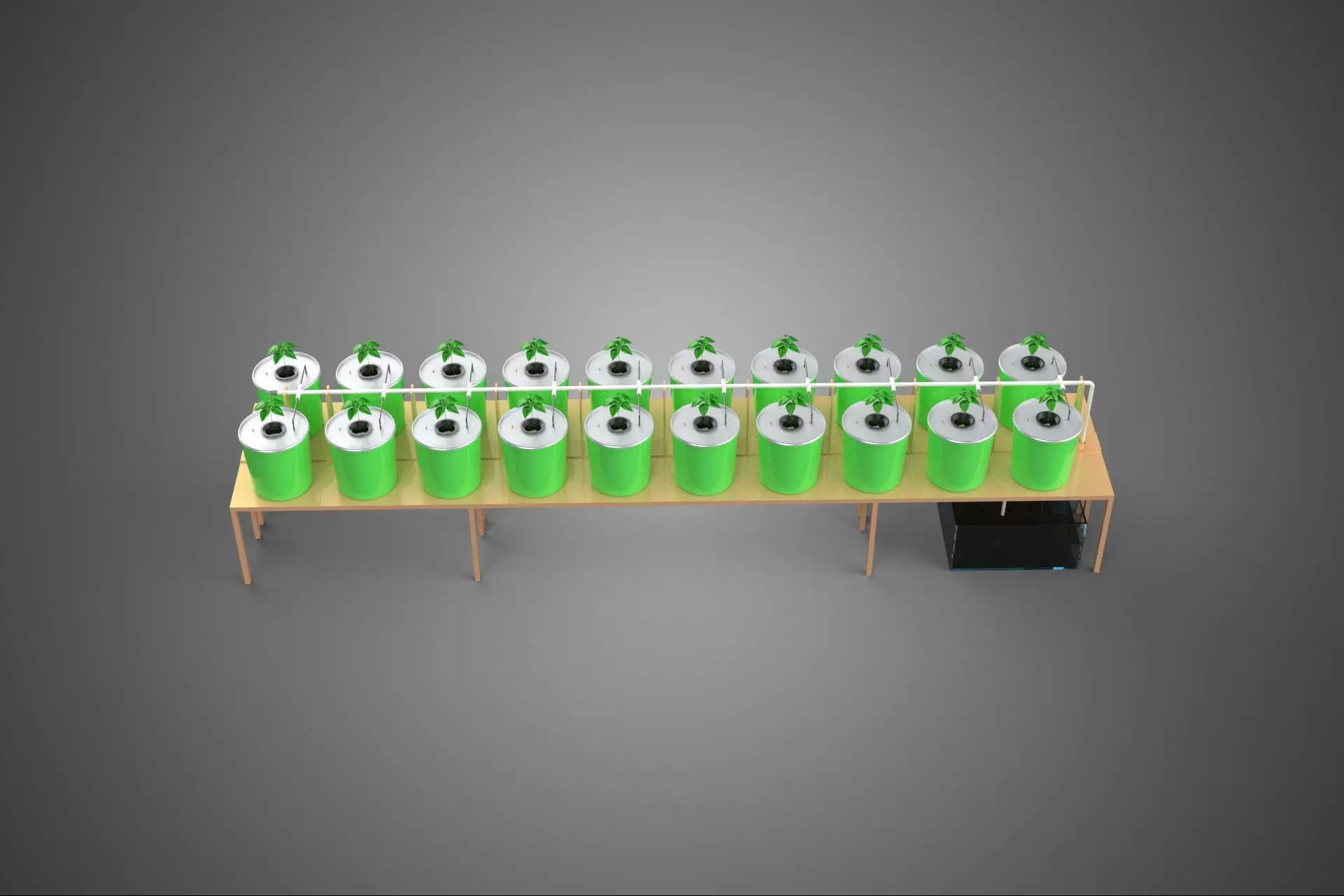
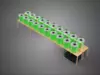
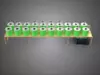
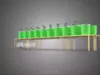
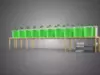
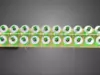
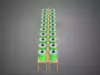
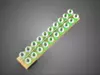
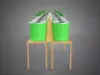
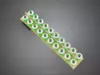
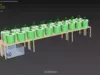
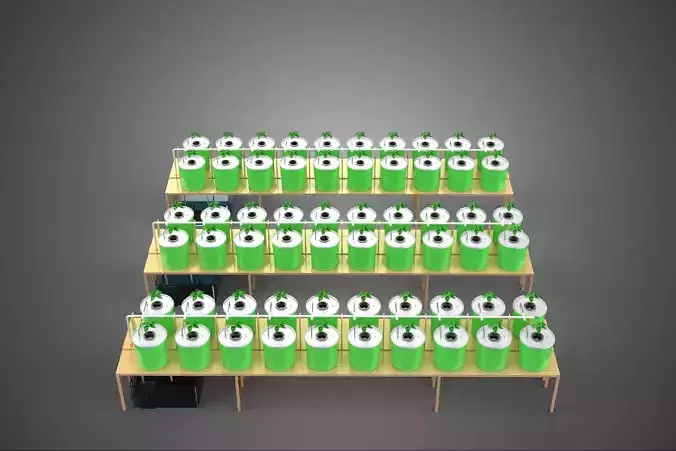
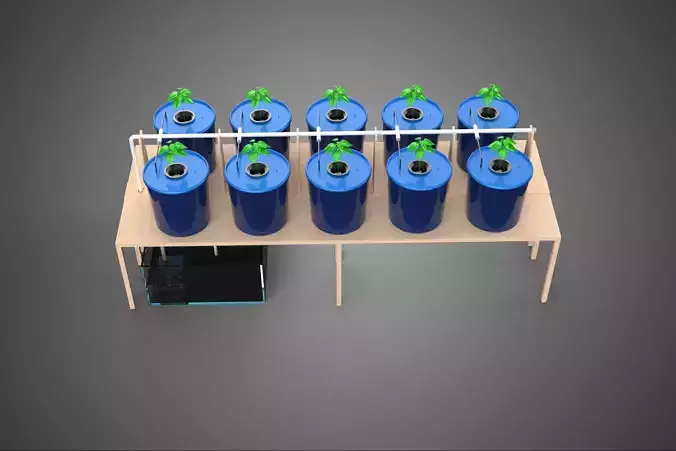
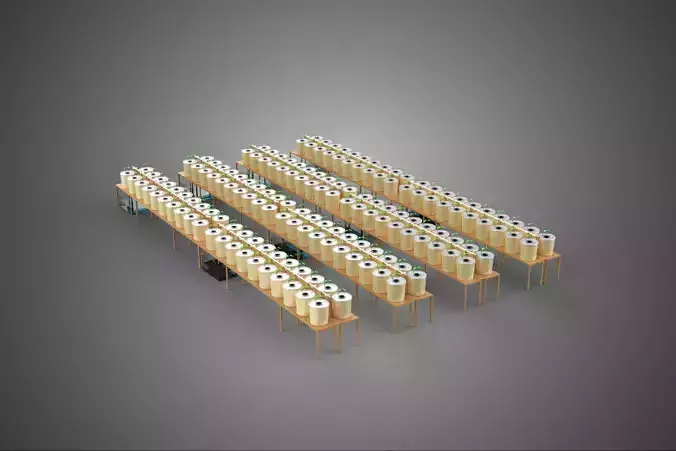
DIY Dutch Bucket Hydroponic System Setup in a Greenhouse Bato Garden
The designation DIY Dutch Bucket Hydroponic System Setup Greenhouse Bato Garden describes a specialized, often scalable, method of soilless cultivation employing recirculating drip irrigation within a controlled environment structure (greenhouse). This setup utilizes individual containers known interchangeably as Dutch Buckets or Bato Pots, making it particularly well-suited for cultivating large fruiting and vining crops that require significant root support and prolonged growth cycles. The DIY component emphasizes the construction and assembly using accessible, non-commercial grade components.
Core Mechanism: The Dutch Bucket (Bato Pot) System
The Dutch Bucket system operates as a variation of recirculating hydroponics, typically arranged in a series or manifold configuration. Each Bato Pot (standard size often 10-20 liters) is an independent container housing the plant's root mass and an inert growing medium such as perlite, coco coir, rockwool, or clay pebbles.
Irrigation and Drainage:
- Delivery: A central reservoir, containing the pH- and electrical conductivity (EC)-optimized nutrient-rich aqueous solution, is connected via a submersible pump to a main distribution line. Smaller lateral drip lines branch off, delivering solution to the base of each plant via timed emitters.
- Saturation: The solution slowly saturates the root zone and media.
- Recirculation (Drainage): The defining feature of the Dutch Bucket is its optimized drainage mechanism. Each bucket is fitted with a specialized elbow or drain fitting, often set a few centimeters above the bottom of the container. This fitting establishes a small, fixed nutrient solution level (often 1-3 cm) at the base, ensuring roots never completely dry out while simultaneously promoting high oxygenation in the upper root zone. Excess solution drains through this fitting and is channeled via a common return line back to the main reservoir for filtration, replenishment, and reuse. This continuous loop minimizes water and nutrient waste.
### DIY Implementation and System Components
The DIY aspect of this system focuses on affordability and customization, often utilizing food-grade plastic barrels for the reservoir and repurposing containers or standard plastic buckets for the Bato Pots, provided adequate light blockage (opacity) is maintained to prevent algal growth.
Essential Components for Setup:
- The Greenhouse Structure: Provides environmental stability critical for year-round growth. This includes protection from pests, heavy weather, and extreme temperature fluctuations. DIY greenhouses may use polyethylene film, polycarbonate panels, or glass, integrating ventilation (fans and vents) and, if necessary, heating or cooling systems.
- Bato Pots/Buckets: Typically linked sequentially on raised benches or support structures to facilitate gravity-assisted drainage. Holes are drilled for the drain elbow and the drip line insertion.
- Reservoir and Pump: A large, opaque tank for storing the nutrient solution. A reliable submersible pump, controlled by a digital timer, drives the irrigation cycles.
- Plumbing and Manifold: PVC or flexible poly tubing constitutes the main supply line. Smaller spaghetti tubing (drip lines) is used to feed individual drip emitters (often pressure-compensating) into each bucket.
- Drainage Lines: Larger diameter piping (e.g., 50–75 mm PVC or channel) runs beneath the buckets, collecting the runoff from the elbow fittings and directing it back to the reservoir.
- Growing Medium: An inert substrate must be selected (e.g., perlite, often preferred for its drainage characteristics).
### Advantages and Applications
The DIY Dutch Bucket system within a greenhouse environment offers significant advantages for non-commercial and semi-commercial growers:
- Scalability: The modular design allows for easy expansion or reduction of the system simply by adding or removing buckets.
- Suitability for Vining Crops: Unlike nutrient film technique (NFT) or deep water culture (DWC), the solid medium in the Bato Pot provides necessary anchorage for heavy, tall-growing plants like indeterminate tomatoes, peppers, cucumbers, and larger flowers.
- Isolation: The individual nature of the buckets helps isolate root diseases, preventing rapid spread throughout the entire system, a vulnerability often associated with contiguous channel systems.
- Water Use Efficiency: The recirculation loop ensures optimal utilization of water and nutrients, significantly reducing operational costs compared to run-to-waste systems.
- Accessibility: The DIY approach lowers the barrier to entry, allowing growers to construct robust hydroponic infrastructure with readily available hardware supplies.
***
KEYWORDS: Hydroponics, Dutch Bucket, Bato Pot, Recirculating System, DIY Greenhouse, Soilless Cultivation, Drip Irrigation, Perlite, Coco Coir, Nutrient Solution, EC, pH, Modular Hydroponics, Vining Crops, Tomatoes, Cucumbers, Inert Media, Submersible Pump, Reservoir, Environmental Control, Drain Elbow, Siphon Tube, Automated Watering, Controlled Environment Agriculture, Gardening, Horticulture, Water Efficiency, Modular System, Home Build, Greenhouse Setup.