High-quality 3D assets at affordable prices — trusted by designers, engineers, and creators worldwide. Made with care to be versatile, accessible, and ready for your pipeline.
Included File Formats
This model is provided in 14 widely supported formats, ensuring maximum compatibility:
• - FBX (.fbx) – Standard format for most 3D software and pipelines
• - OBJ + MTL (.obj, .mtl) – Wavefront format, widely used and compatible
• - STL (.stl) – Exported mesh geometry; may be suitable for 3D printing with adjustments
• - STEP (.step, .stp) – CAD format using NURBS surfaces
• - IGES (.iges, .igs) – Common format for CAD/CAM and engineering workflows (NURBS)
• - SAT (.sat) – ACIS solid model format (NURBS)
• - DAE (.dae) – Collada format for 3D applications and animations
• - glTF (.glb) – Modern, lightweight format for web, AR, and real-time engines
• - 3DS (.3ds) – Legacy format with broad software support
• - 3ds Max (.max) – Provided for 3ds Max users
• - Blender (.blend) – Provided for Blender users
• - SketchUp (.skp) – Compatible with all SketchUp versions
• - AutoCAD (.dwg) – Suitable for technical and architectural workflows
• - Rhino (.3dm) – Provided for Rhino users
Model Info
• - All files are checked and tested for integrity and correct content
• - Geometry uses real-world scale; model resolution varies depending on the product (high or low poly)
• • - Scene setup and mesh structure may vary depending on model complexity
• - Rendered using Luxion KeyShot
• - Affordable price with professional detailing
Buy with confidence. Quality and compatibility guaranteed.
If you have any questions about the file formats, feel free to send us a message — we're happy to assist you!
Sincerely,
SURF3D
Trusted source for professional and affordable 3D models.
More Information About 3D Model :
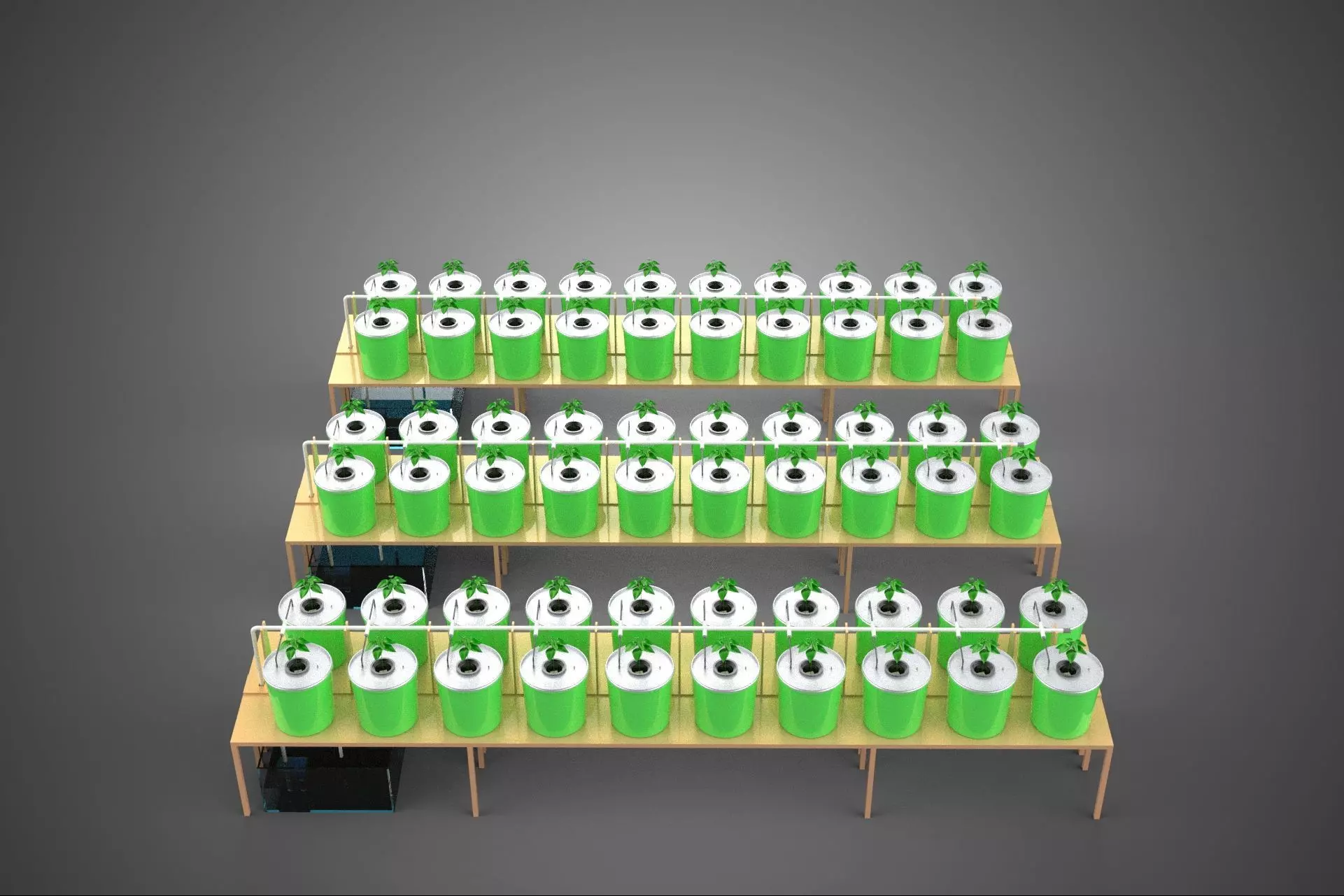
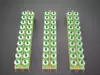
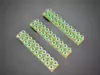
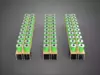
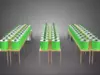
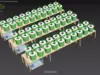
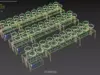
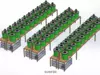
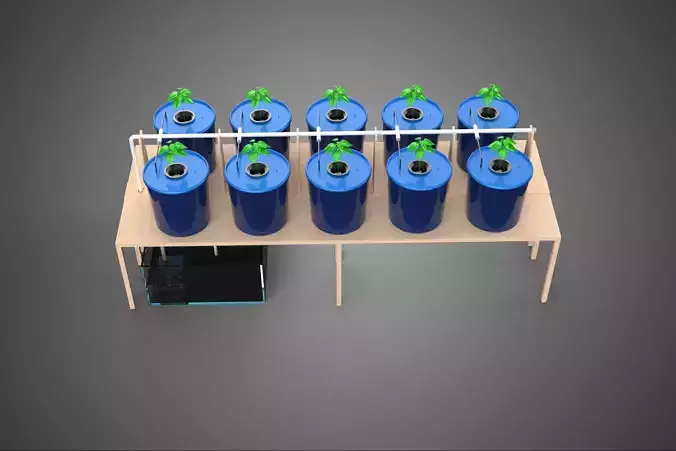
DUTCH BUCKET HYDROPONIC CROP PLANT FACTORY GREENHOUSE PRODUCTION
The integration of the Dutch Bucket system—also formally known as the Bato Bucket system—into Controlled Environment Agriculture (CEA) greenhouses or plant factories represents a sophisticated methodology for high-yield, substrate-based recirculating hydroponic crop production. This methodology combines the resource-efficiency of hydroponics with the environmental modulation capabilities inherent in advanced greenhouse structures, facilitating year-round cultivation regardless of external climatic conditions.
System Definition and Mechanics
The Dutch Bucket system is a modular hydroponic technique particularly favored for large, vine, or long-term fruiting crops, such as tomatoes, cucumbers, peppers, and certain varieties of pole beans. Unlike closed systems like Nutrient Film Technique (NFT), the Dutch Bucket utilizes individual containers, typically manufactured from durable, opaque plastics, often arranged in single or dual rows along a cultivation bench. Each bucket houses one or two plants anchored in an inert growing substrate, which commonly includes perlite, coco coir, rockwool, or clay pebbles (hydroton).
Nutrient delivery is managed by a centralized pumping system that forces the prepared nutrient solution through a mainline and into individual drip emitters positioned at the base of each bucket. The delivery cycle is periodic, regulated by timers or environmental sensors (e.g., light level integration or substrate moisture sensors). Crucially, the system functions via a gravity-assisted return. Excess nutrient solution that percolates through the substrate drains out of the bucket via a specialized elbow fitting (often a two-piece elbow siphon) and into a shared return channel or trough. This recovered solution flows back to a main reservoir, where it is monitored, adjusted, and subsequently recirculated. This recirculation optimizes Water Use Efficiency (WUE) and minimizes nutrient discharge compared to non-recirculating (run-to-waste) systems.
Integration within Plant Factory and Greenhouse Structures
When deployed within a high-tech greenhouse or plant factory context, the Dutch Bucket system benefits from extensive automation and environmental control—the defining feature of CEA.
Environmental Controls (CEA Principles): Production success hinges on precise regulation of key atmospheric and root zone parameters:
- Light Management: Greenhouses utilize natural Photosynthetically Active Radiation (PAR), supplemented by High-Pressure Sodium (HPS) or advanced Light Emitting Diode (LED) fixtures during periods of low light intensity or extended photoperiod requirements. Shade curtains and thermal screens manage solar load and temperature fluctuations.
- Climate Regulation: Heating, ventilation, and air conditioning/dehumidification (HVAC/D) systems are employed to maintain optimal temperature and humidity profiles. Critical attention is paid to the Vapor Pressure Deficit (VPD), which dictates transpiration rates, nutrient uptake, and overall plant health. Carbon Dioxide (CO2) supplementation is frequently introduced to elevate atmospheric CO2 concentration (typically 800 to 1200 ppm), maximizing photosynthetic efficiency and increasing biomass accumulation.
- Nutrient Management: The recirculated solution demands sophisticated monitoring of Electrical Conductivity (EC), which measures nutrient concentration, and pH, which affects nutrient availability. Dosing pumps automatically inject concentrated stock solutions (A and B mixtures) and acids/bases to maintain predefined set points, ensuring the nutrient profile remains stable and balanced for the specific crop phase (vegetative, flowering, fruiting).
### Operational Advantages and Applications
The Dutch Bucket system is highly favored in commercial settings due to several operational advantages. Its modular nature allows for easy maintenance, individual plant isolation (limiting disease spread), and flexible layout configurations. The use of a substrate provides physical stability for larger plants and acts as a buffer against rapid changes in root zone pH and temperature, a vulnerability sometimes seen in DWC or NFT systems. Furthermore, the system’s ability to efficiently handle high-volume irrigation required by mature, fruiting crops makes it superior to techniques designed primarily for leafy greens. This high-density, controlled environment approach maximizes yield per square meter (Y/m²) while reducing dependency on arable land and minimizing fresh water consumption.
KEYWORDS: Bato Bucket, Recirculating Hydroponics, Controlled Environment Agriculture, Greenhouse Production, Substrate Hydroponics, Perlite, Coco Coir, Nutrient Solution, Electrical Conductivity, pH Monitoring, Drip Irrigation, Vine Crops, Tomatoes, Cucumbers, Plant Factory, Vapor Pressure Deficit, CEA, Automation, CO2 Supplementation, Water Use Efficiency, Crop Cycling, Root Zone Management, Modular System, High-Density Farming, Commercial Cultivation, Yield Optimization, Environmental Control, Closed-Loop System, Inert Media, Fertigation.