DESCRIPTION

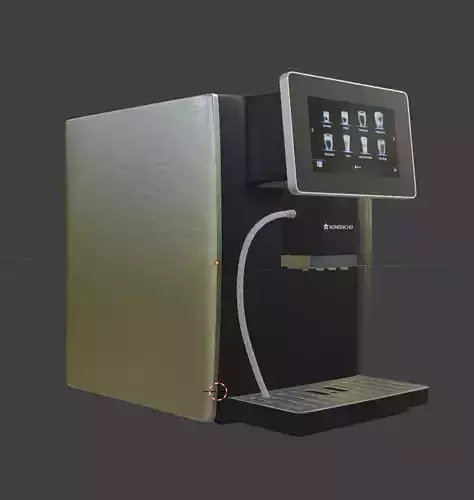
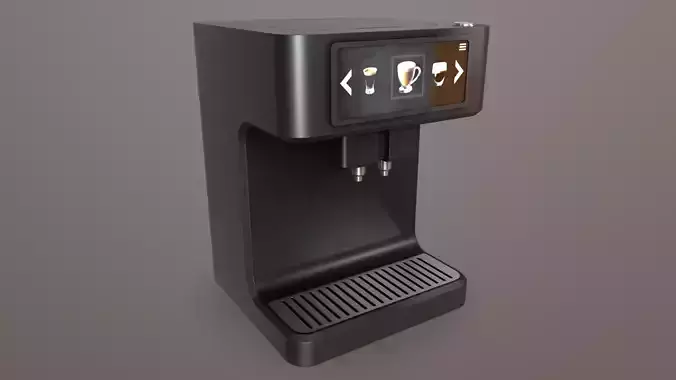
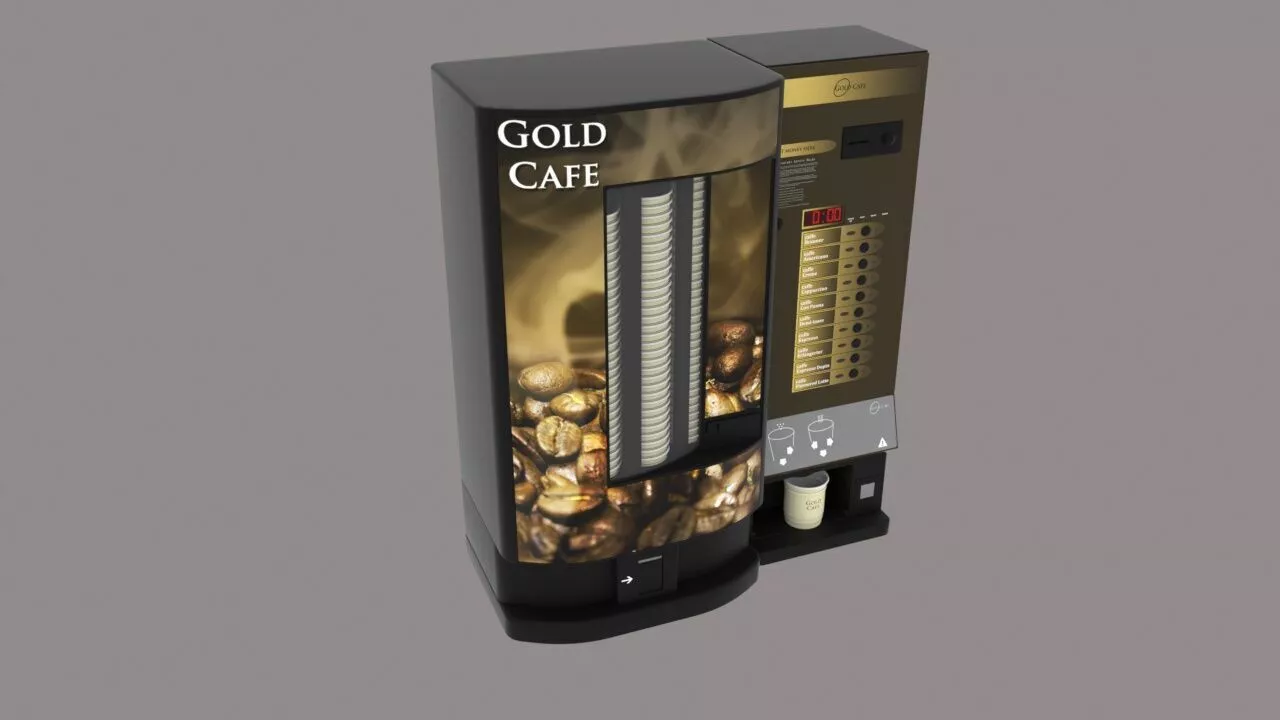
The coffee vending machine is a vending machine that dispenses hot coffee and other coffee beverages. Older models used instant coffee or concentrated liquid coffee and hot or boiling water, and provided condiments such as cream and sugar. Some modern machines prepare various coffee styles such as mochas and lattes and use ground drip coffee, and some fresh-grind the coffee to order using a grinder in the machine.

The machine was invented in the United States by the Rudd-Melikian company in 1947,[1] debuting as the Kwik Kafe. Several U.S. companies also began manufacturing the machines in 1947, and by 1955 over 60,000 existed in the U.S. Today, coffee vending machines exist in various areas of the world, and are very common in Japan.

Overview

A coffee vending machine in RomaniaA coffee vending machine is a type of vending machine that dispenses hot coffee. Some of the machines, particularly older models, utilize powdered instant coffee mixed with hot water, and some of these offer condiments such as cream and sugar.[2] Some newer models fresh-brew the coffee using hot water and ground coffee beans, and some also grind the coffee to order using coffee grinders installed in the machines, as well as providing various condiments.[3][4] Some modern machines also provide other hot drinks such as tea, espresso, lattes, cappuccinos, mochas and hot chocolate.[4][5] Some of the machines dispense canned coffee, and some dispense both hot coffee and iced coffee.[6][7]

Public coffee vending machines typically require payment, functioning as coin-operated machines, and some also accept bills and credit cards.[8] Some do not require payment; these are typically found at places of employment, whereby the company furnishes the beverage to employees free of charge.[9]

Machines that purvey hot and iced coffee are common in Japan, and many of them are placed in street locations.[7] In Italy, some of the machines purvey up to 18 coffee varieties.[5]

HistoryThe coffee vending machine was invented in the United States by the Rudd-Melikian company of Philadelphia, Pennsylvania, in 1947, and the machine was named the Kwik Kafe.[a][11] The machine would drop a paper cup through a chute onto a platform and fill the cup with hot coffee prepared using instant coffee and hot water.[12] The Kwik Kafe took five seconds to prepare a cup of coffee.[12] The Kwik Kafe machines were placed in U.S. locations through the process of franchising.[12] At a 1948 convention in Philadelphia, Lloyd K. Rudd, president of the Rudd-Melikian company, stated that Kwik Kafe machines purveyed 250,000 cups of coffee on a daily basis.[13]

Additional companies that manufactured coffee vending machines in 1947 in the United States include the Manning & Lewis company, Knapway Devices and the Bert Mills Corporation.[12][14] Some machines in 1947 used a liquid coffee concentrate that was mixed with boiling water, and one such machine charged a nickel for a cup of coffee and dispensed a wooden spoon to mix the cream and sugar.[15] By the year 1955, over 60,000 coffee vending machines existed in the United States.[12]

Concept machinesTouch screen coffee machines, such as those introduced by Bella, Bravilor Bonamat and La Marquise are becoming increasingly popular[when?] as they allow closer engagement with customers.[16] In 2009, Douwe Egberts introduced a conceptual coffee vending machine named BeMoved, which has touch screens with drag and drop features to select ingredients and interactive features such as the ability to access news, weather information and stock prices as the coffee is prepared.[17] The BeMoved machine also has a motion-sensitive video camera that can take an image of the user and remember the user's coffee preferences via personal profile settings, as well as an interactive video game named Shoot-Em-Up, which involves jumping in front of the machine while the camera and software coordinate the jumping with the video game play.

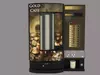
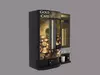
coffee vending machine 3D model cafe restaurant metro shopping mall office machine latte espresso person market city street token card

REVIEWS & COMMENTS

See what other buyers think about this model - real feedback on quality,
accuracy, and usability.
There are no reviews or comments yet. Please be the first one to write it.
NEW
Recently added to CGTrader - explore one of the latest models on the marketplace.

coffee vending machine 3D model Low-poly 3D model

$32.00
Royalty Free License
Hire
Like this model to show appreciation to the designer.
See how many times this model was viewed.
Share this model to support the designer and boost their visibility.
File formats
STL
Stereolithography<br />Version: 1<br />File Size: 13.7 MB
C4D
Cinema 4D<br />Version: 19 - Renderer: Default 19<br />File Size: 17.2 MB
FBX
Autodesk FBX<br />Version: 7.5<br />File Size: 14.2 MB
3DS
3D Studio<br />Version: 1<br />File Size: 6.79 MB
DAE
Collada<br />Version: 1.5<br />File Size: 19.7 MB
JPG
JPG<br />Version: 19<br />File Size: 808 KB
Verified by CGTrader
Verified models are of higher quality as they have
passed CGT Standard technical and visual checks,
making them more professional-grade 3D assets.
Learn more.
FBX
This FBX file has successfully passed the CGT Standard technical and visual checks. The verification results are detailed in the section below.
File & scene
Binary FBX
Binary FBX file is more compact and faster to load and process.
Learn more
No unsupported objects
Unsupported objects:
- Lights
- Cameras
Learn more
Geometry
No N-gons
N-gons are polygons with five or more sides which might cause issues in certain processes like rendering or animation. Learn more
No faceted geometry
Faceted geometry uses flat surfaces without smoothing, which can look unrealistic on curves.
Learn more
Manifold geometry
Manifold geometry ensures all surfaces are properly connected, avoiding issues like edges shared by more than two faces.
Learn more
Textures & material
PBR textures
PBR textures simulate how light interacts with materials, making the model look realistic under different lighting.
Required PBR textures:
- Base Color
- Roughness
- Metalness
- Normal
Learn more
No embed textures
Embedded textures are stored inside the model file, increasing its size and sometimes causing compatibility issues.
Learn more
Square textures
Texture aspect ratio is the width-to-height ratio of a texture. Expected texture aspect ratio: 1:1
Learn more
Power of 2 texture sizes
Textures with dimensions in power of two (e.g. 512x512px, 1024x1024px) are used to optimize performance and memory usage.
Learn more
Assigned materials
Materials are applied to the 3D model to allow visualize a model's surface properties and appearance.
Learn more
UVs & naming
No UV overlaps
UVs overlap when multiple points on the 3D model's surface are mapped to the same point on the UV island causing texture stretching.
Learn more
UV unwrapped model
A UV unwrapped model means its 3D surface is flattened into 2D space, allowing textures to be applied accurately.
Learn more
Allowed characters
Allowed ASCII characters: a-zA-Z0-9-_
Learn more
Provided by designer
Information and details shared directly by the model's designer.
3D Features
Textures
The model includes image files (textures) that add color, patterns, or detail to its surfaces.
UV Mapping
The model's surfaces are mapped to a 2D image, allowing textures to display correctly.
Plugins Used
Some external plugins were used to create the model. These may be required for full functionality.
3D printing
Indicates whether the designer marked this model as suitable for 3D printing.
Model is not 3D printable
The designer indicates this model is intended for digital use only (rendering, animation, or AR/VR) and not for 3D printing.
Geometry
Polygon mesh
A model built from polygons (triangles or quads) connected in a mesh.
38000 polygons
The total number of polygons (flat shapes) that make up the 3D model.
/
42000 vertices
The number of points (corners) that define the shape of the model's polygons.
Unwrapped UVs
Publish date
Model ID
Chat