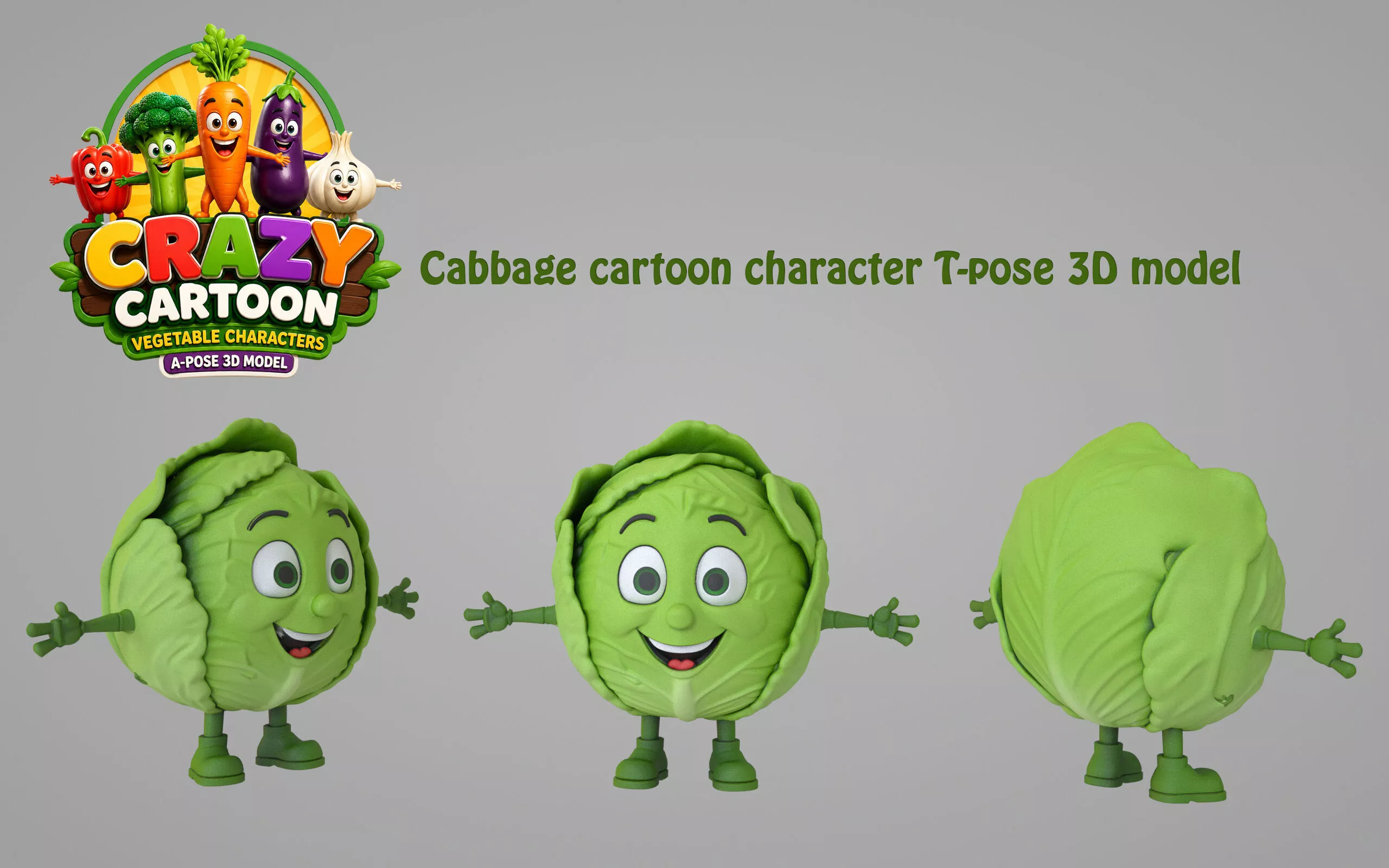
Cabbage, comprising several cultivars of Brassica oleracea, is a leafy green, red (purple), or white (pale green) biennial plant grown as an annual vegetable crop for its dense-leaved heads. It is descended from the wild cabbage (B. oleracea var. oleracea), and belongs to the cole crops or brassicas, meaning it is closely related to broccoli and cauliflower (var. botrytis); Brussels sprouts (var. gemmifera); and Savoy cabbage (var. sabauda).
A cabbage generally weighs between 500 and 1,000 grams (1 and 2 lb). Smooth-leafed, firm-headed green cabbages are the most common, with smooth-leafed purple cabbages and crinkle-leafed savoy cabbages of both colours being rarer. Under conditions of long sunny days, such as those found at high northern latitudes in summer, cabbages can grow quite large. As of 2012, the heaviest cabbage was 62.71 kilograms (138 lb 4 oz). Cabbage heads are generally picked during the first year of the plant's life cycle, but plants intended for seed are allowed to grow a second year and must be kept separate from other cole crops to prevent cross-pollination. Cabbage is prone to several nutrient deficiencies, as well as to multiple pests, and bacterial and fungal diseases.
Cabbage was most likely domesticated somewhere in Europe in ancient history before 1000 BC. Cabbage use in cuisine has been documented since antiquity.[1] It was described as a table luxury in the Roman Empire.[2] By the Middle Ages, cabbage had become a prominent part of European cuisine, as indicated by manuscript illuminations.[3] New variants were introduced from the Renaissance on, mostly by Germanic-speaking peoples. Savoy cabbage was developed in the 16th century. By the 17th and 18th centuries, cabbage was popularised as a staple food in central, northern, and Eastern Europe.[4] It was also employed by European sailors to prevent scurvy during long sea voyages. Starting in the early modern era, cabbage was exported to the Americas, Asia, and around the world.[5]
Cabbages can be prepared many different ways for eating; they can be pickled, fermented (for dishes such as sauerkraut and kimchi), steamed, stewed, roasted, sautéed, braised, or eaten raw. Raw cabbage is a rich source of vitamin K, vitamin C, and dietary fiber. China is the largest producer of cabbages, providing 48% of the world total.
Description
The cabbage inflorescence, which appears in the plant's second year of growth, features white or yellow flowers, each with four perpendicularly arranged petals.Cabbage seedlings have a thin taproot and cordate, or heart-shaped cotyledons. The first leaves produced are ovate (egg-shaped) with a lobed petiole. Plants are 40–60 centimetres (15+1⁄2–23+1⁄2 inches) tall in their first year at the mature vegetative stage, and 1.5–2 metres (5–6+1⁄2 feet) tall when flowering in the second year.[6] Heads average between 0.5 and 4 kilograms (1 and 8 pounds), with fast-growing, earlier-maturing varieties producing smaller heads.[7] Most cabbages have thick, alternating leaves, with margins that range from wavy or lobed to highly dissected; some varieties have a waxy bloom on the leaves. Plants have root systems that are fibrous and shallow.[8] About 90% of the root mass is in the upper 20–30 cm (8–12 in) of soil; some lateral roots can penetrate up to 2 m (6+1⁄2 ft) deep.[6]
The inflorescence is an unbranched and indeterminate terminal raceme measuring 50–100 cm (20–40 in) tall,[6] with flowers that are yellow or white. Each flower has four petals set in a perpendicular pattern, as well as four sepals, six stamens, and a superior ovary that is two-celled and contains a single stigma and style. Two of the six stamens have shorter filaments. The fruit is a silique that opens at maturity through dehiscence to reveal brown or black seeds that are small and round in shape. Self-pollination is impossible, and plants are cross-pollinated by insects.[8] The initial leaves form a rosette shape comprising 7 to 15 leaves, each measuring 25–35 cm (10–14 in) by 20–30 cm (8–12 in);[6] after this, leaves with shorter petioles develop and heads form through the leaves cupping inward.[9]
Many shapes, colors and leaf textures are found in various cultivated varieties of cabbage. Leaf types are generally divided between crinkled-leaf, loose-head savoys and smooth-leaf firm-head cabbages, while the color spectrum includes white and a range of greens and purples. Oblate, round and pointed shapes are found.[10]
Cabbage has been selectively bred for head weight and morphological characteristics, frost hardiness, fast growth and storage ability. The appearance of the cabbage head has been given importance in selective breeding, with varieties being chosen for shape, color, firmness and other physical characteristics.[11] Breeding objectives are now focused on increasing resistance to various insects and diseases and improving the nutritional content of cabbage.[12] Scientific research into the genetic modification of B. oleracea crops, including cabbage, has included European Union and United States explorations of greater insect and herbicide resistance.[13]
There are several Guinness Book of World Records entries related to cabbage, including the heaviest cabbage, at 62.71 kg (138 lb 4 oz);[14] the heaviest red cabbage, at 31.6 kilograms (69 lb 11 oz);[15] the longest cabbage roll, at 19.54 m (64 ft);[16] and the largest cabbage dish, at 2,960 kg (6,526 lb).[17]