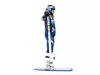
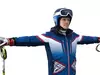
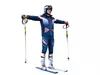
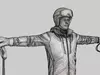
DESCRIPTION

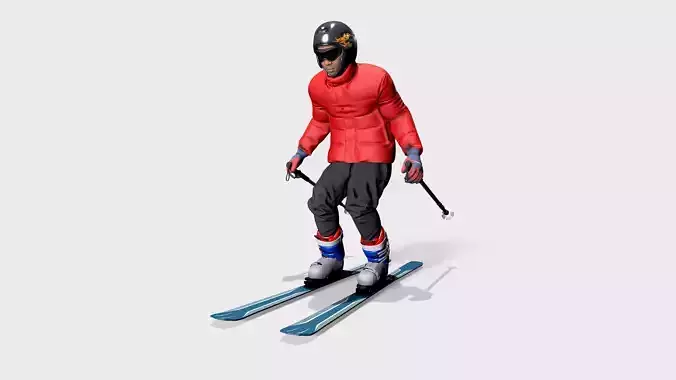
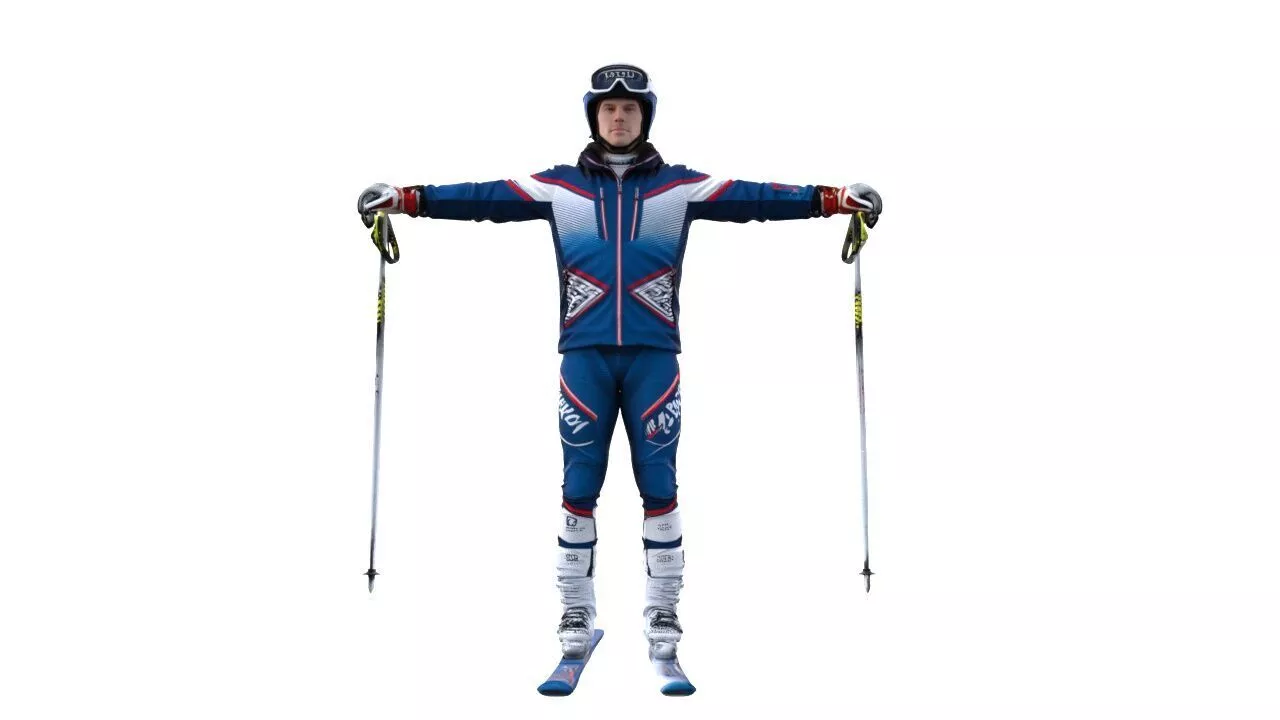
Skiing is the use of skis to glide on snow for basic transport, a recreational activity, or a competitive winter sport. Many types of competitive skiing events are recognized by the International Olympic Committee (IOC), and the International Ski and Snowboard Federation (FIS).

HistoryMain article: History of skiingDuration: 1 minute and 28 seconds.1:28Video demonstration of a variety of ski techniques used in the 1940s.Skiing has a history of almost five millennia.[1] Although modern skiing has evolved from beginnings in Scandinavia, it may have been practiced more than 100 centuries ago in the Altai Mountains, according to an interpretation of ancient paintings.[2][3] However, this continues to be debated.[4][5]

The word ski comes from the Old Norse word skíð which means to split piece of wood or firewood.[6]

Asymmetrical skis were used in northern Finland and Sweden until at least the late 19th century. On one foot, the skier wore a long straight non-arching ski for sliding, and a shorter ski was worn on the other foot for kicking. The underside of the short ski was either plain or covered with animal skin to aid this use, while the long ski supporting the weight of the skier was treated with animal fat in a similar manner to modern ski waxing.

Early skiers used one long pole or spear. The first description of a skier with two ski poles dates to 1741.[7]

Troops in continental Europe were equipped with skis by 1747,[8] and into the 21st century many nations continue to equip and train specialized troops for ski warfare.

Skiing was primarily used for transport until the mid-19th century but, since then, it has also become a recreation and sport.[9] Military ski races were held in Norway during the 18th century,[10] and ski warfare was studied in the late 18th century.[11] As equipment evolved and ski lifts were developed during the late 19th and early 20th centuries, two main genres of skiing emerged—Alpine (downhill) skiing and Nordic skiing. The main difference between the two is the type of ski binding (the way in which the ski boots are attached to the skis).

TypesAlpineMain article: Alpine skiingAlso called downhill skiing, Alpine skiing typically takes place on a piste at a ski resort. It is characterized by fixed-heel bindings that attach at both the toe and the heel of the skier's boot. Ski lifts, including chairlifts, bring skiers up the slope. Backcountry skiing can be accessed by helicopter, snowcat, hiking and snowmobile. Facilities at resorts can include night skiing, après-ski, and glade skiing, usually under the supervision of the ski patrol and/or a ski school. Alpine skiing branched off from the older Nordic type of skiing around the 1920s when the advent of ski lifts meant that it was no longer necessary to climb back uphill. Alpine equipment has specialized to the point where it can now only be used with the help of lifts. Alpine Touring setups use specialized bindings which are switchable between locked and free-heel modes. Climbing skins are temporarily attached to the bottom of alpine skis to give them traction on snow. This permits Nordic style uphill and back-country travel on alpine skis. For downhill travel, the heels are locked and the skins are removed.

Nordic

Spring ski touring on Hardangervidda, NorwayMain article: Nordic skiingThe Nordic disciplines include cross-country skiing and ski jumping, which both use bindings that attach at the toes of the skier's boots but not at the heels. Cross-country skiing may be practiced on groomed trails or in undeveloped backcountry areas. Ski jumping is practiced in certain areas that are reserved exclusively for ski jumping.

TelemarkMain article: Telemark skiingTelemark skiing is a ski turning technique and FIS-sanctioned discipline, which is named after the Telemark region of Norway. It uses equipment similar to Nordic skiing, where the ski bindings are attached only at the toes of the ski boots, allowing the skier's heel to be raised throughout the turn. However, the skis themselves are often the same width as Alpine skis.

REVIEWS & COMMENTS

See what other buyers think about this model - real feedback on quality,
accuracy, and usability.
There are no reviews or comments yet. Please be the first one to write it.
NEW
Recently added to CGTrader - explore one of the latest models on the marketplace.

skier t-pose 3D model Low-poly 3D model

$65.00
Royalty Free License
Hire
Like this model to show appreciation to the designer.
See how many times this model was viewed.
Share this model to support the designer and boost their visibility.
File formats
STL
Stereolithography<br />Version: 1<br />File Size: 23.8 MB
3DS
3D Studio<br />Version: 1<br />File Size: 12.6 MB
C4D
Cinema 4D<br />Version: 19 - Renderer: Default 19<br />File Size: 28.9 MB
JPG
JPG<br />File Size: 32.1 MB
PNG
PNG<br />File Size: 32.1 MB
FBX
Autodesk FBX<br />Version: 7.5<br />File Size: 50.2 MB
DAE
Collada<br />Version: 1.5<br />File Size: 47.6 MB
Verified by CGTrader
Verified models are of higher quality as they have
passed CGT Standard technical and visual checks,
making them more professional-grade 3D assets.
Learn more.
FBX
This FBX file has successfully passed the CGT Standard technical and visual checks. The verification results are detailed in the section below.
File & scene
Binary FBX
Binary FBX file is more compact and faster to load and process.
Learn more
No unsupported objects
Unsupported objects:
- Lights
- Cameras
Learn more
Geometry
No N-gons
N-gons are polygons with five or more sides which might cause issues in certain processes like rendering or animation. Learn more
No faceted geometry
Faceted geometry uses flat surfaces without smoothing, which can look unrealistic on curves.
Learn more
Manifold geometry
Manifold geometry ensures all surfaces are properly connected, avoiding issues like edges shared by more than two faces.
Learn more
Textures & material
PBR textures
PBR textures simulate how light interacts with materials, making the model look realistic under different lighting.
Required PBR textures:
- Base Color
- Roughness
- Metalness
- Normal
Learn more
No embed textures
Embedded textures are stored inside the model file, increasing its size and sometimes causing compatibility issues.
Learn more
Square textures
Texture aspect ratio is the width-to-height ratio of a texture. Expected texture aspect ratio: 1:1
Learn more
Power of 2 texture sizes
Textures with dimensions in power of two (e.g. 512x512px, 1024x1024px) are used to optimize performance and memory usage.
Learn more
Assigned materials
Materials are applied to the 3D model to allow visualize a model's surface properties and appearance.
Learn more
UVs & naming
No UV overlaps
UVs overlap when multiple points on the 3D model's surface are mapped to the same point on the UV island causing texture stretching.
Learn more
UV unwrapped model
A UV unwrapped model means its 3D surface is flattened into 2D space, allowing textures to be applied accurately.
Learn more
Allowed characters
Allowed ASCII characters: a-zA-Z0-9-_
Learn more
Provided by designer
Information and details shared directly by the model's designer.
3D Features
PBR
Uses Physically Based Rendering materials, which give the model realistic lighting and surface properties.
Textures
The model includes image files (textures) that add color, patterns, or detail to its surfaces.
Materials
The model has material settings that define how surfaces look (color, shine, transparency, etc.).
UV Mapping
The model's surfaces are mapped to a 2D image, allowing textures to display correctly.
Plugins Used
Some external plugins were used to create the model. These may be required for full functionality.
3D printing
Indicates whether the designer marked this model as suitable for 3D printing.
Model is not 3D printable
The designer indicates this model is intended for digital use only (rendering, animation, or AR/VR) and not for 3D printing.
Geometry
Polygon mesh
A model built from polygons (triangles or quads) connected in a mesh.
500000 polygons
The total number of polygons (flat shapes) that make up the 3D model.
/
380000 vertices
The number of points (corners) that define the shape of the model's polygons.
Unwrapped UVs
Publish date
Model ID
Chat