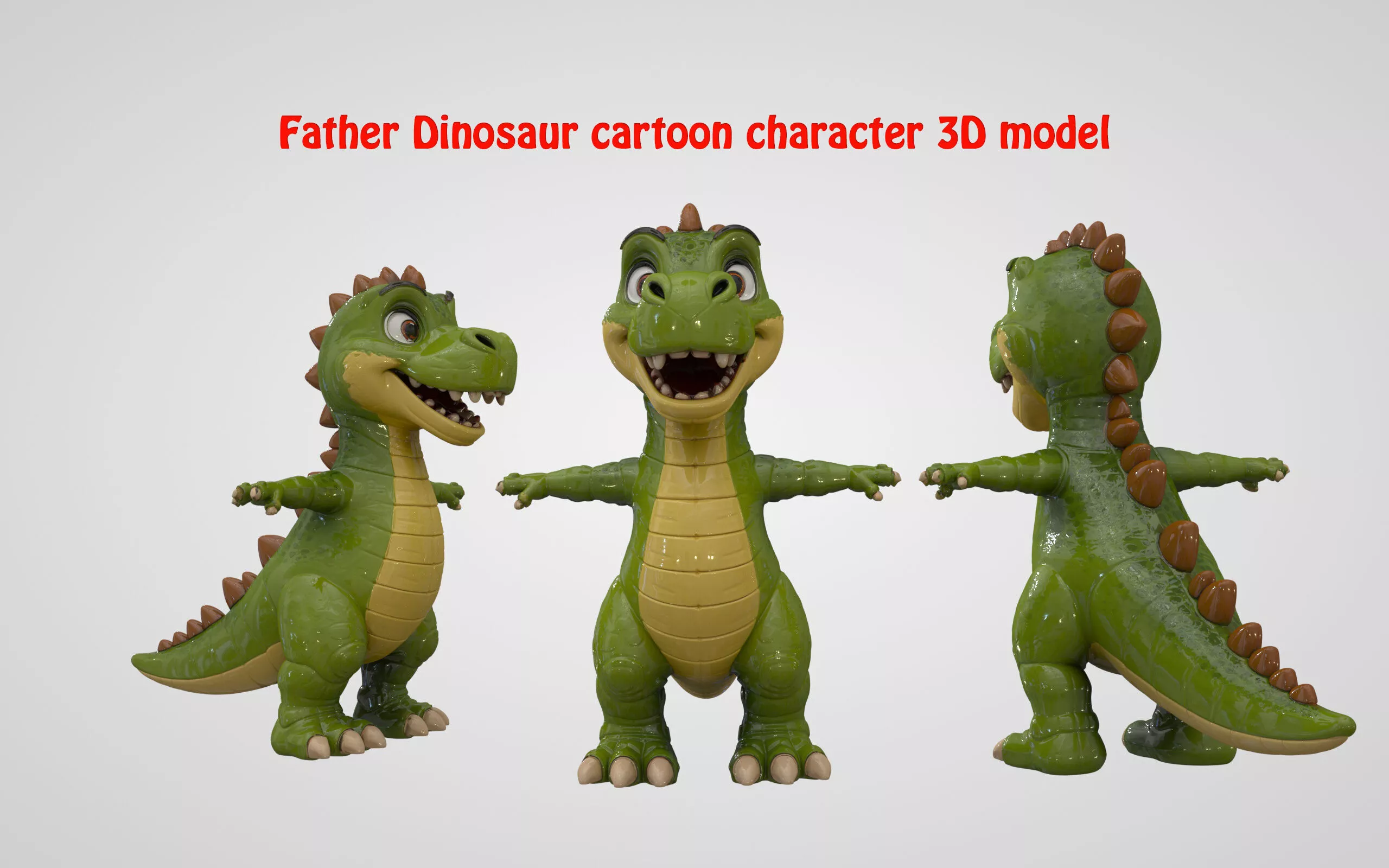
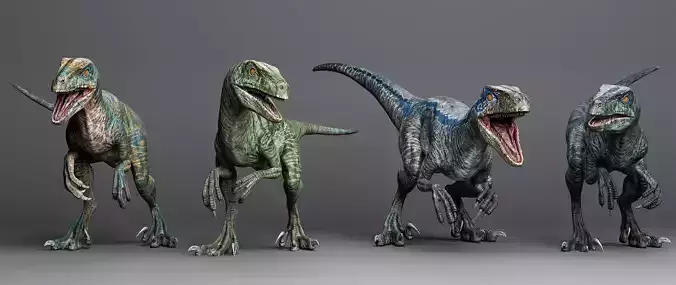
Dinosaurs are a diverse group of warmblooded reptiles[note 1] of the clade Dinosauria. They existed through most of the Mesozoic era, first appearing early in the Triassic period. They became the dominant terrestrial vertebrates after the Triassic–Jurassic extinction event 201.3 mya and their dominance continued throughout the Jurassic and Cretaceous periods. The fossil record shows that birds are feathered dinosaurs, having evolved from earlier theropods during the Late Jurassic epoch, and are the only dinosaur lineage known to have survived the Cretaceous–Paleogene extinction event approximately 66 mya. Dinosaurs can therefore be divided into avian dinosaurs—birds—and the extinct non-avian dinosaurs, which are all dinosaurs other than birds.
Dinosaurs are varied from taxonomic, morphological and ecological standpoints. Birds, at over 11,000 living species, are among the most diverse groups of vertebrates. Using fossil evidence, paleontologists have identified over 900 distinct genera and more than 1,000 different species of non-avian dinosaurs. Dinosaurs are represented on every continent by both extant species (birds) and fossil remains. Through most of the 20th century, before birds were recognized as dinosaurs, most of the scientific community believed dinosaurs to have been sluggish and cold-blooded. Most research conducted since the 1970s, however, has indicated that dinosaurs were active animals with elevated metabolisms and numerous adaptations for social interaction. Evidence shows that all dinosaurs had erect legs similar to that of birds and many mammals, as opposed to the sprawling leg stance of cold-blooded tetrapods. Some were herbivorous, others carnivorous. Evidence suggests that all dinosaurs were egg-laying, and that nest-building was a trait shared by many dinosaurs, both avian and non-avian.
While dinosaurs were ancestrally bipedal, many extinct groups included quadrupedal species, and some were able to shift between these stances. Elaborate display structures such as horns or crests are common to all dinosaur groups, and some extinct groups developed skeletal modifications such as bony armor and spines. While the dinosaurs' modern-day surviving avian lineage (birds) are generally small due to the constraints of flight, many non-avian dinosaurs were large-bodied—the largest sauropod dinosaurs are estimated to have reached lengths of 39.7 meters (130 feet) and heights of 18 m (59 ft) and were the largest land animals of all time.
The first dinosaur fossils were recognized in the early 19th century, with the name dinosaur (meaning terrible lizard) being coined by Sir Richard Owen in 1842 to refer to these great fossil lizards. Since then, mounted fossil dinosaur skeletons have been major attractions at museums worldwide, and dinosaurs have become an enduring part of popular culture. The large sizes of some dinosaurs, as well as their seemingly monstrous and fantastic nature, have ensured their regular appearance in best-selling books and films, such as the Jurassic Park franchise. Persistent public enthusiasm for the animals has resulted in significant funding for dinosaur science, and new discoveries are regularly covered by the media.
DefinitionUnder phylogenetic nomenclature, dinosaurs are usually defined as the group consisting of the most recent common ancestor (MRCA) of Triceratops and modern birds (Neornithes), and all its descendants.[7] It has also been suggested that Dinosauria be defined with respect to the MRCA of Megalosaurus and Iguanodon, because these were two of the three genera cited by Richard Owen when he recognized the Dinosauria.[8] Both definitions cover the same known genera: Dinosauria = Ornithischia + Saurischia. This includes major groups such as ankylosaurians (armored herbivorous quadrupeds), stegosaurians (plated herbivorous quadrupeds), ceratopsians (bipedal or quadrupedal herbivores with neck frills), pachycephalosaurians (bipedal herbivores with thick skulls), ornithopods (bipedal or quadrupedal herbivores including duck-bills), theropods (mostly bipedal carnivores and birds), and sauropodomorphs (mostly large herbivorous quadrupeds with long necks and tails).[9]
Birds are the sole surviving dinosaurs. In traditional taxonomy, birds were considered a separate class that had evolved from dinosaurs. However, most contemporary paleontologists reject the traditional style of classification based on anatomical similarity, in favor of phylogenetic taxonomy based on deduced ancestry, in which each group is defined as all descendants of a given founding genus.[10] Birds belong to the dinosaur subgroup Maniraptora, which are coelurosaurs, which are theropods, which are saurischians.[11]
Research by Matthew G. Baron, David B. Norman, and Paul M. Barrett in 2017 suggested a radical revision of dinosaurian systematics. Phylogenetic analysis by Baron et al. recovered the Ornithischia as being closer to the Theropoda than the Sauropodomorpha, as opposed to the traditional union of theropods with sauropodomorphs. This would cause sauropods and kin to fall outside traditional dinosaurs, so they re-defined Dinosauria as the last common ancestor of Triceratops horridus, Passer domesticus and Diplodocus carnegii, and all of its descendants, to ensure that sauropods and kin remain included as dinosaurs. They also resurrected the clade Ornithoscelida to refer to the group containing Ornithischia and Theropoda.[12][13]
General description
Triceratops skeleton, Natural History Museum of Los Angeles CountyUsing one of the above definitions, dinosaurs can be generally described as archosaurs with hind limbs held erect beneath the body.[14] Other prehistoric animals, including pterosaurs, mosasaurs, ichthyosaurs, plesiosaurs, and Dimetrodon, while often popularly conceived of as dinosaurs, are not taxonomically classified as dinosaurs. Pterosaurs are distantly related to dinosaurs, being members of the clade Ornithodira. The other groups mentioned are, like dinosaurs and pterosaurs, members of Sauropsida (the reptile and bird clade), except Dimetrodon (which is a synapsid). None of them had the erect hind limb posture characteristic of true dinosaurs.[15]
Dinosaurs were the dominant terrestrial vertebrates of the Mesozoic Era, especially the Jurassic and Cretaceous periods. Other groups of animals were restricted in size and niches; mammals, for example, rarely exceeded the size of a domestic cat and were generally rodent-sized carnivores of small prey.[16] Dinosaurs have always been recognized as an extremely varied group: over 900 non-avian dinosaur genera have been confidently identified (2018) with 1,124 species (2016). Estimates put the total number of dinosaur genera preserved in the fossil record at 1850, nearly 75% still undiscovered,[17][18][19] and the number that ever existed (in or out of the fossil record) at 3,400.[20] A 2016 estimate put the number of dinosaur species living in the Mesozoic at 1,543–2,468,[18][21] compared to the number of modern-day birds (avian dinosaurs) at 10,806 species.[22]
Extinct dinosaurs, as well as modern birds, include genera that are herbivorous and others carnivorous, including seed-eaters, fish-eaters, insectivores, and omnivores. While dinosaurs were ancestrally bipedal (as are all modern birds), some evolved into quadrupeds, and others, such as Anchisaurus and Iguanodon, could walk as easily on two or four legs. Cranial modifications like horns and crests are common dinosaurian traits, and some extinct species had bony armor. Although the best-known genera are remarkable for their large size, many Mesozoic dinosaurs were human-sized or smaller, and modern birds are generally small in size. Dinosaurs today inhabit every continent, and fossils show that they had achieved global distribution by the Early Jurassic epoch at latest.[23] Modern birds inhabit most available habitats, from terrestrial to marine, and there is evidence that some non-avian dinosaurs (such as Microraptor) could fly or at least glide, and others, such as spinosaurids, had semiaquatic habits.[24]