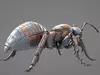
DESCRIPTION

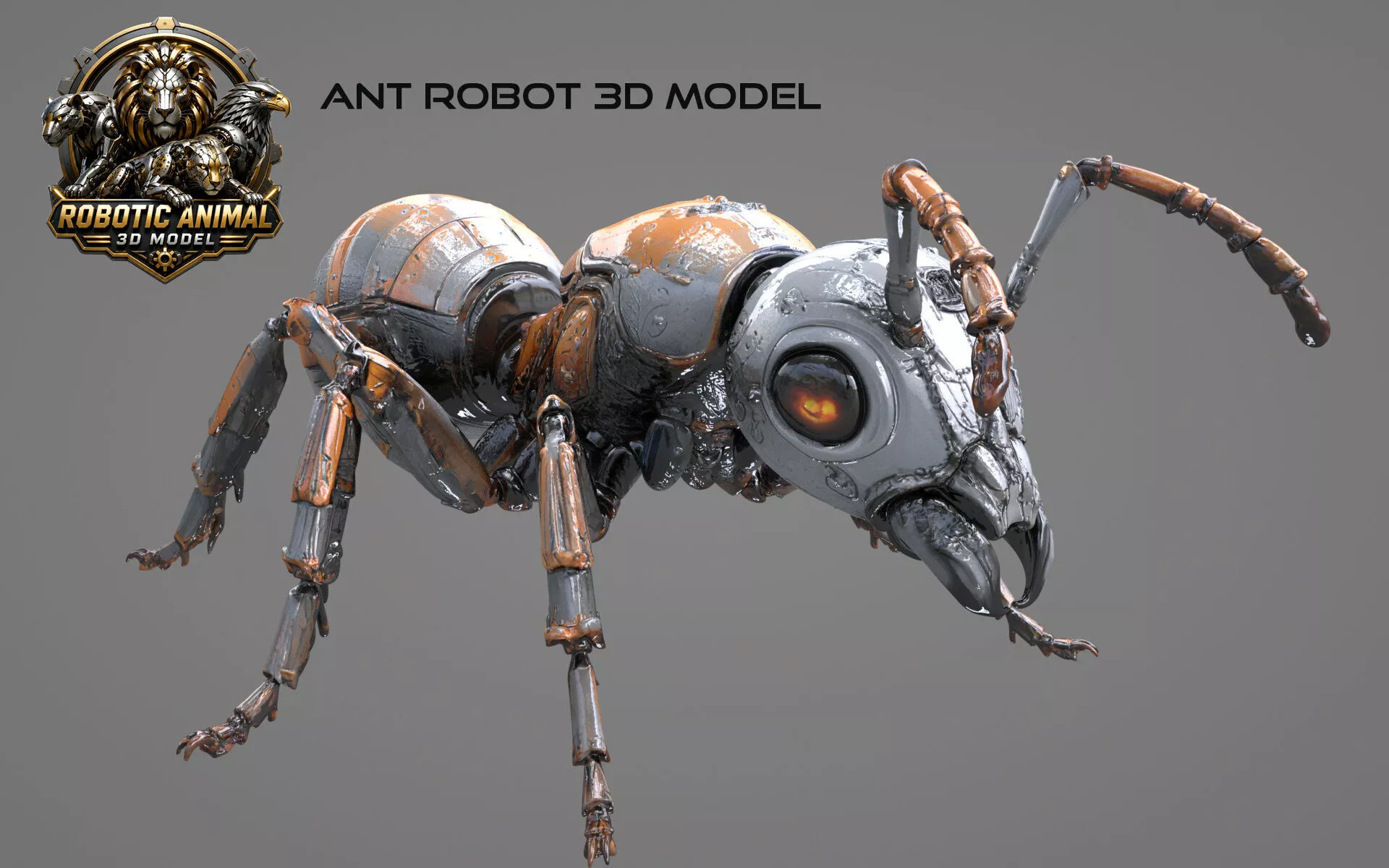
Ants are eusocial insects of the family Formicidae and, along with the related wasps and bees, belong to the order Hymenoptera.[2] Ants evolved from vespoid wasp ancestors in the Cretaceous period. More than 13,800 of an estimated total of 22,000 species have been described. They are easily identified by their geniculate (elbowed) antennae and the distinctive node-like structure that forms their slender waists.

Ants form colonies that range in size from a few dozen individuals often living in small natural cavities to highly organised colonies that may occupy large territories with a sizeable nest (or nests) that consist of millions of individuals. In some cases they reach hundreds of millions of individuals in super colonies. Typical colonies consist of various castes of sterile, wingless females, most of which are workers (ergates), as well as soldiers (dinergates) and other specialised groups. Nearly all ant colonies also have some fertile males called drones and one or more fertile females called queens (gynes). The colonies are described as superorganisms because the ants appear to operate as a unified entity, collectively working together to support the colony.

Ants have colonised almost every landmass on Earth. The only places lacking indigenous ants are Antarctica and a few remote or inhospitable islands. Ants thrive in moist tropical ecosystems and may exceed the combined biomass of wild birds and mammals. Their success in so many environments has been attributed to their social organisation and their ability to modify habitats, tap resources, and defend themselves. Their long co-evolution with other species has led to mimetic, commensal, parasitic, and mutualistic relationships.

Ant societies have division of labour, communication between individuals, and an ability to solve complex problems. These parallels with human societies have long been an inspiration and subject of study. Many human cultures make use of ants in cuisine, medication, and rites. Some species are valued in their role as biological pest control agents. Their ability to exploit resources may bring ants into conflict with humans, however, as they can damage crops and invade buildings. Some species, such as the red imported fire ant (Solenopsis invicta), Linepithema humile, Wasmannia auropunctata, Anoplolepis gracilipes, and Pheidole megacephala are regarded as invasive species in other parts of the world, establishing themselves in areas where they have been introduced accidentally.

EtymologyThe word ant and the archaic word emmet[3] are derived from ante, emete of Middle English, which come from ǣmette of Old English; these are all related to Low Saxon e(e)mt, empe and varieties (Old Saxon emeta) and to German Ameise (Old High German āmeiza). All of these words come from West Germanic *ǣmaitjōn, and the original meaning of the word was the biter (from Proto-Germanic *ai-, off, away + *mait- cut).[4][5]

The study of ants is called myrmecology, from Ancient Greek μύρμηξ mýrmēx (ant). It has been hypothesised that a Proto-Indo-European word *morwi- was the root for Sanskrit vamrah, Greek μύρμηξ mýrmēx, Latin formīca, Old Church Slavonic mraviji, Old Irish moirb, Old Norse maurr, Dutch mier, Swedish myra, Danish myre, Middle Dutch miere, and Crimean Gothic miera.[6][7]

REVIEWS & COMMENTS

See what other buyers think about this model - real feedback on quality,
accuracy, and usability.
There are no reviews or comments yet. Please be the first one to write it.
NEW
Recently added to CGTrader - explore one of the latest models on the marketplace.

ant robot 3D model 3D model

$78.00
Royalty Free License
Hire
Like this model to show appreciation to the designer.
See how many times this model was viewed.
Share this model to support the designer and boost their visibility.
File formats
STL
Stereolithography<br />Version: 1<br />File Size: 47.7 MB
OBJ
OBJ | 2 files<br />Version: 1<br />File Size: 137 MB
DAE
Collada<br />Version: 1<br />File Size: 95.2 MB
FBX
Autodesk FBX<br />Version: 1<br />File Size: 75.9 MB
C4D
Cinema 4D<br />Version: 19 - Renderer: Default 19<br />File Size: 57.6 MB
3DS
3D Studio<br />Version: 1<br />File Size: 24.7 MB
JPG
JPG<br />Version: 1<br />File Size: 42.1 MB
PNG
PNG<br />File Size: 42.1 MB
Verified by CGTrader
Verified models are of higher quality as they have
passed CGT Standard technical and visual checks,
making them more professional-grade 3D assets.
Learn more.
FBX
This FBX file has successfully passed the CGT Standard technical and visual checks. The verification results are detailed in the section below.
File & scene
Binary FBX
Binary FBX file is more compact and faster to load and process.
Learn more
No unsupported objects
Unsupported objects:
- Lights
- Cameras
Learn more
Geometry
No N-gons
N-gons are polygons with five or more sides which might cause issues in certain processes like rendering or animation. Learn more
No faceted geometry
Faceted geometry uses flat surfaces without smoothing, which can look unrealistic on curves.
Learn more
Manifold geometry
Manifold geometry ensures all surfaces are properly connected, avoiding issues like edges shared by more than two faces.
Learn more
Textures & material
PBR textures
PBR textures simulate how light interacts with materials, making the model look realistic under different lighting.
Required PBR textures:
- Base Color
- Roughness
- Metalness
- Normal
Learn more
No embed textures
Embedded textures are stored inside the model file, increasing its size and sometimes causing compatibility issues.
Learn more
Square textures
Texture aspect ratio is the width-to-height ratio of a texture. Expected texture aspect ratio: 1:1
Learn more
Power of 2 texture sizes
Textures with dimensions in power of two (e.g. 512x512px, 1024x1024px) are used to optimize performance and memory usage.
Learn more
Assigned materials
Materials are applied to the 3D model to allow visualize a model's surface properties and appearance.
Learn more
UVs & naming
No UV overlaps
UVs overlap when multiple points on the 3D model's surface are mapped to the same point on the UV island causing texture stretching.
Learn more
UV unwrapped model
A UV unwrapped model means its 3D surface is flattened into 2D space, allowing textures to be applied accurately.
Learn more
Allowed characters
Allowed ASCII characters: a-zA-Z0-9-_
Learn more
Provided by designer
Information and details shared directly by the model's designer.
3D Features
PBR
Uses Physically Based Rendering materials, which give the model realistic lighting and surface properties.
Textures
The model includes image files (textures) that add color, patterns, or detail to its surfaces.
Materials
The model has material settings that define how surfaces look (color, shine, transparency, etc.).
UV Mapping
The model's surfaces are mapped to a 2D image, allowing textures to display correctly.
Plugins Used
Some external plugins were used to create the model. These may be required for full functionality.
3D printing
Indicates whether the designer marked this model as suitable for 3D printing.
Model is not 3D printable
The designer indicates this model is intended for digital use only (rendering, animation, or AR/VR) and not for 3D printing.
Geometry
Polygon mesh
A model built from polygons (triangles or quads) connected in a mesh.
1100000 polygons
The total number of polygons (flat shapes) that make up the 3D model.
/
1100000 vertices
The number of points (corners) that define the shape of the model's polygons.
Unwrapped UVs
Publish date
Model ID
Chat