



DESCRIPTION

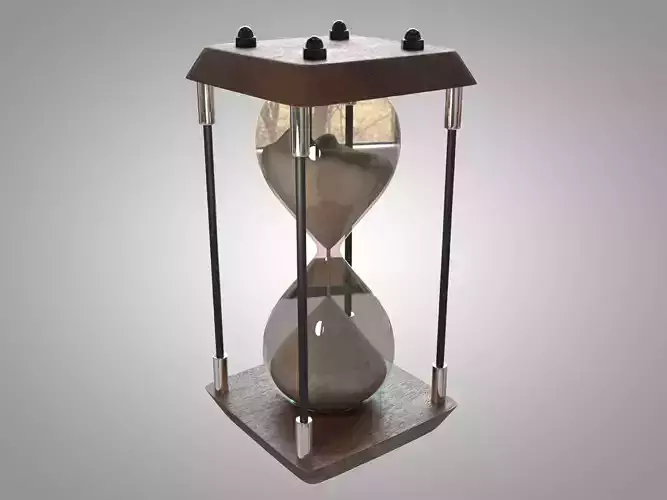
Name: HourglassModel01Dimensions: 26x26x38 cm

NumVerts: 118528NumPolys: 114032Num Faces: 235660

Render Engines:

  • VRay_RT

File Version:

  • Max_v2012 (vray)
  • FBX_v2009 (vRay)

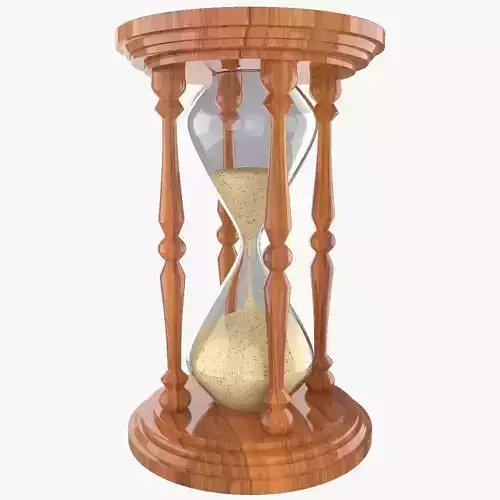
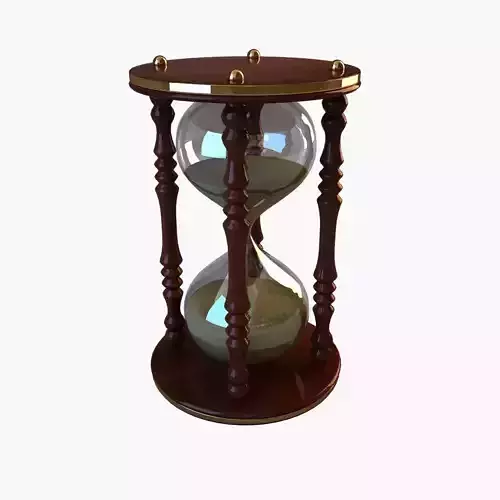
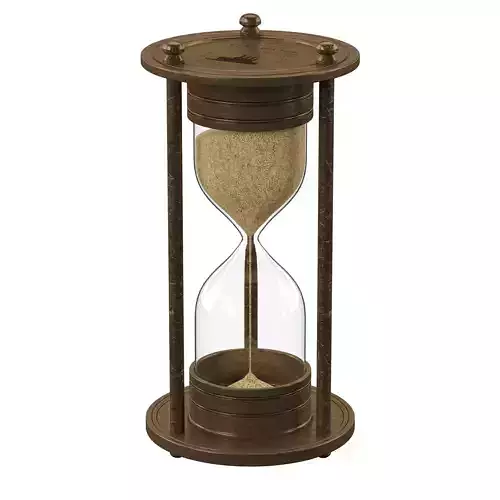
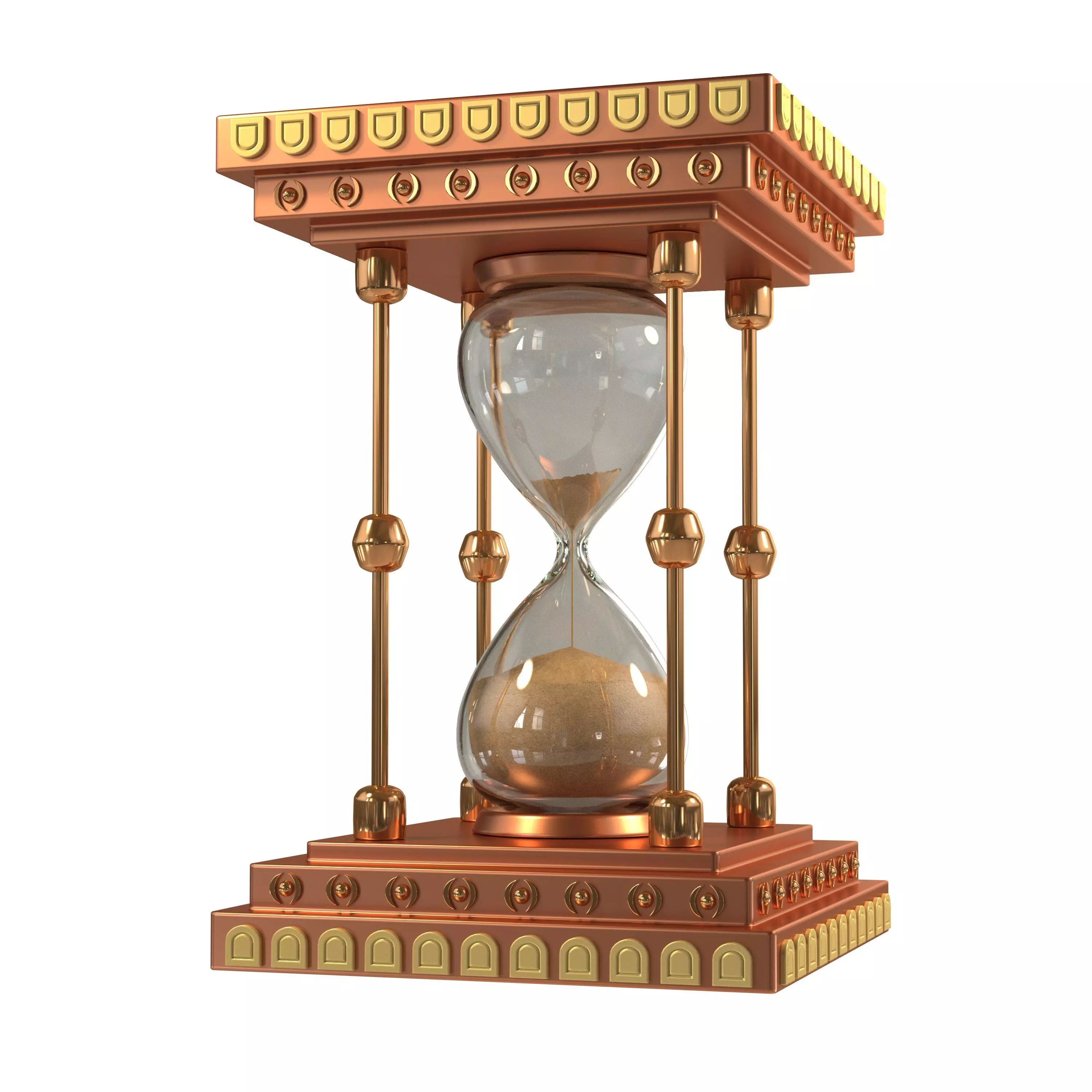
An hourglass (or sandglass, sand timer, sand clock or egg timer) is a device used to measure the passage of time. It comprises two glass bulbs connected vertically by a narrow neck that allows a regulated flow of a substance (historically sand) from the upper bulb to the lower one. Typically, the upper and lower bulbs are symmetric so that the hourglass will measure the same duration regardless of orientation. The specific duration of time a given hourglass measures is determined by factors including the quantity and coarseness of the particulate matter, the bulb size, and the neck width.The hourglass first appeared in Europe in the eighth century, and may have been made by Luitprand, a monk at the cathedral in Chartres, France. By the early fourteenth century, the sand glass was used commonly in Italy. It appears to have been widely used throughout Western Europe from that time through 1500. The hourglass or sand clock follows exactly the same principle as the clepsydra. Two globes (also called phials or ampules) of glass are connected by a narrow throat so that sand (with relatively uniform grain size) flows from the upper globe to the lower. Hourglasses were made in different sizes based on pre-tested measurements of sand flow in different sizes of globes. A housing or frame that enclosed the globes could be fitted to the two globes to form a top and bottom for the hourglass and was used to invert the hourglass and start the flow of sand again. Some hourglasses or sets of hourglasses were set in a pivoted mount so they could be turned easily.John Harrison and his brother James were introduced to clock repair by their father, Henry. At the time, clock making, or horology, was undergoing a developmental revolution. Mechanical clocks had existed since the fourteenth century, but had remained rather primitive in their operation until Christiaan Huygens invented the weight-and-pendulum clock in 1656. One limitation was that they were totally dependent upon the earth's gravity for their operation. This meant that they could not keep accurate time at sea, and could not be adapted for portability. Even moving them across a room would require adjustment.The Harrison brothers set to work on developing a marine chronometer in 1728. The motivating factor was money. In 1714, the English Admiralty set up an award of £20,000 for anyone who could provide mariners with a reliable clock that, when used with celestial sightings, could keep them informed of their longitude at sea. Mariners had to rely heavily on dead reckoning to find their way, often leading to tragic results.The Harrison strategy was to design an instrument that was not only internally accurate but also externally stable. The Harrisons made several models of marine chronometers. The fourth model proved to be the most successful. On a nine-week voyage from England to Jamaica in 1761, the device had only a five-second error.

The Board of Longitude, apparently miffed that a common artisan had achieved the coveted goal, reluctantly gave up only half of the prize. John, minus his brother, refused to accept only half of the reward and persisted until the other half was relinquished.

The Board subjected his invention to undue scrutiny and required him to design a fifth model. This time, Harrison outdid himself by designing a compact timepiece that resembled a modern day pocket watch. It was far more convenient than the previous models, which were heavy and bulky. The Board still refused to capitulate. Finally, only a personal appeal to King George III and the King's intervention could set things right, and Harrison received the full reward in 1773 at age seventy-nine. Harrison lived only three more years.

REVIEWS & COMMENTS

See what other buyers think about this model - real feedback on quality,
accuracy, and usability.
There are no reviews or comments yet. Please be the first one to write it.
BEST PRICE GUARANTEED
Found this model cheaper on another marketplace? Let our support team know - we’ll match it.

HourglassModel04 hourglass with sand in it 3D model

$9.00
Royalty Free License
Like this model to show appreciation to the designer.
See how many times this model was viewed.
Share this model to support the designer and boost their visibility.
Native file format
MAX
Size: 4.16 MB
Renderer: V-Ray | 3.0 | 2012
Exchange formats
FBX
Autodesk FBX<br />Version: 2009<br />File Size: 6.12 MB
TEXTURES
Textures<br />File Size: 616 KB
JPG
JPG<br />File Size: 616 KB
Verified by CGTrader
Verified models are of higher quality as they have
passed CGT Standard technical and visual checks,
making them more professional-grade 3D assets.
Learn more.
FBX
This FBX file has successfully passed the CGT Standard technical and visual checks. The verification results are detailed in the section below.
File & scene
Binary FBX
Binary FBX file is more compact and faster to load and process.
Learn more
No unsupported objects
Unsupported objects:
- Lights
- Cameras
Learn more
Geometry
No N-gons
N-gons are polygons with five or more sides which might cause issues in certain processes like rendering or animation. Learn more
No faceted geometry
Faceted geometry uses flat surfaces without smoothing, which can look unrealistic on curves.
Learn more
Manifold geometry
Manifold geometry ensures all surfaces are properly connected, avoiding issues like edges shared by more than two faces.
Learn more
Textures & material
PBR textures
PBR textures simulate how light interacts with materials, making the model look realistic under different lighting.
Required PBR textures:
- Base Color
- Roughness
- Metalness
- Normal
Learn more
No embed textures
Embedded textures are stored inside the model file, increasing its size and sometimes causing compatibility issues.
Learn more
Square textures
Texture aspect ratio is the width-to-height ratio of a texture. Expected texture aspect ratio: 1:1
Learn more
Power of 2 texture sizes
Textures with dimensions in power of two (e.g. 512x512px, 1024x1024px) are used to optimize performance and memory usage.
Learn more
Assigned materials
Materials are applied to the 3D model to allow visualize a model's surface properties and appearance.
Learn more
UVs & naming
No UV overlaps
UVs overlap when multiple points on the 3D model's surface are mapped to the same point on the UV island causing texture stretching.
Learn more
UV unwrapped model
A UV unwrapped model means its 3D surface is flattened into 2D space, allowing textures to be applied accurately.
Learn more
Allowed characters
Allowed ASCII characters: a-zA-Z0-9-_
Learn more
Provided by designer
Information and details shared directly by the model's designer.
3D Features
Textures
The model includes image files (textures) that add color, patterns, or detail to its surfaces.
Materials
The model has material settings that define how surfaces look (color, shine, transparency, etc.).
UV Mapping
The model's surfaces are mapped to a 2D image, allowing textures to display correctly.
3D printing
Indicates whether the designer marked this model as suitable for 3D printing.
Model is not 3D printable
The designer indicates this model is intended for digital use only (rendering, animation, or AR/VR) and not for 3D printing.
Geometry
Polygon mesh
A model built from polygons (triangles or quads) connected in a mesh.
114032 polygons
The total number of polygons (flat shapes) that make up the 3D model.
/
118528 vertices
The number of points (corners) that define the shape of the model's polygons.
Unwrapped UVs
Publish date
Model ID
Chat