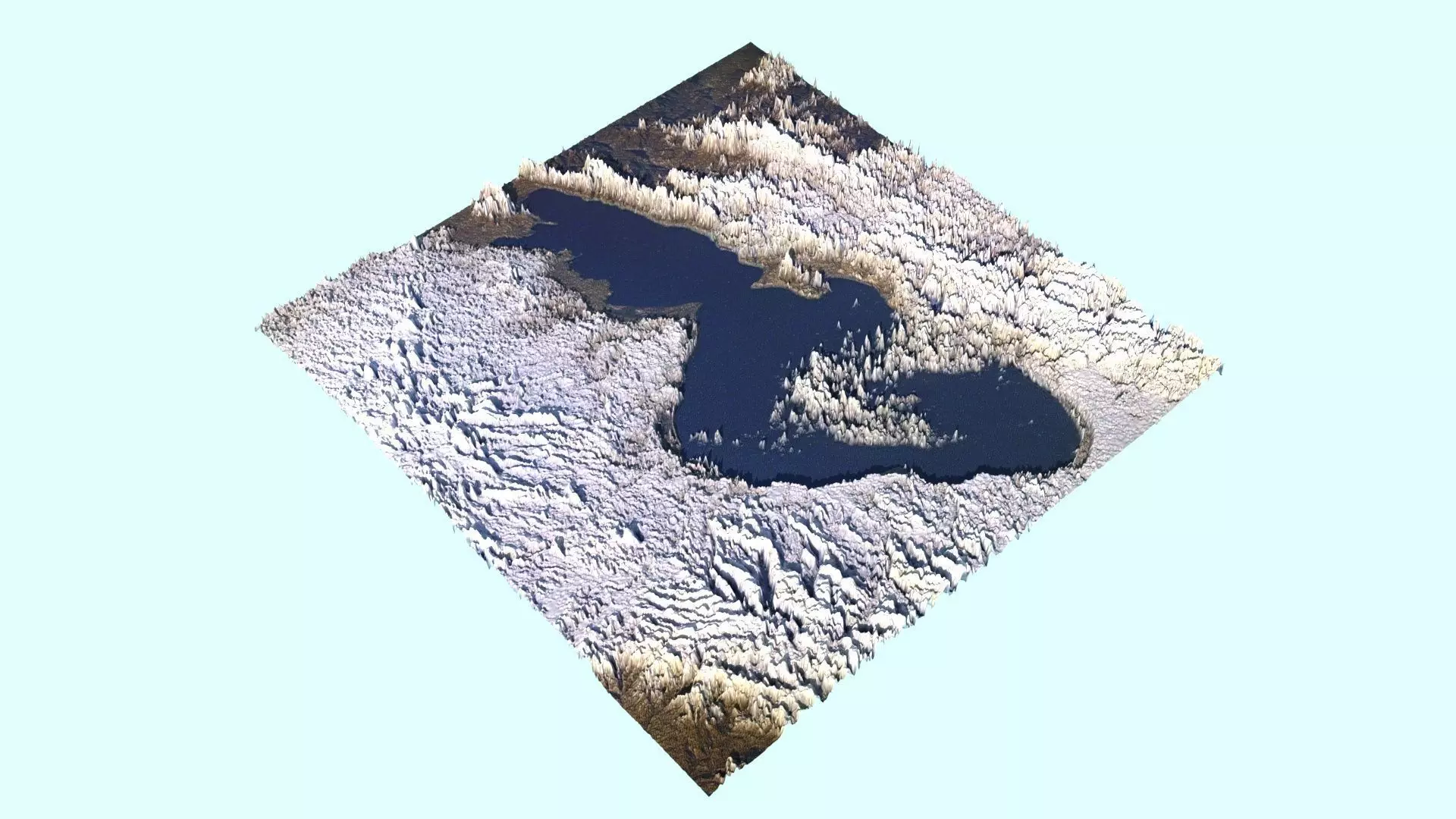
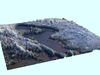
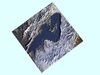
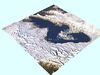
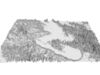
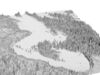
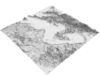
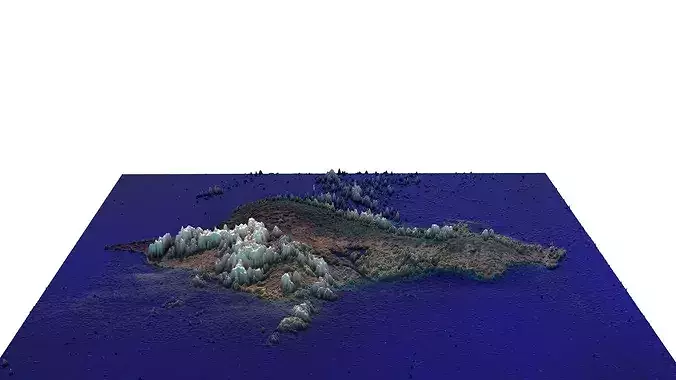
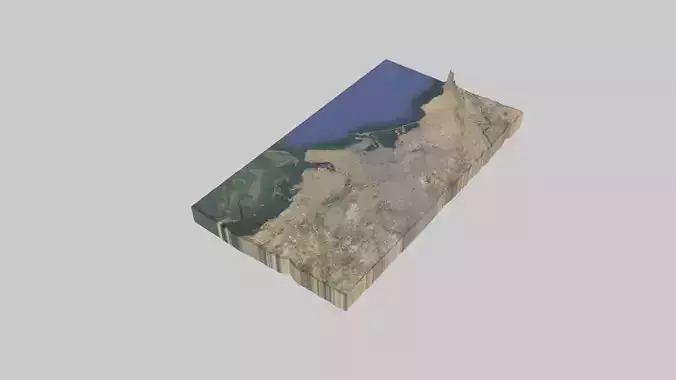
DescriptionSevan Lake. Lake Sevan (Armenian: Սևանա լիճ, romanized: Sevana lich) is the largest body of water in both Armenia and the Caucasus region. It is one of the largest freshwater high-altitude (alpine) lakes in Eurasia. The lake is situated in Gegharkunik Province, at an altitude of 1,900 m (6,234 ft) above sea level. The total surface area of its basin is about 5,000 km2 (1,900 sq mi), which makes up 1⁄6 of Armenia's territory. The lake itself is 1,242 km2 (480 sq mi), and the volume is 32.8 km3 (7.9 cu mi). It is fed by 28 rivers and streams. Only 10% of the incoming water is drained by the Hrazdan River, while the remaining 90% evaporates. Sevan has significant economic, cultural, and recreational value. Its sole major island (now a peninsula) is home to a medieval monastery. The lake provides some 90% of the fish and 80% of the crayfish catch of Armenia. Sevan was heavily exploited for irrigation of the Ararat plain and hydroelectric power generation during the Soviet period. Consequently, its water level decreased by around 20 m (66 ft) and its volume reduced by more than 40%. Later, two tunnels were built to divert water from highland rivers, which halted its decline and its level began rising. Before human intervention dramatically changed the lake's ecosystem, the lake was at an altitude of 1,916 m (6,286 ft) above sea level, 95 m (312 ft) deep, covered an area of 1,416 km2 (547 sq mi) (5% of Armenia's entire area), and had a volume of 58.5 km3 (14.0 cu mi). In the Middle Ages, Sevan was solely the name of the island (now peninsula) and the monastery built on it. In the 19th and early 20th centuries, Russian and European sources sometimes referred to the lake as Sevanga or Sevang, Per folk etymology, Sevan is either a combination of sev (black) and vank’ (monastery), sev (black) + Van (i.e., Lake Van), or originates from the phrase sa ē vank'ə (this is the monastery). The scholarly explanation, first suggested by Mikhail V. Nikolsky in 1896, is that Sevan originated from the Urartian word suinia, usually translated as lake. It is attested on an 8th-century BC cuneiform inscription by the Urartian king Rusa I, found in Odzaberd, on the southern shore of the lake. The historical Armenian name of the lake, attested in early medieval texts, is Sea of Gegham (classical Armenian: ծով Գեղամայ, tsov Geghamay). The historic Georgian name of the lake is Gelakuni (გელაქუნი), which is essentially the Georgian transcription of Armenian Gegharkuni. In classical antiquity, the lake was known as Lychnitis (Ancient Greek: Λυχνῖτις). John Chardin, who visited the lake in 1673, called it the Lake of Erivan and wrote that it was called Deria-Shirin (sweet lake) by Persians and Kiagar-couni-sou by Armenians.
Texture Resolution: 1080 x 1350