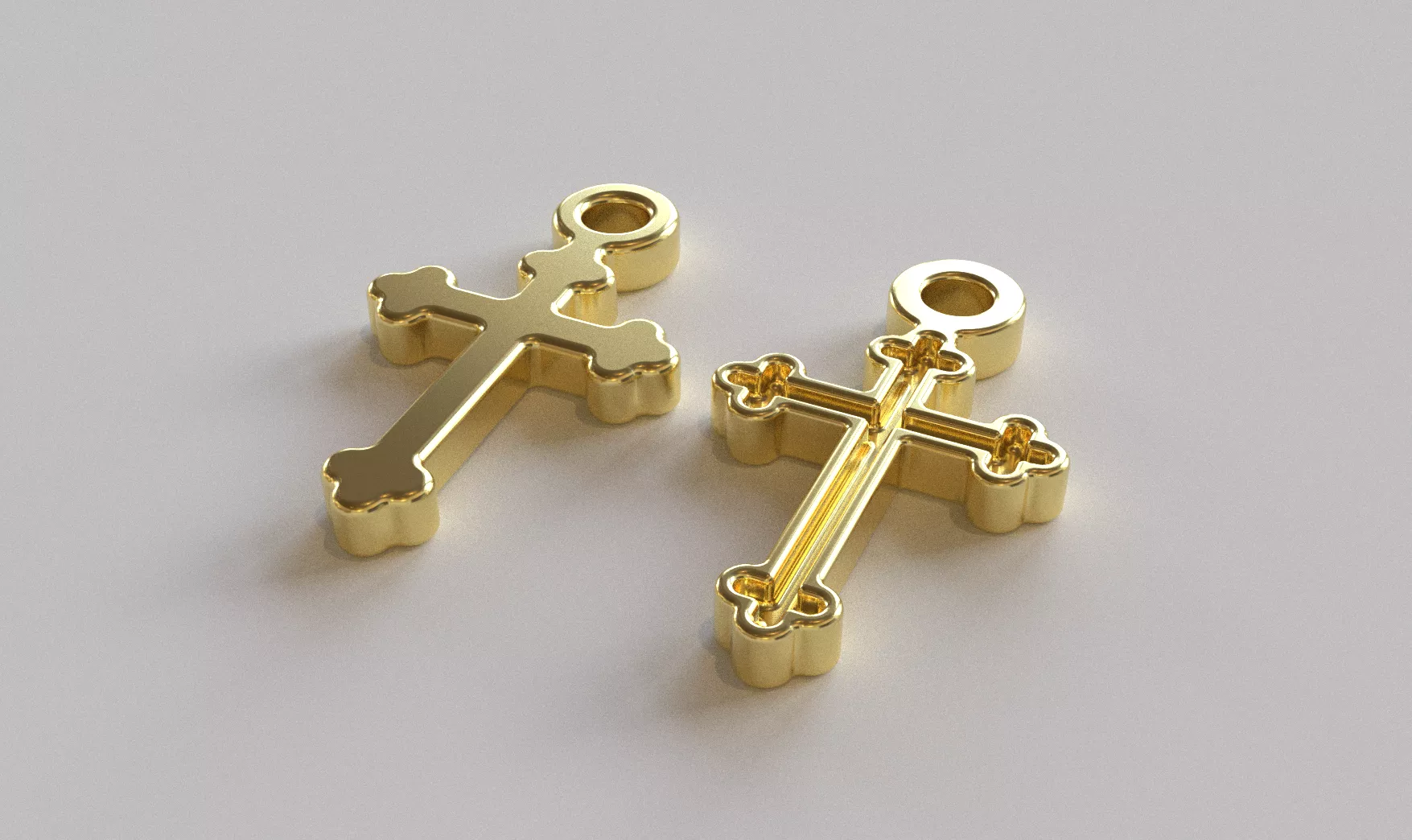
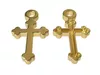
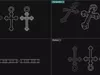
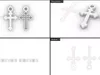
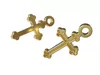
Cross Clover Hands is a compact, production-oriented cross pendant designed with jewelry manufacturing and casting requirements in mind.
The model is supplied in 3DM and STL formats, with clean, closed geometry and smooth front-to-back topology, making it suitable for 3D printing, CNC workflows, laser-related production workflows, prototyping and lost-wax/resin casting.
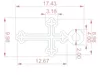
The overall dimensions are approximately 17.43 mm in height, with a maximum width of approximately 9.98 mm on the Solid version and 9.42 mm on the Hollow version. The upper attachment loop has an approximately 4.00 mm outside diameter and 2.00 mm internal opening, allowing a suitable jump ring/bail and chain to be fitted directly through the pendant. and overal thickness of 1.90 mm which is a safe thick for gold works.
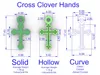
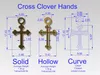
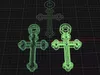
The design is provided in three construction versions: Solid, Hollow and Curve.
The Solid version has an estimated average weight of approximately 1.38 g in 18K yellow gold, while the Hollow version is approximately 1.18 g in 18K yellow gold. The Curve version is supplied as a clean closed-curve design intended as a flexible starting point for further CAD/CAM adaptation and manufacturing preparation. The supplied CAD dimensions and weights are approximate reference values; final metal weight will vary according to alloy, casting shrinkage, production tolerances and finishing.
The geometry has been developed with gold casting principles in mind. Because precious-metal casting—particularly in delicate, small-scale jewelry components—can be sensitive to thin sections, abrupt transitions, incomplete fill, investment failure and finishing loss, the model avoids unnecessarily fragile construction where possible. Casting references commonly emphasize controlled transitions and adequate section thickness because very thin or abrupt thick-to-thin areas can contribute to porosity, tearing or incomplete filling. The design can therefore be cast in 18K yellow gold and adapted for other precious metals and alloys, subject to the specific casting requirements of the chosen material and the caster's process. Final production should always be reviewed by the manufacturer for spruing, investment, shrinkage compensation and finishing allowances.
The files are intended to provide a clean manufacturing starting point rather than merely a visual 3D model.
The STL is prepared for digital fabrication/3D-print workflows, while the 3DM provides the editable Rhino/Matrix-compatible CAD source. The surfaces are designed to remain clean and smooth from front to back and head to toe, allowing the piece to be inspected, modified, printed, milled or prepared for casting without relying on a decorative render mesh.
Customization: Feel free to comment and request changes to the design according to the capabilities, facilities, and machines available in your lab. Manufacturing requirements can vary between casting houses and CNC/printing workflows, so reasonable dimensional or structural adaptations can be discussed before production.
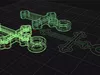
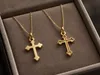
*last picture in the row hs been made bi AI.