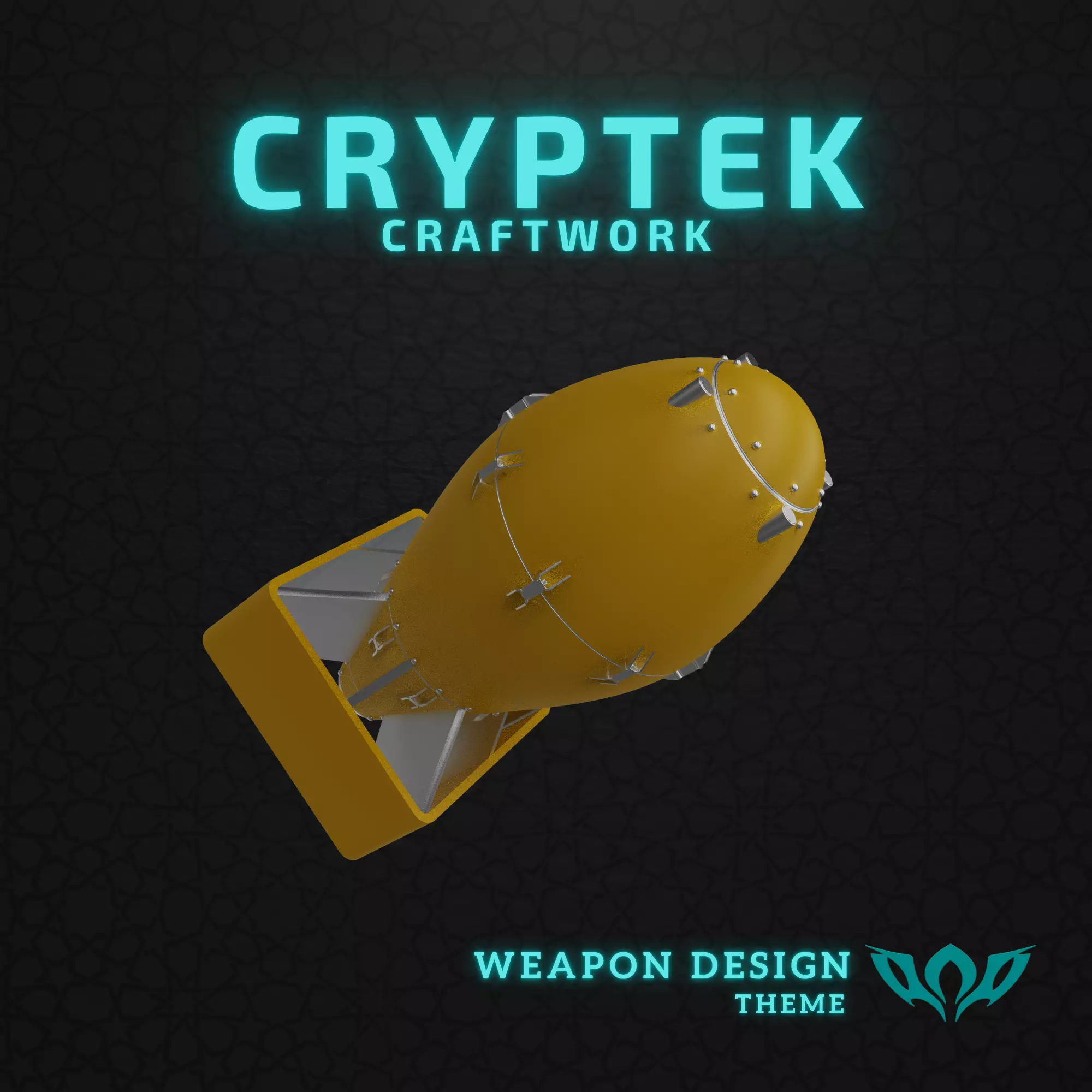
Title: 01. Fat Man Nuclear Bomb - US - Little Details, Big Impact: The Fat Man 3D Print File. Plutonium Implosion-type Atomic Bomb - Nuclear Weapon by Robert Oppenheimer Model:
- Fat Man Nuclear BombModel Size: 128 inSeries: Bomb Series
Bring a piece of monumental history to your workshop with the Fat Man Nuclear Bomb 3D Print File (US Model) — a detailed, ready-to-print digital replica designed for miniature builders and military collectors alike. Crafted with precision and dimension accuracy, this model captures every curve and contour of the iconic WWII-era weapon in stunning fidelity. Whether you’re building a historical diorama, creating a war museum display, or just exploring your passion for military engineering, this file delivers a deeply satisfying print experience.
Perfect for painters, scale modelers, or history buffs, this digital file offers customization freedom — resize it to fit your layout, hollow it for lighting effects, or print it solid for a commanding desk centerpiece. Every rivet and proportion is thoughtfully modeled to celebrate not destruction, but design — a reflection on the complex history of innovation in wartime technology.
Enjoy the thrill of creation as you watch the “Fat Man” take shape layer by layer. It’s more than a print — it’s a conversation starter, a testament to human ingenuity, and a piece of history bound to spark curiosity among fellow hobbyists and collectors.
Manufacturer BackgroundThe real “Fat Man” bomb was produced under the supervision of the Los Alamos Laboratory as part of the top-secret Manhattan Project during World War II. The primary assembly contractor was The United States Army Ordnance Department, working in collaboration with research teams at Los Alamos Scientific Laboratory and Project Y. The casing and explosive lenses were carefully engineered by Dow Chemical and Los Alamos engineers, ensuring stability, precision, and timing essential to its powerful implosion-type design.
Historical SignificanceThe Fat Man bomb became one of history’s most defining weapons when it was dropped on Nagasaki, Japan, on August 9, 1945, marking only the second time a nuclear weapon was ever used in warfare. Its plutonium-core structure and innovative implosion mechanism represented a leap in scientific achievement — combining complex mathematics, material science, and wartime urgency. Though its devastation ushered in the nuclear age, “Fat Man” today stands as a somber reminder of the power of human invention and the responsibility that comes with it.
It remains both a symbol of the end of World War II and a key chapter in the ongoing story of global peace and deterrence — one that history enthusiasts and makers alike can explore through thoughtful recreation and modeling craftsmanship.