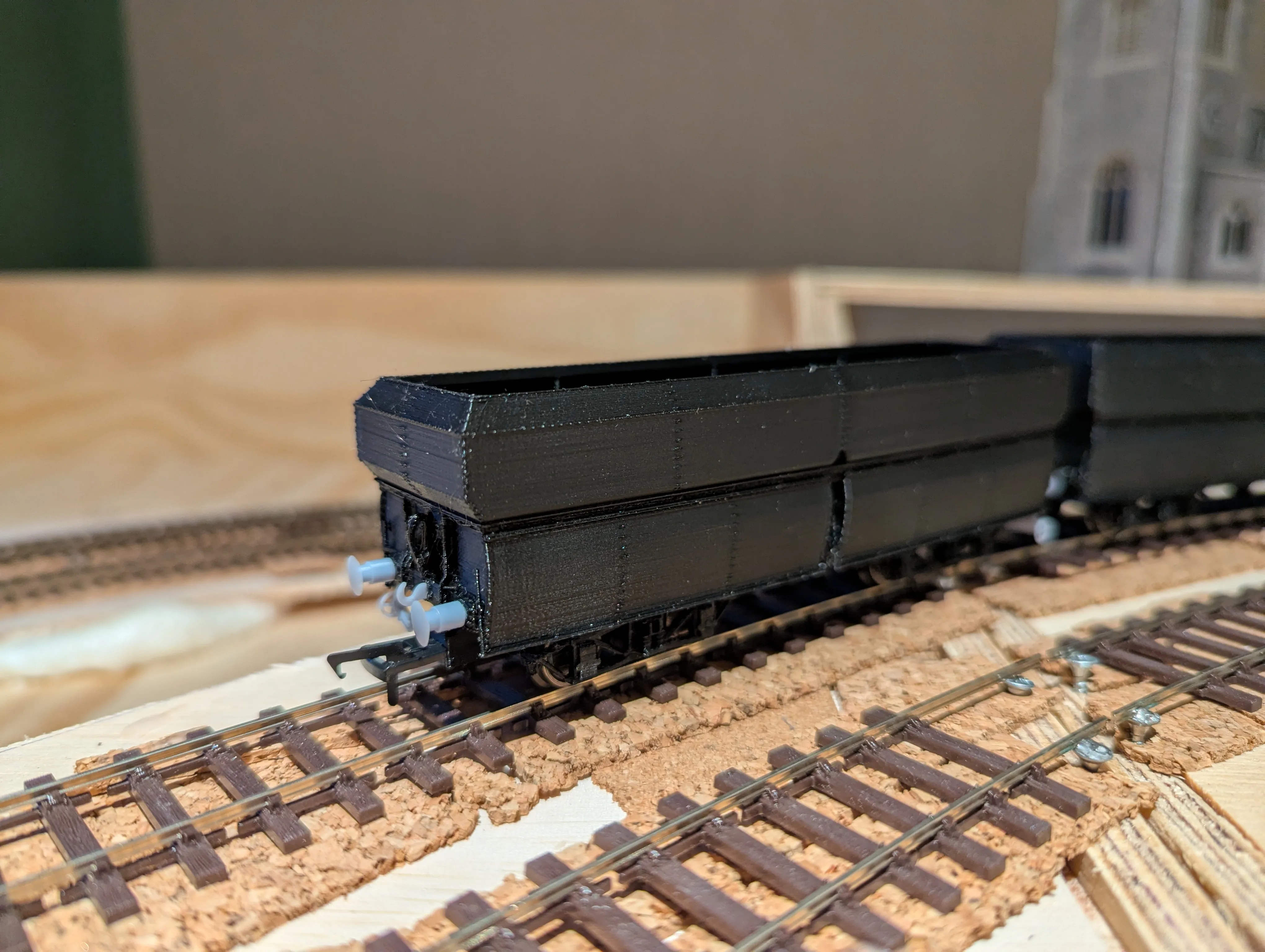
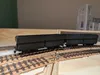
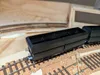
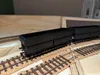
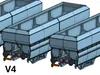
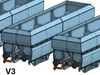
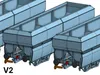
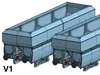
These are models of the LMS's 40T coal hopper wagons. I modelled all the detail differences these hoppers received during their careers, and hope to explain which timeframe fits which hopper best below. The bogies are made to be used with bearings and 10.5mm wheels, as these are closer to those on the original drawings. I used both said original drawings and photographs of the wagons throughout their working lives to try and recreate these unique wagons as best as I could.
The coal hoppers were seen with a large variety of engines, ranging from single 4Fs on empties up to a G2 and 8F double heading a rake of 40Ts plus conventional open wagons. There's also photos of Stanier 8Fs on these trains on their own, as well as an AL6 electric hauling a mix of V3 and V4 (I'll explain those denotations below) hoppers in the 1960s.
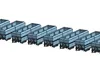
There is eight variations of these wagons which cover as-built condition and three modifications done to the real wagons. In addition, there were two different variations of wagon body from the start, with the ribs to the left and right of the vacuum pipe being inverted on the later batches (see the photos showing two wagons in CAD each). I've dubbed these 'prototype' and 'production'. The prototype batch includes no. 189301 for sure, and possibly up to 189306, as 189307 is the next in line of which a clear photo showing both the number and different ribs in question exists. Onto the four variations then: I've named these V1 through V4. V1 is the 1929 as-built condition, featuring brake blocks on the inner side of all four wheels, and no brake wheels. V2 adds the handbrake wheels and four more brake blocks, so that the bogies now feature eight brake blocks each, two per wheel on the inside and outside of the bogie. I was not able to figure out when this took place, but it's likely the early 30s. With the modification that makes V3, fitted from 1937 onwards, the wagons received a strenghtening strip along the bottom of the four hopper doors, as well as three more latches. The final modification, V4, was done in the mid-60s and adds another strengthening strip halfway up the door.
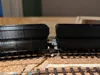
The files supplied include six body variations, as V1 and V2 share the same body. Both the prototype and production bodies come in V1/V2, V3 and V4 formats. To differentiate between V1 and V2, two folders are included, each featuring the rest of the parts needed to finish the model. V2, V3 and V4 use the same detailing arrangement and only differ in the strengthening strips mentioned above. Within both part folders, a bogie with and without NEM pocket are supplied. The former of those two can be used if you want to fit a magnetic coupling like I did on my examples as shown in the photographs. This fits a 3mm square magnet. The NEM bogie can be used with any NEM coupling, but is fixed to the bogie, so using couplings meant for kinematic NEM shafts may not work.
To sum all this up: