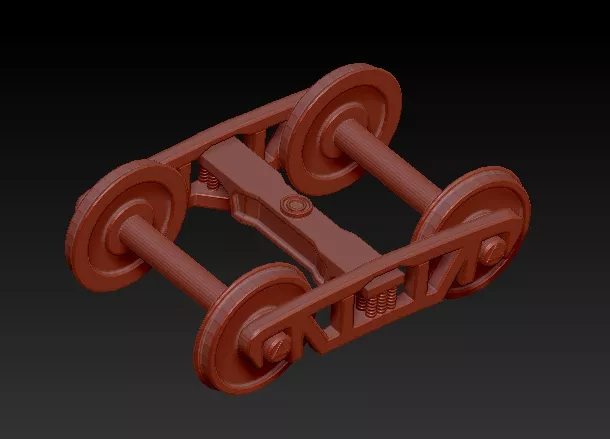
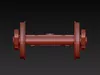
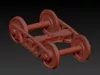
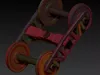
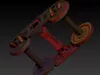
A rail bogie is a wheeled undercarriage chassis located beneath a train coach, wagon, or locomotive to support its weight, guide it along the tracks, and absorb vibrations.A standard railway vehicle uses two bogies, placed near each end of the car body. Instead of fixing wheels rigidly to the main body, a bogie pivots underneath, allowing the train to steer smoothly around curves and reduce track wear. The main structural metal framework that holds all the parts together and handles physical loads. Steel wheels pressed firmly onto a shared steel axle so they rotate together; most bogies feature two wheelsets (4 wheels total). Springs and dampers placed right at the axle level to soak up fast jolts and tiny bumps from rail joints. Heavy-duty coil or air springs placed between the bogie frame and the train body to isolate passengers from slow swaying and rocking motions. A central beam or connection point that lets the bogie swivel beneath the carriage and transfers pulling (traction) forces.Types of Bogies• Motor Bogie: Contains built-in traction motors and gearboxes to power and move the train.• Trailer (Carrier) Bogie: Does not have a motor; it simply supports weight, rolls freely, and provides braking.• Jacobs Bogie: A shared bogie placed directly between two connected rail cars to save weight and improve stability.This model is made in zbrush and it is used for only 3d printing.