OVERVIEW
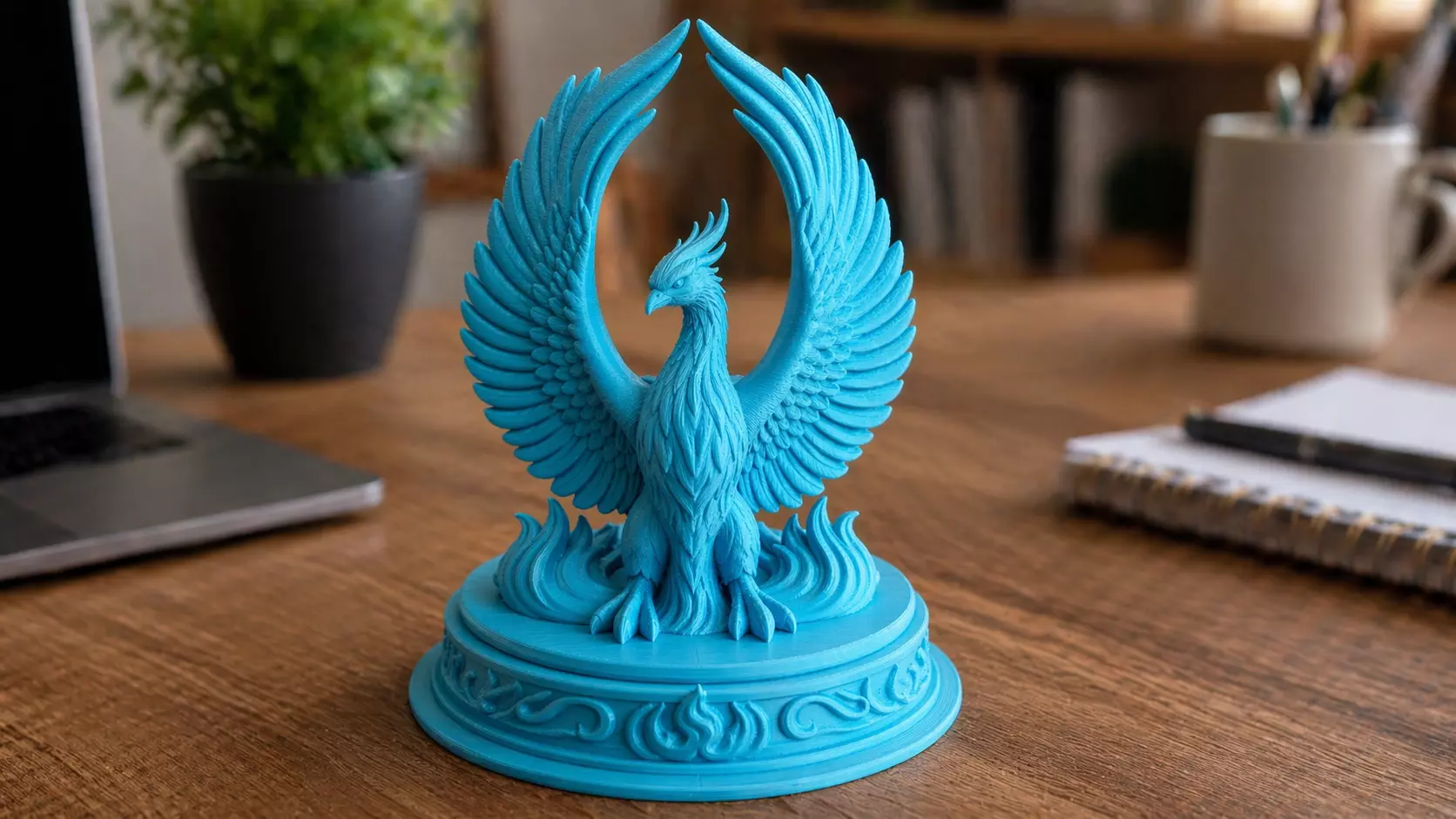
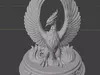
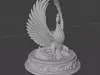
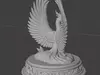
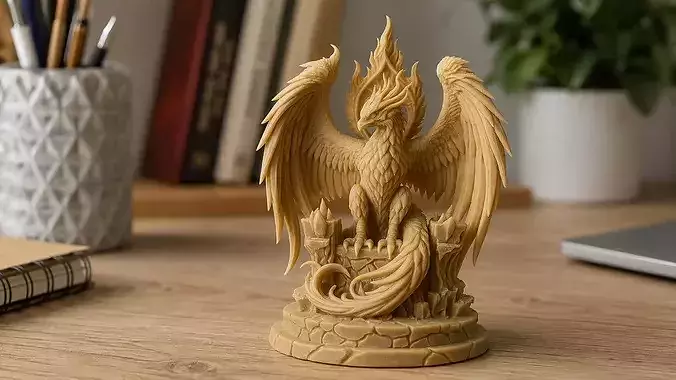
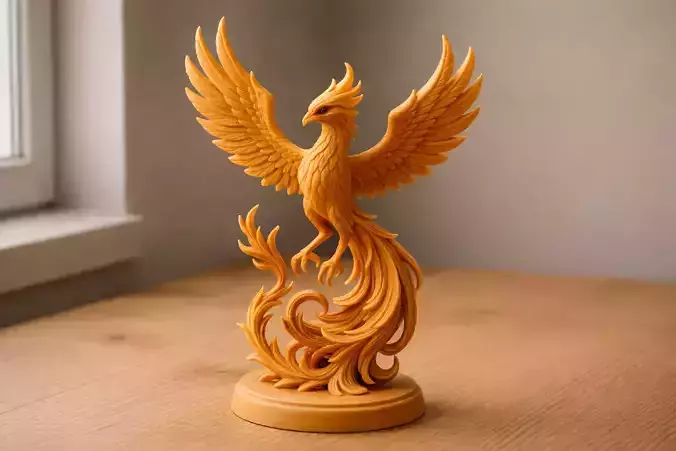
This fantasy phoenix figurine features a vertically balanced composition built around a large symmetrical wing span and a centered avian body pose. The creature stands upright on a circular ornamental base with both wings extended upward in a crescent-like arc that frames the silhouette from edge to edge. The overall shape language combines sharp feather layering with smooth flowing transitions through the neck, chest, tail, and flame-inspired base elements.
The model maintains strong visual readability from multiple viewing angles due to the open wing spacing and centered stance. The head remains clearly visible between the raised wings, while the layered feather structure creates depth without visually overcrowding the sculpture. The lower body integrates naturally into the decorative platform through curved flame forms that reinforce the fantasy aesthetic and stabilize the composition visually.
The circular pedestal adds weight distribution to the design and creates a clean display presentation suitable for shelf decor, tabletop presentation, or fantasy collectible display environments.
DESIGN DETAILS
The figurine contains dense feather sculpting throughout the wings, chest, neck, and tail sections. Individual feather layers are deeply separated and visually defined, producing strong surface texture across large portions of the model. The wings transition from larger outer feathers into tightly packed internal feather rows that increase geometry complexity toward the center structure.
The body maintains smoother transitions compared to the wing edges, helping separate focal areas visually. The head crest and neck plumage use elongated directional feather flow that guides attention upward through the sculpture. The claws and lower body integrate into the base with enclosed contact points that improve structural continuity.
The decorative base includes raised ornamental scrollwork and flame-like structures surrounding the phoenix feet. These elements add surface variation while maintaining a compact footprint suitable for display. The design uses a mix of enclosed structural areas and open negative space beneath the wings, improving visual depth while preserving collectible readability.
Edge treatment remains relatively sharp around the feather tips and crest sections, while broader curved surfaces along the body and pedestal maintain smoother transitions. The model appears optimized as a decorative fantasy sculpture rather than a mechanical or articulated figure.
PRINTING ANALYSIS
This phoenix sculpture appears highly suitable for resin printing due to the fine feather detailing, layered textures, and ornamental surface density. Resin production would preserve the sharp feather separations and subtle sculpt transitions across the wings and body.
FDM printing is also viable, particularly at larger display scales, though support generation would likely be required beneath the raised wings, feather overhangs, and elevated tail sections. The inner wing curves and underside feather layers represent the most likely overhang-sensitive regions.
The circular base provides strong stability during printing and display. The largest structurally sensitive areas are the upper wing tips and thinner feather extremities, which may require careful orientation and support consideration depending on scale.
An angled orientation may help reduce support concentration beneath the wings while preserving visible feather surfaces. The sculpture overall maintains a solid central mass with a balanced vertical profile, making it visually suitable as both a resin figure and decorative FDM display piece.