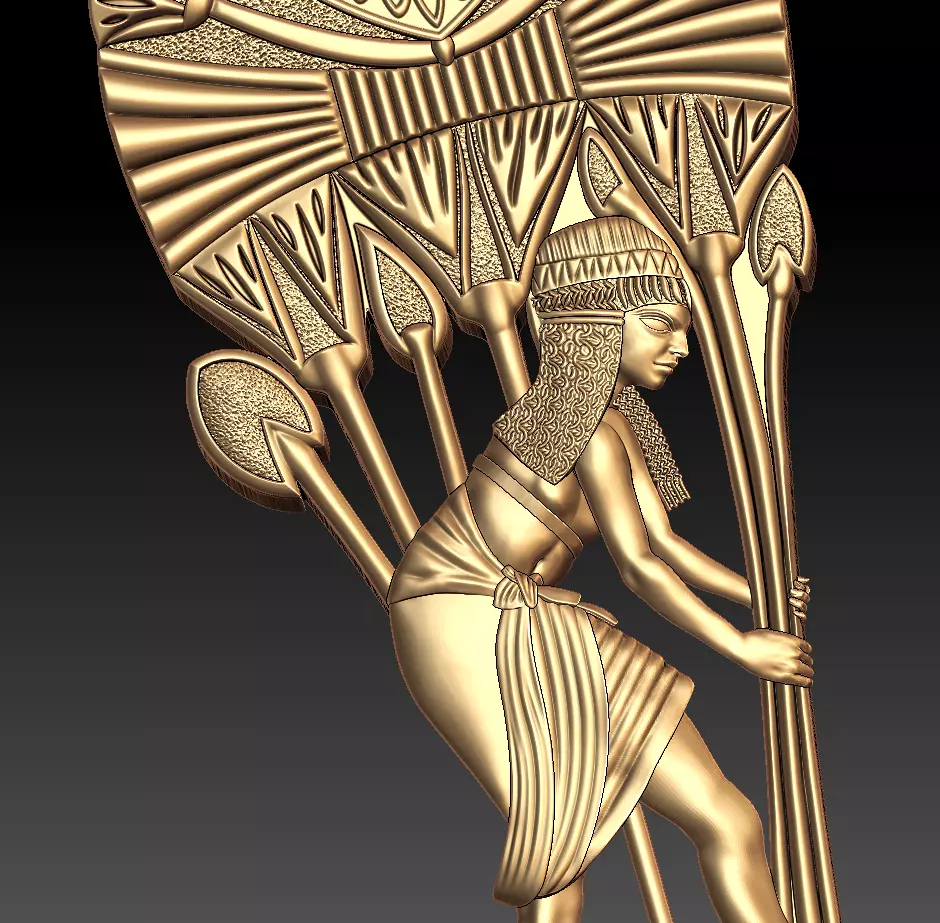
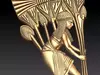
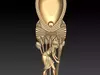
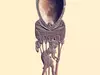
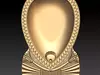
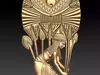
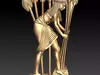
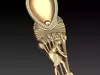
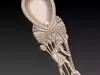
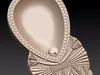
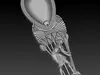
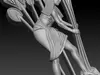
This artifact is a cosmetic spoon that exemplifies the refined art of Pharaonic Egypt and dates back to ancient Egyptian civilization around 1350 BCE.Known as Pharaonic cosmetic spoons, they were used by the wives of the pharaohs to mix cosmetics and then apply them to beautify themselves. Observe the creative design and refined taste of that era.
This piece dates back to the New Kingdom period (between 1400 and 1200 BC), and some to the 25th Dynasty (715–656 BC).
Add a touch of the mystery and power of ancient Egypt to your home, or display your collection with this high-resolution 3D model. This model captures the rich symbolism and historical depth of one of the world’s most famous ancient artifacts, currently on display at the Louvre Museum.
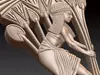
This artwork features depictions of figures (such as a beautiful girl) holding plants (such as lotus) in a meticulously rendered artistic scene. These were used to store and mix cosmetics and scented oils, and ancient Egyptian women also used them as measuring cups and scales to prepare and mix kohl and formulate cosmetics with precise ratios of fats and oils. This use of spoons stemmed from the ancient Egyptians’ great interest in adornment for both women and men, as the use of kohl, henna, and various cosmetic materials was common, and spoons were used to prepare them. Additionally, some spoons were used to prepare medicines, embalming materials, and mix herbs for nearly 3,300 years.
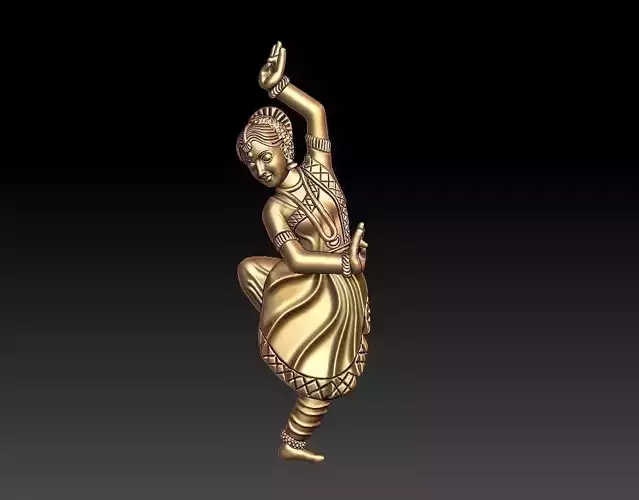
It took on various forms, including animals, deities, dancing girls, and geometric and artistic designs; this spoon depicts a beautiful girl picking lotus flowers
In ancient Egypt, a strong desire to beautify the body developed, as evidenced by their fascination with perfumes, cosmetics, wigs, beads, and, among many other things, decorative tools as well.
Perfect for 3D printing enthusiasts, history buffs, or anyone wishing to create Ancient Egyptian-inspired decor, costume accessories, jewelry prototypes, or unique display pieces.
The model comes in high-resolution STL format,ready for 3D printing using FDM, resin, or SLA printers.Whether you’re a hobbyist, a professional, or a designer looking to expand your digital asset library
Perfect for: 3D printing enthusiasts and makers
Collectors and enthusiasts of ancient Egyptian artifacts
Costume designers
Home decor projects
Jewelry and accessory prototyping
Educational exhibits and museums
Ready to print
Recommended materials: PLA, resin, ABS, PETG
Size: Adjustable according to your project requirements
Supports: Optimized design for easy printing with minimal supports