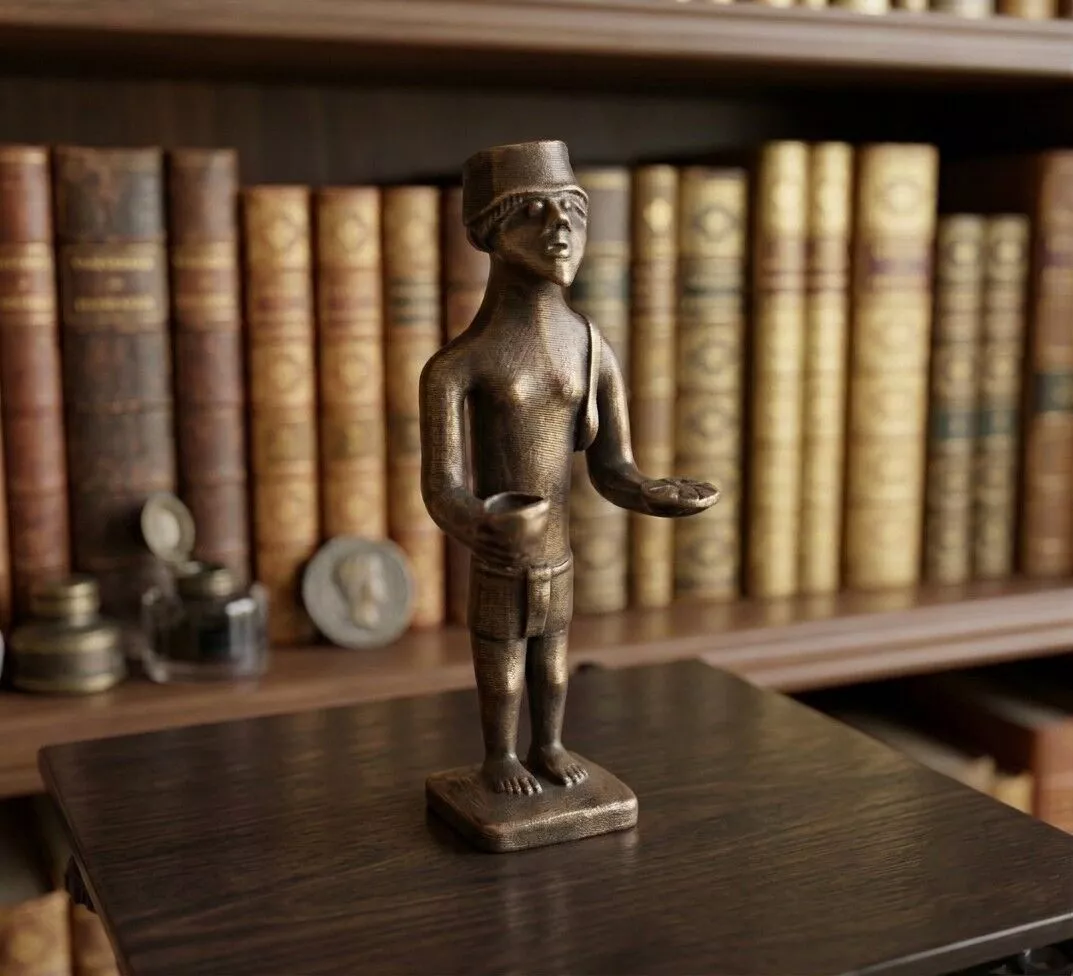
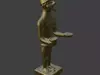
Barbetta is one of the most fascinating Nuragic bronze figurines ever discovered in Sardinia. This miniature statue represents a Nuragic priest or sacred officiant, and was found at the important sanctuary of Matzanni, near Vallermosa, in southwestern Sardinia. The figurine is commonly known as Barbetta (Little Beard) because of its distinctive pointed beard and elongated facial features.
This model depicts the priest standing upright, holding a small bowl in one hand and a round offering loaf or sacred bread in the other, symbols of ritual offerings connected to the Nuragic cult of water and religious ceremonies. The original bronze was discovered within the sacred well complex of Matzanni, one of the most important religious sites of Nuragic Sardinia.
The figure's stylized face, tall neck, and ceremonial posture are characteristic of Nuragic bronze art, reflecting the remarkable craftsmanship and symbolic language developed by Sardinian metalworkers more than 2,500 years ago. The original artifact is currently preserved in the National Archaeological Museum of Cagliari.
3D Printing NotesThis model is ideal for:
Historical and archaeological collectionsMuseum reproductionsEducational projectsSardinian cultural heritage enthusiastsDecorative display piecesThe model captures the unique proportions and iconic features of the original bronze figurine while being optimized for modern 3D printing.
A Brief History of Nuragic Bronze FigurinesNuragic bronze figurines (Bronzetti Nuragici) are small bronze sculptures created by the ancient Nuragic civilization of Sardinia between the Late Bronze Age and the Early Iron Age, roughly from the 12th to the 6th century BC. They were produced using the sophisticated lost-wax casting technique and were primarily offered as votive gifts in temples, sacred wells, and sanctuaries.
More than 500 examples have been discovered, depicting warriors, archers, chiefs, priests, women, animals, ships, and everyday objects. These figurines provide an extraordinary window into Nuragic society, revealing its social structure, religious beliefs, military organization, and artistic achievements. Today, they are considered among the most iconic symbols of ancient Sardinia and one of the finest expressions of prehistoric Mediterranean bronze art.