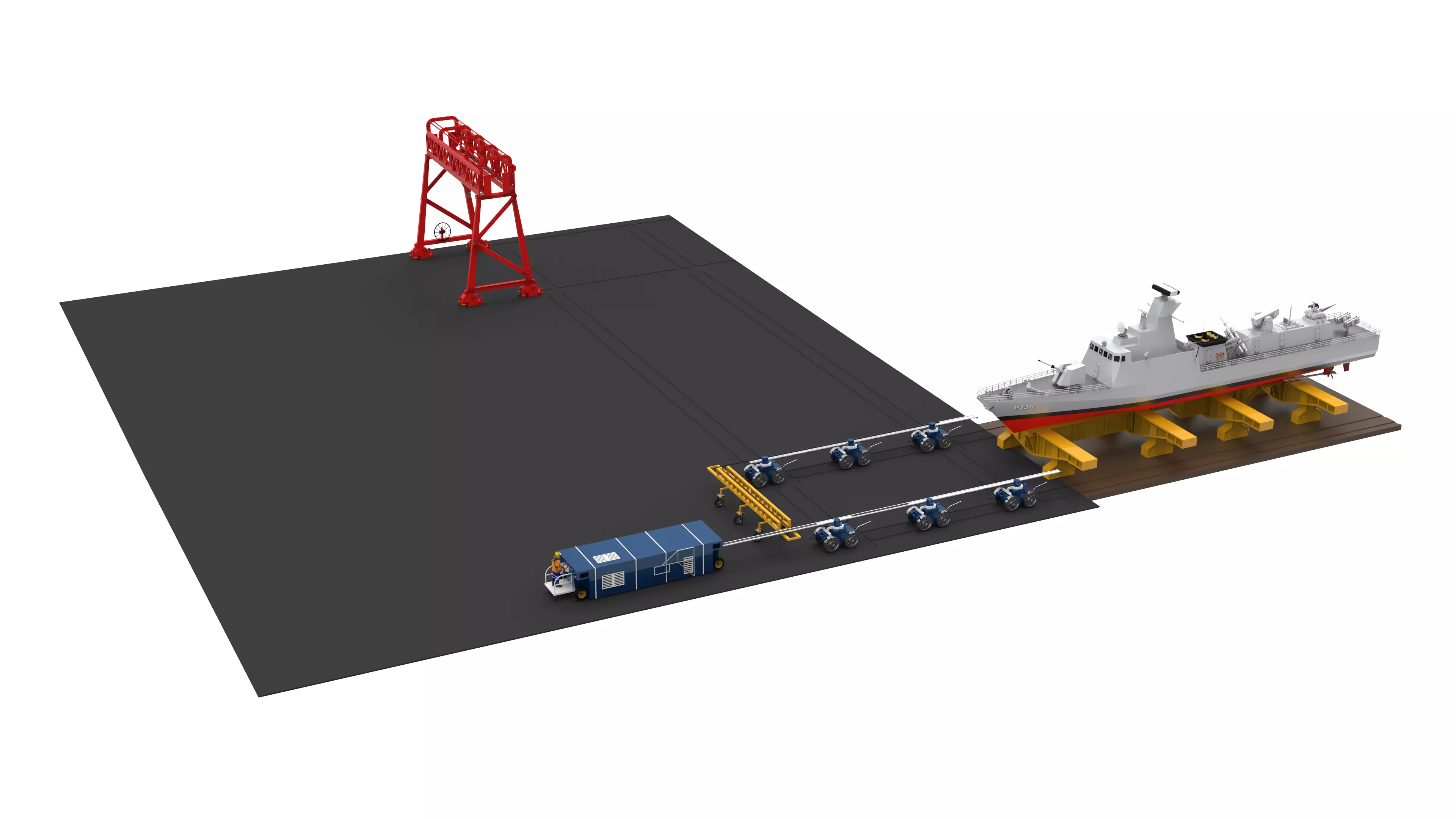
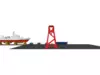
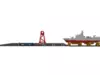
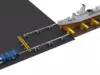
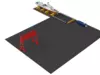
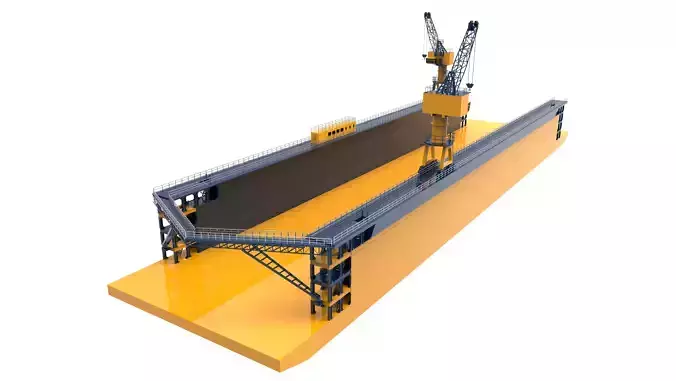
A shiplift is a modern engineering system used as an alternative to a slipway, floating dry dock, or graving dry dock to raise or lower ships out of the water for repair, maintenance, or new construction. The concept is distinct from a boat lift which typically moves vessels between different water elevations within a canal system. Description and OperationA shiplift consists of a structural platform that is lifted and lowered vertically by a number of synchronized hoists or winches. The process works as follows: The platform is submerged underwater.The ship is maneuvered into position above the submerged platform.The platform, with the ship securely supported on a cradle, is raised to the level of the quay. Once at quay level, many shiplifts utilize a transfer system, often involving trolleys on heavy-duty rails, to move the vessel to a land-based parking place for work. This allows one shiplift installation to serve multiple repair bays, which is more efficient than a single dry dock that can only service one ship at a time. Key Features
- Versatility: Shiplifts are used for both ship repair and the launching of new ship constructions.
- Capacity: Modern shiplifts can lift very large vessels, with some capable of handling up to 100,000 tons.
- Design Standards: Shiplifts are typically supplied and certified under the rules of a classification authority, with Lloyd's Register of Shipping having significant experience in this area, using the term Mechanical Lift Dock.
- Types: There are two main platform designs: articulated (hinged connections) and rigid (bolted or welded beams).
The Syncrolift system, invented by Raymond Pearlson, is a well-known example of this technology and has been implemented worldwide.