High-quality 3D assets at affordable prices — trusted by designers, engineers, and creators worldwide. Made with care to be versatile, accessible, and ready for your pipeline.
Included File Formats
This model is provided in 14 widely supported formats, ensuring maximum compatibility:
• - FBX (.fbx) – Standard format for most 3D software and pipelines
• - OBJ + MTL (.obj, .mtl) – Wavefront format, widely used and compatible
• - STL (.stl) – Exported mesh geometry; may be suitable for 3D printing with adjustments
• - STEP (.step, .stp) – CAD format using NURBS surfaces
• - IGES (.iges, .igs) – Common format for CAD/CAM and engineering workflows (NURBS)
• - SAT (.sat) – ACIS solid model format (NURBS)
• - DAE (.dae) – Collada format for 3D applications and animations
• - glTF (.glb) – Modern, lightweight format for web, AR, and real-time engines
• - 3DS (.3ds) – Legacy format with broad software support
• - 3ds Max (.max) – Provided for 3ds Max users
• - Blender (.blend) – Provided for Blender users
• - SketchUp (.skp) – Compatible with all SketchUp versions
• - AutoCAD (.dwg) – Suitable for technical and architectural workflows
• - Rhino (.3dm) – Provided for Rhino users
Model Info
• - All files are checked and tested for integrity and correct content
• - Geometry uses real-world scale; model resolution varies depending on the product (high or low poly)
• • - Scene setup and mesh structure may vary depending on model complexity
• - Rendered using Luxion KeyShot
• - Affordable price with professional detailing
Buy with confidence. Quality and compatibility guaranteed.
If you have any questions about the file formats, feel free to send us a message — we're happy to assist you!
Sincerely,
SURF3D
Trusted source for professional and affordable 3D models.
More Information About 3D Model :
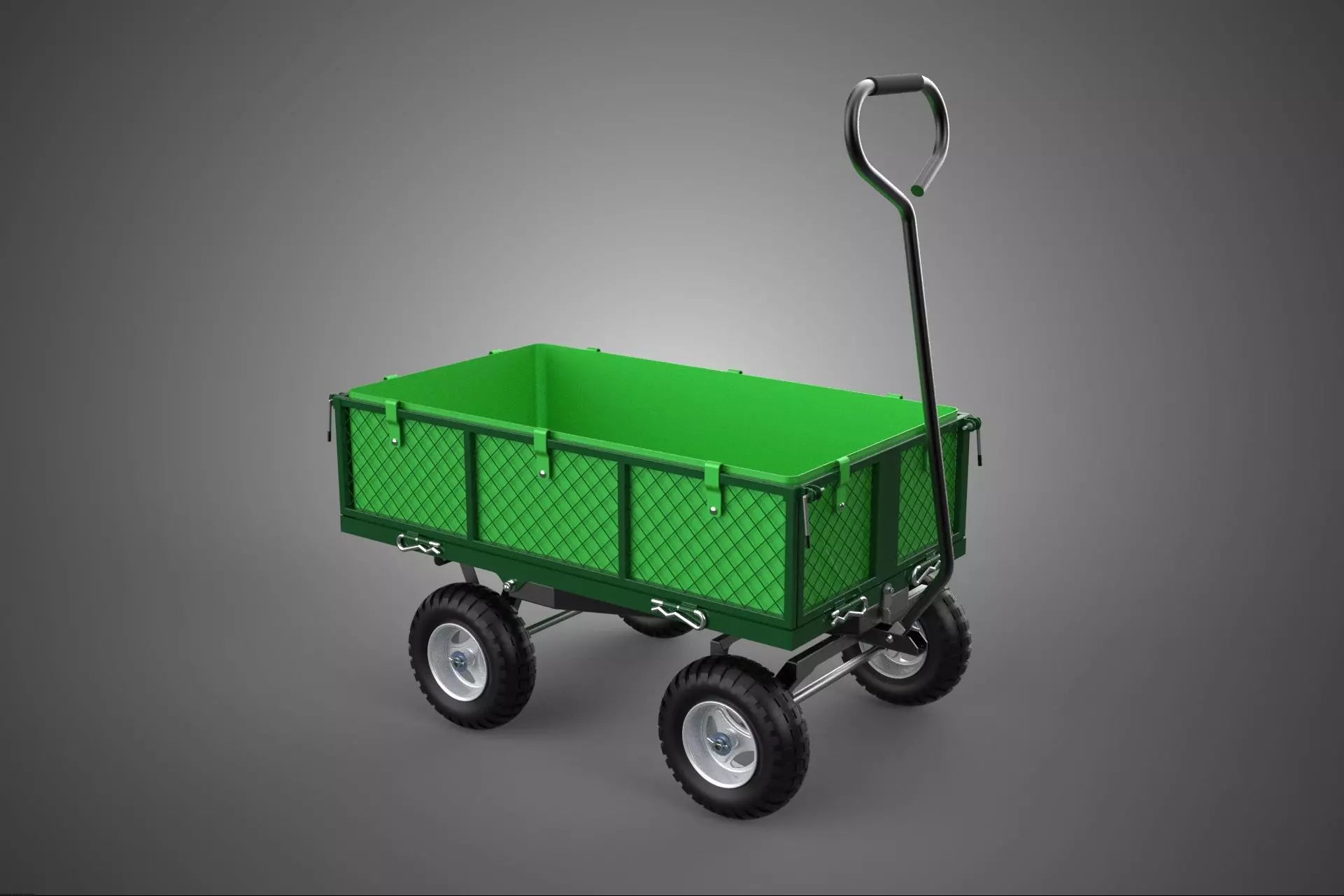
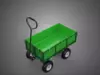
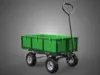
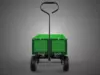
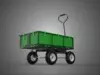
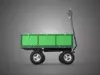
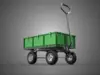
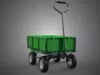
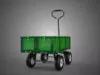
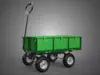
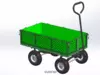
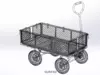
FOUR-WHEELED UTILITY CART WITH DETACHABLE MESH POCKET (MATERIAL TRANSPORT APPARATUS)
I. Definition and Classification
The Four-Wheeled Utility Cart, also commonly denominated as a utility wagon or material transport trolley, is a specialized, non-motorized ground conveyance system engineered for the stable and efficient movement of substantial loads across various types of terrain. This apparatus belongs to the category of manual material handling equipment, serving as a critical component in logistical operations spanning horticulture, industrial maintenance, domestic use, and recreational applications. Its defining characteristic is the deployment of a four-point contact locomotion system, which fundamentally distinguishes it from two-wheeled alternatives, such as the standard hand truck or wheelbarrow, by offering enhanced stability and superior weight distribution capacity.
II. Engineering and Structural Specifications
The structural integrity of the utility cart is predicated upon a robust chassis, typically fabricated from high-gauge, corrosion-resistant steel or structural aluminum alloys, designed to manage high static and dynamic stress loads.
A. Chassis and Load Deck:
The primary cargo containment basin, or load deck, is designed to accommodate bulk materials. Construction materials for the deck vary, including reinforced high-density polyethylene (HDPE), durable woven fabric liners stretched over a frame, or expanded steel mesh panels. Many contemporary designs feature hinged side panels that can be lowered or fully detached, converting the unit into a flatbed platform for the conveyance of excessively long or irregularly shaped items.
B. Locomotion and Steering System:
The quad-wheel configuration ensures equilibrium and mitigates the risk of tipping, particularly when navigating slopes or uneven ground. The wheels are generally large-diameter, ranging from 10 to 13 inches, and utilize either solid polyurethane or pneumatic (air-filled) rubber tires. Pneumatic tires are frequently specified for optimal performance over soft or loose surfaces (e.g., sand, soil, gravel), providing necessary flotation and vibration dampening.
Steering is predominantly achieved through an articulated front axle, coupled directly to a long pulling handle (drawbar). This system allows the user to pivot the front two wheels, facilitating tight turning radii and precise directional control. The drawbar often includes a cushioned grip and may incorporate a locking mechanism to secure the handle vertically against the cart body for compact storage.
III. The Detachable Mesh Pocket Accessory
The inclusion of a detachable mesh pocket represents a significant enhancement to the cart’s utility, transforming it from a simple bulk carrier into a versatile organizational tool.
A. Design and Materiality:
The mesh pocket functions as an auxiliary storage receptacle. It is typically constructed from heavy-duty, UV-resistant polyester or nylon netting, secured to the exterior frame or end panels of the main cargo basin via robust attachment systems, such as reinforced clips, snap fasteners, or industrial-grade hook-and-loop closures. The open-weave mesh material ensures contents are visible and allows for rapid drainage, preventing the accumulation of water, soil, or debris.
B. Functional Role:
The primary function of this accessory is the compartmentalization and segregation of smaller, high-value, or rapidly accessed items. This ensures that specialized tools, personal safety equipment, water bottles, navigational devices, or instructional manuals are kept separate from the primary, often dirty or heavy, cargo load. This feature maximizes operational efficiency by minimizing the time required to locate essential smaller implements, thereby streamlining work processes in dynamic environments.
IV. Operational Deployment
This apparatus is utilized across diverse logistical environments:
-
Horticulture and Landscaping: Movement of large bags of substrate, heavy planters, gardening tools, and harvest collection.
-
Construction and Maintenance: Hauling small machinery, replacement parts, cleaning supplies, and debris removal.
-
Recreational and Event Logistics: Transporting substantial volumes of equipment (tents, coolers, sports gear) across parks, campgrounds, or event sites.
V. Summary of Advantages
The four-wheeled utility cart, particularly in its enhanced configuration featuring a detachable mesh pocket, offers a synergistic blend of stability, high load-bearing capacity, and integrated organization. Its robust design facilitates the movement of heavy materials with minimal physical strain on the operator, positioning it as an indispensable piece of equipment for demanding manual transport tasks.
KEYWORDS: Utility, Cart, Wagon, Trolley, Four-Wheeled, Material Handling, Conveyance, Hauling, Transport, Detachable, Mesh, Pocket, Storage, Organization, Chassis, Pneumatic, Load Capacity, Gardening, Industrial, Landscape, Ergonomics, Drawbar, Heavy-Duty, Logistics, Quad-Wheel, Apparatus, Container, Accessory, Engineering, Equipment