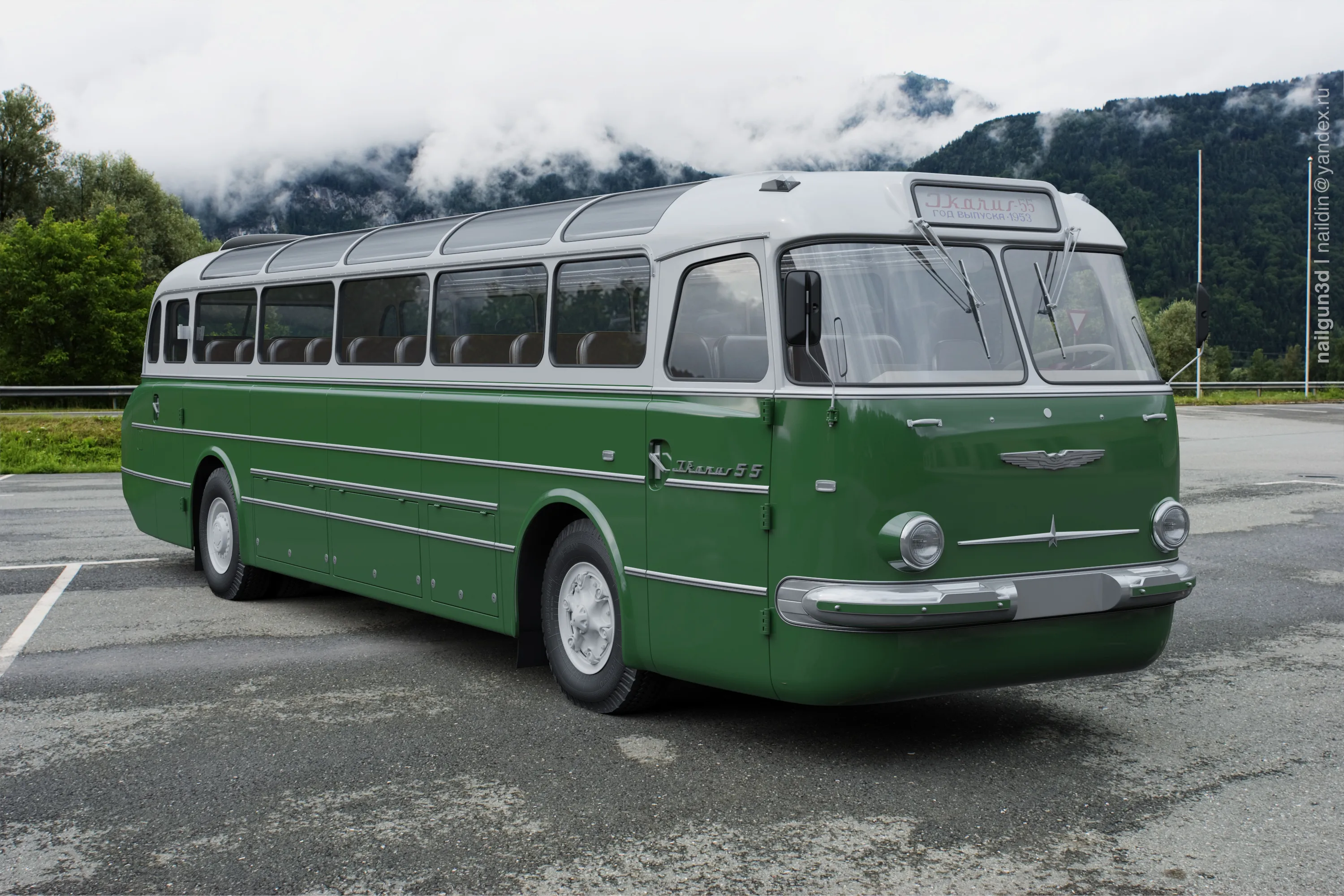
The Ikarus 55 is one of the most distinctive European coaches of the 1950s and 1960s and an important vehicle in the history of Hungarian bus manufacturing.
Developed by the Hungarian manufacturer Ikarus, the 55 was created as a high-floor coach for long-distance and intercity transportation. It appeared in the early 1950s and remained in production for roughly two decades. Together with the closely related Ikarus 66, it became one of the models that helped establish Ikarus as a major international bus manufacturer.
One of the most important technical features of the Ikarus 55 was its rear-mounted engine. The bus used the Csepel D-614 six-cylinder diesel engine, installed in a distinctive projecting compartment at the rear. This unusual arrangement gave the vehicle its instantly recognizable silhouette and freed the front part of the bus from the engine and drivetrain components typical of many earlier designs.
The exterior design reflected the optimistic styling of the 1950s. Its panoramic glazing, rounded body surfaces and particularly distinctive rear section gave the Ikarus 55 an almost futuristic appearance for its time. In several countries the unusual rear shape and characteristic engine sound inspired nicknames comparing the bus to a rocket, cigar or vacuum cleaner.
The Ikarus 55 was exported extensively throughout Eastern Europe. Large numbers operated in countries including East Germany and the Soviet Union, where the more luxurious Ikarus Lux versions became especially well known on long-distance routes. In the USSR these buses could be seen serving major cities such as Moscow, Leningrad, Riga and Tallinn.
The Lux version offered a more comfortable passenger interior and became one of the symbols of prestigious intercity coach travel during the 1960s. A particularly recognizable feature of some Lux buses was the additional central headlamp positioned above the windshield.
The standard Ikarus 55 measured approximately 11.4 meters long and 2.5 meters wide and could accommodate around 32–44 seated passengers, depending on configuration. Its rear-mounted Csepel diesel engine produced approximately 145 hp and was connected to a five-speed manual transmission.
Today, surviving Ikarus 55 buses are preserved as historic vehicles and museum exhibits. Their unusual styling, long service life and association with post-war European transport have made the model particularly popular among collectors and enthusiasts of historic buses.