High-quality 3D assets at affordable prices — trusted by designers, engineers, and creators worldwide. Made with care to be versatile, accessible, and ready for your pipeline.
Included File Formats
This model is provided in 14 widely supported formats, ensuring maximum compatibility:
• - FBX (.fbx) – Standard format for most 3D software and pipelines
• - OBJ + MTL (.obj, .mtl) – Wavefront format, widely used and compatible
• - STL (.stl) – Exported mesh geometry; may be suitable for 3D printing with adjustments
• - STEP (.step, .stp) – CAD format using NURBS surfaces
• - IGES (.iges, .igs) – Common format for CAD/CAM and engineering workflows (NURBS)
• - SAT (.sat) – ACIS solid model format (NURBS)
• - DAE (.dae) – Collada format for 3D applications and animations
• - glTF (.glb) – Modern, lightweight format for web, AR, and real-time engines
• - 3DS (.3ds) – Legacy format with broad software support
• - 3ds Max (.max) – Provided for 3ds Max users
• - Blender (.blend) – Provided for Blender users
• - SketchUp (.skp) – Compatible with all SketchUp versions
• - AutoCAD (.dwg) – Suitable for technical and architectural workflows
• - Rhino (.3dm) – Provided for Rhino users
Model Info
• - All files are checked and tested for integrity and correct content
• - Geometry uses real-world scale; model resolution varies depending on the product (high or low poly)
• • - Scene setup and mesh structure may vary depending on model complexity
• - Rendered using Luxion KeyShot
• - Affordable price with professional detailing
Buy with confidence. Quality and compatibility guaranteed.
If you have any questions about the file formats, feel free to send us a message — we're happy to assist you!
Sincerely,
SURF3D
Trusted source for professional and affordable 3D models.
More Information About 3D Model :
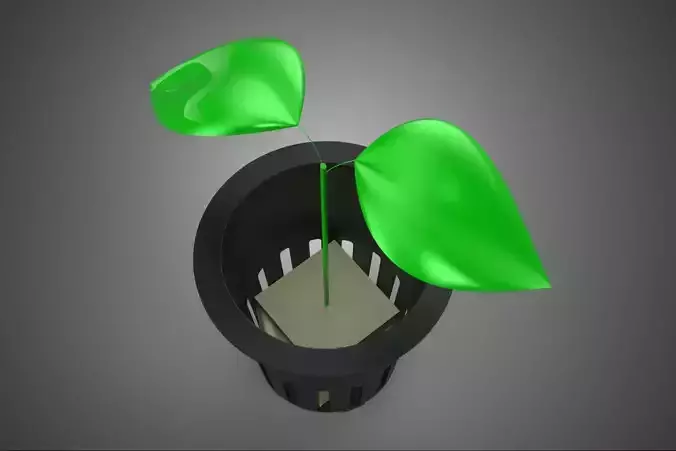
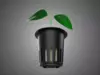
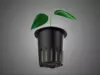
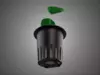
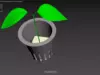
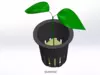
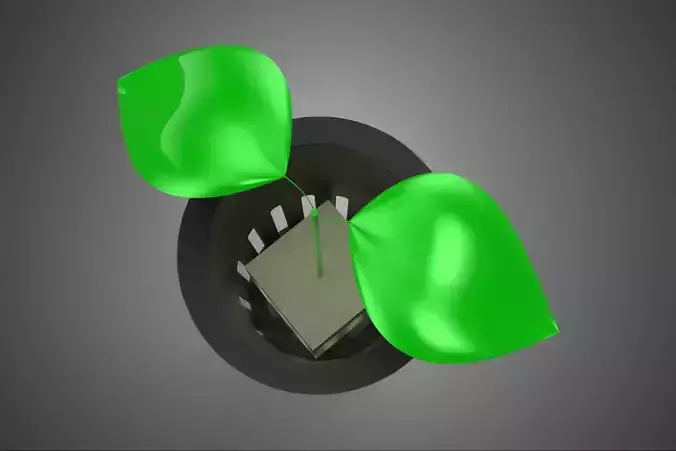
The Net Pot Cup (also known as a Net Pot or Hydroponic Cup) is a specialized horticultural containment vessel utilized extensively in soilless culture and hydroponic systems for the propagation and establishment of seedlings and young plants. This apparatus is fundamental to cultivation methods that mandate the exclusion of traditional soil media, relying instead on inert substrates and nutrient-rich water solutions.
Nomenclature and Design
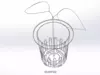
The Net Pot Cup is structurally distinct from conventional planting pots. It is typically manufactured from durable, non-reactive plastics, such as polypropylene or high-density polyethylene, often treated for UV resistance when used in systems exposed to light. The defining characteristic is its open, latticed mesh sidewalls and base. These apertures are designed to facilitate maximum contact between the internal root mass and the external environment, whether that be a nutrient solution reservoir or a highly humidified atmosphere.
Standard dimensions for Net Pots are modular, ensuring compatibility with standard hole cutouts in reservoir lids, channels, or trays. Common sizes range from small 2-inch diameter cups, typically used for initial propagation, up to 6-inch containers employed for mature fruiting plants in vertical or larger recirculating systems. The rim of the pot often incorporates a flange or lip, allowing the pot to be suspended securely within a designated aperture while the body hangs into the growth environment.
Operational Principles in Soilless Culture
The principle behind the Net Pot system is to provide mechanical support for the nascent plant while ensuring optimal conditions for root development, particularly aeration and nutrient absorption. The system inherently operates as soil-free and soilless.
- Substrate Function: Since the Net Pot offers no intrinsic growing medium, inert substrates are required to anchor the young plant. Common substrates include rockwool (mineral wool), hydroton (lightweight expanded clay aggregate, LECA), coconut coir, perlite, or combinations thereof. These media stabilize the plant stem and initial roots but are porous enough to permit rapid root penetration and oxygen flow.
- Hydroponic Integration: The design facilitates the core tenets of hydroponics. In systems such as Deep Water Culture (DWC), the base of the Net Pot is suspended just above or directly into the highly oxygenated nutrient solution, encouraging roots to rapidly grow downwards into the reservoir. In Nutrient Film Technique (NFT) or ebb-and-flow (flood and drain) systems, the pot ensures the root crown is held securely at the appropriate height for intermittent or continuous exposure to the nutrient film or flood level.
- Root Zone Optimization: The mesh structure promotes superior gas exchange (aeration) in the root zone compared to saturated soil, minimizing the risk of hypoxia and preventing anaerobic microbial activity. This enhanced oxygen availability is crucial for metabolic processes and rapid biomass accumulation, which is a hallmark of successful hydroponic cultivation.
### Horticultural Applications and Advantages
The use of Net Pot Cups for establishing seedlings (or plant starts cloned from cuttings) provides significant horticultural advantages, particularly regarding transplant management and system hygiene.
- Mitigation of Transplant Shock: When seedlings grown in Net Pots are ready for scaling up, they can be seamlessly transferred to larger systems without disturbing the delicate root structure. The pot itself acts as a protective sleeve, drastically reducing transplant shock and accelerating the transition time.
- System Standardization: The standardized format of the Net Pot allows for high-throughput, automated integration into controlled environment agriculture (CEA) setups, providing a uniform foundation across different growth phases.
- Cleanliness and Disease Control: The soilless method inherently reduces the presence of soil-borne pathogens and pests. Net Pots are easily sanitized and reused, contributing to the high hygiene standards necessary in commercial hydroponic operations.
The Net Pot Cup, therefore, represents a critical specialized component bridging the delicate initial propagation stage of a young plant with the high-efficiency requirements of advanced hydroponic cultivation.
KEYWORDS: Hydroponics, Soilless Culture, Net Pot Cup, Seedling, Young Plant, Propagation, Root Zone, Aeration, Deep Water Culture, Nutrient Film Technique, Rockwool, Hydroton, LECA, Transplant Shock, Recirculating System, Inert Substrate, Soil-Free, Controlled Environment Agriculture, DWC, NFT, Polypropylene, Root Mass, Gas Exchange, Reservoir, Latticed, Cloning, Horticultural Vessel, Nutrient Solution, Vegetative Phase, Standardization.