High-quality 3D assets at affordable prices — trusted by designers, engineers, and creators worldwide. Made with care to be versatile, accessible, and ready for your pipeline.
Included File Formats
This model is provided in 14 widely supported formats, ensuring maximum compatibility:
• - FBX (.fbx) – Standard format for most 3D software and pipelines
• - OBJ + MTL (.obj, .mtl) – Wavefront format, widely used and compatible
• - STL (.stl) – Exported mesh geometry; may be suitable for 3D printing with adjustments
• - STEP (.step, .stp) – CAD format using NURBS surfaces
• - IGES (.iges, .igs) – Common format for CAD/CAM and engineering workflows (NURBS)
• - SAT (.sat) – ACIS solid model format (NURBS)
• - DAE (.dae) – Collada format for 3D applications and animations
• - glTF (.glb) – Modern, lightweight format for web, AR, and real-time engines
• - 3DS (.3ds) – Legacy format with broad software support
• - 3ds Max (.max) – Provided for 3ds Max users
• - Blender (.blend) – Provided for Blender users
• - SketchUp (.skp) – Compatible with all SketchUp versions
• - AutoCAD (.dwg) – Suitable for technical and architectural workflows
• - Rhino (.3dm) – Provided for Rhino users
Model Info
• - All files are checked and tested for integrity and correct content
• - Geometry uses real-world scale; model resolution varies depending on the product (high or low poly)
• • - Scene setup and mesh structure may vary depending on model complexity
• - Rendered using Luxion KeyShot
• - Affordable price with professional detailing
Buy with confidence. Quality and compatibility guaranteed.
If you have any questions about the file formats, feel free to send us a message — we're happy to assist you!
Sincerely,
SURF3D
Trusted source for professional and affordable 3D models.
More Information About 3D Model :
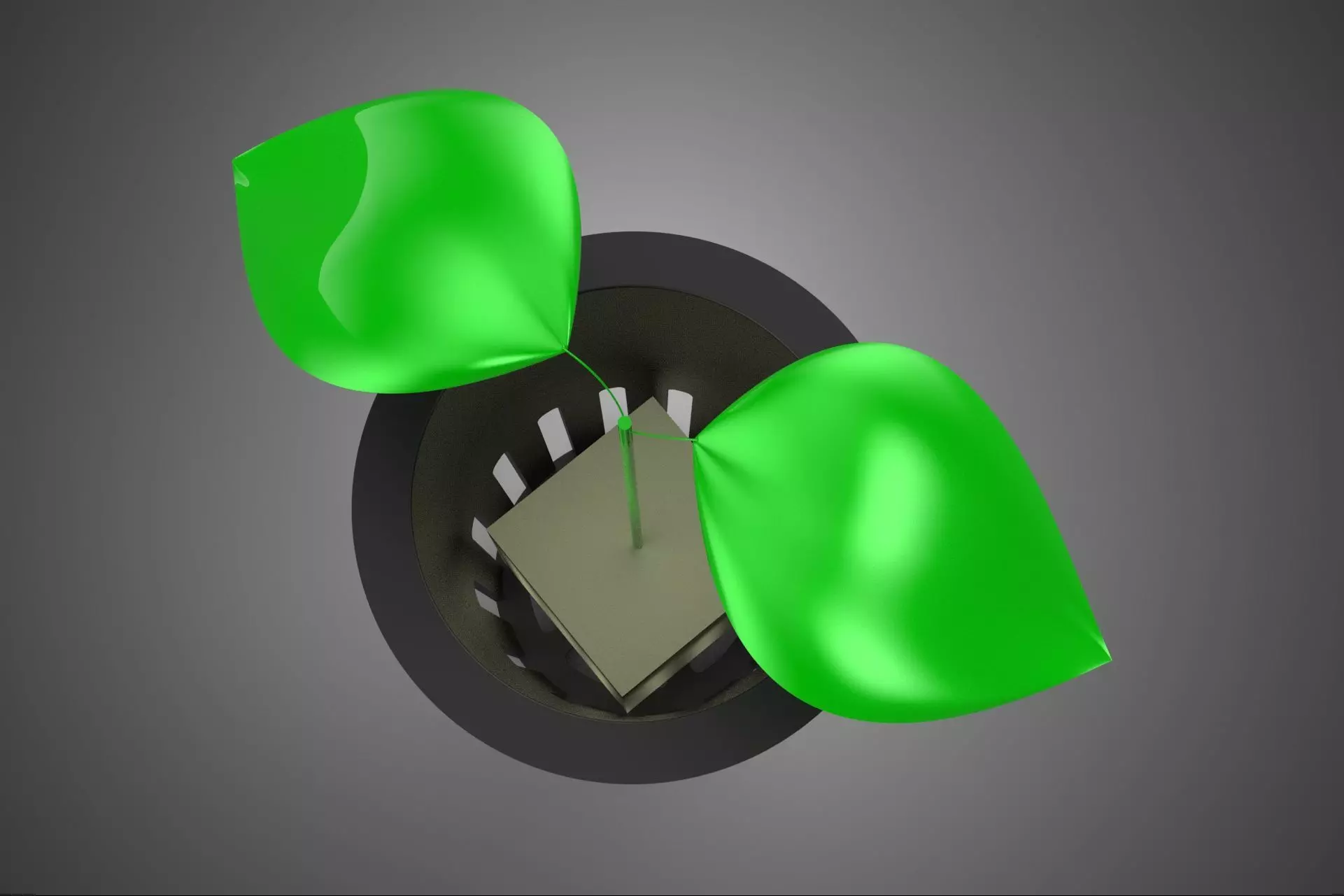
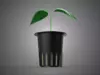
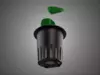
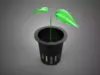
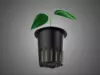
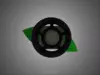
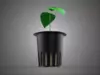
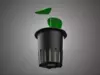
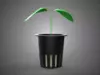
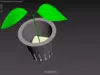
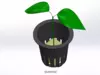
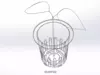
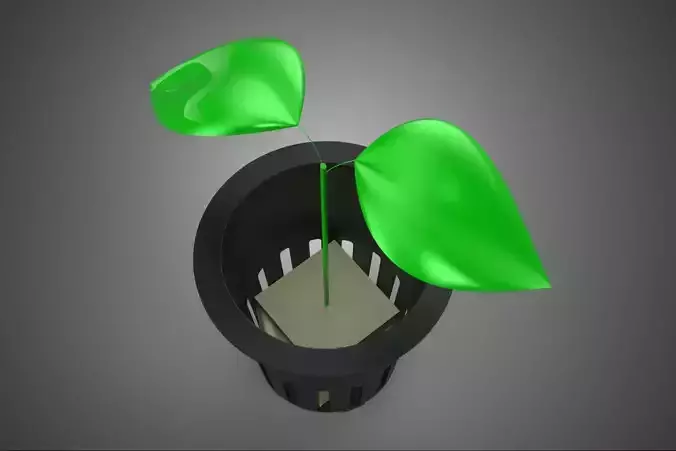
The CUBIC CUBE BLOCK SPONGE MEDIUM HYDROPONIC PLANT CROP NET POT CUP defines a composite horticultural apparatus crucial for soilless cultivation systems. This assembly integrates a structured propagation substrate with a specialized containment vessel, designed to optimize root development and facilitate seamless transplanting within automated hydroponic environments.
The apparatus is characterized by two distinct, interlocking components: the Cubic Block Sponge Medium and the Net Pot Cup.
I. The Cubic Block Sponge Medium
The medium serves as the initial anchor and germination site for seeds or cuttings (clones). It is structurally designed to provide the necessary moisture and oxygen balance required by nascent root systems, replacing traditional soil mixtures.
Composition and Structure:
These cubic blocks are typically manufactured from inert, sterile, and pH-neutral materials, most commonly open-cell phenolic foam (sometimes referred to as stonewool substitutes) or specialized polyurethane foams. The block geometry—cubic or rectangular—ensures structural stability and uniform saturation.
Horticultural Properties:
The core attribute of the sponge medium is its optimized porosity. It exhibits high field capacity (water retention) for nutrient delivery while maintaining exceptional air-filled porosity (AFP), which is critical for gas exchange (root respiration) and preventing anoxic conditions. Because the medium is sterile and biologically inert, it mitigates the risk of soil-borne pathogens and simplifies nutrient management. A starter hole is usually pre-drilled in the center of the upper surface for direct seed placement or insertion of a cutting.
II. The Net Pot Cup
The Net Pot Cup functions as the rigid, reusable container that supports the medium and the plant within the main hydroponic system infrastructure.
Design and Material:
Net pots are typically injection-molded from durable, non-reactive plastics, such as food-grade High-Density Polyethylene (HDPE) or Polypropylene (PP). The defining characteristic is the extensive lattice, mesh, or grid structure incorporated into the sides and base of the container. This perforated design allows for the free, uninhibited proliferation of the plant’s root mass outside the confines of the plastic cup and directly into the circulating nutrient solution.
Functionality and Integration:
A flared lip or rim around the top edge of the cup is designed for secure mounting. In Deep Water Culture (DWC), the rim rests upon the lid of the reservoir, suspending the pot and allowing the base to dip into the solution. In Nutrient Film Technique (NFT) or ebb and flow systems, the rim often rests within dedicated channels or grow beds. Standard sizes vary significantly, ranging commonly from 2 inches (50 mm) for herbs and leafy greens to 6 inches (150 mm) for larger crops.
III. System Application
The integrated assembly maximizes efficiency in commercial hydroponics. Once a seed germinates within the cubic sponge block, the entire block is placed directly into a corresponding net pot cup. The net pot is then transferred to the final grow location. During early growth, the cube maintains moisture via capillary action. As the roots mature, they penetrate the cube, pass through the mesh openings of the net pot, and establish direct contact with the primary flow of nutrient solution. This methodology minimizes root disturbance (transplant shock), ensuring high survival rates and rapid growth initiation for a wide variety of cultivated crops, including lettuce (Lactuca sativa), basil (Ocimum basilicum), and various fruit-bearing plants.
KEYWORDS: Hydroponics, Net Pot, Sponge Medium, Soilless Cultivation, Cubic Block, Propagation, Germination, Root Zone, Phenolic Foam, DWC, NFT, Aeroponics, Grow Medium, Substrate, Inert, Porosity, Water Retention, Plant Crop, Containment Vessel, Lattice Structure, Transplanting, Seedling Starter, Rockwool Substitute, Horticultural Apparatus, Polypropylene, Root Proliferation, Commercial Greenhouse, Capillary Action, Deep Water Culture, Nutrient Film Technique.