High-quality 3D assets at affordable prices — trusted by designers, engineers, and creators worldwide. Made with care to be versatile, accessible, and ready for your pipeline.
Included File Formats
This model is provided in 14 widely supported formats, ensuring maximum compatibility:
• - FBX (.fbx) – Standard format for most 3D software and pipelines
• - OBJ + MTL (.obj, .mtl) – Wavefront format, widely used and compatible
• - STL (.stl) – Exported mesh geometry; may be suitable for 3D printing with adjustments
• - STEP (.step, .stp) – CAD format using NURBS surfaces
• - IGES (.iges, .igs) – Common format for CAD/CAM and engineering workflows (NURBS)
• - SAT (.sat) – ACIS solid model format (NURBS)
• - DAE (.dae) – Collada format for 3D applications and animations
• - glTF (.glb) – Modern, lightweight format for web, AR, and real-time engines
• - 3DS (.3ds) – Legacy format with broad software support
• - 3ds Max (.max) – Provided for 3ds Max users
• - Blender (.blend) – Provided for Blender users
• - SketchUp (.skp) – Compatible with all SketchUp versions
• - AutoCAD (.dwg) – Suitable for technical and architectural workflows
• - Rhino (.3dm) – Provided for Rhino users
Model Info
• - All files are checked and tested for integrity and correct content
• - Geometry uses real-world scale; model resolution varies depending on the product (high or low poly)
• • - Scene setup and mesh structure may vary depending on model complexity
• - Rendered using Luxion KeyShot
• - Affordable price with professional detailing
Buy with confidence. Quality and compatibility guaranteed.
If you have any questions about the file formats, feel free to send us a message — we're happy to assist you!
Sincerely,
SURF3D
Trusted source for professional and affordable 3D models.
More Information About 3D Model :
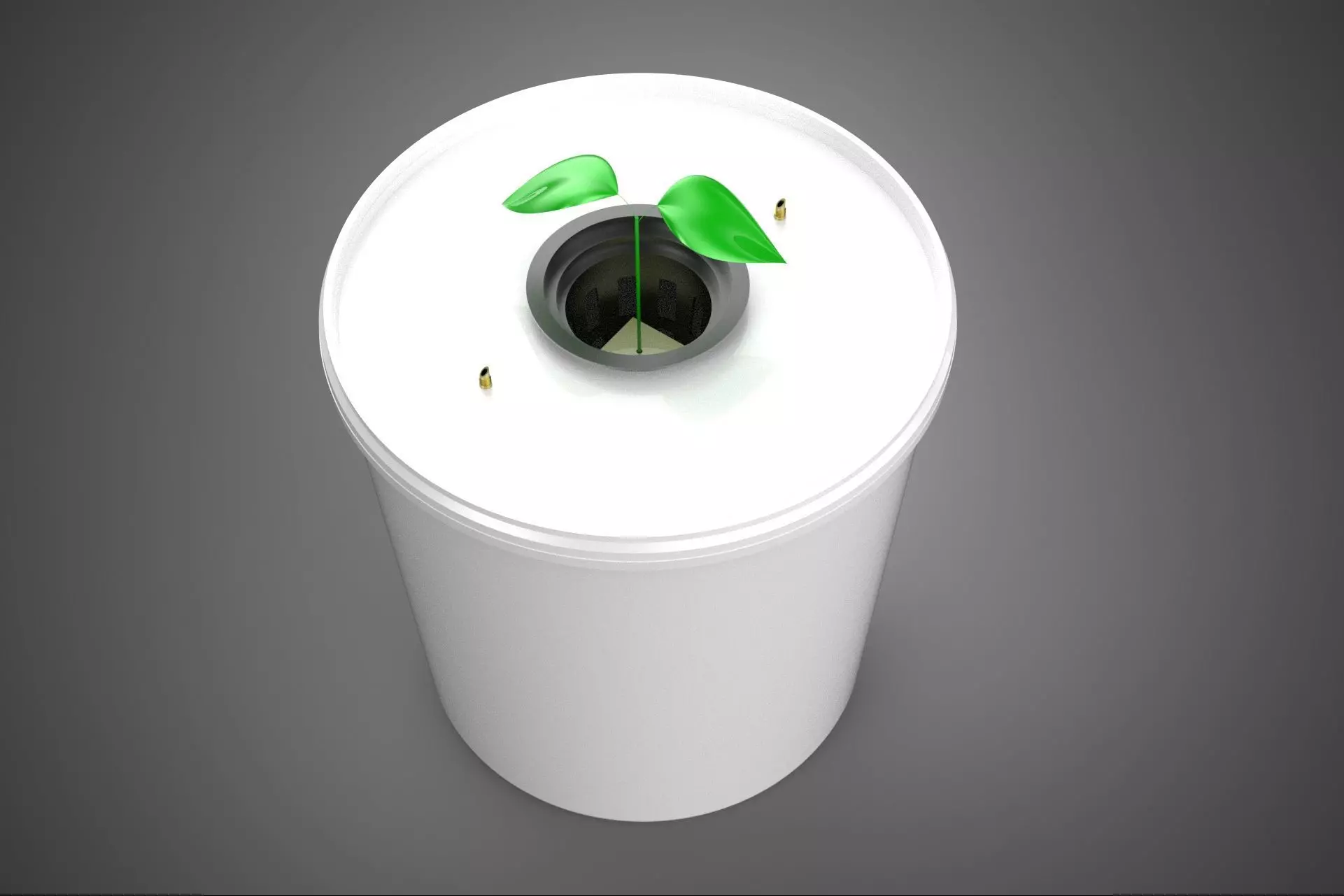
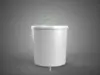
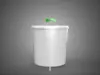
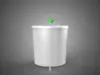
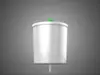
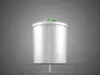
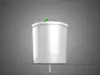
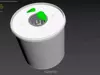
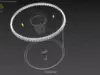
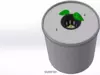
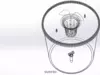
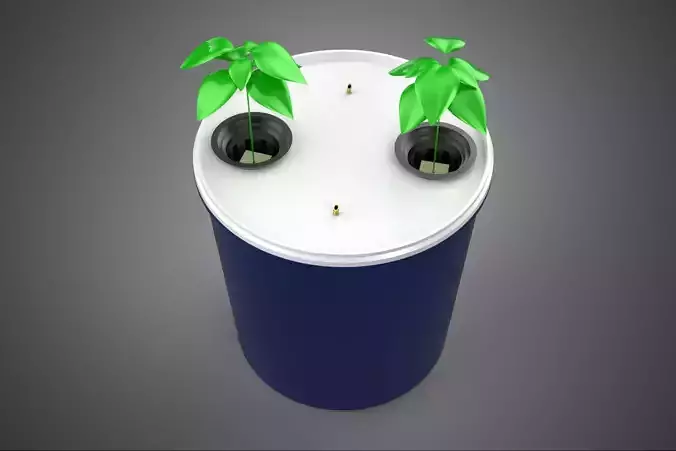
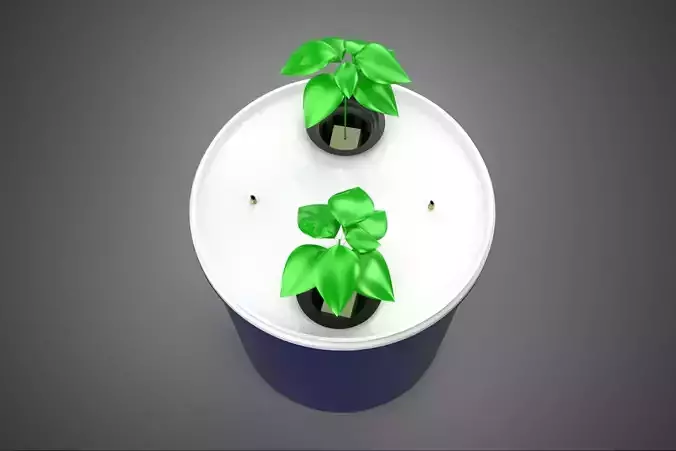
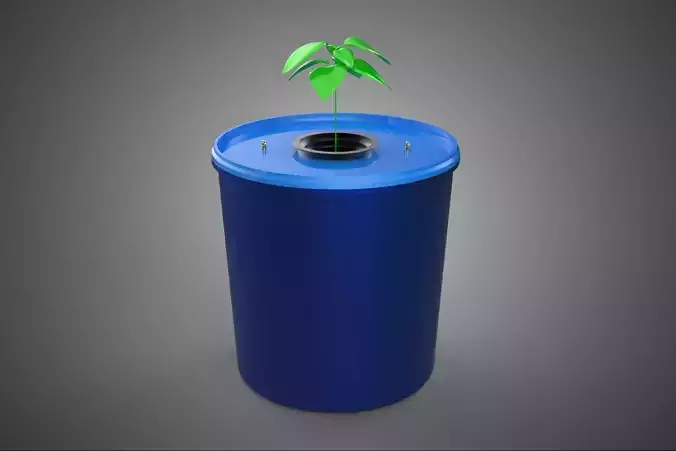
The Dutch Bucket Hydroponic System (also known as the Bato Bucket System)
The Dutch Bucket System is a highly scalable, recirculating, and often hybrid form of hydroponics characterized by the use of individual growing containers fed by drip irrigation. It is widely employed in commercial horticulture globally, particularly for the cultivation of large, long-term crops such as tomatoes (Solanum lycopersicum), cucumbers (Cucumis sativus), eggplants (Solanum melongena), and peppers (Capsicum species). The system is designed to provide precise nutrient delivery while managing root zone moisture, making it an efficient choice for high-yield operations.
Nomenclature and Mechanism
The term Bato Bucket is derived from the name of the Dutch company that popularized the design. Unlike systems like Nutrient Film Technique (NFT) or Deep Water Culture (DWC), where the roots are constantly submerged or exposed to a flowing film, the Dutch Bucket methodology utilizes an inert, granular growing medium housed within the bucket.
Operational Setup:
- Nutrient Delivery: Nutrient solution, pumped from a central reservoir, is delivered to the top of each individual bucket via small-diameter tubing and drip emitters, typically programmed for pulsed delivery cycles.
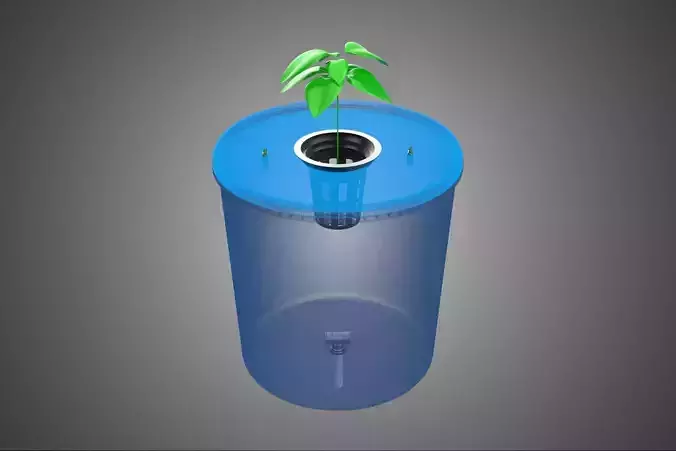
- The Net Pot and Medium: Plants are secured using a Net Pot, which is nestled into the bucket's substrate. The Net Pot provides initial structural support, allowing the roots to quickly grow down into the main volume of the bucket, which is filled with an inert substrate such as perlite, rockwool cubes, hydroton (clay pebbles), or coco coir. The substrate provides aeration, moisture retention, and mechanical support.
- Drainage and Recirculation: The critical feature of the system is the controlled drainage mechanism. Each bucket contains a drain outlet situated near the bottom. In most designs, an inverted elbow pipe (siphon elbow or standpipe) is fitted to this outlet. This standpipe ensures that a shallow layer of nutrient solution, approximately 1 to 2 centimeters deep, is retained at the base of the bucket. This retention prevents the medium from completely drying out between irrigation cycles and acts as a localized, small-scale reservoir for the lowest roots. Excess solution drains through the elbow and into a common collection trough or return line, flowing back to the central reservoir for replenishment and reuse (recirculation).
### System Components
A complete Dutch Bucket system (Plant Gardening Kit) requires several key elements:
- Growing Buckets (Bato Buckets): Typically 10 to 20 liters capacity, designed with specific features for drain line attachment.
- Net Pots and Substrate: Small plastic mesh containers (Net Pots) used for starting seedlings before placement in the larger bucket containing the bulk substrate.
- Central Reservoir: A large container for holding and mixing the nutrient solution, where pH and Electrical Conductivity (EC) are managed.
- Submersible Pump: Used to move the nutrient solution from the reservoir to the main irrigation manifold.
- Irrigation Manifold: Main supply line feeding individual drip lines and emitters to each bucket.
- Drainage Line/Trough: A PVC pipe or channel positioned below the buckets to collect and return spent nutrient solution to the reservoir.
### Advantages and Applications
The Dutch Bucket system offers distinct horticultural advantages, leading to its widespread commercial adoption:
- Disease Isolation: Because plants are grown in separate containers, if one plant contracts a root disease, the risk of rapid, system-wide transmission is significantly lower compared to continuous flow systems like NFT.
- Water Use Efficiency: Recirculating systems dramatically conserve water and nutrients compared to traditional soil methods or drain-to-waste hydroponics.
- Root Zone Aeration: The use of highly aerated, inert media (like perlite or clay pebbles) coupled with periodic irrigation and rapid drainage ensures high levels of oxygen saturation in the root zone, promoting rapid growth.
- Suitability for Large Crops: The sturdy nature of the individual buckets and the substrate allows for the successful cultivation of tall, heavy crops requiring substantial root structures, which are unsuitable for systems that provide minimal physical support.
---
KEYWORDS: Dutch Bucket, Bato Bucket, Recirculating Hydroponics, Drip Irrigation, Plant Gardening Kit, Net Pot, Inert Substrate, Perlite, Coco Coir, Tomatoes, Cucumbers, Peppers, Commercial Horticulture, Siphon Elbow, Nutrient Solution, EC Monitoring, pH Control, Greenhouse Farming, Drainage System, Water Conservation, Scalable System, Hydroton, Root Zone Aeration, Closed Loop System, Modular Hydroponics, High Yield, Submersible Pump, Standpipe, Irrigation Manifold.