High-quality 3D assets at affordable prices — trusted by designers, engineers, and creators worldwide. Made with care to be versatile, accessible, and ready for your pipeline.
Included File Formats
This model is provided in 14 widely supported formats, ensuring maximum compatibility:
• - FBX (.fbx) – Standard format for most 3D software and pipelines
• - OBJ + MTL (.obj, .mtl) – Wavefront format, widely used and compatible
• - STL (.stl) – Exported mesh geometry; may be suitable for 3D printing with adjustments
• - STEP (.step, .stp) – CAD format using NURBS surfaces
• - IGES (.iges, .igs) – Common format for CAD/CAM and engineering workflows (NURBS)
• - SAT (.sat) – ACIS solid model format (NURBS)
• - DAE (.dae) – Collada format for 3D applications and animations
• - glTF (.glb) – Modern, lightweight format for web, AR, and real-time engines
• - 3DS (.3ds) – Legacy format with broad software support
• - 3ds Max (.max) – Provided for 3ds Max users
• - Blender (.blend) – Provided for Blender users
• - SketchUp (.skp) – Compatible with all SketchUp versions
• - AutoCAD (.dwg) – Suitable for technical and architectural workflows
• - Rhino (.3dm) – Provided for Rhino users
Model Info
• - All files are checked and tested for integrity and correct content
• - Geometry uses real-world scale; model resolution varies depending on the product (high or low poly)
• • - Scene setup and mesh structure may vary depending on model complexity
• - Rendered using Luxion KeyShot
• - Affordable price with professional detailing
Buy with confidence. Quality and compatibility guaranteed.
If you have any questions about the file formats, feel free to send us a message — we're happy to assist you!
Sincerely,
SURF3D
Trusted source for professional and affordable 3D models.
More Information About 3D Model :
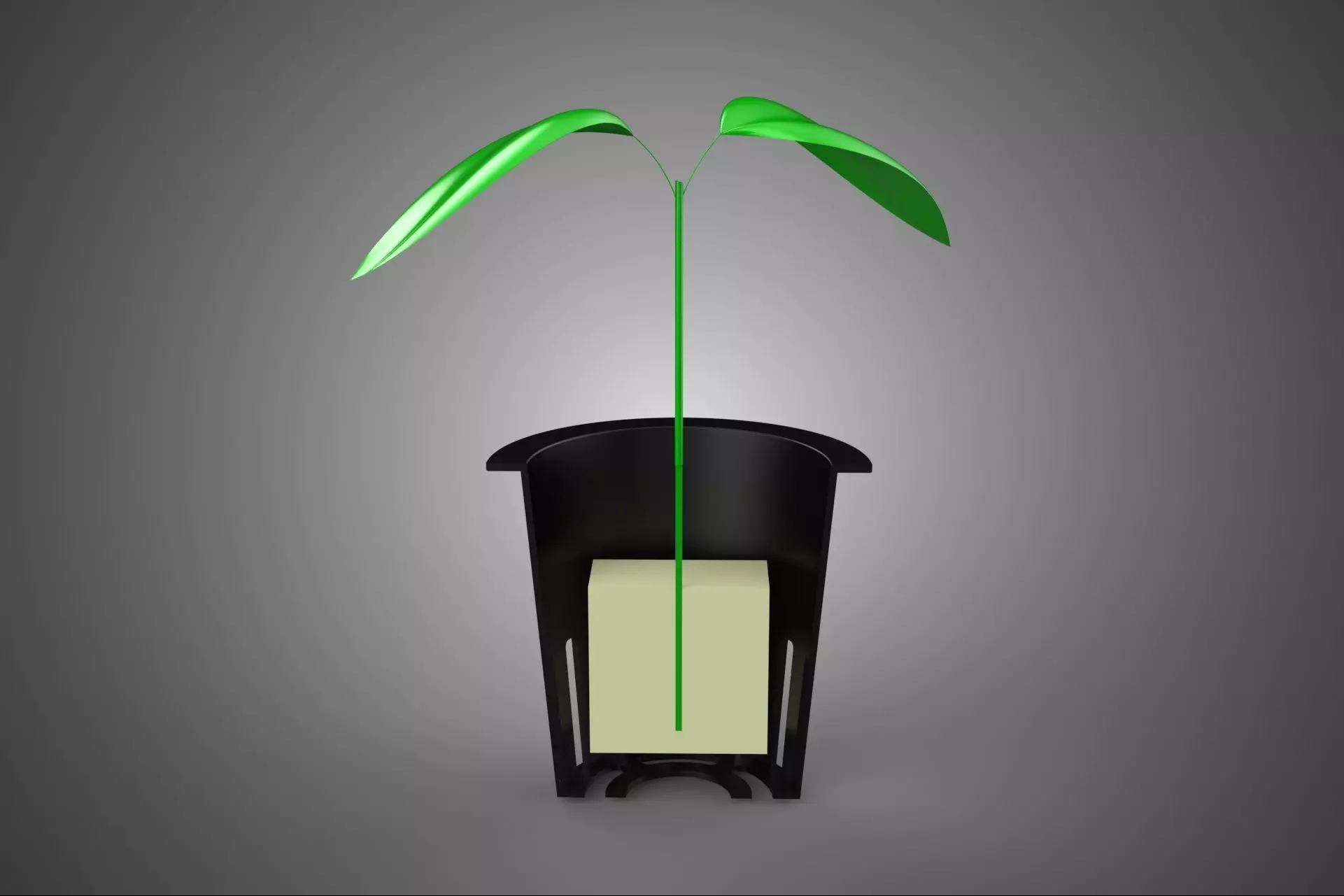
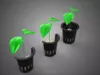
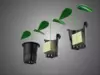
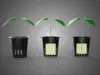
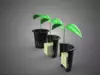
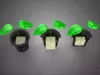
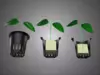
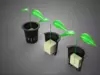
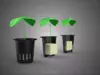
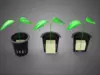
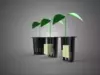
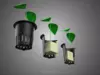
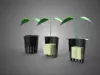
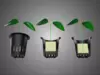
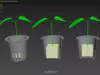
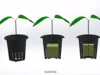
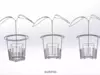
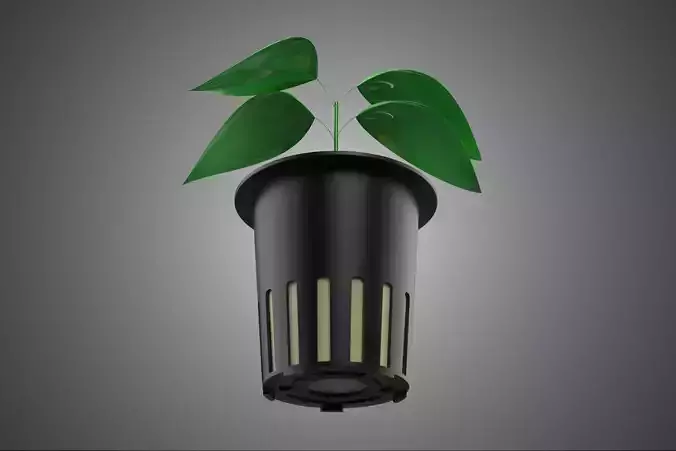
The composite term CUTAWAY PLANT SPONGE FOAM SEEDLING NET POT AEROPONIC HYDROPONIC describes a specialized, integrated assembly utilized for plant propagation and initial establishment within advanced soilless cultivation systems, principally hydroponics and aeroponics. This structure is engineered to optimize the transition phase of young plants (seedlings or clones) from germination to integration into large-scale cultivation environments.
System Components and Function
1. Sponge/Foam Medium (Rooting Substrate):
This component serves as the primary, inert, and sterile medium replacing conventional horticultural soil. It is typically manufactured from synthetic polymers such as phenolic foam, polyurethane, or, increasingly, from environmentally preferable materials like compressed coir, peat, or biodegradable foam matrices. The crucial functions of the sponge or foam are:
- Structural Stability: Anchoring the seed or cutting during the critical germination phase.
- Moisture Management: Maintaining optimal water saturation levels (high water holding capacity) essential for early root cell expansion.
- Aeration: The porous, open-cell structure ensures sufficient gaseous exchange, preventing root anoxia, which is a common stressor in saturated soil media.
2. Net Pot (Container Vessel):
The sponge/foam medium is housed within a small, perforated container known as a Net Pot. These vessels are commonly constructed from durable, inert plastics (e.g., polypropylene). The defining feature of the net pot is its lattice-like, open-mesh base and sides. The net pot serves to:
- System Integration: Stabilize the seedling within the growing channel, raft, or aeroponic chamber.
- Root Penetration: Crucially, the open mesh design allows established roots to grow unrestricted outward from the inert medium and directly into the primary nutrient delivery zone—the flowing nutrient solution (Hydroponics) or the nutrient mist (Aeroponics).
3. Application Context (Aeroponics/Hydroponics):
This assembly is fundamental to Controlled Environment Agriculture (CEA).
- Hydroponics: Used extensively in techniques like Deep Water Culture (DWC) and Nutrient Film Technique (NFT), the net pot ensures the base of the sponge remains wick-fed or partially submerged in the nutrient reservoir until roots emerge into the main solution.
- Aeroponics: Here, the net pot holds the seedling suspended within a chamber where the roots are periodically saturated with a fine, nutrient-dense mist, providing the highest possible root zone oxygenation.
### The Cutaway Perspective
The designation Cutaway refers to the analytical and educational visualization methodology employed. A cutaway illustration or physical cross-section of the plant, medium, and net pot assembly is used to expose the internal structure. This technique is vital for:
- Diagnostic Analysis: Enabling researchers and growers to visually inspect the precise depth of root penetration into the foam, evaluate water distribution (avoiding dry spots or excessive saturation), and diagnose root health issues, such as browning or localized pathogen infestation, without fully dismantling the system.
- System Optimization: Providing essential data on the interface zone between the inert medium and the nutrient solution, allowing for precise calibration of irrigation cycles, nutrient concentration, and system humidity to maximize root development efficiency.
The standardized sponge/foam net pot system enhances operational efficiency in commercial cultivation by facilitating automated handling and transplantation processes, while simultaneously minimizing the introduction of soil-borne pathogens.
KEYWORDS: Hydroponics, Aeroponics, Seedling Propagation, Net Pot, Phenolic Foam, Soilless Culture, Rooting Medium, Controlled Environment Agriculture, CEA, NFT, DWC, Cutaway Diagram, Root Zone Optimization, Sterile Substrate, Cloning, Germination, Plant Establishment, Polyurethane Foam, Inert Media, Nutrient Delivery, Recirculating Systems, Horticulture Technology, Root Mass Development, Transplanting, Porosity, Water Holding Capacity, Gaseous Exchange, Propagation Plug, Open-Cell Structure, Root Inspection, Commercial Nursery.