High-quality 3D assets at affordable prices — trusted by designers, engineers, and creators worldwide. Made with care to be versatile, accessible, and ready for your pipeline.
Included File Formats
This model is provided in 14 widely supported formats, ensuring maximum compatibility:
• - FBX (.fbx) – Standard format for most 3D software and pipelines
• - OBJ + MTL (.obj, .mtl) – Wavefront format, widely used and compatible
• - STL (.stl) – Exported mesh geometry; may be suitable for 3D printing with adjustments
• - STEP (.step, .stp) – CAD format using NURBS surfaces
• - IGES (.iges, .igs) – Common format for CAD/CAM and engineering workflows (NURBS)
• - SAT (.sat) – ACIS solid model format (NURBS)
• - DAE (.dae) – Collada format for 3D applications and animations
• - glTF (.glb) – Modern, lightweight format for web, AR, and real-time engines
• - 3DS (.3ds) – Legacy format with broad software support
• - 3ds Max (.max) – Provided for 3ds Max users
• - Blender (.blend) – Provided for Blender users
• - SketchUp (.skp) – Compatible with all SketchUp versions
• - AutoCAD (.dwg) – Suitable for technical and architectural workflows
• - Rhino (.3dm) – Provided for Rhino users
Model Info
• - All files are checked and tested for integrity and correct content
• - Geometry uses real-world scale; model resolution varies depending on the product (high or low poly)
• • - Scene setup and mesh structure may vary depending on model complexity
• - Rendered using Luxion KeyShot
• - Affordable price with professional detailing
Buy with confidence. Quality and compatibility guaranteed.
If you have any questions about the file formats, feel free to send us a message — we're happy to assist you!
Sincerely,
SURF3D
Trusted source for professional and affordable 3D models.
More Information About 3D Model :
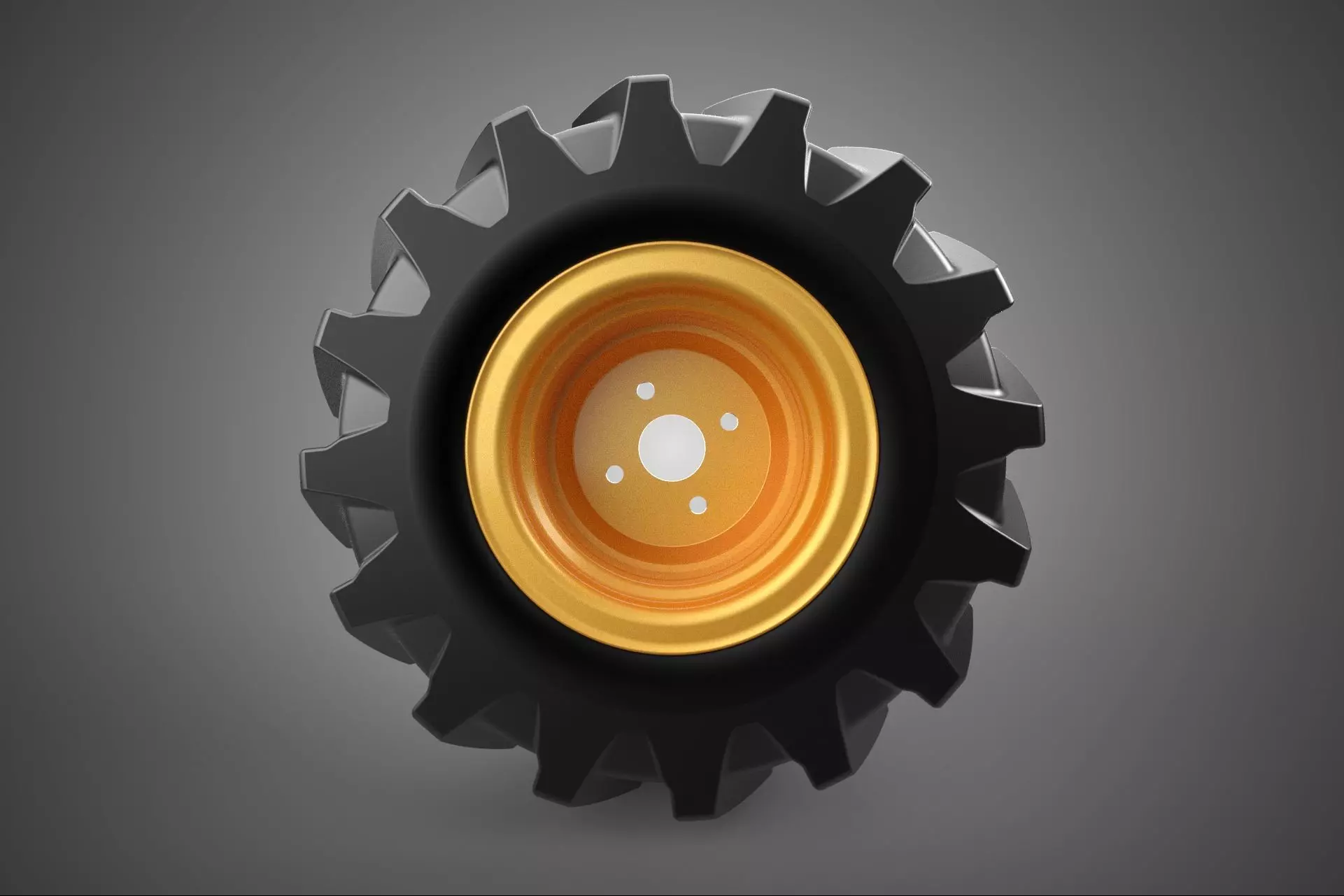
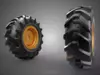
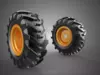
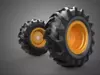
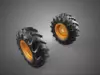
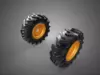
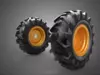
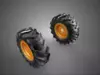
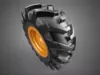
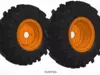
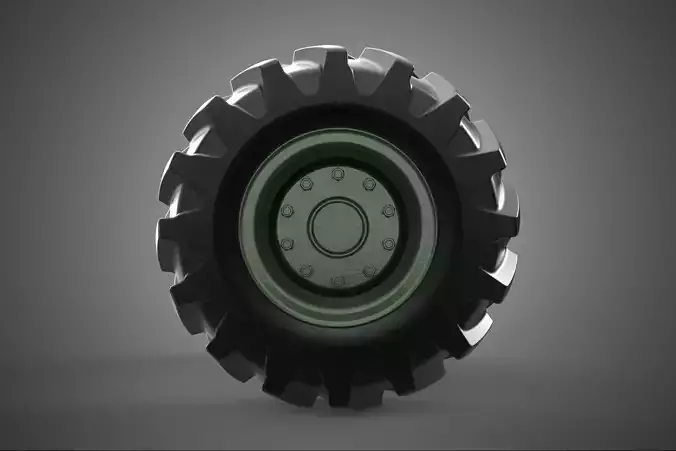
The component described, the Tractor Tire, Tread, and Wheel Assembly, constitutes a fundamental structural and motive unit essential for agricultural and heavy-duty utility machinery operating on unprepared terrain. This complex assembly is engineered specifically to maximize traction (grip), minimize ground pressure (flotation), and efficiently transfer high torque from the drivetrain to the ground surface.
I. Structure and Material Composition
The assembly comprises three primary interacting elements: the pneumatic tire (tyre), the metal wheel rim, and the specialized tread pattern (lugs).
A. The Tire (Tyre)
Tractor tires are large-diameter, high-volume pneumatic envelopes constructed typically using either bias-ply or radial technology. The material utilized is a highly durable, abrasion-resistant rubber compound, often reinforced with carbon black (giving the standard black coloration) for UV stability and durability. The term rubber refers specifically to the vulcanized elastomer blend forming the carcass (the structural body of the tire) and the external tread surface.
B. The Wheel Rim
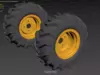
The rim is the metallic component, typically stamped or welded steel, designed to seat and secure the beads of the tire, creating an airtight seal. The wheel configuration includes a central disc (often bolted directly to the tractor hub) and the external circumferential rim flange. The yellow-orange coloration referenced in the title generally pertains to this component. This industrial hue serves multiple practical functions: corrosion resistance (via epoxy or polyurethane coatings), high visibility for safety protocols, and corporate branding identification (e.g., specific agricultural or construction equipment manufacturers frequently use yellow, orange, or high-visibility red for their wheel components).
C. The Tread and Lugs
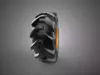
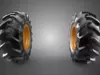
The tread is the external surface of the tire carcass designed for contact with the ground. The aggressive design typical of agricultural tires is characterized by large, deep, widely spaced elements known as lugs. These lugs are arranged in a distinctive chevron or V-pattern, which is oriented to point toward the center line of the tire as the pattern repeats (for drive tires).
The specialized design, often categorized as R-1 (standard traction) or R-2 (deep lug for wet/paddy fields), achieves traction through soil penetration and shear strength engagement, rather than simple adhesion. The geometry of the lugs ensures that soil and mud are efficiently expelled from the channels during rotation, a process known as self-cleaning. This action is critical for maintaining maximum effective grip throughout continuous operation.
II. Functionality and Grip Mechanics
The primary function of the agricultural tire lug is to provide superior grip across diverse surfaces, including soft soil, mud, and uneven fields.
- Traction Force: The deep penetration of the lugs maximizes the surface area engaged with the soil’s shear plane, optimizing the transfer of torque. The angled design resists lateral slippage and enhances directional stability during fieldwork, particularly when towing heavy implements.
- Flotation: The large volume and width of the assembly distribute the tractor’s substantial weight over a greater area, minimizing the ground bearing pressure and preventing excessive rutting or soil compaction, which is detrimental to agricultural yield.
- Load Bearing: The internal structure, including steel or textile belts and the robust sidewall, is engineered to bear static and dynamic loads inherent to heavy machinery operations.
The term YELLOW ORANGE serves as a descriptor emphasizing the high-visibility aesthetic applied to the metallic substructure (rim), differentiating the assembly from standard monochromatic industrial tires.
***
KEYWORDS: Pneumatic tire, Agricultural machinery, Traction, Tread lug, Chevron pattern, R-1 classification, Wheel rim, Steel wheel, Rubber compound, Flotation, Torque transfer, Self-cleaning, Sidewall, Carcass, Industrial coating, High visibility, Corrosion resistance, Bias-ply, Radial tire, Ground pressure, Grip mechanism, Shear strength, Bead seat, Axle load, Vulcanization, Yellow orange, Implement tire, Driving wheel, Deep lug, Off-road.