High-quality 3D assets at affordable prices — trusted by designers, engineers, and creators worldwide. Made with care to be versatile, accessible, and ready for your pipeline.
Included File Formats
This model is provided in 14 widely supported formats, ensuring maximum compatibility:
• - FBX (.fbx) – Standard format for most 3D software and pipelines
• - OBJ + MTL (.obj, .mtl) – Wavefront format, widely used and compatible
• - STL (.stl) – Exported mesh geometry; may be suitable for 3D printing with adjustments
• - STEP (.step, .stp) – CAD format using NURBS surfaces
• - IGES (.iges, .igs) – Common format for CAD/CAM and engineering workflows (NURBS)
• - SAT (.sat) – ACIS solid model format (NURBS)
• - DAE (.dae) – Collada format for 3D applications and animations
• - glTF (.glb) – Modern, lightweight format for web, AR, and real-time engines
• - 3DS (.3ds) – Legacy format with broad software support
• - 3ds Max (.max) – Provided for 3ds Max users
• - Blender (.blend) – Provided for Blender users
• - SketchUp (.skp) – Compatible with all SketchUp versions
• - AutoCAD (.dwg) – Suitable for technical and architectural workflows
• - Rhino (.3dm) – Provided for Rhino users
Model Info
• - All files are checked and tested for integrity and correct content
• - Geometry uses real-world scale; model resolution varies depending on the product (high or low poly)
• • - Scene setup and mesh structure may vary depending on model complexity
• - Rendered using Luxion KeyShot
• - Affordable price with professional detailing
Buy with confidence. Quality and compatibility guaranteed.
If you have any questions about the file formats, feel free to send us a message — we're happy to assist you!
Sincerely,
SURF3D
Trusted source for professional and affordable 3D models.
More Information About 3D Model :
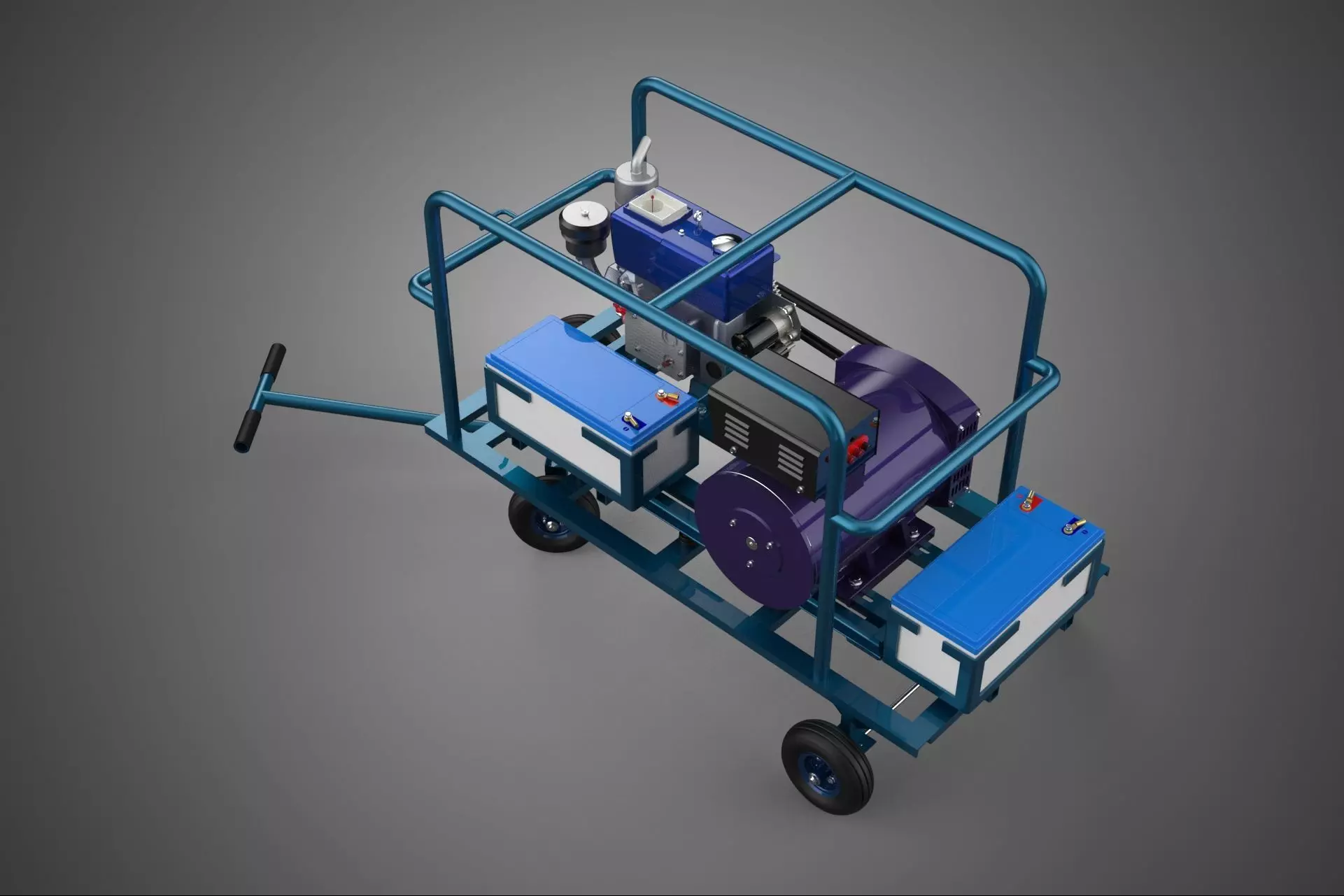
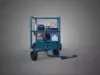
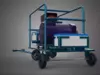
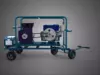
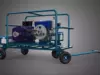
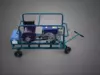
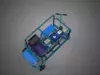
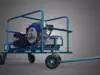
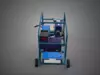
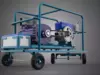
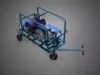
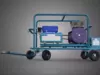
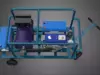
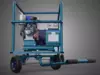
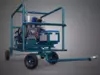
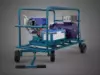
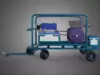
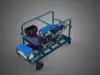
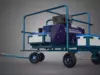
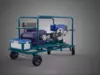
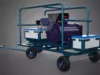
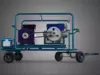
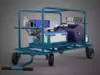
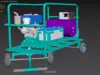
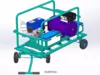
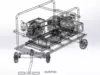
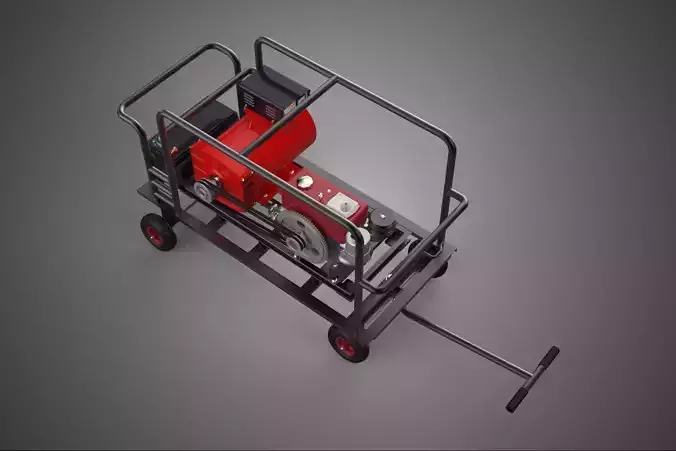
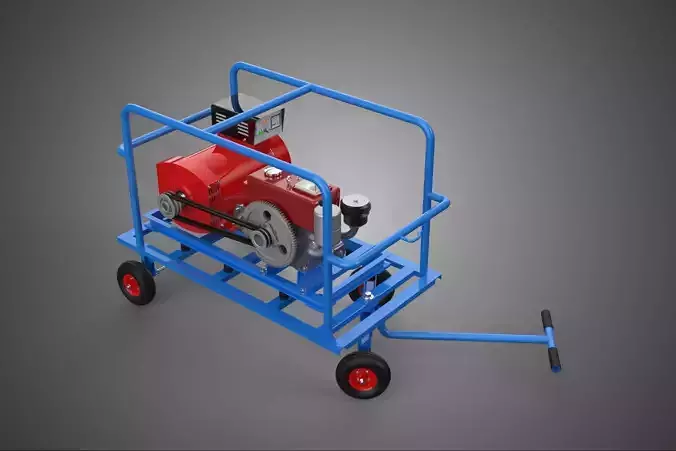
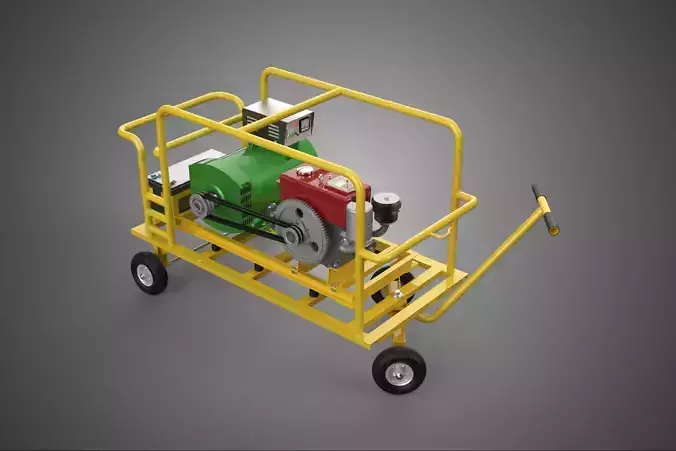
The apparatus described as a Wheeled Utility Cart Engine Twin Battery Power Banks Generator constitutes a specialized Mobile Hybrid Power System (MHPS). This integrated unit is engineered for the production, storage, and regulated distribution of electrical energy in environments lacking fixed infrastructure. It represents a convergence of conventional internal combustion generation technology and contemporary battery energy storage systems (BESS), mounted upon a highly portable platform.
Architecture and Component Subsystems
The system is defined by four principal subsystems: the mobility platform, the prime mover/generator assembly, the dual storage array, and the power management system.
1. Mobility Platform (Wheeled Utility Cart)
The structural foundation is a heavy-duty utility cart, designed for maneuverability across varied terrain, including unimproved surfaces. The chassis is typically constructed from high-tensile steel tubing or aluminum alloys to optimize durability and minimize overall mass. It incorporates high-load capacity wheels, often pneumatic or semi-pneumatic, ensuring vibration damping and ease of transport by a single operator. The platform is crucial for isolating the operational noise and vibration produced by the engine/generator from the ground plane.
2. Prime Mover and Generation Assembly
The prime mover is an Internal Combustion Engine (ICE), commonly fueled by gasoline, propane, or diesel, selected for its power-to-weight ratio and volumetric efficiency. This engine is mechanically coupled to an alternator or generator head. The generation system typically incorporates an Automatic Voltage Regulator (AVR) to ensure stable voltage output regardless of engine load fluctuation. The primary function of this subsystem is to convert chemical energy (fuel) into mechanical energy, and subsequently, into electrical energy, used either for direct load supply or for recharging the battery array.
3. Twin Battery Power Banks (Storage Array)
The defining feature of this system is the integration of twin independent battery power banks. These banks (often utilizing deep-cycle lead-acid, Absorbent Glass Mat (AGM), or high-density Lithium-ion chemistries) serve multiple critical functions:
- Buffering: They absorb instantaneous load spikes that exceed the generator’s continuous rating.
- Redundancy: The twin configuration provides redundancy, ensuring operational continuity if one bank fails or requires maintenance.
- Silent Operation: They enable extended operation without the necessity of running the ICE, crucial for noise-sensitive applications or confined spaces.
- Optimal Engine Cycling: They permit the engine to run only during optimal charge windows, maximizing fuel efficiency and reducing wear.
The voltage output from the banks (typically 12V, 24V, or 48V DC) is fed into the power management system for inversion.
#### 4. Power Management and Inversion System
This subsystem integrates the charge controller, the power inverter, and the automatic transfer switch (ATS). The charge controller manages the flow of current from the generator to the twin battery banks, preventing overcharging and optimizing battery longevity. The high-capacity inverter converts the stored Direct Current (DC) from the batteries into usable Alternating Current (AC) compatible with standard utility loads (e.g., 120V/240V). The ATS ensures seamless transitions between generator-supplied power and inverter-supplied power based on operational mode, load demand, and fuel levels.
### Operational Modalities
The MHPS configuration allows for several distinct operating modes, optimizing power delivery based on demand:
- Hybrid Mode: The generator runs intermittently, specifically when the combined load exceeds the inverter capacity, or when the battery State of Charge (SoC) falls below a predefined threshold. This is the most fuel-efficient mode.
- Silent (Inverter) Mode: The engine is dormant, and the entire load is supplied solely by the stored energy in the twin battery banks via the inverter. This mode is essential for nighttime operation or indoor use where exhaust fumes and noise pollution are critical concerns.
- Generator (Continuous) Mode: The generator operates constantly, supplying peak power for heavy loads while simultaneously float charging the batteries.
### Applications
Due to its mobility, power flexibility, and dual-source architecture, the Wheeled Utility Cart Generator is frequently deployed in: field maintenance, emergency disaster response (providing critical communication and lighting power), remote data collection stations, temporary construction lighting, and specialized mobile medical or scientific platforms requiring reliable, conditioned power away from the grid.
KEYWORDS: Mobile Hybrid Power System, Engine Generator, Battery Energy Storage, Power Banks, Utility Cart, Internal Combustion Engine, Inverter, Charge Controller, Automatic Transfer Switch, Redundancy, Field Operations, Portable Power, Standby Power, Deep Cycle Battery, Lithium-Ion, AGM, Silent Operation, Remote Power, Emergency Response, Power Conditioning, Voltage Regulation, Prime Mover, Electrical Grid Independence, Energy Buffer, Modular Power, Fuel Efficiency, Maneuverability, High Density Power, Dual Battery System.