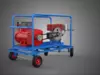
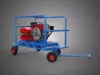
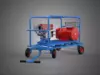
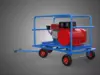
High-quality 3D assets at affordable prices — trusted by designers, engineers, and creators worldwide. Made with care to be versatile, accessible, and ready for your pipeline.
Included File Formats
This model is provided in 14 widely supported formats, ensuring maximum compatibility:
• - FBX (.fbx) – Standard format for most 3D software and pipelines
• - OBJ + MTL (.obj, .mtl) – Wavefront format, widely used and compatible
• - STL (.stl) – Exported mesh geometry; may be suitable for 3D printing with adjustments
• - STEP (.step, .stp) – CAD format using NURBS surfaces
• - IGES (.iges, .igs) – Common format for CAD/CAM and engineering workflows (NURBS)
• - SAT (.sat) – ACIS solid model format (NURBS)
• - DAE (.dae) – Collada format for 3D applications and animations
• - glTF (.glb) – Modern, lightweight format for web, AR, and real-time engines
• - 3DS (.3ds) – Legacy format with broad software support
• - 3ds Max (.max) – Provided for 3ds Max users
• - Blender (.blend) – Provided for Blender users
• - SketchUp (.skp) – Compatible with all SketchUp versions
• - AutoCAD (.dwg) – Suitable for technical and architectural workflows
• - Rhino (.3dm) – Provided for Rhino users
Model Info
• - All files are checked and tested for integrity and correct content
• - Geometry uses real-world scale; model resolution varies depending on the product (high or low poly)
• • - Scene setup and mesh structure may vary depending on model complexity
• - Rendered using Luxion KeyShot
• - Affordable price with professional detailing
Buy with confidence. Quality and compatibility guaranteed.
If you have any questions about the file formats, feel free to send us a message — we're happy to assist you!
Sincerely,
SURF3D
Trusted source for professional and affordable 3D models.
More Information About 3D Model :
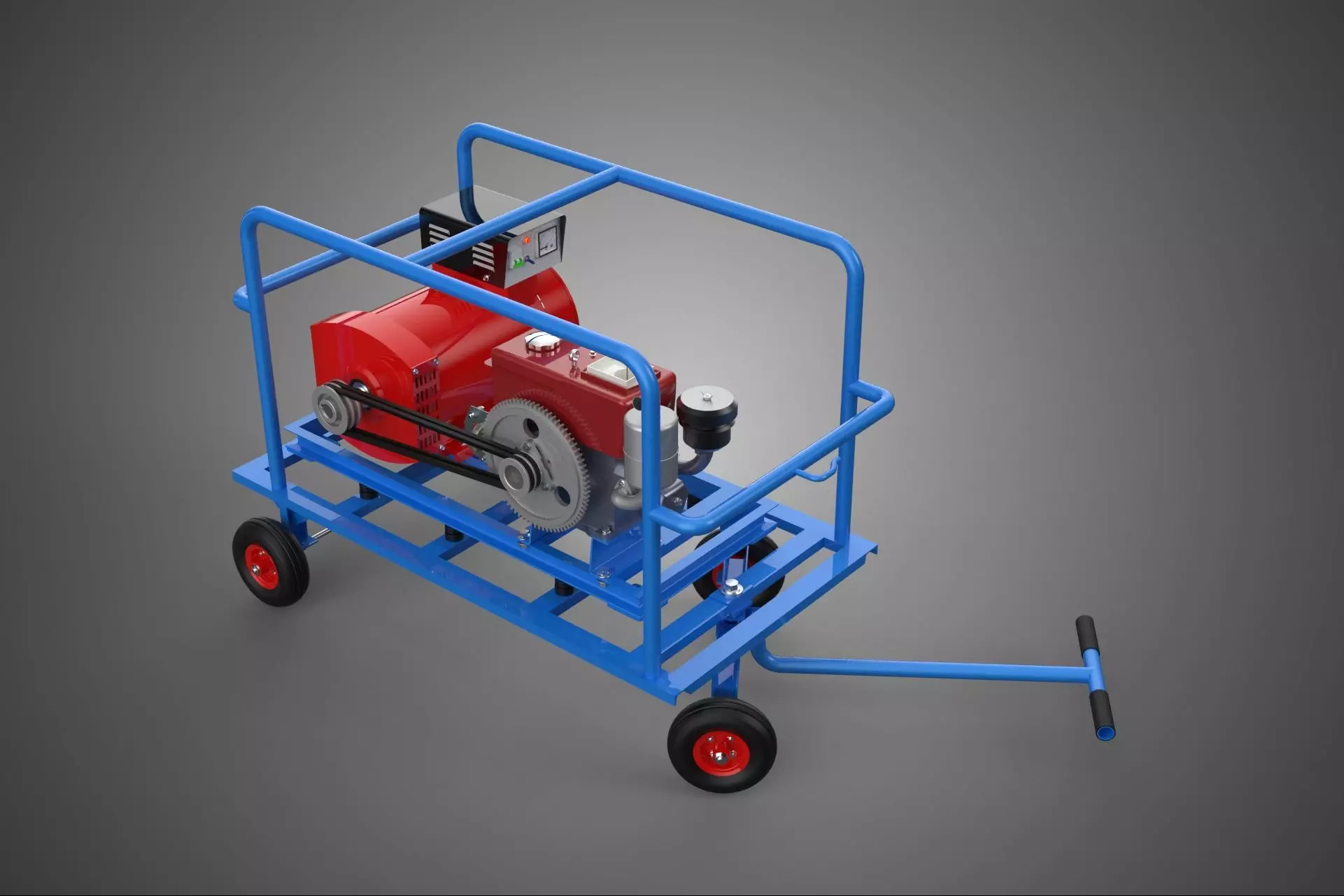
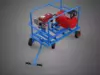
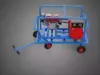
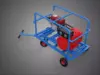
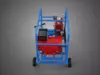
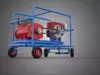
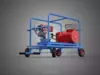
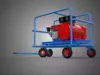
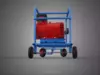
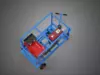
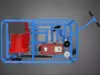
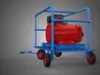
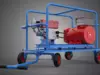
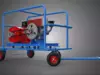
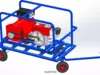
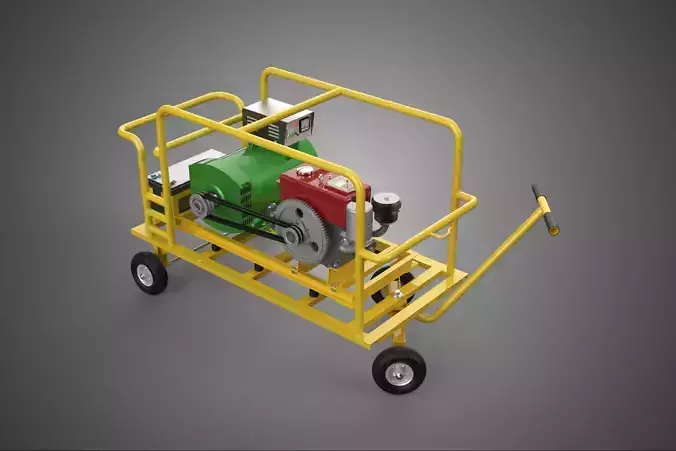
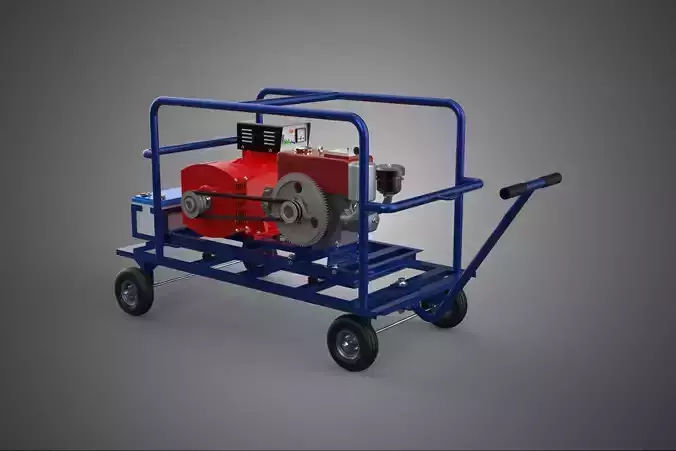
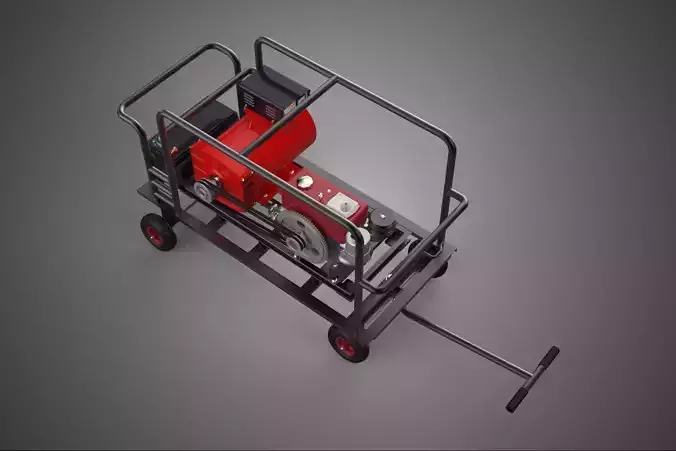
A Diesel Generator Set (often abbreviated as DG set or Genset) is an integrated power generation system consisting of a diesel engine coupled to an electrical generator (commonly an alternator). This assembly functions to convert the chemical energy stored in diesel fuel into mechanical rotational energy, which is subsequently converted into usable electrical energy via electromagnetic induction. Gensets are crucial for providing continuous primary power in remote locations, as well as dependable backup or emergency power across commercial, industrial, and residential sectors.
Nomenclature and Component Clarification
The terminology associated with these systems often includes historical or imprecise terms, necessitating clarification:
- Genset/DG Set: The unified assembly of the engine and generator.
- Diesel Engine (Prime Mover): The internal combustion engine that provides the mechanical input torque.
- Alternator: The modern component responsible for AC (Alternating Current) generation. It is a synchronous machine.
- Dynamo: An archaic term referring specifically to DC (Direct Current) generators. Modern diesel gensets universally employ alternators.
- Motor: The term motor is technically inaccurate when referring to the primary generating unit, as a motor converts electrical energy into mechanical energy. However, the system utilizes a dedicated electric motor (starter motor) to initiate the engine cycle.
### Principal Components and Operation
The DG set operates through the coordinated interaction of two main sections: the prime mover and the electrical generator, mounted rigidly onto a common skid base, often insulated with vibration dampening mounts.
#### 1. The Prime Mover (Diesel Engine)
The diesel engine operates on the four-stroke compression-ignition cycle. Its primary function is to maintain a constant angular velocity (RPM) to ensure a stable electrical frequency output. Engine specifications are critical, determining the Genset’s ability to handle starting loads (motor starting) and sustained power demands.
- Speed Regulation: For standard utility power generation, the engine speed must be precisely governed. For 50 Hz output, the engine runs at 1500 RPM; for 60 Hz output, it runs at 1800 RPM. Speed is controlled by an electronic or mechanical governor system.
- Cooling System: Generators are typically cooled by either radiator-based liquid cooling (using ethylene glycol or water) or, in smaller units, air cooling. Adequate cooling is essential to prevent thermal damage and maintain engine efficiency.
- Fuel System: Includes the fuel tank, filters, and injection system, delivering metered diesel fuel to the combustion chamber.
#### 2. The Electrical Generator (Alternator)
The alternator converts the mechanical power delivered by the engine shaft into electrical power. Modern industrial alternators are typically brushless designs, eliminating the maintenance requirements associated with brush and commutator systems.
- Synchronous Design: Genset alternators are synchronous generators, meaning the frequency of the generated voltage is directly proportional to the rotation speed and the number of magnetic poles.
- Excitation System: The generation of the magnetic field (excitation) is often managed via an auxiliary winding or permanent magnets. The control of this field is essential for voltage regulation.
- Automatic Voltage Regulator (AVR): The AVR is a critical electronic component that senses the output voltage and load changes. It automatically adjusts the excitation current delivered to the rotor to maintain the output voltage within strict operational tolerances, ensuring power quality stability.
### Control and Monitoring
The control panel serves as the interface for operating and monitoring the genset. Modern control systems utilize microprocessors to perform numerous functions:
- Protection: Monitoring parameters such as low oil pressure, high coolant temperature, overspeed, overcurrent, and voltage faults, and shutting down the unit automatically to prevent catastrophic failure.
- Synchronization: For systems operating in parallel (multiple gensets or genset-to-utility grid), sophisticated controls manage load sharing and phase matching.
- Automatic Transfer Switch (ATS): In standby applications, the ATS senses utility power failure and automatically commands the genset to start, connect, and transfer the electrical load.
### Applications
Diesel gensets are categorized based on their intended duty cycle:
- Standby Power: Used only during utility power failures (e.g., hospitals, data centers).
- Prime Power: Providing continuous power where no electrical grid exists (e.g., remote mining operations, construction sites).
- Continuous Power: Operating indefinitely at a constant load.
- Peak Shaving: Operated in parallel with the grid during periods of high demand to reduce expensive peak utility charges.
***
KEYWORDS: Diesel, Genset, Generator Set, Alternator, Prime Mover, Engine, Synchronous Generator, Automatic Voltage Regulator, AVR, Standby Power, Prime Power, Control Panel, ATS, Power Generation, Electrical Engineering, Compression Ignition, Dynamo, Motor, Skid Base, Excitation System, Frequency Regulation, 50 Hz, 60 Hz, Cooling System, Load Sharing, Fuel Efficiency, Brushless Alternator, Synchronization, Kilowatt, KVA.