High-quality 3D assets at affordable prices — trusted by designers, engineers, and creators worldwide. Made with care to be versatile, accessible, and ready for your pipeline.
Included File Formats
This model is provided in 14 widely supported formats, ensuring maximum compatibility:
• - FBX (.fbx) – Standard format for most 3D software and pipelines
• - OBJ + MTL (.obj, .mtl) – Wavefront format, widely used and compatible
• - STL (.stl) – Exported mesh geometry; may be suitable for 3D printing with adjustments
• - STEP (.step, .stp) – CAD format using NURBS surfaces
• - IGES (.iges, .igs) – Common format for CAD/CAM and engineering workflows (NURBS)
• - SAT (.sat) – ACIS solid model format (NURBS)
• - DAE (.dae) – Collada format for 3D applications and animations
• - glTF (.glb) – Modern, lightweight format for web, AR, and real-time engines
• - 3DS (.3ds) – Legacy format with broad software support
• - 3ds Max (.max) – Provided for 3ds Max users
• - Blender (.blend) – Provided for Blender users
• - SketchUp (.skp) – Compatible with all SketchUp versions
• - AutoCAD (.dwg) – Suitable for technical and architectural workflows
• - Rhino (.3dm) – Provided for Rhino users
Model Info
• - All files are checked and tested for integrity and correct content
• - Geometry uses real-world scale; model resolution varies depending on the product (high or low poly)
• • - Scene setup and mesh structure may vary depending on model complexity
• - Rendered using Luxion KeyShot
• - Affordable price with professional detailing
Buy with confidence. Quality and compatibility guaranteed.
If you have any questions about the file formats, feel free to send us a message — we're happy to assist you!
Sincerely,
SURF3D
Trusted source for professional and affordable 3D models.
More Information About 3D Model :
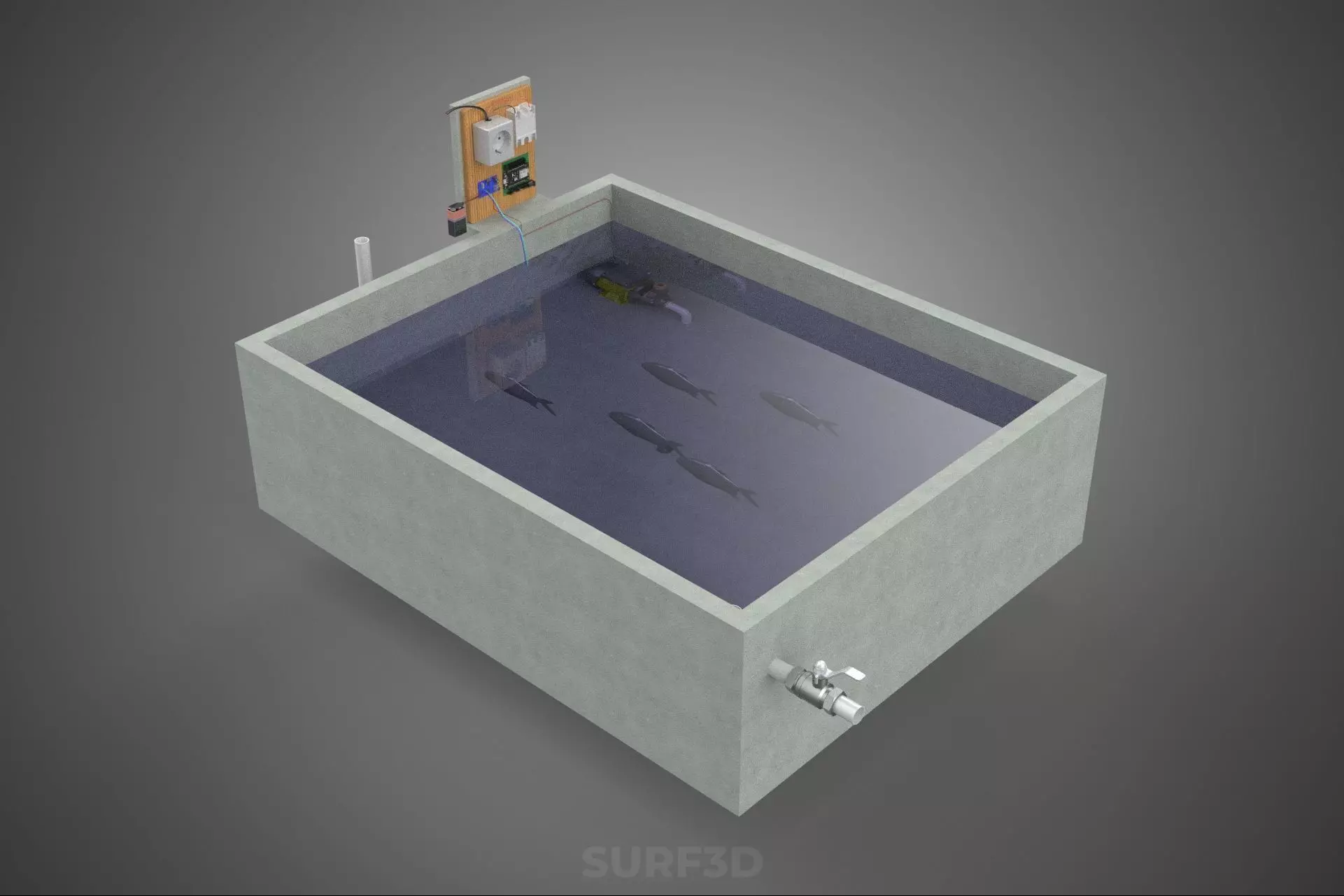
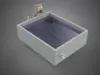
IOT SMART FISH POND AQUACULTURE MONITOR WATER LEVEL CIRCULATION
Internet of Things (IoT) Smart Fish Pond Aquaculture refers to the advanced integration of interconnected digital technologies to optimize the farming of aquatic organisms within controlled pond environments. This sophisticated approach leverages real-time data acquisition, automated control mechanisms, and remote monitoring capabilities to enhance efficiency, sustainability, and productivity significantly beyond traditional aquaculture methodologies. Core to such systems are sensors, actuators, robust communication networks, and a centralized data processing platform, which collectively enable precise management of critical environmental parameters, particularly water level and circulation dynamics.
Context and Objectives
Conventional aquaculture practices often rely on manual observation and periodic, often labor-intensive, parameter testing. This can lead to delays in identifying issues, potential human error, and a predominantly reactive management strategy. IoT smart systems address these inherent limitations by providing continuous, high-precision monitoring and facilitating automated responses to evolving environmental conditions. The overarching objectives are to maintain optimal aquatic environments for target species, minimize resource consumption (such as water and energy), reduce operational costs, and proactively mitigate risks like disease outbreaks or environmental stress, thereby improving yield and reducing mortality rates.
Water Level Monitoring
Precise management of water level is fundamental for the health, growth, and overall productivity of a fish pond. Aberrations from optimal levels can induce various adverse outcomes:
- Low Water Levels: Can lead to increased susceptibility to predation, reduced availability of dissolved oxygen, heightened concentration of metabolic waste products, and undesirable fluctuations in water temperature, all of which induce stress on aquatic life.
- High Water Levels: Present risks of pond overflow, potential escape or loss of cultivated species, and unintended dilution of essential nutrients or applied treatments.
- Volume Consistency: Is crucial for accurate and efficient dosing of feed, medication, and water treatment chemicals, ensuring uniform distribution and efficacy.
IoT systems incorporate diverse sensor technologies for continuous water level detection, including ultrasonic sensors, float switches, and pressure transducers. These devices perpetually transmit data to a central gateway or cloud-based platform. Upon detecting deviations from predefined thresholds, the system can trigger automated responses, such as activating or deactivating inlet or outlet pumps to restore the desired water volume. Concurrently, alerts are typically dispatched to farm managers via mobile applications, SMS, or email, facilitating timely intervention even when personnel are not physically present. Historical data logging provides invaluable insights into water consumption patterns, aiding in the identification of potential leaks, excessive evaporation rates, or other inefficiencies over time.
Water Circulation Management
Effective water circulation is paramount for sustaining a healthy and productive aquaculture ecosystem. It directly influences several vital environmental factors:
- Oxygenation: Adequate circulation ensures the uniform distribution of dissolved oxygen (DO) throughout the pond, a critical element for the respiration of fish and other aquatic organisms. Stagnant zones can rapidly become hypoxic or anoxic, severely impacting aquatic health.
- Waste Dispersion and Removal: Circulation facilitates the dispersion of fish waste and uneaten feed, preventing the localized accumulation of toxic compounds (e.g., ammonia, nitrite) and promoting their efficient removal by integrated filtration systems or biological processes.
- Temperature Homogenization: It actively prevents thermal stratification, ensuring a more uniform water temperature, which is especially crucial for species sensitive to temperature gradients.
- Nutrient Distribution: In integrated systems like aquaponics, robust circulation ensures the even distribution of vital nutrients to cultivated plants.
IoT-enabled smart ponds deploy a suite of sensors, primarily dissolved oxygen (DO) and temperature probes, to continuously monitor these critical parameters. Based on real-time data, the system automatically controls various actuators such as aerators, diffusers, and recirculation pumps. For instance, if DO levels fall below a predetermined threshold, the system can automatically activate aerators to inject oxygen. Similarly, temperature sensors can trigger heating or cooling mechanisms as required, or adjust pump speeds to ensure consistent water movement. This dynamic, demand-driven control optimizes energy consumption by operating aeration or circulation equipment only when necessary, rather than continuously, leading to substantial operational cost savings and reduced environmental impact.
System Architecture and Benefits
A typical IoT smart aquaculture system generally comprises:
- Sensors: For real-time data collection (e.g., water level, DO, temperature, pH, conductivity, turbidity, ammonia).
- Actuators: For automated control and physical intervention (e.g., pumps, aerators, automated feeders, valves).
- Connectivity: Wireless communication protocols (e.g., Wi-Fi, LoRaWAN, Cellular, NB-IoT) to transmit sensor data reliably.
- Gateway/Edge Device: To aggregate and perform preliminary processing of sensor data before transmission to the cloud.
- Cloud Platform: For robust data storage, advanced analytics, trend analysis, and remote access capabilities.
- User Interface: Intuitive mobile applications or web-based dashboards for monitoring, manual control, system configuration, and alert management.