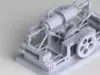
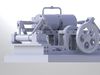
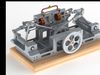
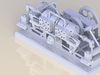
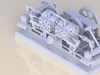
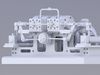
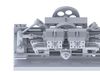
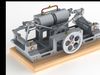
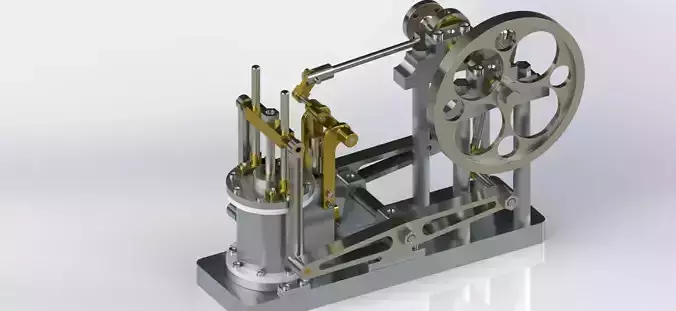
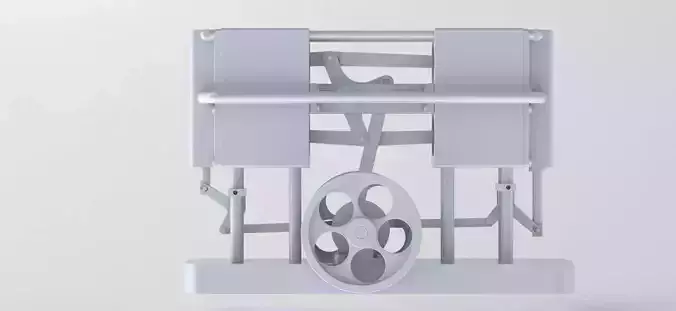
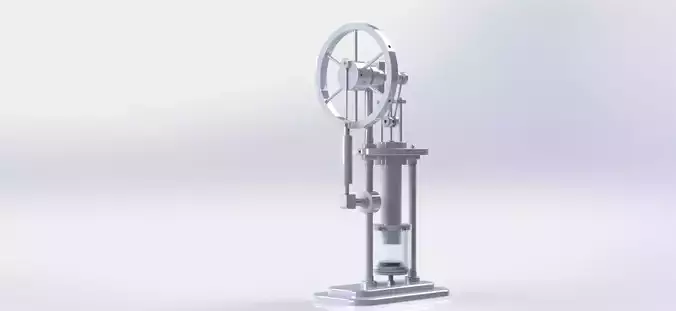
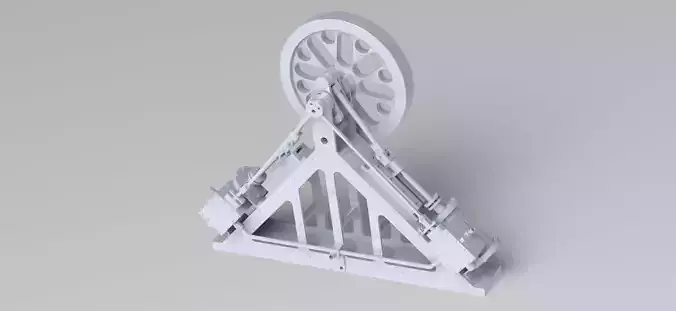
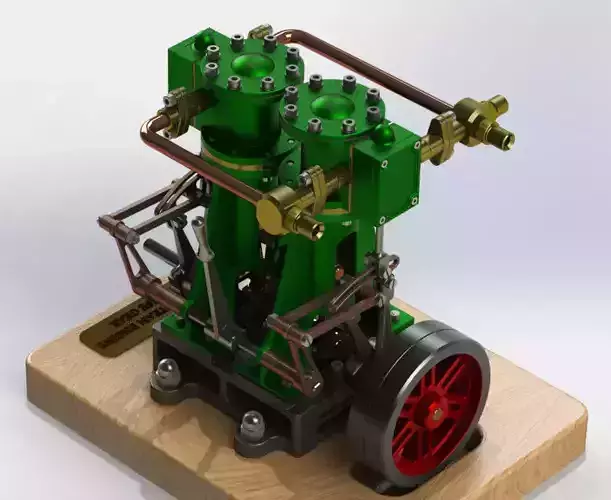
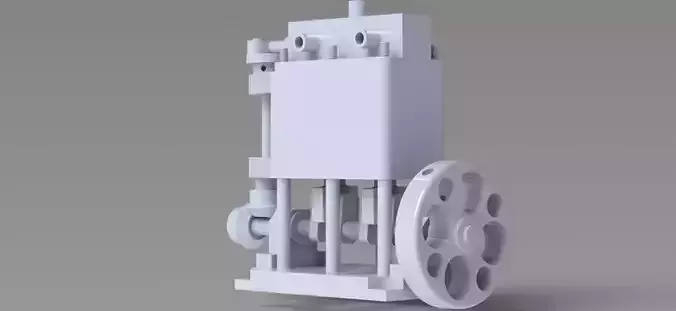
2 CYLINDER HORIZONTAL STEAM ENGINE OF THE MONITOR TYPE ,SOLIDWORK PART MODELLING AND ASSEMBLYSOLIDWORK STUDYSOLIDWORK WORKING ANIMATION #solidworks #letsmakeitcad #steamengines
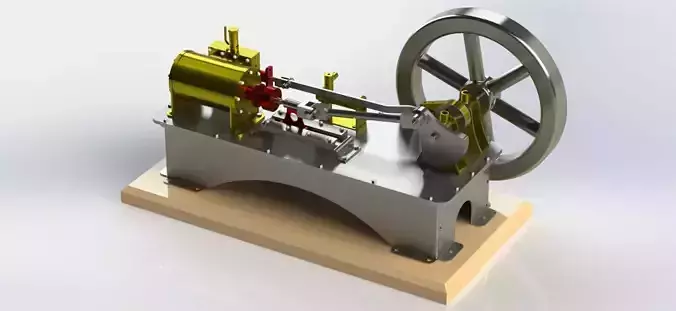
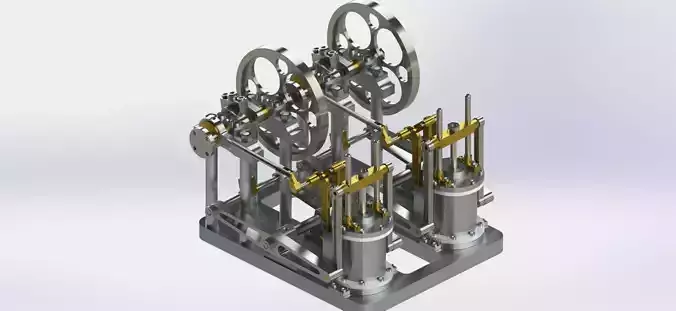
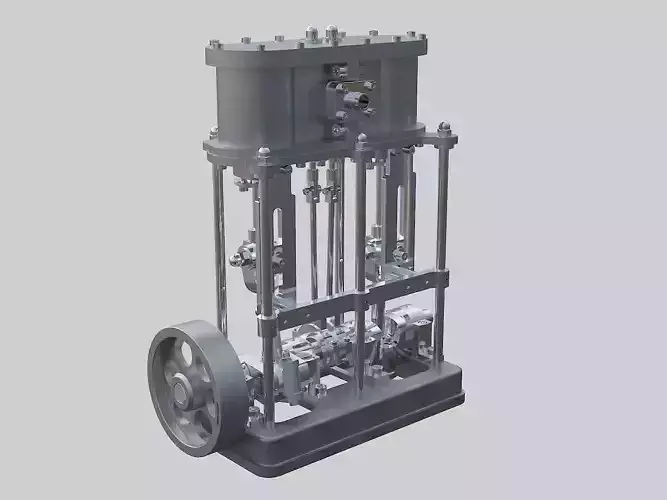
The Monitor type steam engine refers to a specific design of a horizontal steam engine that was commonly used in marine applications, particularly on early steam-powered warships called monitors. Here's a description of a 2-cylinder horizontal steam engine of the Monitor type:
Components:
Cylinders: There are two horizontal cylinders positioned side by side.Pistons: Each cylinder has a piston that moves back and forth within it.Crankshaft: The pistons are connected to a common crankshaft, which converts the reciprocating motion of the pistons into rotational motion.Crosshead: Connected to each piston is a crosshead that helps to guide the piston's movement and transmit its motion to the connecting rod.Connecting Rod: The connecting rods link the crossheads to the crankshaft. They transfer the up-and-down motion of the pistons to the rotational motion of the crankshaft.Flywheel: Similar to the vertical engine, a flywheel is attached to the crankshaft to smooth out the engine's motion and store rotational energy.Working:
Steam Inlet: Steam is admitted into one end of each cylinder through a valve.Power Stroke: Steam enters one cylinder, pushing its piston away from the valve end. This is the power stroke. As the steam expands, it does work on the piston, converting its energy into motion.Exhaust: After the power stroke, a valve opens to allow the used steam to exit the cylinder.Piston Return: The flywheel's momentum, combined with the connecting rod mechanism, pushes the piston back to its original position. This is the exhaust stroke.Steam Switch: At the same time, the second cylinder goes through a similar cycle. While one cylinder is in the power stroke, the other cylinder is in the exhaust stroke, and vice versa. This arrangement ensures a continuous rotational output.Advantages:
Compact Design: The horizontal arrangement allows for a more compact engine layout, making it suitable for tight spaces on ships.Balanced Forces: The opposing movements of the pistons help to balance out the forces on the engine, reducing vibrations.Disadvantages:
Limited Efficiency: Like the vertical engine, this simple design might not be as efficient as more advanced designs due to the lack of optimization features.Limited Power: The power output might be limited compared to more modern engine designs.The Monitor type steam engine played a crucial role in the early development of steam power for marine propulsion and industrial applications. However, as technology advanced, more efficient and powerful engine designs were developed. If you're interested in this type of engine, studying historical references and engineering principles will provide you with a deeper understanding of its operation and construction.