High-quality 3D assets at affordable prices — trusted by designers, engineers, and creators worldwide. Made with care to be versatile, accessible, and ready for your pipeline.
Included File Formats
This model is provided in 14 widely supported formats, ensuring maximum compatibility:
• - FBX (.fbx) – Standard format for most 3D software and pipelines
• - OBJ + MTL (.obj, .mtl) – Wavefront format, widely used and compatible
• - STL (.stl) – Exported mesh geometry; may be suitable for 3D printing with adjustments
• - STEP (.step, .stp) – CAD format using NURBS surfaces
• - IGES (.iges, .igs) – Common format for CAD/CAM and engineering workflows (NURBS)
• - SAT (.sat) – ACIS solid model format (NURBS)
• - DAE (.dae) – Collada format for 3D applications and animations
• - glTF (.glb) – Modern, lightweight format for web, AR, and real-time engines
• - 3DS (.3ds) – Legacy format with broad software support
• - 3ds Max (.max) – Provided for 3ds Max users
• - Blender (.blend) – Provided for Blender users
• - SketchUp (.skp) – Compatible with all SketchUp versions
• - AutoCAD (.dwg) – Suitable for technical and architectural workflows
• - Rhino (.3dm) – Provided for Rhino users
Model Info
• - All files are checked and tested for integrity and correct content
• - Geometry uses real-world scale; model resolution varies depending on the product (high or low poly)
• • - Scene setup and mesh structure may vary depending on model complexity
• - Rendered using Luxion KeyShot
• - Affordable price with professional detailing
Buy with confidence. Quality and compatibility guaranteed.
If you have any questions about the file formats, feel free to send us a message — we're happy to assist you!
Sincerely,
SURF3D
Trusted source for professional and affordable 3D models.
More Information About 3D Model :
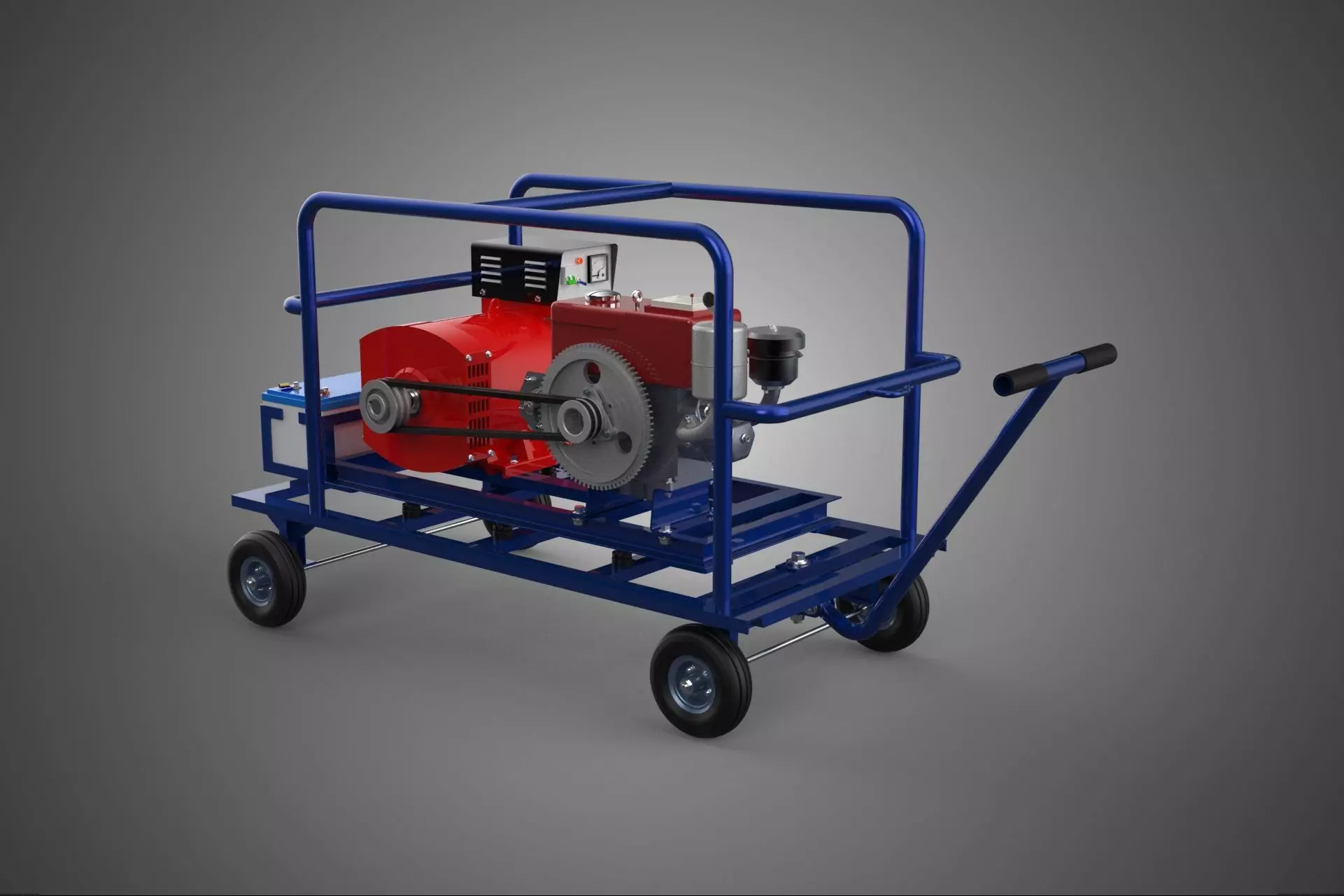
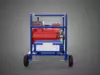
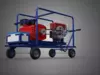
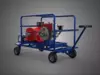
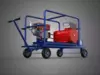
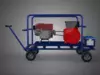
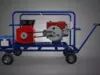
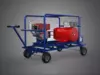
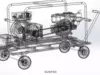
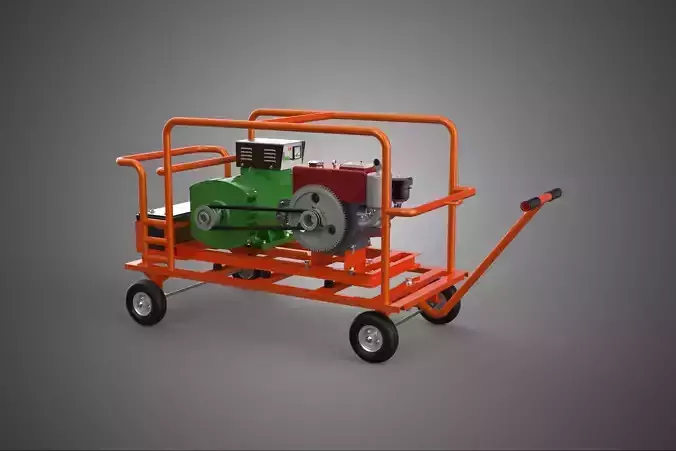
PORTABLE ELECTRIC VEHICLE (EV) CAR CHARGING SYSTEM POWER GENERATOR
A Portable Electric Vehicle (EV) Charging System Power Generator, often referred to as a Mobile EV Charger, is a specialized, self-contained apparatus designed to supply electrical energy directly to an electric vehicle’s onboard battery system outside the conventional fixed electrical grid infrastructure. These systems integrate an independent power generation source or high-capacity energy storage with the necessary power conditioning and communication hardware required for standardized EV charging.
I. Function and Classification
The primary function of these systems is to provide immediate, on-demand charging capability in remote locations, during power outages, or as part of mobile roadside assistance services. Unlike standard fixed Electric Vehicle Supply Equipment (EVSE), which draws power from the utility grid, a portable system generates or stores the necessary energy autonomously.
Portable EV power generation systems are generally classified based on their primary energy source:
- Internal Combustion Engine (ICE) Gensets: These are typically diesel or gasoline-fueled generator sets coupled with sophisticated power electronics. The engine drives an alternator, producing AC power which is then rectified and conditioned to meet the precise voltage, current, and communication requirements (Level 2 AC or DC Fast Charging) of the receiving EV.
- Mobile Energy Storage Systems (MESS): These units utilize high-density lithium-ion or solid-state batteries (often mounted on trailers or skids) that are pre-charged using grid power. They act as large, portable power banks capable of discharging rapidly to an EV. While not technically generators, they fulfill the same function of delivering off-grid power and are preferred in noise-sensitive or emission-restricted areas.
- Fuel Cell Generators: Utilizing hydrogen or methanol, these systems employ electrochemical processes to generate electricity with water and minimal heat as the only byproducts. They offer high energy density and zero tailpipe emissions but require specialized fuel logistics.
### II. Technical Architecture and Standards
A robust portable charging system must manage several complex technical requirements to safely interface with modern EVs:
#### A. Power Conditioning
The raw power generated by an ICE alternator or discharged from a battery bank must be meticulously filtered and regulated. The power conditioning unit (PCU) is essential for converting the input power into the standardized output required by the EV. This involves stabilizing the voltage and frequency (for AC charging) or regulating the DC bus voltage (for DC Fast Charging). Efficiency in this conversion process is critical to minimize fuel consumption or maximize battery utility.
#### B. Charging Protocols
All portable EV charging systems must adhere to international charging standards to ensure interoperability and safety. The interface hardware usually includes:
- J1772 (Type 1) or IEC 62196 (Type 2): For Level 2 AC charging (typically 3.3 kW to 19.2 kW).
- Combined Charging System (CCS) or CHAdeMO: For Level 3/DC Fast Charging, which can output power ranging from 25 kW to over 350 kW, depending on the unit’s capacity.
Communication between the charger and the vehicle (Control Pilot signaling) is mandatory for regulating the current flow and confirming safety parameters, preventing battery damage, and managing thermal load.
### III. Applications and Utility
The mobility and independence of these systems address critical gaps in the evolving EV infrastructure:
- Emergency Roadside Assistance (Mobile Charging Services): For EVs that have depleted their battery capacity far from a fixed station (range anxiety mitigation).
- Disaster Relief and Critical Infrastructure Support: Providing vital charging capability to first responder fleets when fixed electrical infrastructure is damaged or compromised.
- Temporary Installations and Events: Supplying charging at pop-up locations, large festivals, or remote construction sites where the cost and time associated with installing permanent grid connections are prohibitive.
- Fleet Management and Depot Charging: Offering flexible charging solutions within large corporate or logistical fleets without requiring permanent installation upgrades to local utility service.
### IV. Environmental and Regulatory Considerations
Systems relying on ICE technology are subject to strict environmental regulations regarding noise pollution and exhaust emissions (e.g., EPA Tier standards). Modern ICE-based chargers often incorporate advanced catalytic converters and sound attenuation enclosures. Battery-based systems offer zero local emissions but require robust thermal management and safety protocols due to the high energy density of the mobile storage unit. The logistics of fuel (for gensets) or recharging the MESS unit remain primary operational challenges.
KEYWORDS: Mobile EV Charger, Off-Grid Charging, DC Fast Charging, Emergency EVSE, Power Generation, Generator Set (Genset), Portable Power, EV Infrastructure, Roadside Assistance, Battery-Buffered System, Mobile Energy Storage (MESS), Fuel Cell Technology, J1772, CCS, CHAdeMO, Power Electronics, Energy Conversion, Charging Protocol, Autonomous Power, Disaster Relief, Remote Charging, Level 3 Charging, Grid Independence, High Voltage DC, Lithium-Ion, Power Conditioning Unit (PCU), Fleet Charging, Energy Density, Range Anxiety Mitigation, Temporary Power.