High-quality 3D assets at affordable prices — trusted by designers, engineers, and creators worldwide. Made with care to be versatile, accessible, and ready for your pipeline.
Included File Formats
This model is provided in 14 widely supported formats, ensuring maximum compatibility:
• - FBX (.fbx) – Standard format for most 3D software and pipelines
• - OBJ + MTL (.obj, .mtl) – Wavefront format, widely used and compatible
• - STL (.stl) – Exported mesh geometry; may be suitable for 3D printing with adjustments
• - STEP (.step, .stp) – CAD format using NURBS surfaces
• - IGES (.iges, .igs) – Common format for CAD/CAM and engineering workflows (NURBS)
• - SAT (.sat) – ACIS solid model format (NURBS)
• - DAE (.dae) – Collada format for 3D applications and animations
• - glTF (.glb) – Modern, lightweight format for web, AR, and real-time engines
• - 3DS (.3ds) – Legacy format with broad software support
• - 3ds Max (.max) – Provided for 3ds Max users
• - Blender (.blend) – Provided for Blender users
• - SketchUp (.skp) – Compatible with all SketchUp versions
• - AutoCAD (.dwg) – Suitable for technical and architectural workflows
• - Rhino (.3dm) – Provided for Rhino users
Model Info
• - All files are checked and tested for integrity and correct content
• - Geometry uses real-world scale; model resolution varies depending on the product (high or low poly)
• • - Scene setup and mesh structure may vary depending on model complexity
• - Rendered using Luxion KeyShot
• - Affordable price with professional detailing
Buy with confidence. Quality and compatibility guaranteed.
If you have any questions about the file formats, feel free to send us a message — we're happy to assist you!
Sincerely,
SURF3D
Trusted source for professional and affordable 3D models.
More Information About 3D Model :
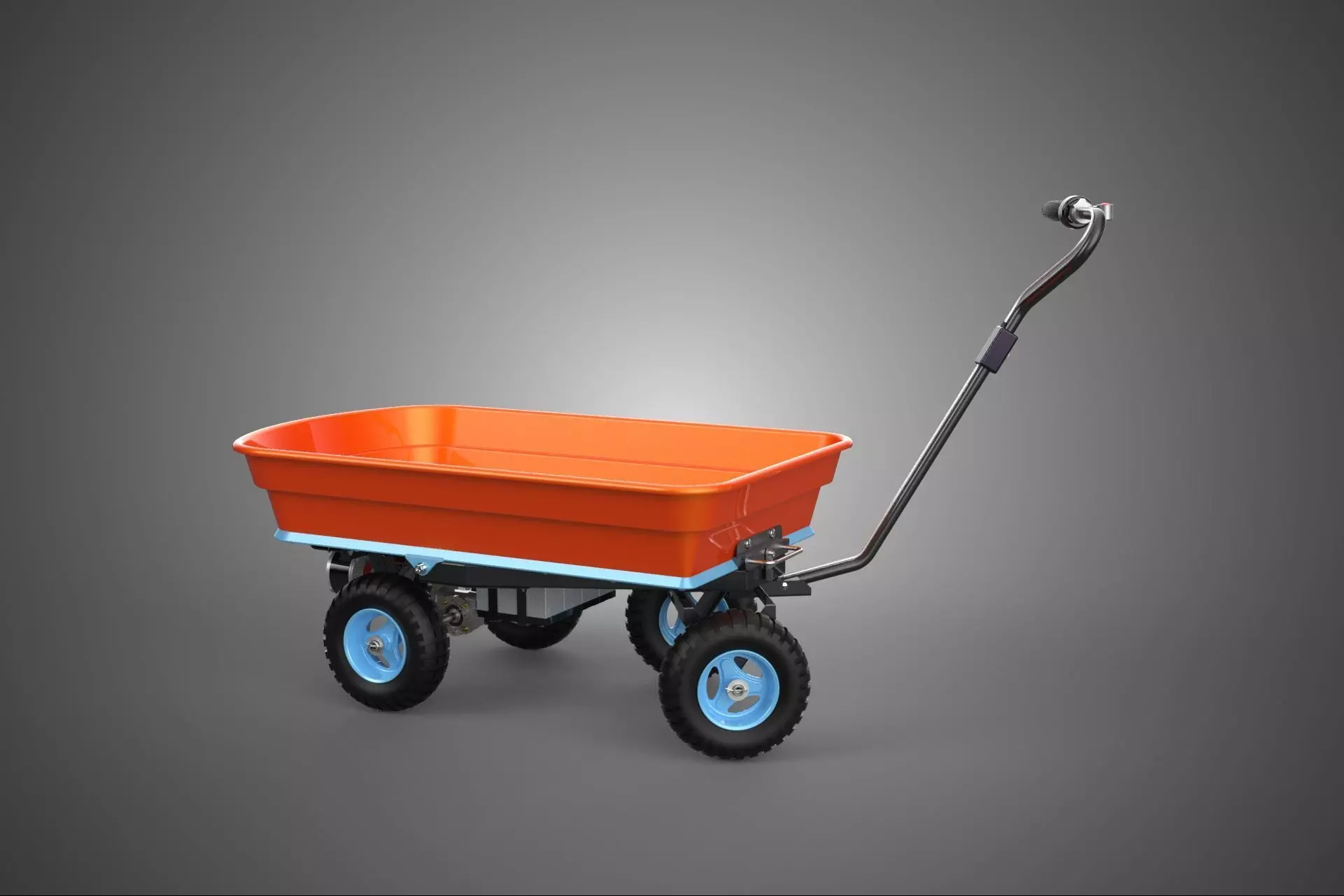
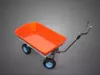
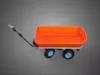
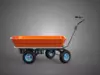
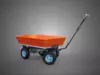
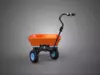
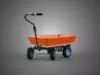
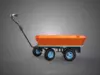
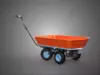
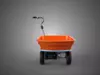
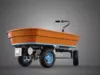
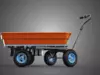
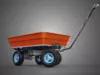
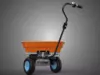
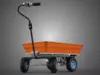
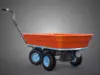
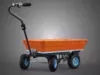
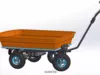
An Electric Heavy Duty Home Pull Wagon Utility Cart Trolley Offroad represents a specialized class of motorized material handling equipment engineered for robust transportation tasks within residential, garden, and light commercial environments. It integrates the fundamental utility of a traditional manually pulled wagon or cart with electric propulsion or power assistance, significantly mitigating user exertion, especially when maneuvering substantial loads across challenging and unpaved terrain.
I. Defining Characteristics
- Electric Propulsion System: The core distinguishing feature is an integrated electric motor, typically a direct current (DC) brushed or brushless type, powered by a rechargeable battery pack (commonly lithium-ion or sealed lead-acid). This system provides either direct self-propulsion or power assistance, enabling the user to effortlessly move heavy loads that would otherwise demand considerable physical effort. Controls typically involve a throttle mechanism (e.g., thumb lever, twist grip) and often include variable speed settings and a reverse function, usually integrated into the pull handle.
- Heavy-Duty Construction: These units are purpose-built for durability and high load-bearing capacity. Frames are commonly constructed from robust materials such as steel or reinforced high-density polyethylene (HDPE) composites, capable of supporting considerable weights (often ranging from several hundred pounds to over a thousand pounds). Components like axles, bearings, and fasteners are selected for their resilience against continuous strenuous use, impact, and environmental exposure.
- Off-Road Capability: Designed specifically to traverse diverse unpaved surfaces, these carts are equipped with large-diameter, pneumatic tires, frequently featuring deep treads (knobby or aggressive patterns) to maximize traction on dirt, gravel, grass, mud, and uneven ground. A generous ground clearance and a stable, wide wheelbase further enhance their performance and stability on rugged terrain, distinguishing them from standard utility carts designed for paved surfaces.
- Utility Cart Functionality: The cargo bed is typically constructed from durable plastic, powder-coated steel, or mesh, designed for resilience. Common features enhancing versatility include removable or folding side panels, allowing for the transport of oversized items, and often a dump or tilt mechanism, facilitating quick and efficient unloading of bulk materials such as soil, mulch, sand, or gravel.
- Ergonomics and Control: A sturdy pull handle serves as the primary steering and control interface. The electric assist system is calibrated to complement manual effort, offering a more ergonomic and less fatiguing solution compared to purely manual hauling, particularly over long distances or up inclines. Integrated controls for power, speed, and direction are strategically placed for intuitive operation.
II. Key Components
A typical Electric Heavy Duty Home Pull Wagon Utility Cart Trolley Offroad comprises:
- Electric Motor: Provides the motive power.
- Battery Pack: Rechargeable power source (e.g., 24V, 36V, 48V).
- Control Unit (Controller): Manages motor speed, direction, and power output.
- Chassis/Frame: The structural backbone, usually steel or reinforced composite.
- Cargo Bed: The platform for carrying materials, often with a dump feature or removable sides.
- Wheels/Tires: Large, pneumatic, off-road tires for diverse terrain.
- Axles and Bearings: Heavy-duty components to support significant loads.
- Pull Handle: Ergonomic design with integrated controls.
- Braking Mechanism: Typically a manual brake, and sometimes regenerative braking on more advanced models.
III. Applications
The primary applications within a domestic or light-commercial context include:
- Gardening and Landscaping: Transporting soil, compost, mulch, plants, rocks, fertilizer, and gardening tools.
- Yard Work: Moving firewood, fallen branches, large bags of leaves, and general yard debris.
- DIY and Construction Projects: Hauling building materials such as bricks, cement bags, timber, paving stones, tools, and construction waste.
- General Utility: Facilitating the movement of heavy or bulky items across a property, such as patio furniture, barbecue grills, or sports equipment, especially in properties with extensive or uneven terrain.
IV. Advantages
The principal advantages of these motorized utility carts include a significant reduction in physical strain and fatigue for the operator, enhanced efficiency in moving heavy or bulky items, superior maneuverability over difficult or uneven terrain compared to purely manual carts, and an overall increase in productivity for various home, garden, and yard maintenance tasks. They effectively bridge the gap between purely manual carts and larger, more complex powered machinery.
V. Safety Considerations
Safe operation necessitates strict adherence to the manufacturer's specified weight limits to prevent structural damage or instability. Proper battery charging and maintenance, securing loads to prevent shifting, and exercising caution when operating on slopes or extremely uneven ground are crucial. Regular inspection of tires, brakes, and all electrical components is recommended to ensure reliable and safe functionality.
KEYWORDS: Electric cart, heavy duty wagon, utility trolley, off-road cart, motorized garden cart, battery-powered wagon, home utility, yard equipment, material transport, electric pull wagon, power assist cart, dump cart, garden utility, landscaping tool, residential transport, ergonomic cart, heavy load mover, outdoor equipment, rough terrain cart, pneumatic tires, rechargeable battery, material handling, DIY equipment, robust design, all-terrain wagon, motorized trolley, garden work, load carrier, domestic use, self-propelled cart.