In the Catholic tradition, there are many religious institutes of nuns and sisters (the female equivalent of male monks or friars), each with its own charism or special character. Traditionally, nuns are members of enclosed religious orders and take solemn religious vows, while sisters do not live in the papal enclosure and formerly took vows called simple vows.[4]
As monastics, nuns living within an enclosure historically commit to recitation of the full Divine Office throughout the day in church, usually in a solemn manner. They were formerly distinguished within the monastic community as choir nuns, as opposed to lay sisters who performed upkeep of the monastery or errands outside the cloister. This last task is still often entrusted to women, called externs, who live in the monastery, but outside the enclosure. They were usually either oblates or members of the associated Third Order, often wearing a different habit or the standard woman's attire of the period.
Membership and vowsIn general, when a woman enters a religious order or monastery she first undergoes a period of testing life for six months to two years called a postulancy. If she, and the order, determine that she may have a vocation to the life, she receives the habit of the order (usually with some modification, normally a white veil instead of black, to distinguish her from professed members) and undertakes the novitiate, a period (that lasts one to two years) of living the life of the religious institute without yet taking vows.[5] Upon completion of this period she may take her initial, temporary vows.[6] Temporary vows last one to three years, typically, and will be professed for not less than three years and not more than six.[7] Finally, she will petition to make her perpetual profession, taking permanent, solemn vows.[8]
In the branches of the Benedictine tradition, (Benedictines, Cistercians, Camaldolese, and Trappists, among others) nuns take vows of stability (that is, to remain a member of a single monastic community), obedience (to an abbess or prioress), and conversion of life (which includes poverty and celibacy). In other traditions, such as the Poor Clares (the Franciscan Order) and the Dominican nuns, they take the threefold vows of poverty, chastity and obedience. These are known as the 'evangelical counsels' as opposed to 'monastic vows' proper. Most orders of nuns not listed here follow one of these two patterns, with some Orders taking an additional vow related to the specific work or character of their Order (for example, to undertake a certain style of devotion, praying for a specific intention or purpose).[9][10]
Bridgettine Sisters at the March For Life in Washington, D.C., January 2009
Mother Teresa, founder of the Missionaries of Charity[9][10]Cloistered nuns (Carmelites, for example) observe papal enclosure[11] rules, and their nunneries typically have walls separating the nuns from the outside world. The nuns rarely leave (except for medical necessity or occasionally for purposes related to their contemplative life) though they may receive visitors in specially built parlors, often with either a grille or half-wall separating the nuns from visitors. They are usually self-sufficient, earning money by selling jams, candies or baked goods by mail order, or by making liturgical items (such as vestments, candles, or hosts to be consecrated at Mass for Holy Communion).
They often undertake contemplative ministries – that is, a community of nuns is often associated with prayer for some particular good or supporting the missions of another order by prayer (for instance, the Dominican nuns of Corpus Christi Monastery in the Bronx, New York, pray in support of the priests of the Archdiocese of New York). Yet religious sisters can also perform this form of ministry, e.g., the Maryknoll Missionary Sisters have small houses of contemplative sisters, some in mission locations, who pray for the work of the priests, brothers, and other sisters of their congregation, and since Vatican II have added retreat work and spiritual guidance to their apostolate;[12] the Sister Disciples of the Divine Master are also cloistered sisters who receive visitors and pray in support of their sister congregation,[13] the Daughters of St. Paul in their media ministry.
LeadershipA canoness is a nun who corresponds to the male equivalent of canon, usually following the Rule of St. Augustine. The origin and rules of monastic life are common to both. As with the canons, differences in the observance of rule gave rise to two types: the canoness regular, taking the traditional religious vows, and the secular canoness, who did not take vows and thus remained free to own property and leave to marry, should they choose. This was primarily a way of leading a pious life for the women of aristocratic families and generally disappeared in the modern age, except for the modern Lutheran convents of Germany.
A nun who is elected to head her religious house is termed an abbess if the house is an abbey, a prioress if it is a monastery, or more generically may be referred to as Mother Superior and styled Reverend Mother. The distinction between abbey and monastery has to do with the terms used by a particular order or by the level of independence of the religious house. Technically, a convent is any home of a community of sisters – or, indeed, of priests and brothers, though this term is rarely used in the United States. The term monastery is often used by The Benedictine family to speak of the buildings and convent when referring to the community. Neither is gender specific. 'Convent' is often used of the houses of certain other institutes.
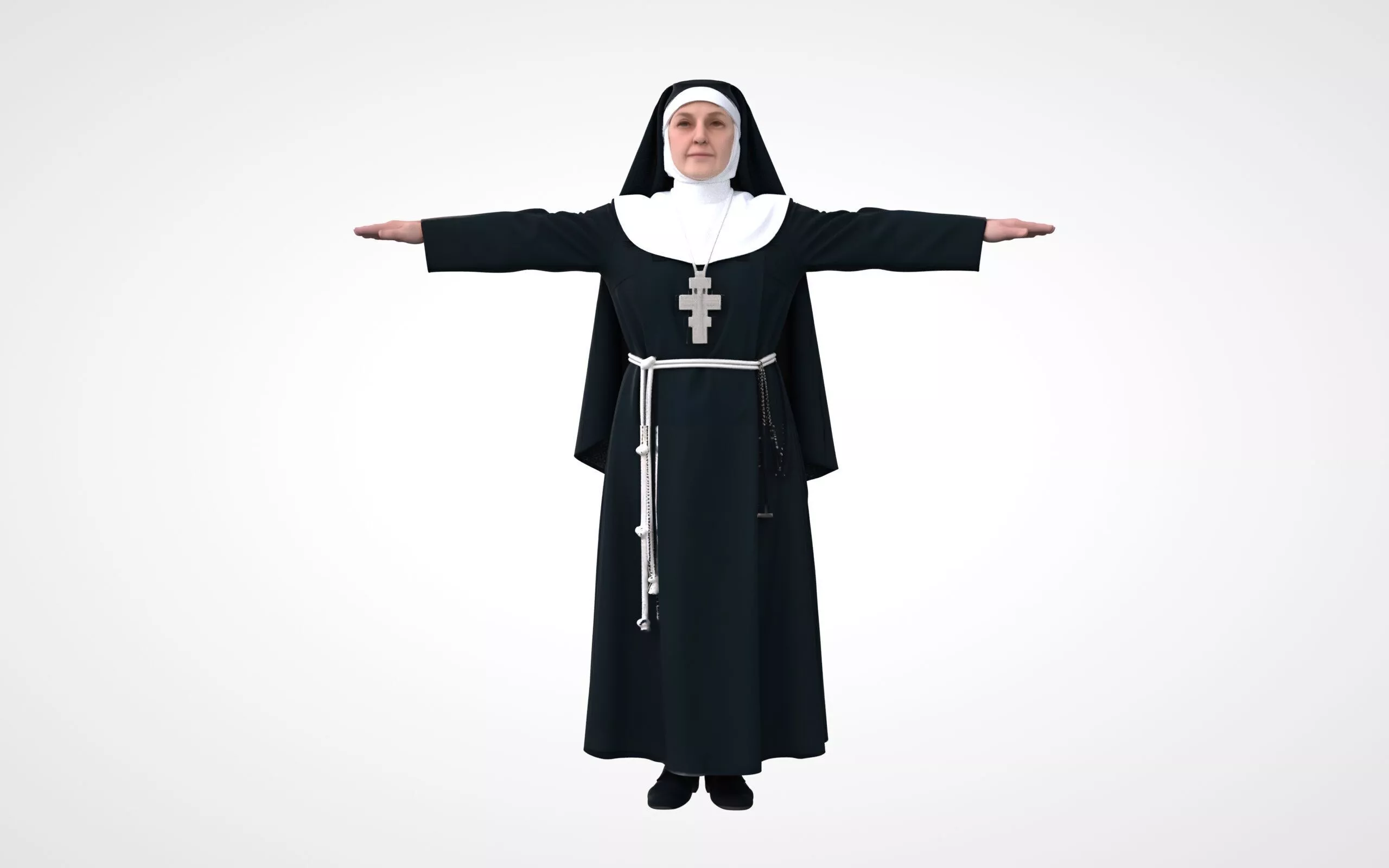
The traditional dress for women in religious communities consists of a tunic, which is tied around the waist with a cloth or leather belt. Over the tunic some nuns wear a scapular which is a garment of long wide piece of woolen cloth worn over the shoulders with an opening for the head. Some wear a white wimple and a veil, the most significant and ancient aspect of the habit. Some orders – such as the Dominicans – wear a large rosary on their belt. Benedictine abbesses wear a cross or crucifix on a chain around their neck.
After the Second Vatican Council, many religious institutes chose in their own regulations to no longer wear the traditional habit and did away with choosing a religious name. Catholic Church canon law states: Religious are to wear the habit of the institute, made according to the norm of proper law, as a sign of their consecration and as a witness of poverty.[14]