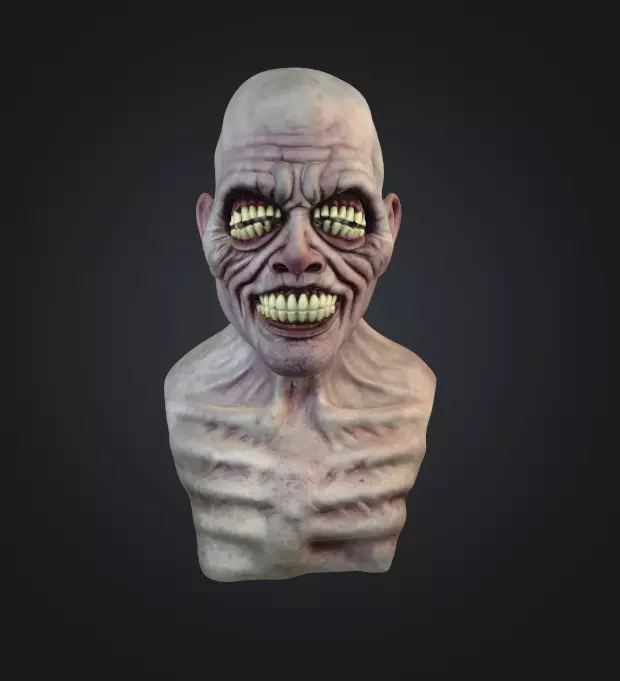
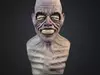
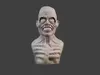
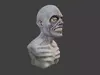
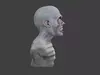
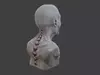
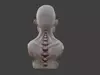
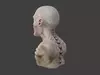
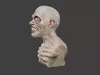
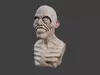
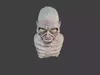
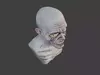
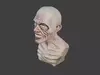
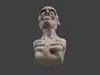
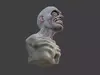
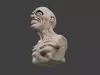
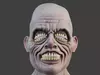
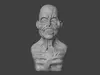
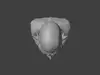
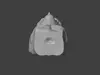
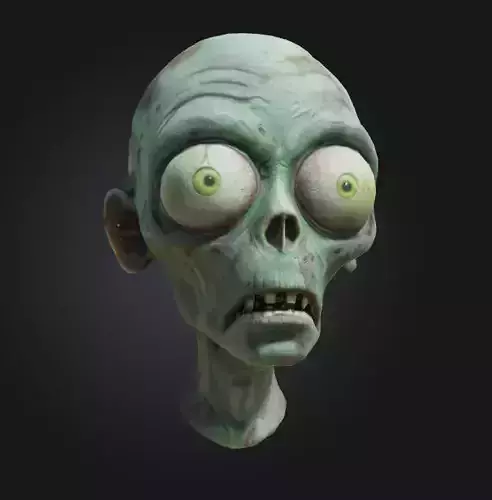
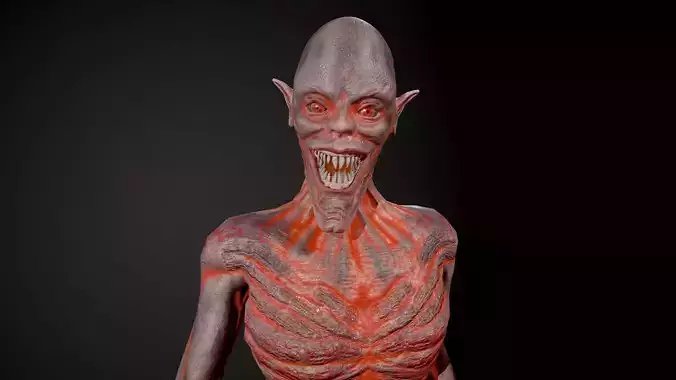
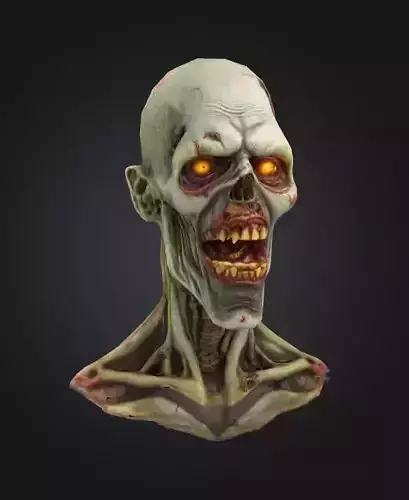
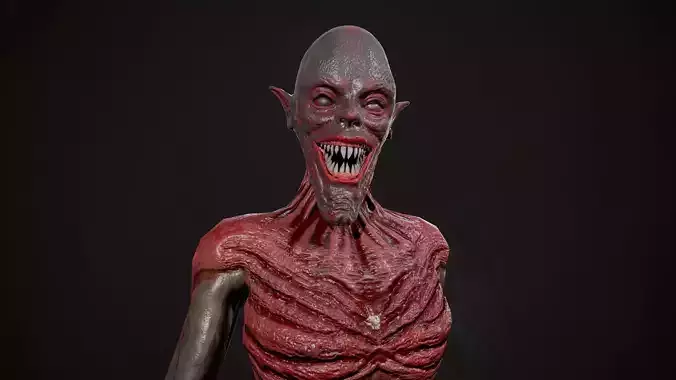
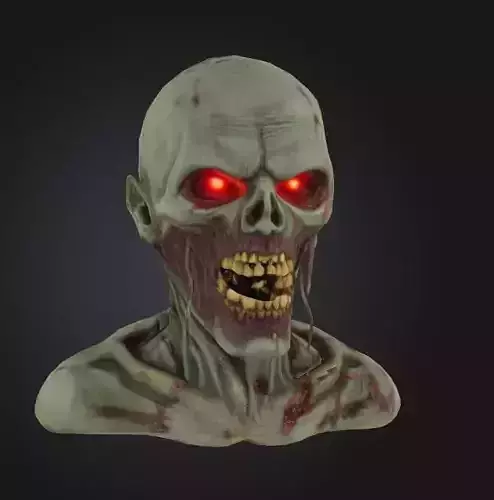
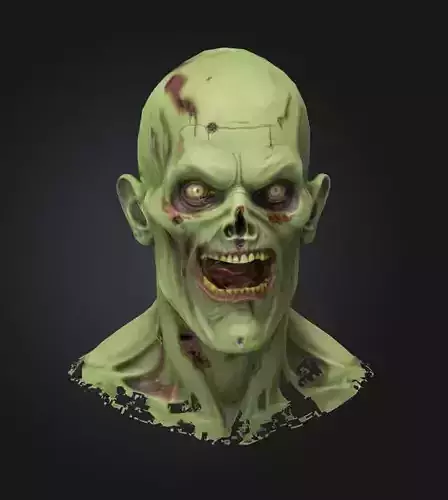
Grotesque Grin is a deeply unsettling horror creature sculpture that transforms one of humanity’s most familiar expressions—a smile—into an instrument of pure nightmare. Combining elements of body horror, psychological terror, grotesque anatomy, and surreal creature design, this disturbing bust presents an emaciated humanoid entity whose face has evolved into an impossible arrangement of teeth, eyes, and flesh. The result is a monster that appears simultaneously human and profoundly alien, creating an immediate sense of unease that lingers long after the first glance.
At the center of the design is the creature’s horrifying facial structure. What should be ordinary eyes have been replaced by grotesque rows of exposed teeth embedded directly within the eye sockets. These secondary mouths stare outward from deep folds of wrinkled flesh, creating an uncanny visual contradiction. Human observers instinctively search for eyes to establish emotional connection, but instead encounter endless jagged teeth grinning back from impossible locations. This distortion of recognizable anatomy generates a powerful psychological response, making the creature feel fundamentally wrong.
Beneath these monstrous eye-mouths lies an equally disturbing smile. The lower mouth stretches unnaturally wide across the face, exposing densely packed teeth arranged in almost perfect rows. Unlike the chaotic fangs of a predator, these teeth appear strangely organized, as though the creature has become obsessed with smiling. The expression is not one of joy or amusement—it is a frozen, compulsive grin that radiates madness, hunger, and existential discomfort.
The facial skin is marked by deep folds, wrinkles, and stretched tissue. Every crease appears carved by years of unnatural tension, as if the creature has spent centuries maintaining its impossible smile. These details create a sense of age and suffering, suggesting that the grin is not voluntary but rather a permanent condition inflicted upon the being.
The head itself is completely bald, emphasizing the exposed anatomy and drawing attention toward the horrifying facial features. Without hair or ornamentation to distract the viewer, every wrinkle, scar, and deformity becomes part of the visual narrative. The smooth cranium contrasts sharply against the chaotic textures of the face, enhancing the unsettling appearance.
The creature’s body continues the theme of unnatural deterioration. The bust reveals an emaciated upper torso with prominent collarbones, exposed rib structures, and stretched skin clinging tightly to the underlying anatomy. This skeletal appearance suggests starvation, disease, mutation, or supernatural corruption. Despite its frailty, the creature does not appear weak. Instead, it possesses the unnerving resilience often associated with nightmare entities and cursed beings.
The pale coloration contributes significantly to the atmosphere. Sickly flesh tones mixed with subtle bruising and discoloration create the impression of something that exists outside normal biological processes. The skin appears lifeless yet animated, giving the impression that the creature should not be alive—and yet somehow is.
From a storytelling perspective, Grotesque Grin offers extraordinary narrative flexibility. It could be interpreted as a victim of a supernatural curse, a failed medical experiment, a manifestation of collective fear, a resident of a nightmare dimension, or an ancient entity feeding upon human emotions. The ambiguity allows creators to adapt the character to a wide variety of horror settings.
In psychological horror narratives, the creature functions particularly well because its terror is rooted in distortion rather than violence. It weaponizes familiarity by corrupting fundamental human features. Smiles, eyes, and faces are among the most recognizable aspects of human identity, and by twisting them into something impossible, the design taps into deep subconscious fears.
For survival horror games, Grotesque Grin could serve as a memorable enemy, cursed patient, haunted asylum inhabitant, nightmare boss, or hallucination entity. Its distinctive appearance ensures instant recognition while providing strong visual impact during gameplay encounters.
The creature also works exceptionally well within dark fantasy and cosmic horror worlds. It could be a disciple of forbidden gods, a failed prophet transformed by forbidden knowledge, or a survivor altered by contact with eldritch forces beyond human comprehension. The design naturally supports themes of madness, transformation, and forbidden revelation.
The rows of teeth replacing the eyes carry powerful symbolic meaning. Teeth traditionally represent consumption and predation, while eyes symbolize perception and understanding. By replacing vision with hunger, the creature becomes an embodiment of insatiable desire. It no longer sees the world—it consumes it.
The expression itself creates a uniquely unsettling emotional effect. Most horror creatures rely on aggression, rage, or monstrous features. Grotesque Grin instead relies on a smile that should feel welcoming but instead becomes terrifying. This inversion of expectations enhances its psychological impact and makes it particularly memorable.
In cinematic productions, the creature would excel as a close-up horror reveal. The audience may initially perceive a human face before gradually noticing the impossible anatomy hidden within the eye sockets. Such a reveal could create an unforgettable moment of dread.
Collectors of horror art and creature design may appreciate the balance between realism and surrealism. The anatomy remains grounded enough to feel believable while incorporating impossible distortions that elevate the creature into the realm of nightmare.
The bust format further enhances the presentation by focusing attention entirely on the face and upper torso. Without distractions from weapons, clothing, or environmental elements, viewers are forced to confront the creature’s horrifying features directly.
Ultimately, Grotesque Grin – The Thousand-Eyed Smiling Horror Bust is a masterclass in psychological horror and grotesque creature design. Through its impossible anatomy, unnerving smile, emaciated form, and symbolic distortion of human features, it transforms a simple facial expression into an unforgettable source of terror. Whether used in games, films, concept art, collectibles, haunted attractions, or horror worldbuilding projects, this creature embodies the disturbing beauty of nightmares made flesh.