DESCRIPTION

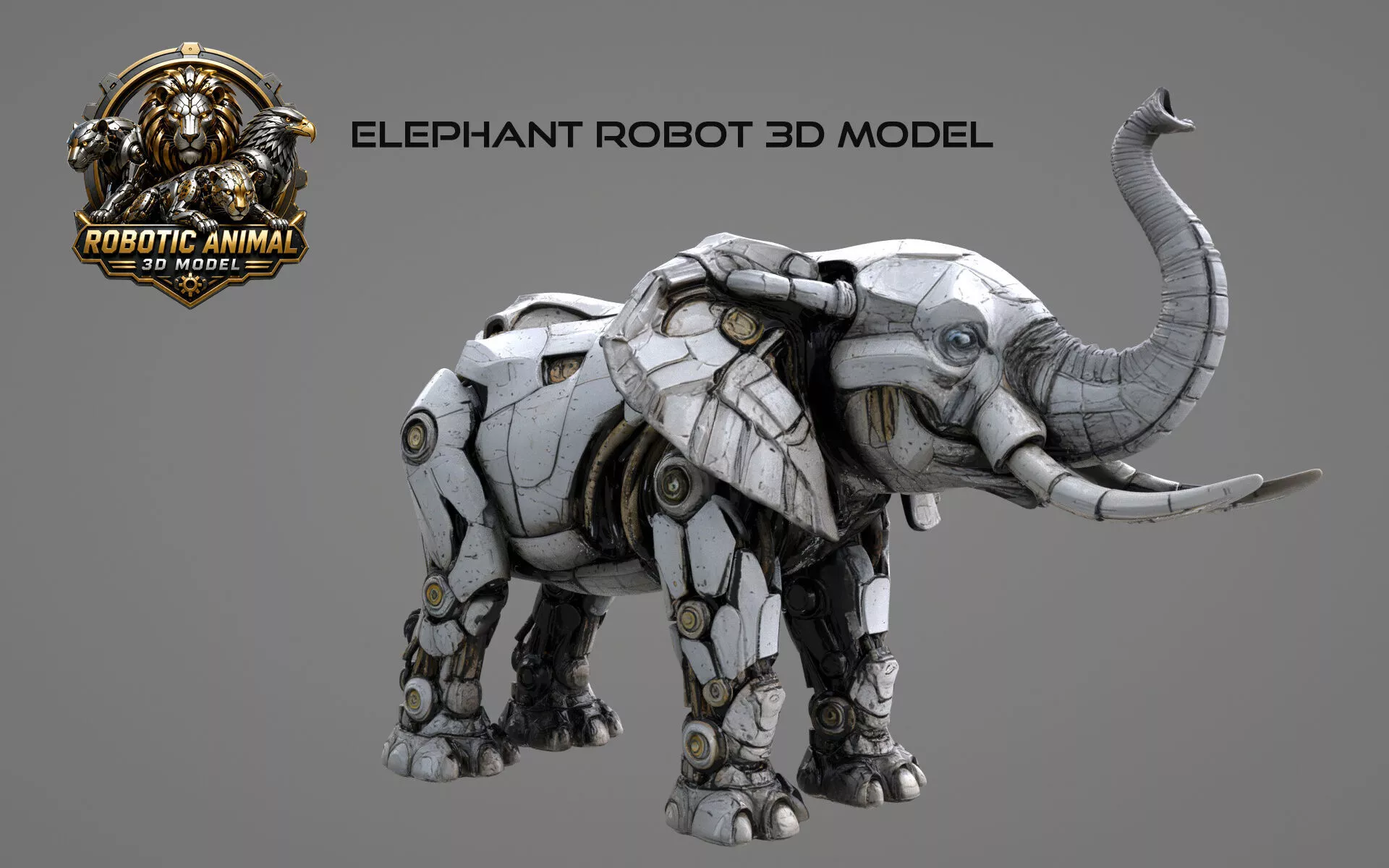
Elephants are the largest living land animals. Three living species are currently recognised: the African bush elephant (Loxodonta africana), the African forest elephant (L. cyclotis), and the Asian elephant (Elephas maximus). They are the only surviving members of the family Elephantidae and the order Proboscidea; extinct relatives include mammoths and mastodons. Distinctive features of elephants include a long proboscis called a trunk, tusks, large ear flaps, pillar-like legs, and tough but sensitive grey skin. The trunk is prehensile, bringing food and water to the mouth and grasping objects. Tusks, which are derived from the incisor teeth, serve both as weapons and as tools for moving objects and digging. The large ear flaps assist in maintaining a constant body temperature as well as in communication. African elephants have larger ears and concave backs, whereas Asian elephants have smaller ears and convex or level backs.

Elephants are scattered throughout sub-Saharan Africa, South Asia, and Southeast Asia. They live in different habitats, including savannahs, forests, deserts, and marshes. They are herbivorous, and they stay near water when it is accessible. They are considered to be keystone species, due to their impact on their environments. Elephants have a fission–fusion society, in which multiple family groups come together to socialise. Females (cows) tend to live in family groups, which can consist of one female with its calves or several related females with offspring. The leader of a female group, usually the oldest cow, is known as the matriarch.

Males (bulls) leave their family groups when they reach puberty and may live alone or with other males. Adult bulls mostly interact with family groups when looking for a mate. They enter a state of increased testosterone and aggression known as musth, which helps them gain dominance over other males as well as reproductive success. Calves are the centre of attention in their family groups and rely on their mothers for as long as three years. Elephants can live up to 70 years in the wild. They communicate by touch, sight, smell, and sound; elephants use infrasound and seismic communication over long distances. Elephant intelligence has been compared with that of primates and cetaceans. They appear to have self-awareness, and possibly show concern for dying and dead individuals of their kind.

African bush elephants and Asian elephants are listed as endangered and African forest elephants as critically endangered on the IUCN Red Lists. One of the biggest threats to elephant populations is the ivory trade, as the animals are poached for their ivory tusks. Other threats to wild elephants include habitat destruction and conflicts with local people. Elephants are used as working animals in Asia. In the past, they were used in war; today, they are often controversially put on display in zoos, or employed for entertainment in circuses. Elephants have an iconic status in human culture and have been widely featured in art, folklore, religion, literature, and popular culture.

EtymologyThe word elephant is derived from the Latin word elephas (genitive elephantis) 'elephant', which is the Latinised form of the ancient Greek ἐλέφας (elephas) (genitive ἐλέφαντος (elephantos,[1])) probably from a non-Indo-European language, likely Phoenician.[2] It is attested in Mycenaean Greek as e-re-pa (genitive e-re-pa-to) in Linear B syllabic script.[3][4] As in Mycenaean Greek, Homer used the Greek word to mean ivory, but after the time of Herodotus, it also referred to the animal.[1] The word elephant appears in Middle English as olyfaunt in c. 1300 and was borrowed from Old French oliphant in the 12th century.[2]

REVIEWS & COMMENTS

See what other buyers think about this model - real feedback on quality,
accuracy, and usability.
There are no reviews or comments yet. Please be the first one to write it.
NEW
Recently added to CGTrader - explore one of the latest models on the marketplace.

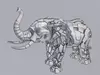
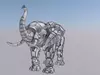
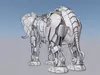
elephant robot 3D model 3D model

$78.00
Royalty Free License
Hire
Like this model to show appreciation to the designer.
See how many times this model was viewed.
Share this model to support the designer and boost their visibility.
File formats
STL
Stereolithography<br />Version: 1<br />File Size: 47.7 MB
OBJ
OBJ | 2 files<br />Version: 1<br />File Size: 140 MB
3DS
3D Studio<br />Version: 1<br />File Size: 25.5 MB
FBX
Autodesk FBX<br />Version: 1<br />File Size: 73.3 MB
DAE
Collada<br />Version: 1<br />File Size: 95.9 MB
JPG
JPG<br />Version: 1<br />File Size: 37.8 MB
PNG
PNG<br />File Size: 37.8 MB
C4D
Cinema 4D<br />Version: 1 - Renderer: Default 1<br />File Size: 57.5 MB
Verified by CGTrader
Verified models are of higher quality as they have
passed CGT Standard technical and visual checks,
making them more professional-grade 3D assets.
Learn more.
FBX
This FBX file has successfully passed the CGT Standard technical and visual checks. The verification results are detailed in the section below.
File & scene
Binary FBX
Binary FBX file is more compact and faster to load and process.
Learn more
No unsupported objects
Unsupported objects:
- Lights
- Cameras
Learn more
Geometry
No N-gons
N-gons are polygons with five or more sides which might cause issues in certain processes like rendering or animation. Learn more
No faceted geometry
Faceted geometry uses flat surfaces without smoothing, which can look unrealistic on curves.
Learn more
Manifold geometry
Manifold geometry ensures all surfaces are properly connected, avoiding issues like edges shared by more than two faces.
Learn more
Textures & material
PBR textures
PBR textures simulate how light interacts with materials, making the model look realistic under different lighting.
Required PBR textures:
- Base Color
- Roughness
- Metalness
- Normal
Learn more
No embed textures
Embedded textures are stored inside the model file, increasing its size and sometimes causing compatibility issues.
Learn more
Square textures
Texture aspect ratio is the width-to-height ratio of a texture. Expected texture aspect ratio: 1:1
Learn more
Power of 2 texture sizes
Textures with dimensions in power of two (e.g. 512x512px, 1024x1024px) are used to optimize performance and memory usage.
Learn more
Assigned materials
Materials are applied to the 3D model to allow visualize a model's surface properties and appearance.
Learn more
UVs & naming
No UV overlaps
UVs overlap when multiple points on the 3D model's surface are mapped to the same point on the UV island causing texture stretching.
Learn more
UV unwrapped model
A UV unwrapped model means its 3D surface is flattened into 2D space, allowing textures to be applied accurately.
Learn more
Allowed characters
Allowed ASCII characters: a-zA-Z0-9-_
Learn more
Provided by designer
Information and details shared directly by the model's designer.
3D Features
PBR
Uses Physically Based Rendering materials, which give the model realistic lighting and surface properties.
Textures
The model includes image files (textures) that add color, patterns, or detail to its surfaces.
Materials
The model has material settings that define how surfaces look (color, shine, transparency, etc.).
UV Mapping
The model's surfaces are mapped to a 2D image, allowing textures to display correctly.
Plugins Used
Some external plugins were used to create the model. These may be required for full functionality.
3D printing
Indicates whether the designer marked this model as suitable for 3D printing.
Model is not 3D printable
The designer indicates this model is intended for digital use only (rendering, animation, or AR/VR) and not for 3D printing.
Geometry
Polygon mesh
A model built from polygons (triangles or quads) connected in a mesh.
1100000 polygons
The total number of polygons (flat shapes) that make up the 3D model.
/
1100000 vertices
The number of points (corners) that define the shape of the model's polygons.
Unwrapped UVs
Publish date
Model ID
Chat