High-quality 3D assets at affordable prices — trusted by designers, engineers, and creators worldwide. Made with care to be versatile, accessible, and ready for your pipeline.
Included File Formats
This model is provided in 14 widely supported formats, ensuring maximum compatibility:
• - FBX (.fbx) – Standard format for most 3D software and pipelines
• - OBJ + MTL (.obj, .mtl) – Wavefront format, widely used and compatible
• - STL (.stl) – Exported mesh geometry; may be suitable for 3D printing with adjustments
• - STEP (.step, .stp) – CAD format using NURBS surfaces
• - IGES (.iges, .igs) – Common format for CAD/CAM and engineering workflows (NURBS)
• - SAT (.sat) – ACIS solid model format (NURBS)
• - DAE (.dae) – Collada format for 3D applications and animations
• - glTF (.glb) – Modern, lightweight format for web, AR, and real-time engines
• - 3DS (.3ds) – Legacy format with broad software support
• - 3ds Max (.max) – Provided for 3ds Max users
• - Blender (.blend) – Provided for Blender users
• - SketchUp (.skp) – Compatible with all SketchUp versions
• - AutoCAD (.dwg) – Suitable for technical and architectural workflows
• - Rhino (.3dm) – Provided for Rhino users
Model Info
• - All files are checked and tested for integrity and correct content
• - Geometry uses real-world scale; model resolution varies depending on the product (high or low poly)
• • - Scene setup and mesh structure may vary depending on model complexity
• - Rendered using Luxion KeyShot
• - Affordable price with professional detailing
Buy with confidence. Quality and compatibility guaranteed.
If you have any questions about the file formats, feel free to send us a message — we're happy to assist you!
Sincerely,
SURF3D
Trusted source for professional and affordable 3D models.
More Information About 3D Model :
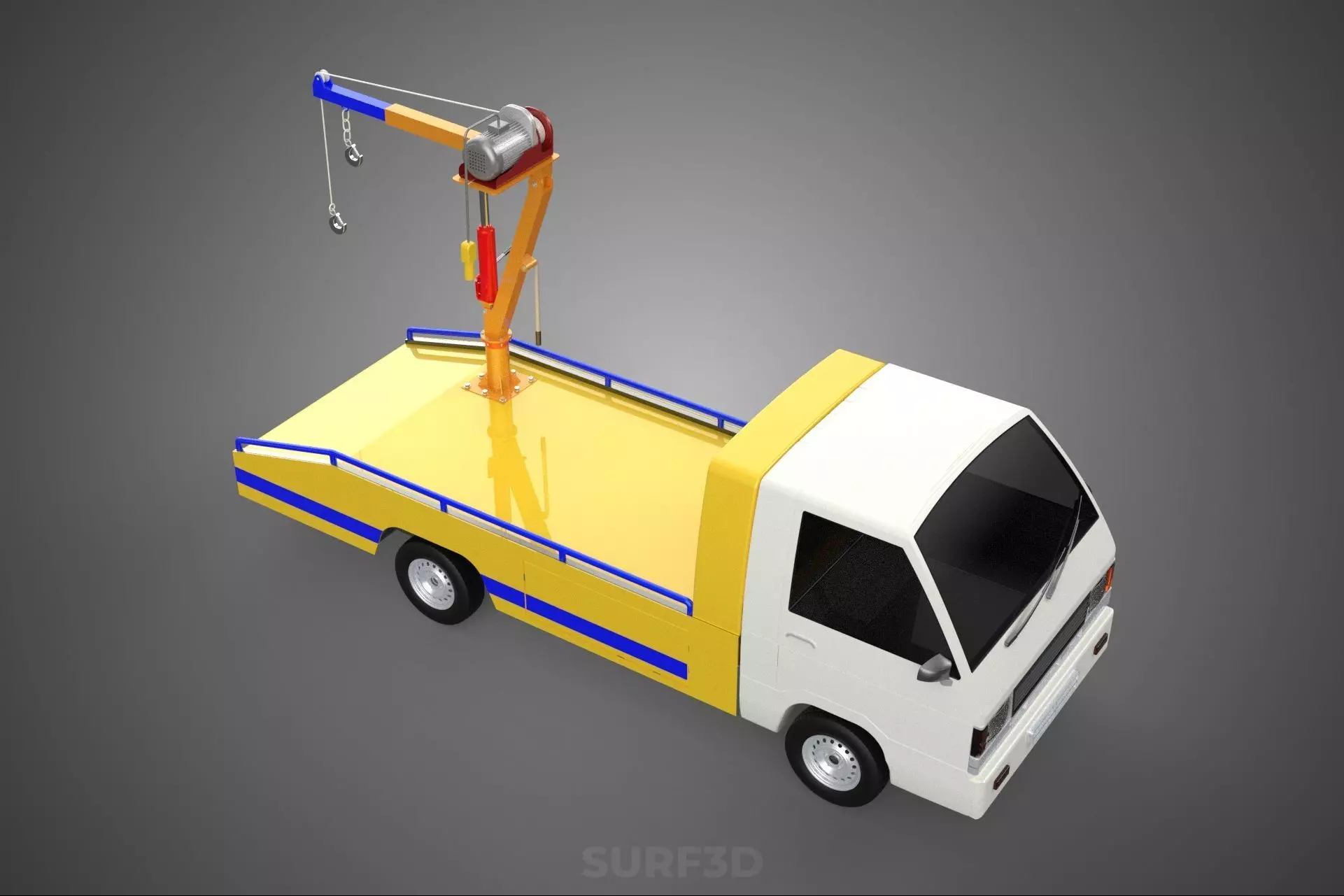
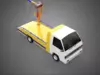
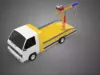
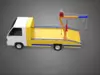
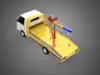
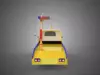
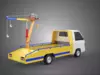
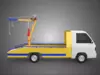
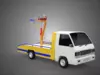
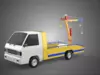
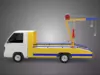
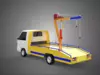
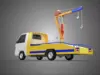
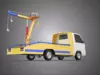
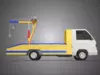
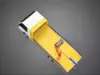
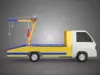
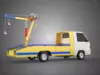
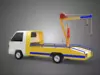
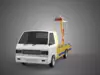
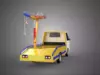
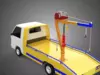
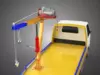
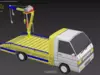
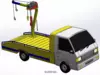
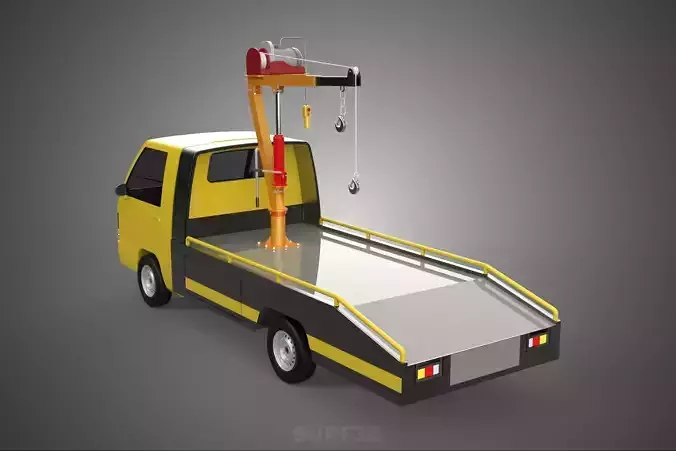
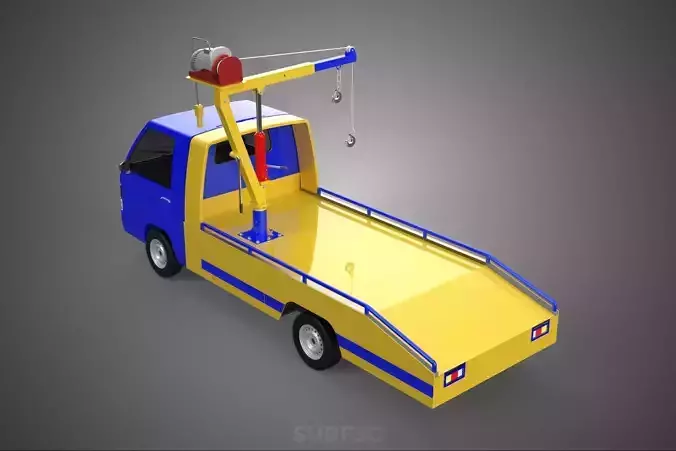
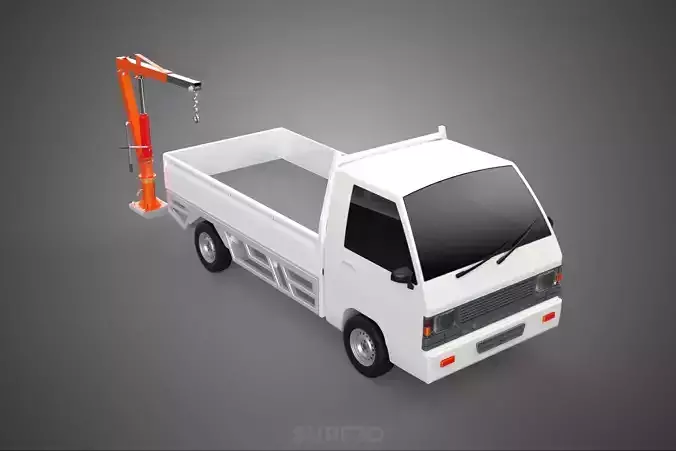
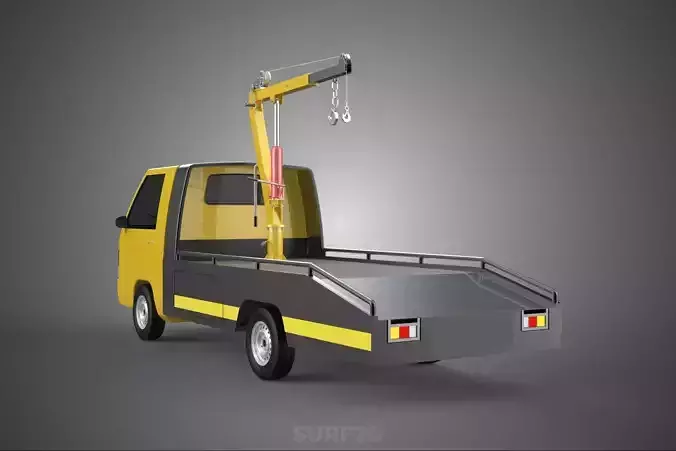
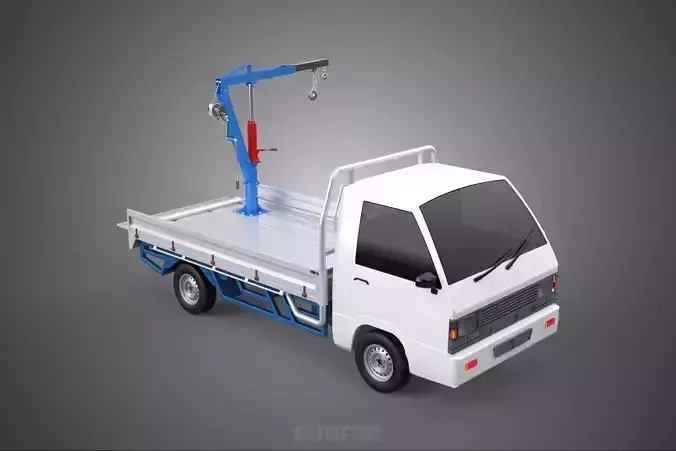
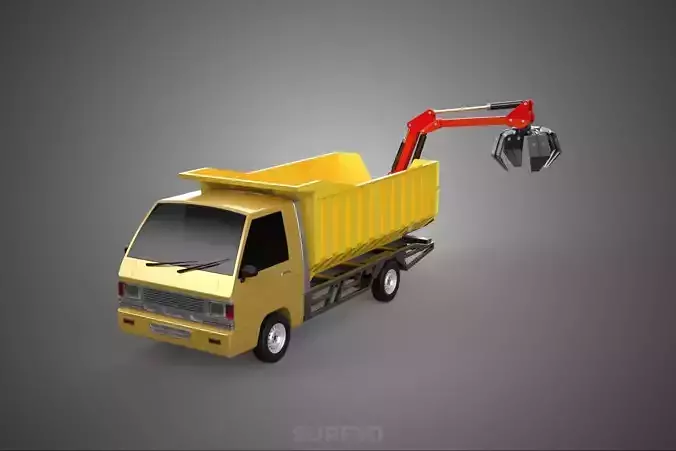
A Service Tow Truck Roadside with Overhead Rear Recovery Lifting Crane, commonly referred to as a rotator wrecker or heavy-duty recovery vehicle, represents a specialized class of commercial vehicle engineered for the comprehensive retrieval, uprighting, and towing of incapacitated, damaged, or overturned large vehicles from challenging environments. This highly capable apparatus integrates robust towing capabilities with an articulating, high-capacity crane system, distinguishing it significantly from conventional light- or medium-duty tow trucks.
The primary function of this vehicle extends beyond simple towing, focusing on complex roadside assistance and recovery operations. The inclusion of an overhead rear recovery lifting crane endows the vehicle with superior lifting and maneuvering capabilities. Typically mounted at the rear of the chassis, this crane provides extensive vertical reach and horizontal articulation, specifically designed for intricate recovery scenarios. These include, but are not limited to:
- Uprighting severely overturned commercial vehicles, such as semi-trailer trucks, buses, or heavy construction equipment.
- Extracting vehicles from precarious positions, including ditches, embankments, or water bodies.
- Lifting and precisely repositioning heavy machinery, cargo, or debris.
- Executing intricate winching operations with controlled manipulation of substantial loads.
The distinguishing features of this equipment are central to its efficacy:
- Rotator Boom: A multi-stage hydraulic boom forms the core of the crane system, characterized by its ability to rotate 360 degrees continuously or through a wide arc. This omnidirectional capability allows for operations from any side of the vehicle without requiring the repositioning of the entire truck, optimizing efficiency on confined accident scenes. The overhead descriptor pertains to its capacity for significant vertical extension above the vehicle's frame.
- High-Capacity Winches: Equipped with multiple, independently controlled hydraulic winches, these systems offer immense pulling power. Their independent operation facilitates synchronized pulls or counter-pulls, critical for complex load stabilization and extraction.
- Stabilizer Outriggers: Essential for maintaining operational stability, these hydraulically extendable outriggers or jacks deploy laterally from the vehicle chassis. They distribute the substantial loads exerted during lifting and pulling operations, preventing the vehicle from tipping or shifting.
- Heavy-Duty Chassis: The entire recovery system is integrated onto a robust commercial truck chassis, typically featuring multiple axles (e.g., tri-axle, quad-axle configurations) to adequately support the weight of the specialized recovery apparatus and the immense loads it is designed to manage.
- Integrated Underlift: Many such vehicles also incorporate a heavy-duty underlift or wheel-lift system, augmenting their versatility by enabling conventional towing of large commercial vehicles or buses without engaging the crane.
- Advanced Control Systems: Operations are managed via sophisticated remote or tethered control systems, empowering operators with precise manipulation of the crane, winches, and outriggers, often from a safe distance from the active recovery zone.
These specialized tow trucks are deployed in critical scenarios where conventional towing apparatuses are inadequate or unsafe. Their primary application lies in major accident recovery on highways, rural routes, and industrial sites, particularly involving large vehicles that have departed the roadway, overturned, or are severely compromised. Their inherent capacity to lift, rotate, and precisely maneuver heavy objects makes them indispensable for clearing complex accident scenes efficiently, safely, and with minimal disruption to traffic flow.
The overhead rear recovery lifting crane system confers several distinct advantages over less specialized towing platforms:
- Unparalleled Versatility: Capable of executing both highly complex recovery maneuvers and standard heavy-duty towing.
- Superior Power and Capacity: Possesses significantly higher lifting, pulling, and recovery capacities.
- Enhanced Precision: The articulating and rotating crane enables precise load placement and manipulation, even in constrained environments or at challenging angles.
- Improved Safety: By potentially reducing the need for multiple pieces of equipment and allowing remote operation, these units can enhance overall scene safety.
Given the substantial forces involved and the inherent complexities of heavy recovery operations, the deployment and operation of a tow truck equipped with an overhead recovery crane necessitate extensive specialized training and stringent adherence to established safety protocols. Operators must demonstrate proficiency in load calculation, advanced rigging techniques, stability management, and emergency response procedures to ensure the safety of personnel, integrity of the recovered asset, and protection of the surrounding environment.
KEYWORDS: Tow Truck, Recovery Vehicle, Rotator Wrecker, Heavy-Duty Towing, Roadside Assistance, Overhead Crane, Lifting Crane, Rear Recovery, Hydraulic Boom, 360-degree Rotation, Vehicle Recovery, Accident Scene Management, Commercial Vehicle Recovery, Overturned Vehicle, Winching Operations, Underlift System, Stabilizer Outriggers, Specialized Transport, Emergency Services, Heavy Equipment Recovery, Cargo Recovery, Industrial Recovery, Highway Recovery, Professional Towing, Complex Recovery, Controlled Lift, Precision Recovery, Multi-Axle Chassis, Hydraulic Winches, Road Clearance