High-quality 3D assets at affordable prices — trusted by designers, engineers, and creators worldwide. Made with care to be versatile, accessible, and ready for your pipeline.
Included File Formats
This model is provided in 14 widely supported formats, ensuring maximum compatibility:
• - FBX (.fbx) – Standard format for most 3D software and pipelines
• - OBJ + MTL (.obj, .mtl) – Wavefront format, widely used and compatible
• - STL (.stl) – Exported mesh geometry; may be suitable for 3D printing with adjustments
• - STEP (.step, .stp) – CAD format using NURBS surfaces
• - IGES (.iges, .igs) – Common format for CAD/CAM and engineering workflows (NURBS)
• - SAT (.sat) – ACIS solid model format (NURBS)
• - DAE (.dae) – Collada format for 3D applications and animations
• - glTF (.glb) – Modern, lightweight format for web, AR, and real-time engines
• - 3DS (.3ds) – Legacy format with broad software support
• - 3ds Max (.max) – Provided for 3ds Max users
• - Blender (.blend) – Provided for Blender users
• - SketchUp (.skp) – Compatible with all SketchUp versions
• - AutoCAD (.dwg) – Suitable for technical and architectural workflows
• - Rhino (.3dm) – Provided for Rhino users
Model Info
• - All files are checked and tested for integrity and correct content
• - Geometry uses real-world scale; model resolution varies depending on the product (high or low poly)
• • - Scene setup and mesh structure may vary depending on model complexity
• - Rendered using Luxion KeyShot
• - Affordable price with professional detailing
Buy with confidence. Quality and compatibility guaranteed.
If you have any questions about the file formats, feel free to send us a message — we're happy to assist you!
Sincerely,
SURF3D
Trusted source for professional and affordable 3D models.
More Information About 3D Model :
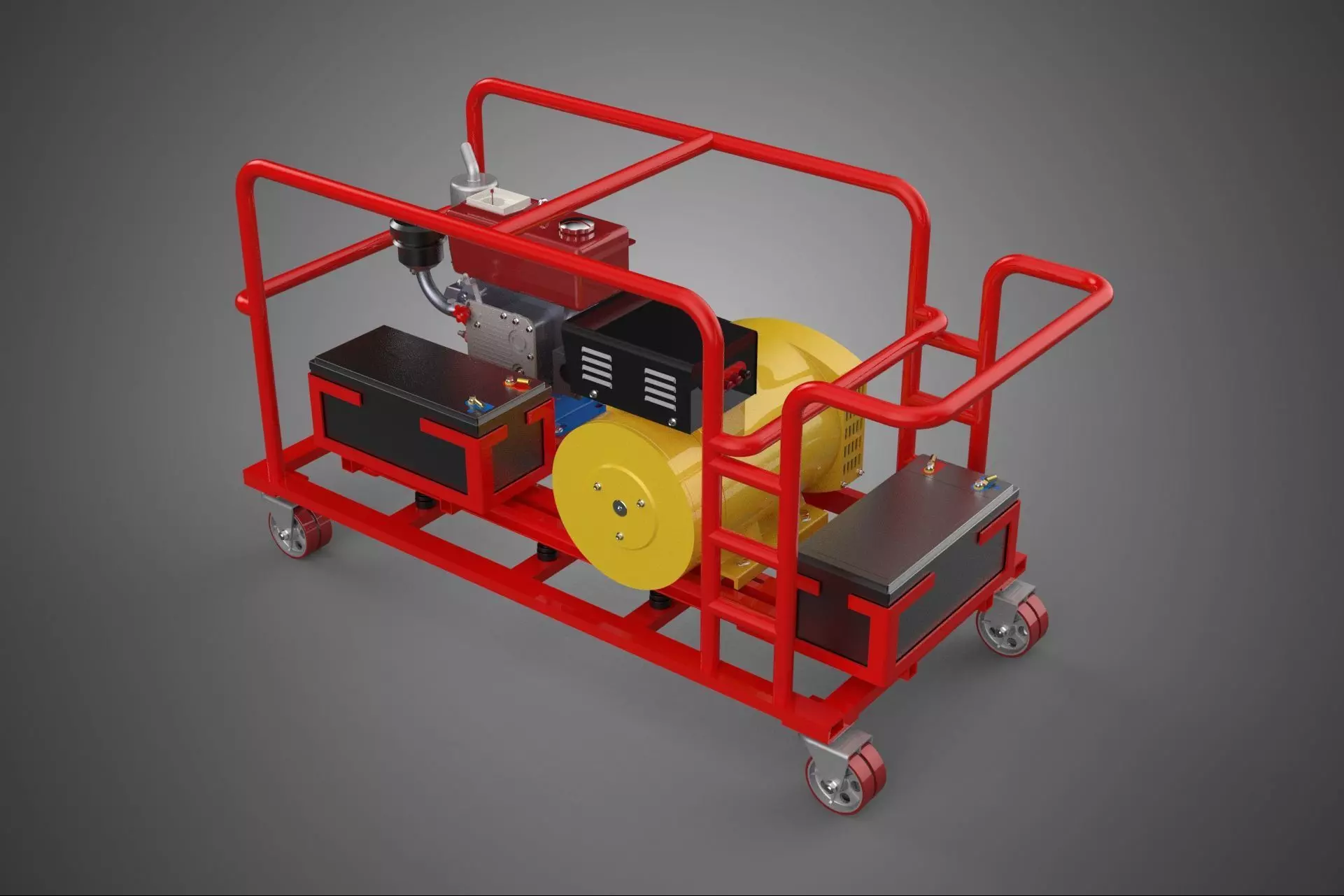
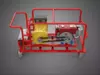
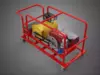
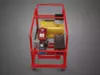
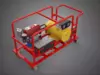
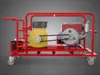
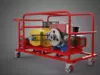
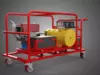
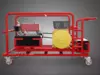
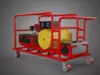
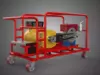
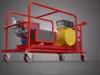
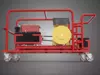
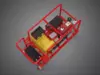
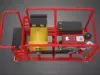
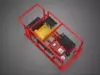
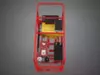
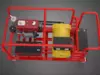
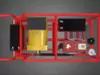
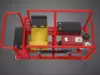
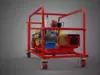
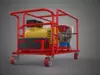
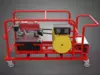
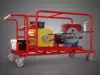
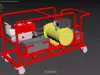
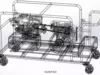
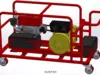
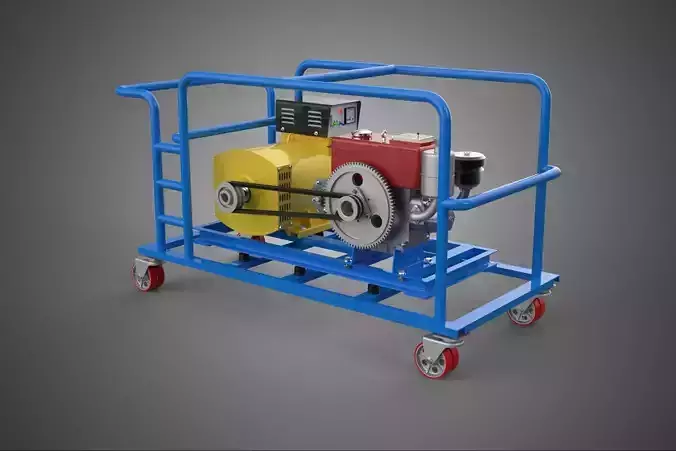
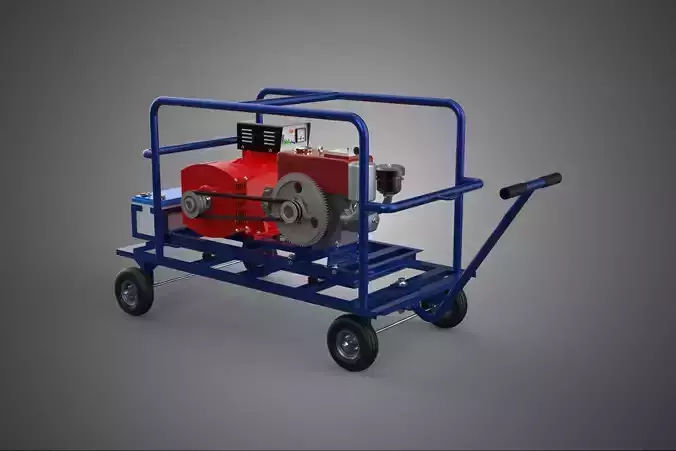
MOBILE BACKUP POWER DIESEL GENSET GENERATOR SET BATTERY SYSTEM
A Mobile Backup Power Diesel Genset Generator Set Battery System, often termed a Mobile Hybrid Power Unit (MHPU) or Hybrid Genset System, is an integrated, transportable energy solution designed to provide continuous, reliable electrical power, particularly during main utility outages, in remote locations, or in temporary critical infrastructure deployments. This architecture leverages the high energy density and sustained output of a compression-ignition (diesel) internal combustion engine generator set (genset) alongside the rapid response time and optimized discharge capabilities of a Battery Energy Storage System (BESS).
Architecture and Components
The system is characterized by its integration of three primary subsystems, all mounted within a protective, weatherized, and acoustically dampened enclosure, typically trailerized or skid-mounted for ease of transport via standard road, rail, or air logistics.
1. Diesel Generator Set (Genset)
The genset comprises a diesel engine coupled to a synchronous AC alternator. This component serves as the primary power source for extended duration outages and for recharging the battery system. Key characteristics include:
- Engine: Utilizes a heavy-duty, industrial-grade diesel engine engineered for reliable performance and regulatory compliance (e.g., EPA Tier standards).
- Alternator: Typically brushless, providing three-phase or single-phase output, governed by an Automatic Voltage Regulator (AVR) to maintain stable voltage and frequency parameters (e.g., 50 Hz or 60 Hz).
- Fuel System: Includes a robust on-board fuel tank, often double-walled, with environmental spill containment features, ensuring autonomy for prolonged operational periods.
#### 2. Battery Energy Storage System (BESS)
The BESS provides instantaneous power delivery and acts as a buffer between the genset and the dynamic load demands. While historically utilizing Valve Regulated Lead Acid (VRLA) batteries, modern mobile systems increasingly employ high-density Lithium-ion (Li-ion) chemistries (e.g., LiFePO4) due to their superior cycle life, deeper discharge tolerance, lower maintenance, and reduced weight, critical factors for mobility.
- Inverter/Converter Stack: This includes bi-directional power conversion units (PCUs) responsible for converting the DC power stored in the batteries to AC power for the load, and rectifying AC power from the genset or grid (if applicable) back to DC for battery charging.
- Battery Management System (BMS): A sophisticated electronic system essential for monitoring cell voltage, temperature, state-of-charge (SOC), and current flow, ensuring optimal performance, longevity, and critical safety cutoffs.
#### 3. Power Management and Control System (PMS)
The PMS is the central intelligence regulating the hybrid operation. It determines the optimal source of power based on load demand, fuel levels, battery SOC, and predefined operational parameters.
- Load Following and Peak Shaving: The PMS directs the BESS to handle transient load peaks, allowing the diesel genset to operate at its most efficient fixed load point, significantly reducing fuel consumption and preventing generator issues like 'wet stacking' (unburnt fuel buildup due to low-load operation).
- Automatic Start/Stop: The PMS automatically starts the genset when the battery SOC drops below a threshold or when the load exceeds the inverter's capacity. Conversely, it shuts down the genset when the batteries are recharged, enabling silent, zero-emission operation solely via the BESS.
### Operational Modes and Functions
Mobile hybrid systems offer flexible operational modes crucial for diverse deployment scenarios:
- Bridging Power (Seamless Transition): In the event of primary power failure, the BESS provides immediate, uninterruptible power. The genset then starts and synchronizes to the load, taking over the sustained power generation after a brief transition period.
- Silent/Zero-Emission Mode: The system can operate entirely on battery power for specified durations, ideal for night operations, residential areas, or regulated sites requiring minimal noise and local emissions.
- Fuel Optimization Mode (Cycle Charging): The genset is run intermittently at high efficiency (high load factor) to rapidly recharge the BESS, minimizing total runtime and maximizing fuel economy compared to traditional gensets operating continuously at fluctuating or low loads.
### Applications
Mobile Backup Power Diesel Genset Battery Systems are utilized across sectors demanding reliable, rapidly deployable, and environmentally sensitive temporary power:
- Telecommunications: Providing backup for mobile cell sites (macro and micro), particularly during infrastructure deployment or natural disasters.
- Disaster Relief and Emergency Services: Establishing immediate power for command centers, field hospitals, and critical communication links in areas affected by widespread outages.
- Construction and Mining: Supplying efficient power for remote site operations, where temporary microgrids are required.
- Data Centers: Offering temporary power for commissioning, maintenance windows, or providing localized UPS capacity.
KEYWORDS: Hybrid Power Unit, Diesel Genset, Battery Energy Storage System, Mobile Power, Backup Power, BESS, Power Management System, Load Following, Peak Shaving, Silent Operation, Temporary Power, Microgrid, Fuel Efficiency, Li-ion Battery, Generator Set, Remote Power, Resilience, Disaster Recovery, Grid Independence, SOC, UPS, Inverter Stack, Compression Ignition, Telecommunications Backup, Critical Infrastructure, Runtime Optimization, Wet Stacking Prevention, Transportable Energy, Power Conditioning, Trailerized Genset.