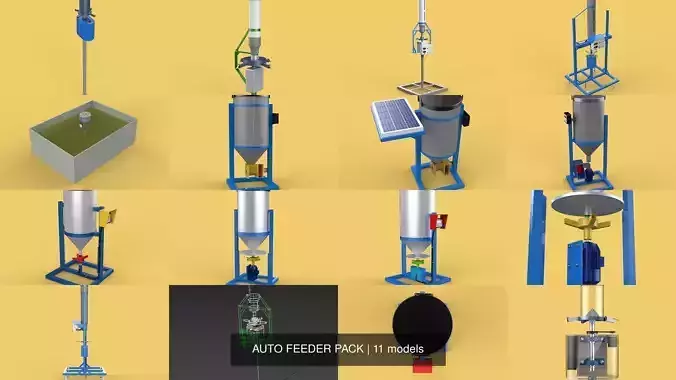
High-quality 3D assets at affordable prices — trusted by designers, engineers, and creators worldwide. Made with care to be versatile, accessible, and ready for your pipeline.
Included File Formats
This model is provided in 14 widely supported formats, ensuring maximum compatibility:
• - FBX (.fbx) – Standard format for most 3D software and pipelines
• - OBJ + MTL (.obj, .mtl) – Wavefront format, widely used and compatible
• - STL (.stl) – Exported mesh geometry; may be suitable for 3D printing with adjustments
• - STEP (.step, .stp) – CAD format using NURBS surfaces
• - IGES (.iges, .igs) – Common format for CAD/CAM and engineering workflows (NURBS)
• - SAT (.sat) – ACIS solid model format (NURBS)
• - DAE (.dae) – Collada format for 3D applications and animations
• - glTF (.glb) – Modern, lightweight format for web, AR, and real-time engines
• - 3DS (.3ds) – Legacy format with broad software support
• - 3ds Max (.max) – Provided for 3ds Max users
• - Blender (.blend) – Provided for Blender users
• - SketchUp (.skp) – Compatible with all SketchUp versions
• - AutoCAD (.dwg) – Suitable for technical and architectural workflows
• - Rhino (.3dm) – Provided for Rhino users
Model Info
• - All files are checked and tested for integrity and correct content
• - Geometry uses real-world scale; model resolution varies depending on the product (high or low poly)
• • - Scene setup and mesh structure may vary depending on model complexity
• - Rendered using Luxion KeyShot
• - Affordable price with professional detailing
Buy with confidence. Quality and compatibility guaranteed.
If you have any questions about the file formats, feel free to send us a message — we're happy to assist you!
Sincerely,
SURF3D
Trusted source for professional and affordable 3D models.
More Information About 3D Model :
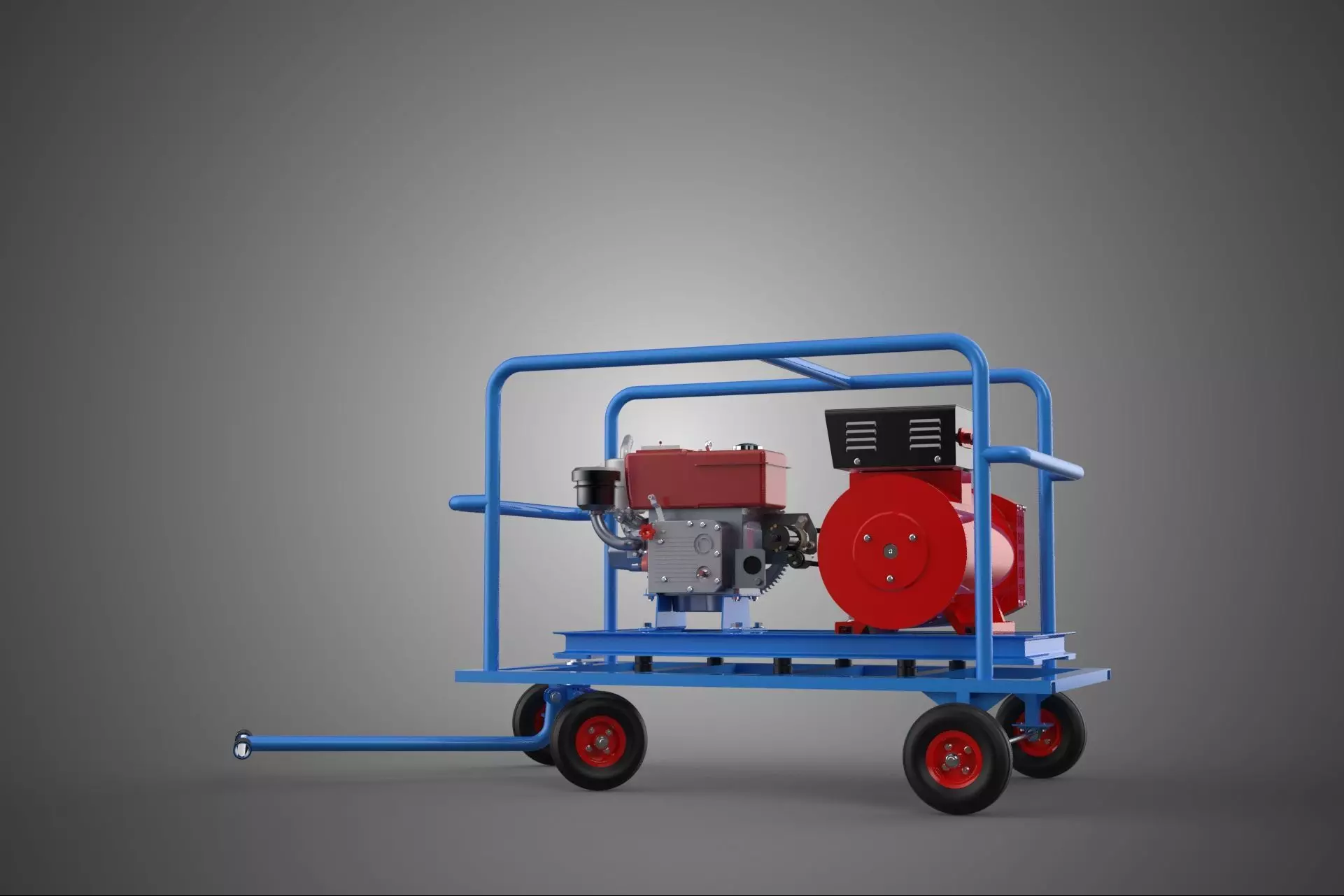
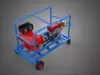
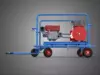
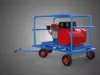
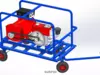
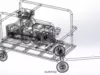
An industrial power generator system, commonly referred to as a genset (generator set), is an integrated assembly designed for the conversion of chemical energy (stored in fuel) into mechanical energy (via an internal combustion engine) and subsequently into electrical energy (via an alternator). These systems are critical infrastructure components, providing reliable power for applications ranging from continuous remote operation (prime power) to critical backup functions (standby power) in sectors such as healthcare, data processing, heavy manufacturing, and utilities.
System Architecture and Components
The industrial genset is characterized by its robust construction, high power density, and sophisticated control mechanisms. Its operational effectiveness is predicated upon the precise integration of several core subsystems:
1. The Prime Mover (Combustion Engine)
The engine serves as the source of mechanical energy. For industrial applications, the engine is typically a heavy-duty, multi-cylinder reciprocating internal combustion engine (ICE).
- Fuel Types: The most common fuels are diesel, natural gas (NG), and propane, with heavy fuel oil (HFO) utilized in large-scale marine or utility applications. Diesel engines are valued for their rapid load acceptance, high thermal efficiency, and minimal derating at startup, making them the standard for emergency standby systems. Natural gas engines offer lower operational costs, simplified fuel logistics (when pipeline access is available), and reduced particulate emissions, favoring them for continuous prime power and Combined Heat and Power (CHP) applications.
- Engine Control: The engine speed must be precisely governed to maintain the required output frequency (50 Hz or 60 Hz). Modern systems employ electronic governing for highly accurate speed and load response control, crucial for applications involving sensitive electronic equipment or synchronization with other power sources.
#### 2. The Electrical Generator (Alternator)
The alternator converts the engine's mechanical rotation into AC electrical power. Industrial alternators are almost universally synchronous machines.
- Design: They are typically brushless excitation systems, which reduces maintenance requirements associated with commutators and slip rings. The alternator is specified by its voltage output (ranging from low voltage, e.g., 480V, to medium voltage, e.g., 13.8kV), kVA rating, and ability to handle non-linear loads common in modern industrial facilities.
- Voltage Regulation: Automatic Voltage Regulators (AVRs) are essential components, ensuring that the output voltage remains stable despite fluctuations in load. This is achieved by modulating the field current supplied to the exciter.
#### 3. Auxiliary and Support Systems
For sustained industrial operation, auxiliary systems manage vital parameters:
- Cooling System: Large industrial gensets generate significant waste heat. Cooling is managed by closed-loop fluid systems utilizing radiators, forced air, or remote heat exchangers, particularly in containerized or high-output installations.
- Lubrication and Fuel Systems: Dedicated systems ensure adequate fluid supply and filtration. Fuel tanks (often secondary containment systems for diesel) and sophisticated gas regulation skids are necessary to reliably feed the prime mover.
- Exhaust System: Exhaust manifolding, mufflers, and catalytic reduction devices (SCR or oxidation catalysts) are integral for noise abatement and adherence to stringent environmental regulations concerning nitrogen oxides (NOx) and particulate matter (PM).
#### 4. Control and Monitoring Systems
The sophisticated control panel is the central nervous system of the genset. Microprocessor-based controllers facilitate:
- Protection: Monitoring engine parameters (oil pressure, coolant temperature, overspeed) and electrical parameters (overcurrent, phase loss) to initiate protective shutdowns when thresholds are exceeded.
- Synchronization and Load Sharing: For installations involving multiple gensets or paralleling with the utility grid, controllers automatically manage frequency matching, voltage phase synchronization, and proportional load distribution among units.
- Automatic Transfer Switch (ATS): In standby applications, the ATS senses utility failure and commands the genset to start, subsequently transferring the electrical load from the utility to the generator.
### Operational Modes
Industrial gensets are functionally defined by their duty rating:
- Standby/Emergency Power (ESP): Used for non-continuous operation during utility outages. Power output capacity is defined for typically limited annual operating hours. This is the primary mode for hospitals, telecommunications, and data centers.
- Prime Power (PRP): Used for unlimited hours of operation, where the genset serves as the primary power source. Often utilized in remote geographical locations lacking grid access (e.g., mining or construction camps).
- Peaking/Load Shaving: Used to supplement grid supply during periods of high demand to avoid expensive utility peak demand charges or to stabilize microgrids (Distributed Generation).
KEYWORDS: Genset, Generator Set, Internal Combustion Engine, Alternator, Standby Power, Prime Power, Distributed Generation, Synchronous Generator, Automatic Transfer Switch (ATS), Diesel Engine, Natural Gas Engine, Reciprocating Engine, Load Shaving, Peaking Power, Power Generation, Control System, Voltage Regulation, Switchgear, Cogeneration (CHP), Emissions Control, Auxiliary Systems, Base Load, Medium Voltage, Paralleling, Microgrid, Fuel Efficiency, Thermal Management, Synchronizing, Power Factor, Duty Cycle