High-quality 3D assets at affordable prices — trusted by designers, engineers, and creators worldwide. Made with care to be versatile, accessible, and ready for your pipeline.
Included File Formats
This model is provided in 14 widely supported formats, ensuring maximum compatibility:
• - FBX (.fbx) – Standard format for most 3D software and pipelines
• - OBJ + MTL (.obj, .mtl) – Wavefront format, widely used and compatible
• - STL (.stl) – Exported mesh geometry; may be suitable for 3D printing with adjustments
• - STEP (.step, .stp) – CAD format using NURBS surfaces
• - IGES (.iges, .igs) – Common format for CAD/CAM and engineering workflows (NURBS)
• - SAT (.sat) – ACIS solid model format (NURBS)
• - DAE (.dae) – Collada format for 3D applications and animations
• - glTF (.glb) – Modern, lightweight format for web, AR, and real-time engines
• - 3DS (.3ds) – Legacy format with broad software support
• - 3ds Max (.max) – Provided for 3ds Max users
• - Blender (.blend) – Provided for Blender users
• - SketchUp (.skp) – Compatible with all SketchUp versions
• - AutoCAD (.dwg) – Suitable for technical and architectural workflows
• - Rhino (.3dm) – Provided for Rhino users
Model Info
• - All files are checked and tested for integrity and correct content
• - Geometry uses real-world scale; model resolution varies depending on the product (high or low poly)
• • - Scene setup and mesh structure may vary depending on model complexity
• - Rendered using Luxion KeyShot
• - Affordable price with professional detailing
Buy with confidence. Quality and compatibility guaranteed.
If you have any questions about the file formats, feel free to send us a message — we're happy to assist you!
Sincerely,
SURF3D
Trusted source for professional and affordable 3D models.
More Information About 3D Model :
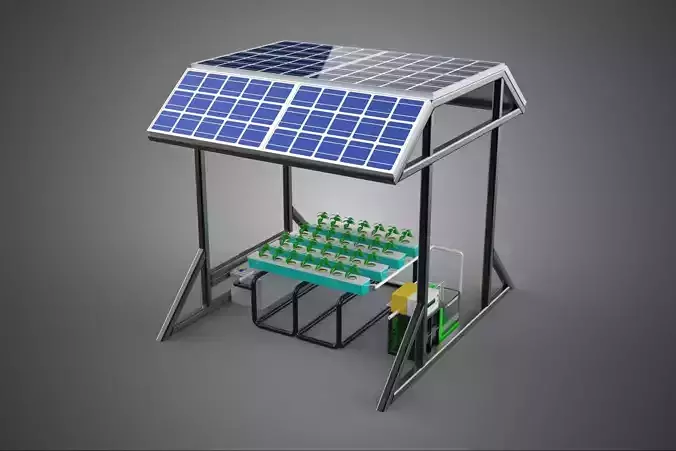
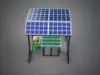
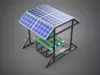
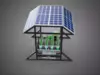
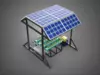
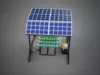
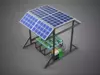
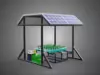
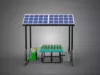
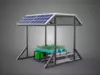
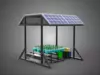
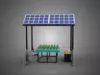
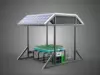
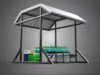
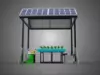
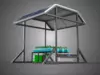
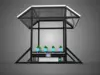
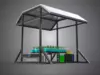
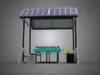
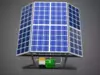
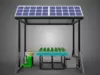
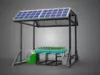
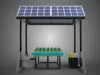
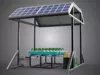
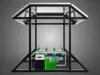
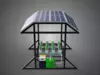
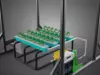
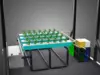
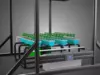
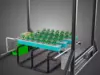
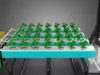
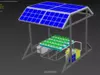
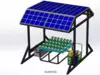
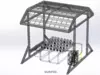
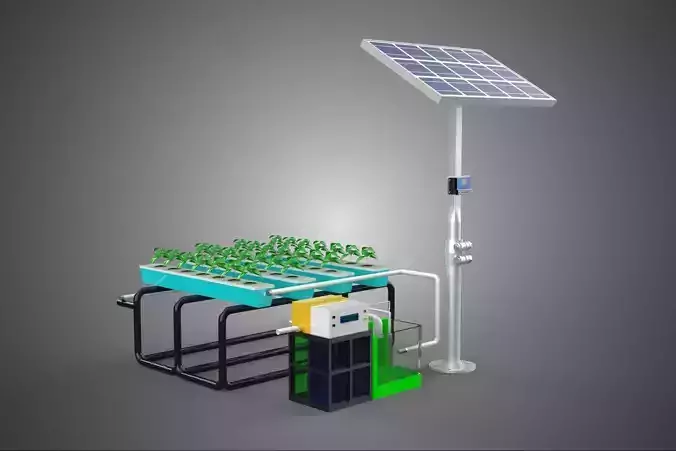
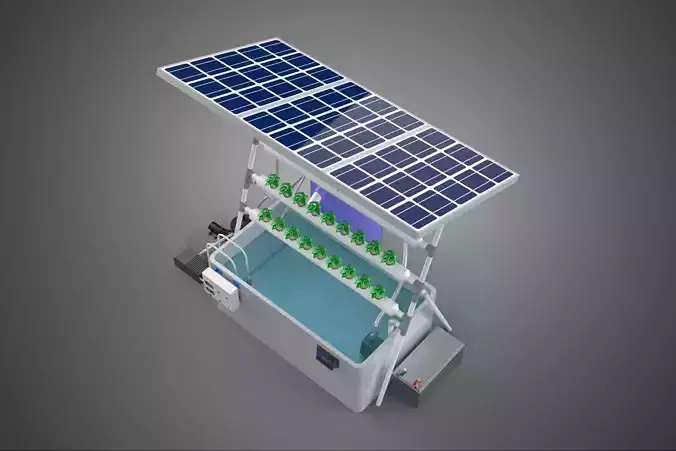
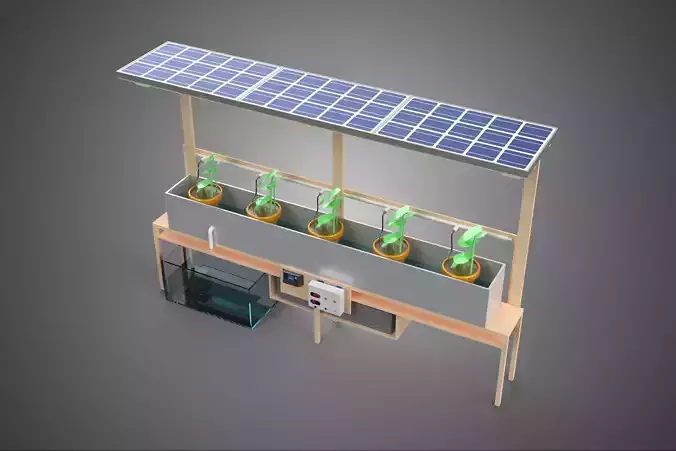
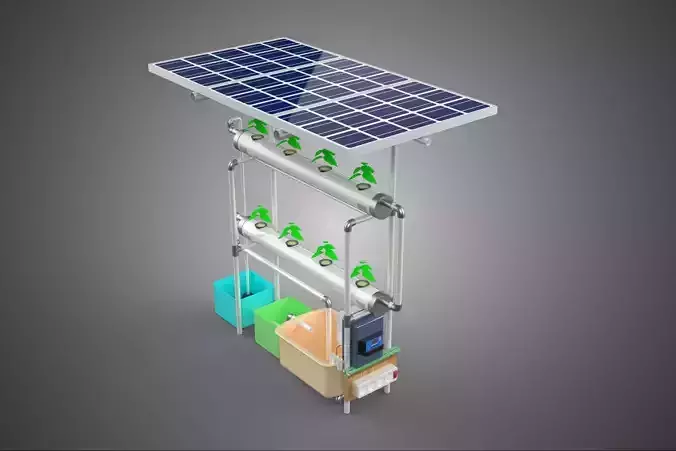
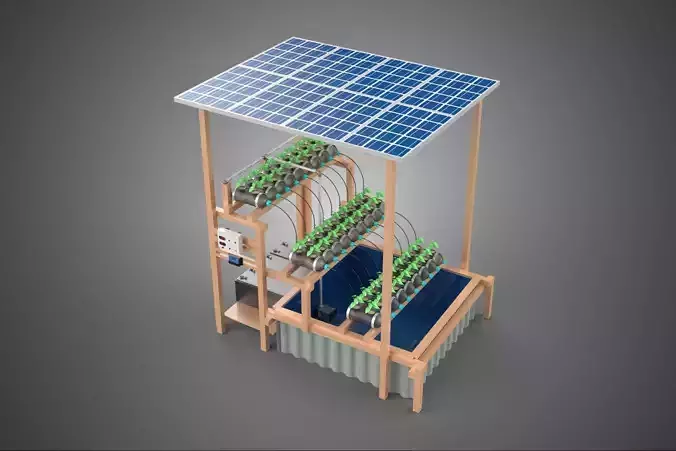
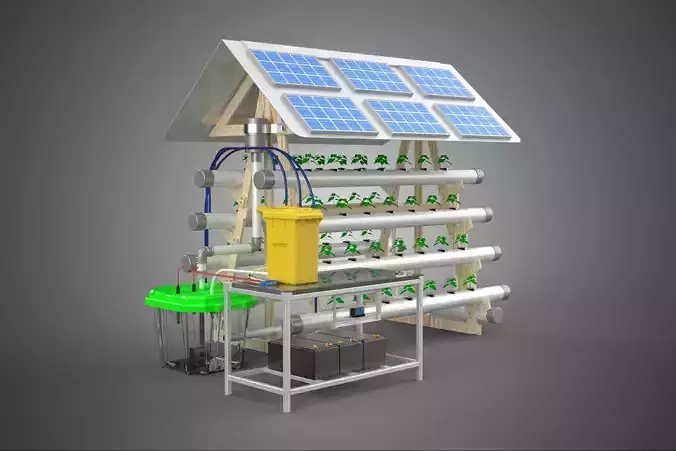
A SOLAR ROOF ENERGY POWER IOT PH NUTRIENT CONTROL HYDROPONIC PLANT system represents an advanced, integrated agricultural solution designed for sustainable and highly efficient plant cultivation. This nomenclature describes a comprehensive setup that leverages renewable energy, soilless cultivation techniques, and pervasive digital connectivity to precisely manage environmental parameters critical for optimal plant growth.
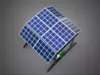
At its foundation, the system is powered by Solar Roof Energy Power. This component involves the integration of photovoltaic (PV) panels onto or as part of a roof structure. These solar arrays convert sunlight directly into electricity, providing a clean, renewable, and often decentralized energy source for the entire hydroponic operation. This not only reduces reliance on conventional grid electricity but also significantly lowers operational costs and the carbon footprint, enhancing the system's environmental sustainability. The choice of a roof integration maximizes space utilization, particularly pertinent in urban or constrained environments.
The core cultivation method is Hydroponics, a technique where plants are grown in nutrient-rich water solutions rather than soil. This method offers several advantages, including accelerated growth rates, significantly reduced water consumption (up to 90% less than traditional farming), higher yields per unit area, and elimination of soil-borne pests and diseases. Various hydroponic techniques, such as Nutrient Film Technique (NFT), Deep Water Culture (DWC), or Drip Systems, can be employed, each optimized for specific plant types and operational scales.
Crucial to the success of hydroponic cultivation is precise environmental management, specifically pH Nutrient Control. This involves the continuous monitoring and adjustment of two critical parameters in the hydroponic solution:
- pH Level: The potential of hydrogen (pH) dictates the availability and uptake efficiency of essential nutrients by plants. Most plants thrive within a narrow pH range (typically 5.5 to 6.5). The system employs pH sensors to measure the solution's acidity or alkalinity and automatically doses pH adjusters (acid or base) to maintain the optimal range.
- Nutrient Concentration: Measured typically as Electrical Conductivity (EC) or Total Dissolved Solids (TDS), this parameter indicates the concentration of dissolved mineral salts (nutrients) in the water. EC/TDS sensors monitor nutrient levels, and automated dosing pumps add concentrated nutrient solutions as required to replenish depleted minerals and maintain the ideal nutrient profile for the specific crop at its particular growth stage.
The entire sophisticated operation is unified and managed through IoT (Internet of Things) integration. This refers to a network of physical devices embedded with sensors, software, and other technologies that connect and exchange data over the internet. In this system:
- Sensors: IoT-enabled sensors continuously collect real-time data on critical parameters, including pH, EC/TDS, water temperature, ambient air temperature, humidity, light intensity, and potentially CO2 levels.
- Data Transmission: This data is wirelessly transmitted to a central processing unit or cloud platform.
- Automated Control: Algorithms process the sensor data, triggering automated responses such as activating pumps for nutrient dosing, adjusting pH, controlling LED grow lights, operating ventilation fans, or managing irrigation schedules.
- Remote Monitoring and Control: Users can access system data, monitor plant health, receive alerts, and even remotely adjust parameters via a smartphone application, web portal, or dedicated control interface, enabling proactive management and reducing the need for constant physical oversight.
- Data Analytics: Accumulated data can be analyzed to identify trends, optimize growing recipes, predict yields, and improve resource efficiency over time, fostering a data-driven approach to agriculture.
The synergy of these components results in a highly autonomous, resource-efficient, and productive agricultural system. The solar roof provides a sustainable power source, enabling off-grid operation or reducing grid dependency. Hydroponics maximizes resource efficiency, particularly water. The IoT-enabled pH and nutrient control ensures plants receive precisely what they need, when they need it, leading to healthier growth and higher yields. Such integrated systems are pivotal for advancing urban agriculture, vertical farming, and sustainable food production in diverse climatic conditions, addressing challenges of food security, resource scarcity, and environmental impact.
KEYWORDS: Hydroponics, Solar energy, Internet of Things, pH control, Nutrient management, Sustainable agriculture, Urban farming, Precision agriculture, Renewable energy, Automated systems, Smart farming, Vertical farming, Controlled environment agriculture, Remote monitoring, Data analytics, EC control, TDS, Sensors, Actuators, Energy efficiency, Water efficiency, Crop yield, Environmental sustainability, Agritech, Smart greenhouses, Digital agriculture, Resource optimization, Automated nutrient dosing, Rooftop solar, Self-sufficient systems