High-quality 3D assets at affordable prices — trusted by designers, engineers, and creators worldwide. Made with care to be versatile, accessible, and ready for your pipeline.
Included File Formats
This model is provided in 14 widely supported formats, ensuring maximum compatibility:
• - FBX (.fbx) – Standard format for most 3D software and pipelines
• - OBJ + MTL (.obj, .mtl) – Wavefront format, widely used and compatible
• - STL (.stl) – Exported mesh geometry; may be suitable for 3D printing with adjustments
• - STEP (.step, .stp) – CAD format using NURBS surfaces
• - IGES (.iges, .igs) – Common format for CAD/CAM and engineering workflows (NURBS)
• - SAT (.sat) – ACIS solid model format (NURBS)
• - DAE (.dae) – Collada format for 3D applications and animations
• - glTF (.glb) – Modern, lightweight format for web, AR, and real-time engines
• - 3DS (.3ds) – Legacy format with broad software support
• - 3ds Max (.max) – Provided for 3ds Max users
• - Blender (.blend) – Provided for Blender users
• - SketchUp (.skp) – Compatible with all SketchUp versions
• - AutoCAD (.dwg) – Suitable for technical and architectural workflows
• - Rhino (.3dm) – Provided for Rhino users
Model Info
• - All files are checked and tested for integrity and correct content
• - Geometry uses real-world scale; model resolution varies depending on the product (high or low poly)
• • - Scene setup and mesh structure may vary depending on model complexity
• - Rendered using Luxion KeyShot
• - Affordable price with professional detailing
Buy with confidence. Quality and compatibility guaranteed.
If you have any questions about the file formats, feel free to send us a message — we're happy to assist you!
Sincerely,
SURF3D
Trusted source for professional and affordable 3D models.
More Information About 3D Model :
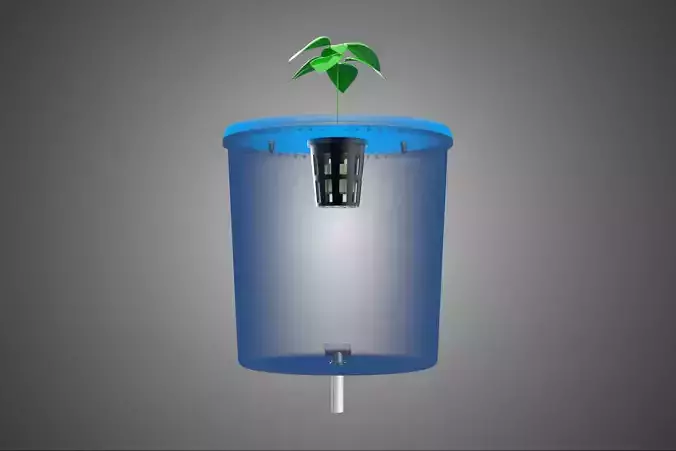
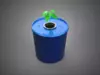
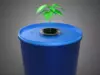
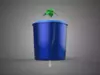
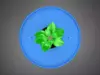
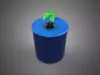
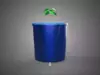
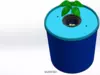
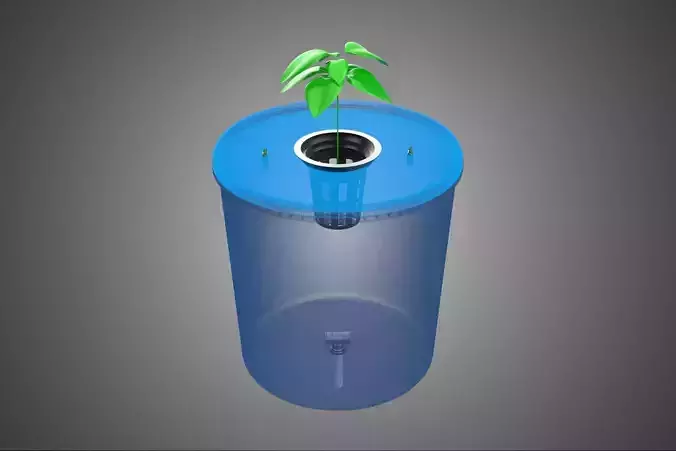
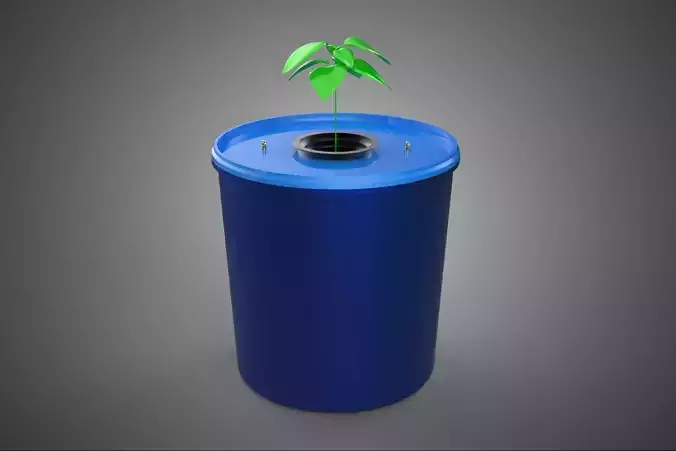
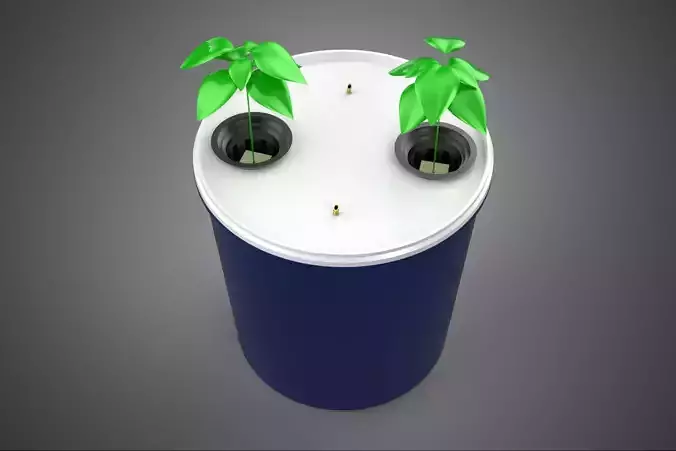
The apparatus referenced, often termed a Hydroponic Blue Reservoir Bucket Net Pot Module, describes a modular, controlled environment agricultural (CEA) system designed for soilless cultivation (hydroponics), typically operating on a recirculating nutrient delivery principle. The specific terminology Dutch Plant Grow is frequently associated with the Bato Bucket System (also known as the Dutch Bucket System) or a high-capacity, modular adaptation of Deep Water Culture (DWC).
System Configuration and Nomenclature
The system is defined by its use of standardized, individual growth vessels.
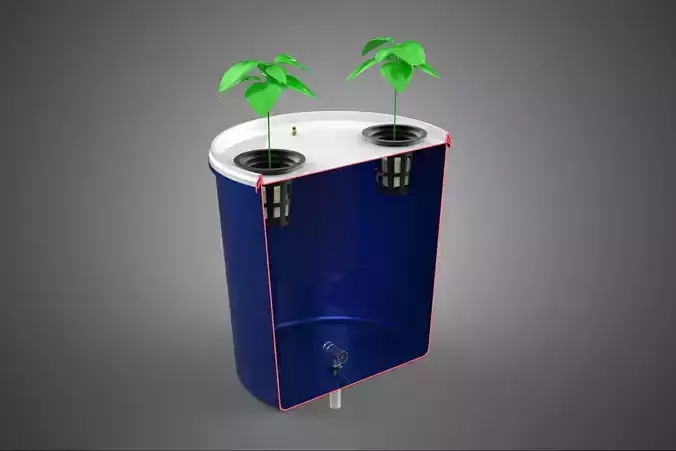
Reservoir Bucket Module (Blue): These containers function as the primary root zone environment. They are typically fabricated from robust, UV-stabilized, food-grade plastic (commonly high-density polyethylene, HDPE, or polypropylene, PP). The designation Blue is an intentional design choice. Blue, particularly opaque shades, is effective at blocking photosynthetically active radiation (PAR), thereby inhibiting the growth of light-dependent opportunistic pathogens and undesirable organisms, most notably algae, which compete with the target crop for dissolved oxygen and nutrients. The modular nature (Module) indicates that each bucket is a self-contained growth unit, often interconnected via shared nutrient lines.
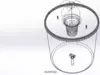
Net Pot: The net pot is a permeable plastic insert, typically cylindrical or square, featuring a mesh or slotted base. It is designed to hold the plant’s base, stabilizing the stem while containing inert growing media—such as expanded clay pebbles (hydroton), perlite, or rockwool—and suspending the root mass directly into or immediately above the nutrient solution within the bucket. The slotted structure ensures maximum exposure of the roots to both the nutrient solution and the oxygenated air space.
Dutch Grow System: The Dutch descriptor refers to the system’s origin and fundamental methodology, emphasizing efficiency and high-density planting suitable for large-scale commercial operations. In the context of a bucket module, this usually denotes a recirculating drip-feed system (Bato Bucket), where a drip emitter delivers fresh nutrient solution to the top of the medium, allowing excess solution to drain through the bottom of the bucket via an elbow fitting or drain line and return to a central nutrient reservoir for reuse and replenishment.
Operational Characteristics
In a typical configuration, the reservoir buckets are elevated and arranged in rows. A central pump pushes the nutrient solution to each module.
- Nutrient Delivery: Solution is delivered either constantly or intermittently (via timer) to the net pot area.
- Drainage and Recirculation: The drainage design ensures that while the root zone receives constant irrigation, the bulk of the root mass is exposed to air, preventing hypoxia. The continuous recirculation minimizes water waste and allows precise monitoring and adjustment of pH and electrical conductivity (EC) across the entire crop.
### Applications
This apparatus is highly favored for cultivating large-stature or long-cycle plants that require stable support and extensive root structures, including vining crops (tomatoes, cucumbers, bell peppers), melons, peppers, and certain cannabis cultivars. Its modularity allows for easy isolation or removal of individual plants without affecting the performance of the rest of the system.
KEYWORDS: Hydroponics, Bato Bucket, Dutch Bucket System, Modular Hydroponics, Recirculating System, Net Pot, Blue Plastic, HDPE, Nutrient Reservoir, Soilless Cultivation, CEA, Deep Water Culture, DWC Hybrid, Algae Control, Root Zone, Inert Medium, Expanded Clay Pebbles, High-Yield Agriculture, Commercial Growing, Polypropylene, UV-Stabilized, Recirculating Drip-Feed, Nutrient Film Technique (NFT) Alternative, Greenhouse Technology, Horticulture, pH Monitoring, Electrical Conductivity, Fruiting Crops, Vine Plants.