High-quality 3D assets at affordable prices — trusted by designers, engineers, and creators worldwide. Made with care to be versatile, accessible, and ready for your pipeline.
Included File Formats
This model is provided in 14 widely supported formats, ensuring maximum compatibility:
• - FBX (.fbx) – Standard format for most 3D software and pipelines
• - OBJ + MTL (.obj, .mtl) – Wavefront format, widely used and compatible
• - STL (.stl) – Exported mesh geometry; may be suitable for 3D printing with adjustments
• - STEP (.step, .stp) – CAD format using NURBS surfaces
• - IGES (.iges, .igs) – Common format for CAD/CAM and engineering workflows (NURBS)
• - SAT (.sat) – ACIS solid model format (NURBS)
• - DAE (.dae) – Collada format for 3D applications and animations
• - glTF (.glb) – Modern, lightweight format for web, AR, and real-time engines
• - 3DS (.3ds) – Legacy format with broad software support
• - 3ds Max (.max) – Provided for 3ds Max users
• - Blender (.blend) – Provided for Blender users
• - SketchUp (.skp) – Compatible with all SketchUp versions
• - AutoCAD (.dwg) – Suitable for technical and architectural workflows
• - Rhino (.3dm) – Provided for Rhino users
Model Info
• - All files are checked and tested for integrity and correct content
• - Geometry uses real-world scale; model resolution varies depending on the product (high or low poly)
• • - Scene setup and mesh structure may vary depending on model complexity
• - Rendered using Luxion KeyShot
• - Affordable price with professional detailing
Buy with confidence. Quality and compatibility guaranteed.
If you have any questions about the file formats, feel free to send us a message — we're happy to assist you!
Sincerely,
SURF3D
Trusted source for professional and affordable 3D models.
More Information About 3D Model :
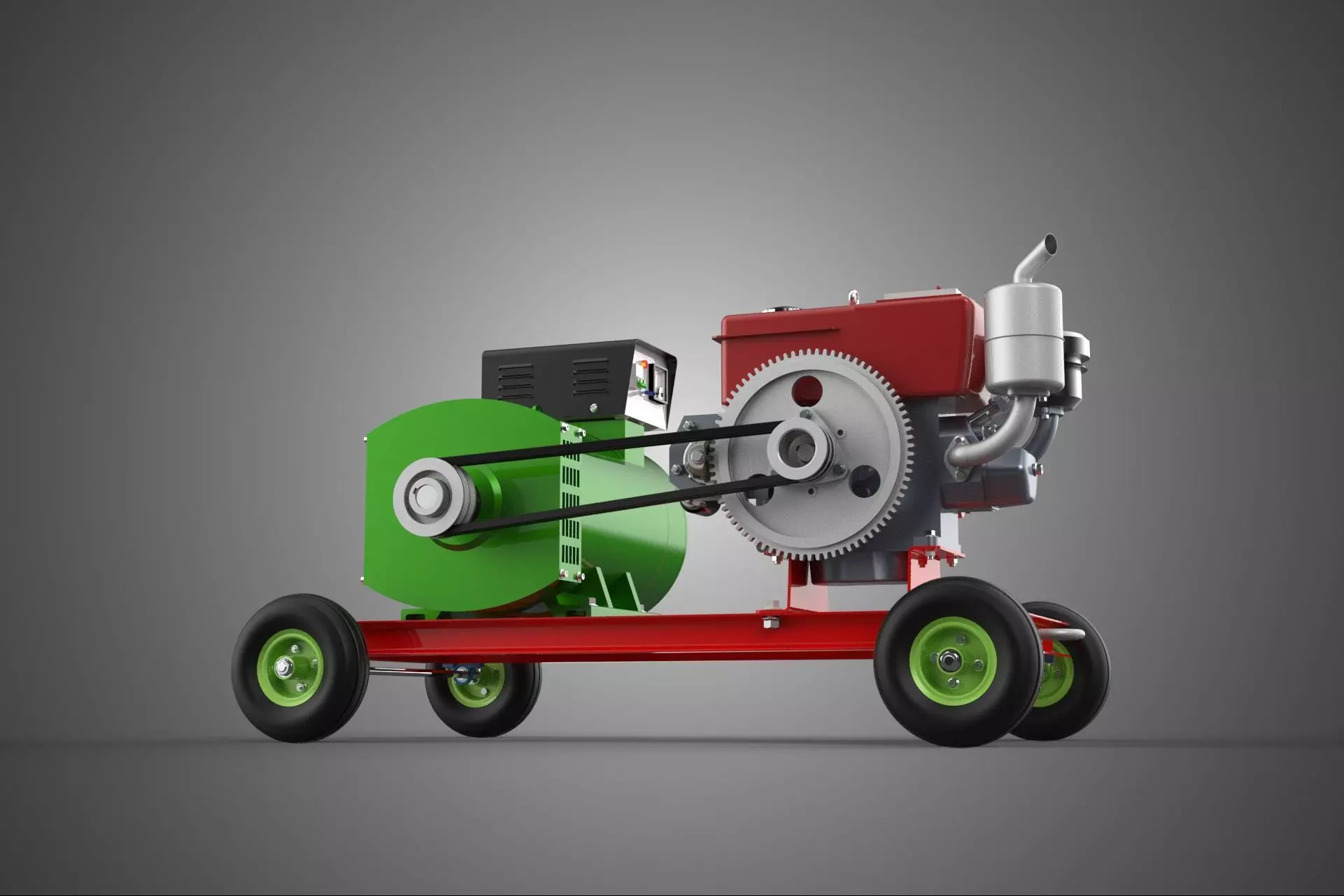
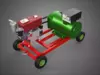
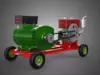
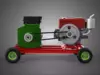
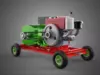
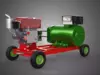
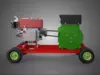
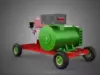
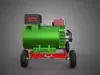
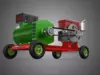
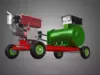
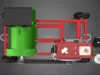
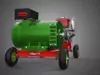
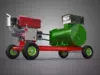
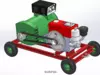
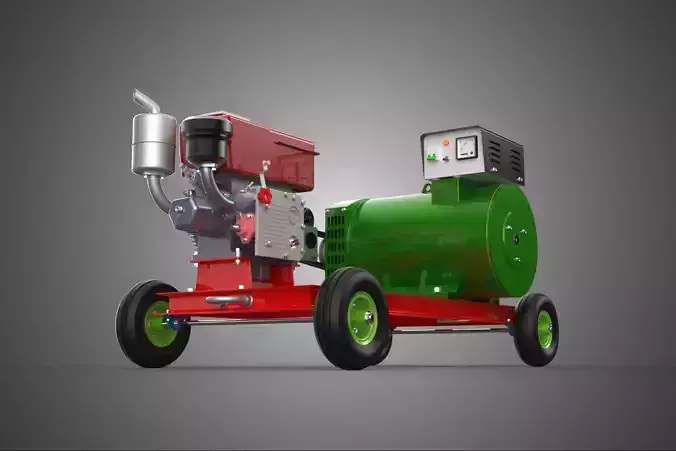
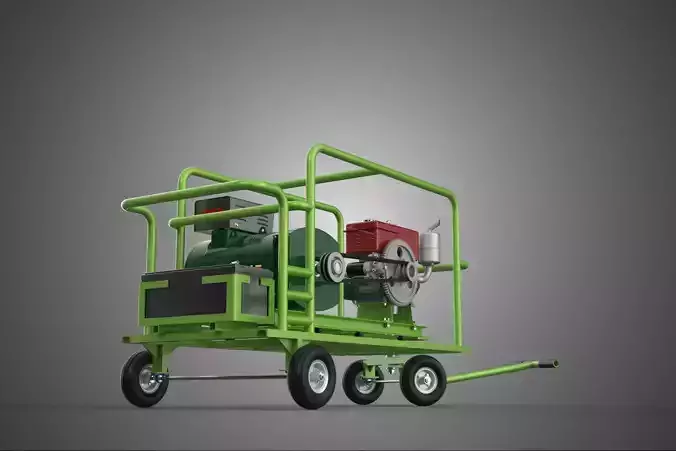
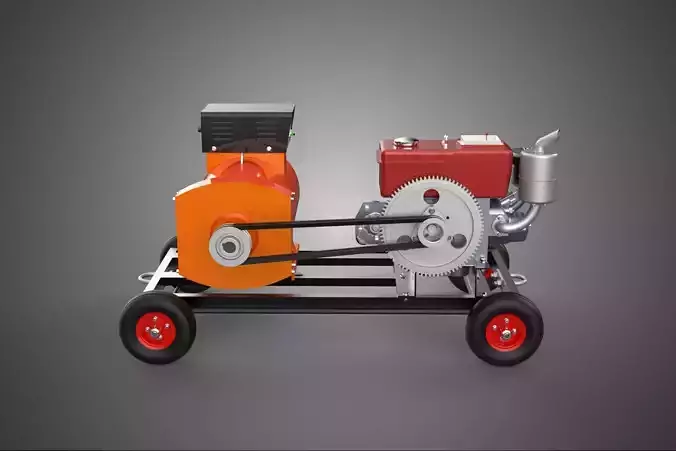
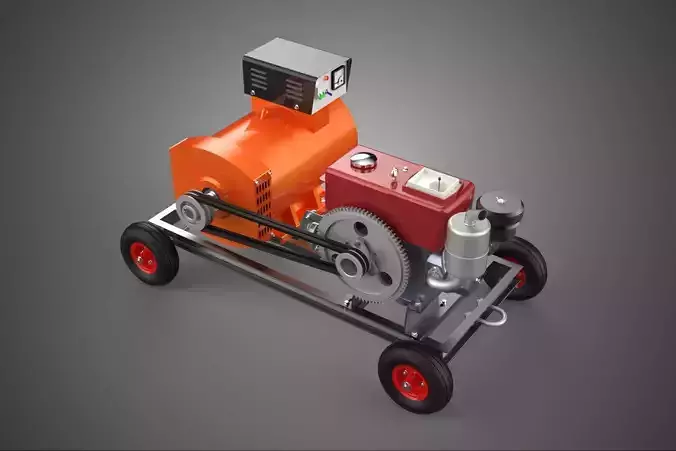
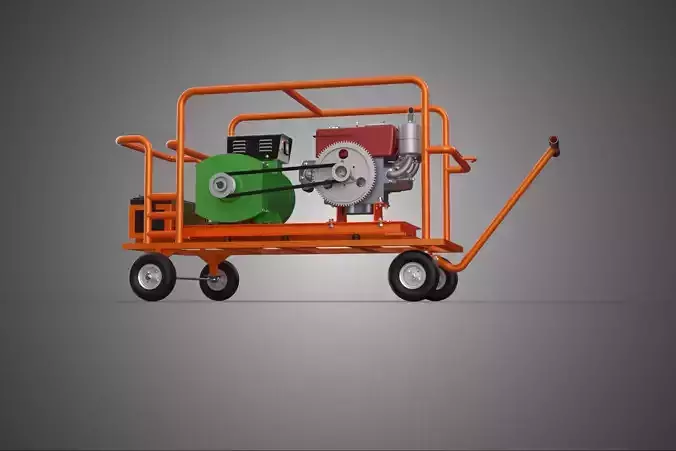
TURBINE POWER GENERATOR SET DIESEL ENGINE ALTERNATOR DYNAMO DIY
A Turbine Power Generator Set (Genset) Diesel Engine Alternator Dynamo DIY refers to a self-assembled, customized system designed to convert the chemical potential energy stored in diesel fuel into electrical energy, utilizing an internal combustion engine (ICE) as the prime mover mechanically coupled to an electrical conversion device. While the term Turbine strictly denotes a rotary engine driven by fluid flow (steam, gas, or liquid), in the context of small-scale, self-built (DIY) systems, this nomenclature is often used generically to signify the entire rotating power generation apparatus or, less frequently, to describe a diesel engine equipped with an exhaust-driven turbocharger.
This class of machinery is primarily employed in applications requiring autonomous, off-grid, or emergency backup power, and is characterized by the integration of components sourced individually and assembled by the end-user rather than being purchased as a factory-integrated commercial package.
I. Core Components and Functional Integration
The DIY diesel generator set fundamentally consists of two primary subsystems: the prime mover and the electrical generator head.
A. The Prime Mover: Diesel Engine
The diesel engine acts as the prime mover, converting thermal energy released during the combustion of hydrocarbon fuels into rotational mechanical energy. Diesel engines are favored in generation applications due to their high thermal efficiency, durability, robustness, and high torque output suitable for driving heavy electrical loads. The engine's speed must be tightly regulated, typically operating at constant rotational speeds (e.g., 1500 or 1800 revolutions per minute [RPM]) to maintain the requisite synchronous frequency (50 or 60 Hertz, respectively) of the electrical output. Engine control mechanisms, such as mechanical or electronic governors, are critical DIY considerations to prevent frequency drift under varying loads.
B. The Electrical Converter: Alternator and Dynamo
The mechanical power is transmitted from the diesel engine's crankshaft to the electrical converter, which facilitates the transformation of kinetic energy into electrical energy via electromagnetic induction.
- Alternator: The contemporary standard for AC (Alternating Current) power generation. Alternators typically employ a rotating magnetic field (rotor) and stationary armature windings (stator). The DIY implementation requires careful selection of an alternator head rated for the engine's power output (measured in kilowatts, kW) and designed for the specific RPM range to ensure stable voltage and frequency output. Brushless alternators are preferred for lower maintenance requirements.
- Dynamo: Historically referring to DC (Direct Current) generators, the term dynamo is often used interchangeably with generator in non-technical discourse. While older or simpler DIY systems might utilize DC dynamos (often for charging batteries or low-voltage DC applications), most modern gensets employ AC alternators, which may then be coupled with rectification circuitry to produce DC power if required.
#### C. Coupling and Frame Integration
In DIY construction, the alignment and robust coupling of the engine output shaft to the generator shaft are paramount. Misalignment introduces destructive vibrational forces and premature bearing failure. Systems may use flexible couplings, rigid couplings, or occasionally belt-driven systems (though direct coupling is generally preferred for high-power constancy). All components must be mounted onto a heavy-duty skid or frame, often custom-welded, incorporating vibration isolation mounts to mitigate noise and stress transfer.
### II. DIY Implementation and Operational Considerations
The Do-It-Yourself approach introduces specific complexities not present in commercial gensets:
- Sizing and Matching: The primary engineering challenge is correctly matching the engine horsepower output (rated in Brake Horsepower, BHP or kW) to the electrical load capacity of the alternator (kVA or kW), ensuring the engine can consistently maintain synchronous speed under peak load conditions. Oversizing the engine is common to ensure longevity and transient load handling.
- Cooling and Exhaust: Adequate cooling (air or liquid) and safe routing of high-temperature exhaust gases are essential safety and operational requirements that necessitate custom fabrication in DIY setups.
- Fuel Management and Safety: Diesel fuel storage, filtration, and supply lines must adhere to strict safety standards. Unlike gas turbines, the diesel engine operates on compression ignition, making the fuel handling requirements specific to low-volatility liquids.
- Voltage Regulation and Synchronization: Self-built AC systems require sophisticated Automatic Voltage Regulators (AVR) to stabilize output voltage. For systems intended for parallel operation or utility grid tie-in (a highly complex task generally discouraged for novice DIY builders), advanced synchronization hardware is mandatory.
The appeal of the DIY Genset lies in its lower initial capital expenditure, the capacity for high component interchangeability, and the educational value derived from the construction process.
KEYWORDS: Diesel Generator, Genset, DIY Power, Off-Grid Electricity, Alternator, Dynamo, Prime Mover, Internal Combustion Engine, Synchronous Generator, Electrical Generation, Mechanical Coupling, Turbocharger, Power System, Engine Governor, Voltage Regulation, AC Power, DC Power, Standby Power, Emergency Power, Self-Assembly, Frequency Control, Engine Sizing, Skidding, Vibration Dampening, Low-Cost Generation, Backup System, Electrical Grid Independence, Energy Autonomy, Microturbine, High Efficiency.