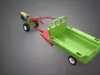
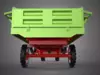
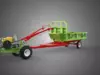
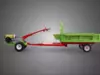
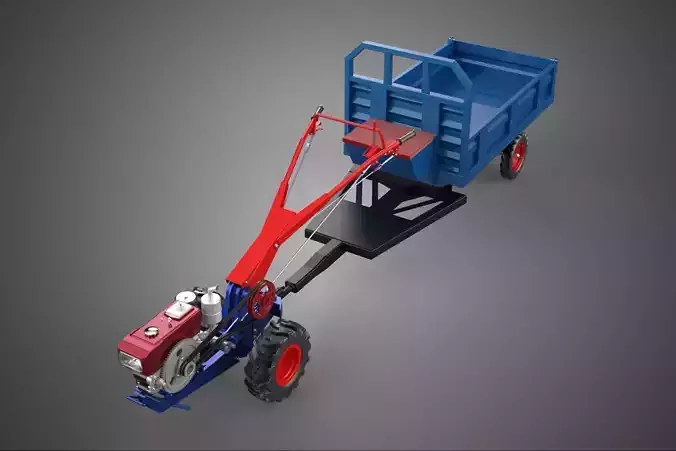
High-quality 3D assets at affordable prices — trusted by designers, engineers, and creators worldwide. Made with care to be versatile, accessible, and ready for your pipeline.
Included File Formats
This model is provided in 14 widely supported formats, ensuring maximum compatibility:
• - FBX (.fbx) – Standard format for most 3D software and pipelines
• - OBJ + MTL (.obj, .mtl) – Wavefront format, widely used and compatible
• - STL (.stl) – Exported mesh geometry; may be suitable for 3D printing with adjustments
• - STEP (.step, .stp) – CAD format using NURBS surfaces
• - IGES (.iges, .igs) – Common format for CAD/CAM and engineering workflows (NURBS)
• - SAT (.sat) – ACIS solid model format (NURBS)
• - DAE (.dae) – Collada format for 3D applications and animations
• - glTF (.glb) – Modern, lightweight format for web, AR, and real-time engines
• - 3DS (.3ds) – Legacy format with broad software support
• - 3ds Max (.max) – Provided for 3ds Max users
• - Blender (.blend) – Provided for Blender users
• - SketchUp (.skp) – Compatible with all SketchUp versions
• - AutoCAD (.dwg) – Suitable for technical and architectural workflows
• - Rhino (.3dm) – Provided for Rhino users
Model Info
• - All files are checked and tested for integrity and correct content
• - Geometry uses real-world scale; model resolution varies depending on the product (high or low poly)
• • - Scene setup and mesh structure may vary depending on model complexity
• - Rendered using Luxion KeyShot
• - Affordable price with professional detailing
Buy with confidence. Quality and compatibility guaranteed.
If you have any questions about the file formats, feel free to send us a message — we're happy to assist you!
Sincerely,
SURF3D
Trusted source for professional and affordable 3D models.
More Information About 3D Model :
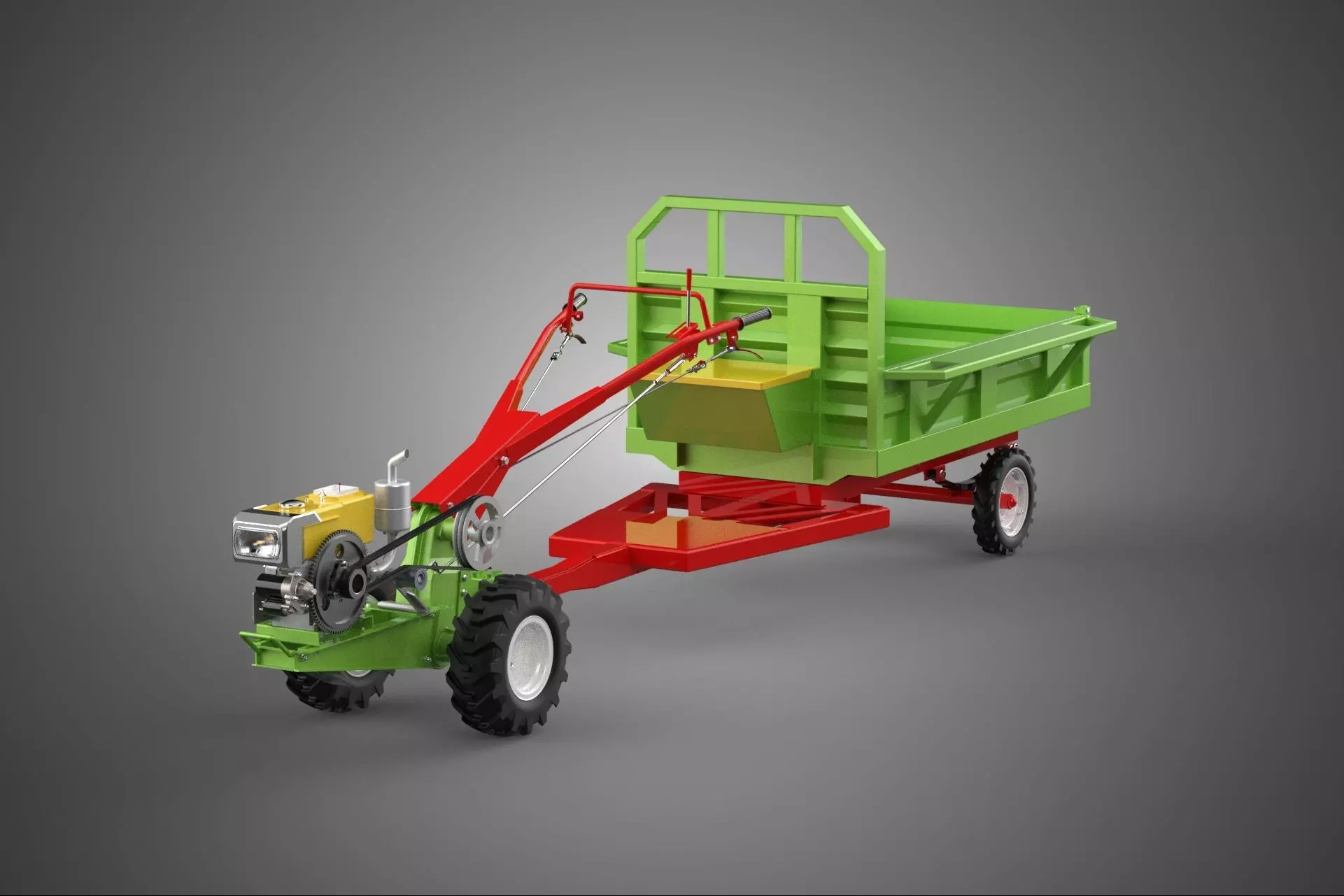
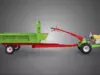
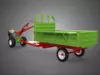
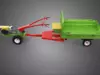
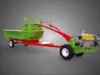
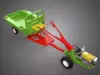
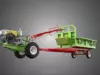
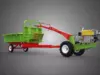
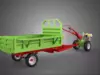
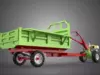
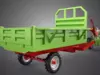
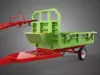
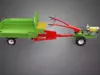
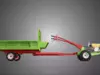
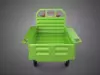
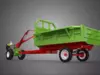
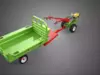
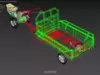
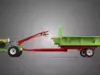
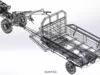
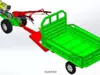
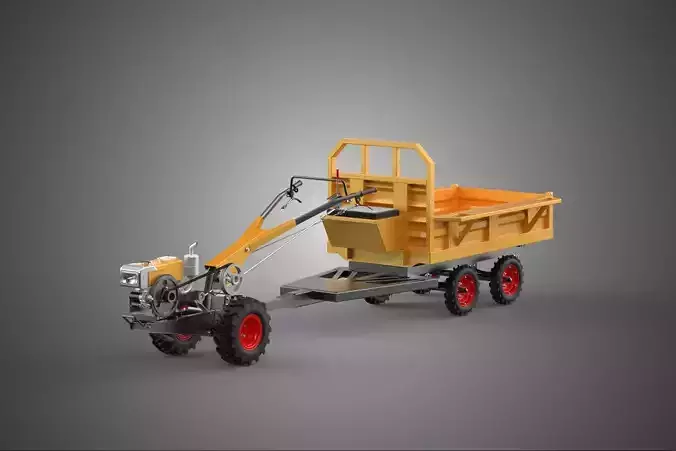
The agricultural or utility trailer, a multifaceted component of rural and heavy-duty logistics, is a non-motorized vehicle chassis designed explicitly for the conveyance of materials, freight, or specialized machinery. While often generically termed a rural cargo vehicle, its precise nomenclature includes farm wagon, utility cart, trolley (referring to heavy-duty industrial platforms), and agricultural trailer.
Definition and Function
These vehicles are universally characterized by their dependency on external motive power, typically an agricultural tractor or a robust utility truck, connected via a rigid drawbar or a specialized hitching mechanism (e.g., pintle hitch or ring feeder). Their fundamental function is augmenting logistical efficiency in settings where specialized urban freight carriers (such as semi-trailers) are impractical due to restricted access, uneven terrain, or the high volume and specific nature of agricultural goods (e.g., silage, grain, timber).
Typology and Nomenclature
The diverse range of rural cargo vehicles necessitates classification based on capacity, axle configuration, and primary use:
- General-Purpose Box Trailers (Farm Wagons): Historically the foundational design, these four-wheeled units feature high sideboards and are used for generalized hauling. Modern iterations frequently incorporate hydraulic tipping mechanisms, transforming them into Dump Trailers or Tipper Carts essential for rapid unloading of loose bulk commodities like soil, aggregate, manure, or harvested crops.
- Flatbed Trailers: Designed with a low, open deck and no superstructure, these are optimized for transporting large, non-stackable items, such as large round or square hay bales, timber logs, or heavy agricultural implements. They often feature securing points for chains or straps.
- Specialized Trailers: This category includes purpose-built vehicles such as Manure Spreaders (which meter out organic fertilizer), Tanker Trailers (for liquid fertilizer, water, or fuel), and Log Trailers (equipped with bolstered frames and, often, integrated hydraulic knuckle-boom loaders for handling timber).
- Carts (Utility Carts): Generally referring to smaller, lighter-capacity two-wheeled vehicles used for maneuverability within constrained areas or for low-density tasks.
### Engineering and Design
The engineering focus of these rural transport systems prioritizes durability, high load-bearing capacity, and operational stability on rough ground.
Chassis and Axles: Construction utilizes heavy-gauge steel to withstand flexing and stress induced by uneven terrain and dynamic loads. Axle configurations vary significantly:
- Single-Axle: Offers maximum maneuverability but limits payload and can impose significant vertical load (tongue weight) on the towing vehicle.
- Tandem or Triple Axles: Used for maximizing Gross Vehicle Weight (GVW) and distributing weight more evenly, crucial for large-capacity models designed for sustained road use. High ground clearance is standard across most models to navigate rutted fields and farm tracks.
Braking Systems: For safety and regulatory compliance, particularly when operated on public roadways, modern high-capacity trailers are equipped with robust braking systems. These typically rely on hydraulic or pneumatic air brakes, actuated and powered directly by the towing tractor's hydraulic or air supply lines. Low-speed farm carts may still utilize simple overrun mechanical braking systems.
Coupling: The standard attachment method is the drawbar, which interfaces with a variety of specialized hitches, ensuring rigid and reliable linkage capable of transmitting significant tractive forces.
### Operational Context
The term Tractor Trailer in the rural context describes this combination—an agricultural tractor towing a heavy-duty trailer—and is distinct from the North American freight industry's definition of an articulated lorry (semi-truck). Rural utility trailers operate at lower speeds but often carry comparable or exceeding axle loads compared to standard commercial freight vehicles, demanding stringent regulation regarding tire pressure, load securing, and overall vehicle roadworthiness. They are indispensable links in the food supply chain, facilitating the transfer of materials from primary production sites (fields, forests) to processing centers or bulk storage facilities.
KEYWORDS: Agricultural Trailer, Utility Vehicle, Farm Equipment, Cargo Transport, Hauling, Rural Logistics, Drawbar, Towed Vehicle, Farm Wagon, Dump Trailer, Flatbed, Silage Transport, Bulk Handling, Agricultural Machinery, Chassis, Axle Configuration, Tow Hitch, Non-Self-Propelled, Agricultural Tractor, Cart, Freight Mover, Infrastructure Vehicle, Forestry Trailer, Material Handling, Agricultural Cart, Heavy Duty, Tipper, Utility Cart, Farm Trailer, Tandem Axle.